
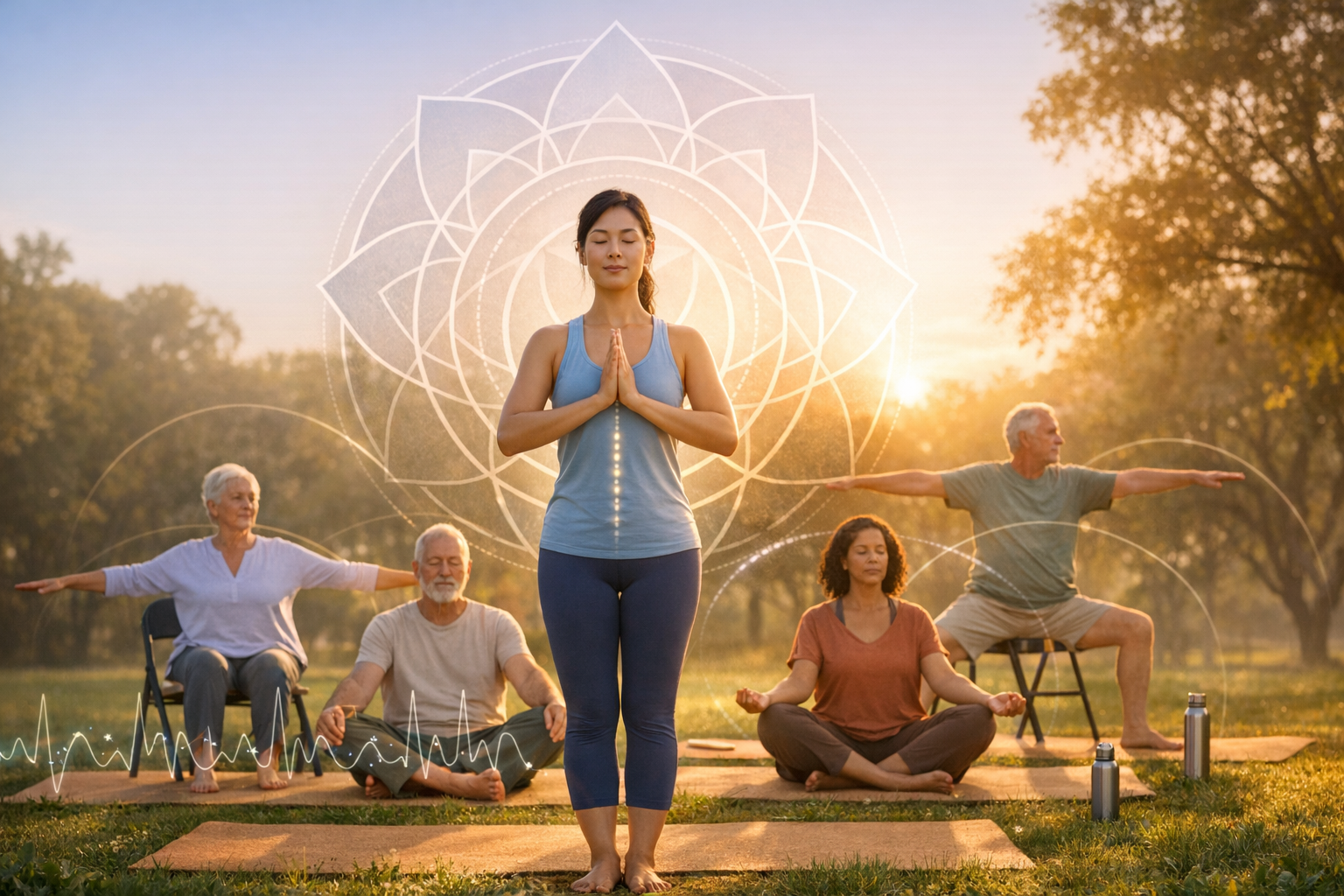
International Yoga Day on 21 June 2026 commemorates a global commitment to well-being and unity that was formally recognized by the United Nations through Resolution 69/131 on 11 December 2014. The observance highlights yoga’s universal appeal as a practical, evidence-informed path to physical health, mental clarity, and social harmony across cultures and communities.
The choice of 21 June aligns with the Northern Hemisphere’s summer solstice, symbolically underscoring illumination and balance. Around the world, sunrise gatherings, workplace sessions, campus workshops, and community festivals mark the International Day of Yoga with accessible, inclusive practices suitable for all ages and abilities.
Contemporary research supports many of the outcomes traditionally associated with yoga. As summarized by the U.S. National Institutes of Health, regular practice can help individuals feel more relaxed, improve flexibility and posture, cultivate deeper, slower breathing, and reduce perceived stress. Randomized controlled trials and systematic reviews further suggest benefits for chronic low back pain management, anxiety and depressive symptoms, balance and fall risk in older adults, and cardiometabolic markers such as resting blood pressure and heart rate variability. While the strength of evidence varies by outcome and population, a consistent pattern emerges: yoga, when tailored and practiced safely, functions as an effective mind-body intervention.
Multiple mechanisms plausibly account for these changes. Slow, diaphragmatic breathing and mindful movement influence the autonomic nervous system, increasing parasympathetic tone and improving heart rate variability. Gentle spinal mobility and isometric engagement enhance musculoskeletal function and proprioception. Focused attention and meditation practices dampen stress reactivity through modulation of the hypothalamic-pituitary-adrenal axis. Over time, these adaptations can translate into better sleep, steadier mood, improved pain coping, and more efficient recovery from daily stressors.
Yoga is best understood as an integrated discipline rather than a single technique. Classical frameworks, such as the Ashtanga model in Patanjali’s Yoga Sutra, describe eight interrelated limbs: yama, niyama, asana, pranayama, pratyahara, dharana, dhyana, and samadhi. This structure places ethical clarity, breath, sensory regulation, concentration, and meditation alongside physical postures, emphasizing that movement, breath, and attention operate as one coherent system.
These ethical and contemplative foundations resonate across the dharmic traditions of Hinduism, Buddhism, Jainism, and Sikhism. Core values such as ahimsa, satya, and self-discipline find parallel expression in Buddhist mindfulness and metta practices, Jain vows of non-violence and self-restraint, and Sikh simran that steadies attention on the Divine Name. International Yoga Day thus offers an opportunity to celebrate shared principles of compassion, discipline, and inner freedom while honoring the diversity of methods and lineages.
Modern practice styles make these teachings accessible to broad audiences. Hatha Yoga emphasizes steady postures and breath coordination; Ashtanga Vinyasa follows progressive, flowing sequences; Iyengar Yoga uses props to refine alignment and enhance safety; Kundalini traditions combine breath, mantra, and dynamic movements to mobilize energy and focus; and integrative schools adapt sequences for athletes, older adults, and those rehabilitating from injury. Selection can be guided by personal goals, physical condition, and the availability of qualified instruction.
Yogic anatomy describes prana (vital energy) moving through a network of nadis, with transformative potential concentrated at chakras from muladhara to sahasrara. These models can be read phenomenologically, supporting interoceptive awareness and subtle sensory discrimination. Contemporary physiology offers complementary language, relating traditional insights to respiratory mechanics, baroreflex sensitivity, vestibular function, and central-peripheral signaling that together shape the felt sense of equilibrium.
Pranayama remains a cornerstone for stress regulation and mental clarity. Foundational practices include three-part breathing that expands abdomen, ribs, and chest; ujjayi with gentle glottic narrowing; nadi shodhana that alternates nostrils to balance attention and breath; and box breathing at a controlled cadence. Slow rates near six breaths per minute often enhance heart rate variability and calm arousal. Stronger techniques such as kapalabhati or bhastrika warrant care and should be avoided or modified in pregnancy, uncontrolled hypertension, hernias, glaucoma, and cardiovascular or retinal conditions without medical guidance.
Meditation (dhyana) integrates naturally with movement and breath. Options include breath-focused mindfulness, mantra japa that stabilizes attention through sound, loving-kindness practices that cultivate prosocial emotion, and open monitoring that observes thoughts and feelings without attachment. These methods, reflected across Hindu, Buddhist, Jain, and Sikh contemplative lineages, converge on the same aim: steady, compassionate awareness that reduces suffering and supports wise action.
A simple 21-minute International Yoga Day 2026 sequence can make practice approachable and consistent. Begin with two to three minutes of centering and diaphragmatic breathing, then include five minutes of gentle mobility such as cat-cow, hip circles, and shoulder rolls. Add five minutes of standing postures at a sustainable intensity, for example tadasana, virabhadrasana II, trikonasana, and a supported forward fold. Follow with four minutes of nadi shodhana or box breathing. Close with four to five minutes of seated meditation and a brief intention setting that aligns practice with compassion and service.
Sun salutations can be practiced as mindful mobility rather than vigorous exercise. Short, deliberate rounds with synchronized breath emphasize spinal waves, posterior chain lengthening, and shoulder stability without strain. When practiced outdoors at sunrise, the sequence integrates circadian light exposure, which supports sleep-wake cycles and mood regulation.
Micro-practices help sustain benefits throughout the day. Two minutes of slow nasal breathing before meetings can reduce cognitive interference; a one-minute eye and neck mobility break offsets screen fatigue; three to five minutes of seated twists and hamstring flossing mitigate desk-induced stiffness. These brief interventions compound over weeks into meaningful changes in comfort, focus, and stress tolerance.
Programs for older adults and those with limited mobility are most effective when emphasizing stability, joint range within pain-free limits, and breath-led pacing. Chair-based variations of spinal elongation, gentle hip external rotation, and supported balance drills can improve confidence and reduce fall risk. For children and adolescents, short playful flows and breath games enhance interoceptive skills, attention, and emotional regulation.
Safety principles are straightforward and vital. Pain is a signal to modify or cease; end-range spinal flexion and loaded end-range rotation are approached with caution, especially with osteopenia or disc pathology; prolonged inversions are avoided in glaucoma or uncontrolled hypertension; and strong abdominal pressure techniques are contraindicated in pregnancy and postoperative states. Individuals with cardiovascular, neurological, or ophthalmic conditions benefit from personalized guidance and clear communication between yoga teachers and healthcare professionals.
Outcome tracking encourages adherence and makes benefits visible. Practical markers include morning resting heart rate, subjective sleep quality, weekly minutes of slow breathing, perceived stress scores using brief validated scales, and a simple flexibility or balance check. Digital tools can assist, but paper logs and consistent practice windows often prove equally effective.
Community observances can foreground unity across dharmic traditions with inclusive formats. A shared opening of silent breath awareness honors diverse sensibilities, followed by a gentle, all-levels sequence and brief meditation that emphasizes compassion for self and others. Readings may draw on the Yoga Sutra, Dhammapada, Jain aphorisms, or Sikh Gurbani around themes of ethics, equanimity, and service, framed to invite participation rather than persuasion.
Sustainable choices align practice with care for the planet. Natural rubber or cork mats, breathable organic fabrics, reusable water bottles, and outdoor practice spaces reduce environmental impact. Event planners can encourage low-waste logistics, public transport, and accessible venues that welcome multi-generational participation.
Integration with Ayurveda can personalize routines. For high arousal states, slower, grounded sequences and cooling pranayama are emphasized; for low motivation or heaviness, brighter, rhythmic flows and invigorating breathwork are introduced. Simple dietary guidance around whole, seasonal foods and consistent mealtimes complements the stabilizing effects of practice. Such integrations are educational and supportive, not prescriptive medical care.
Habit architecture increases the likelihood of sustained engagement. Anchoring practice to existing cues such as sunrise, lunch breaks, or pre-sleep wind-down routines, keeping a compact home kit ready, and beginning with 10 to 20 minute sessions on most days reduce friction. Over time, individuals can layer intensity and duration, add strength elements, or diversify meditation methods as capacity grows.
International Yoga Day 2026 ultimately celebrates a shared aspiration echoed across Hinduism, Buddhism, Jainism, and Sikhism: disciplined compassion, clarity of mind, and service to the common good. By blending classical wisdom with modern evidence, yoga offers a practical, adaptable pathway to heal and focus the body-mind and to strengthen community bonds through mutual respect and collaboration. The observance invites everyone to begin where they are, move and breathe with care, and let practice become a steady force for personal and collective well-being.
This article is informational in nature and does not substitute for professional medical advice. Individuals with health conditions should consult qualified healthcare practitioners and work with trained yoga teachers for safe, personalized guidance.
Inspired by this post on Hindu Pad.
