
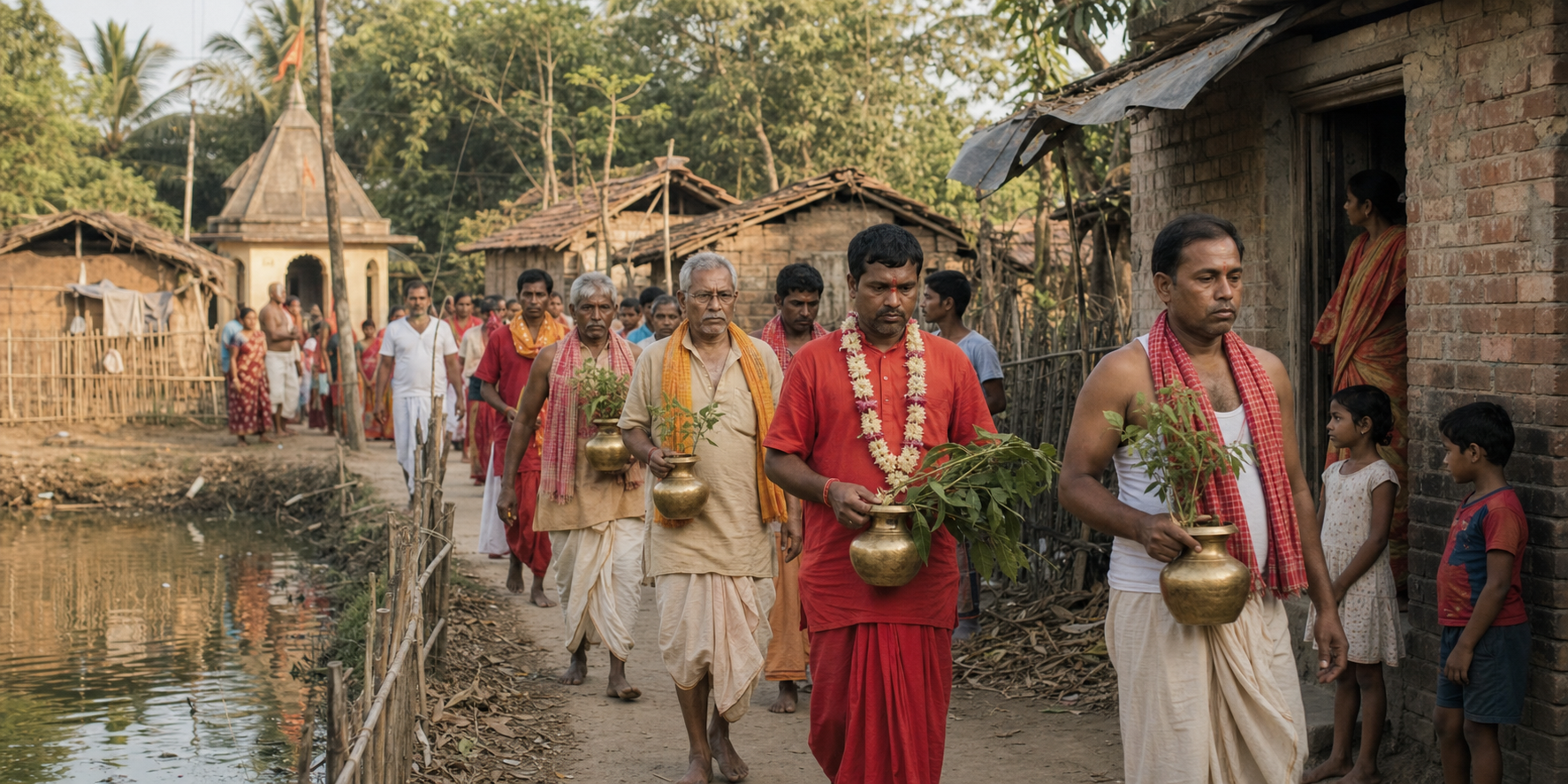
You may be planning to witness Gajan in a Bengali village, or you may have encountered an image of a physically demanding ritual and wondered what you were looking at. The useful question is not, “How extreme is this?” It is, “What relationship does this act express between the devotee, Shiva, the season, and the village?”
That change of question matters. Gajan can be visually dramatic, but its meaning does not begin with spectacle. It begins with devotion. If you keep that order clear, you can understand the festival more accurately and approach it more respectfully.
Begin with Gajan’s devotional grammar
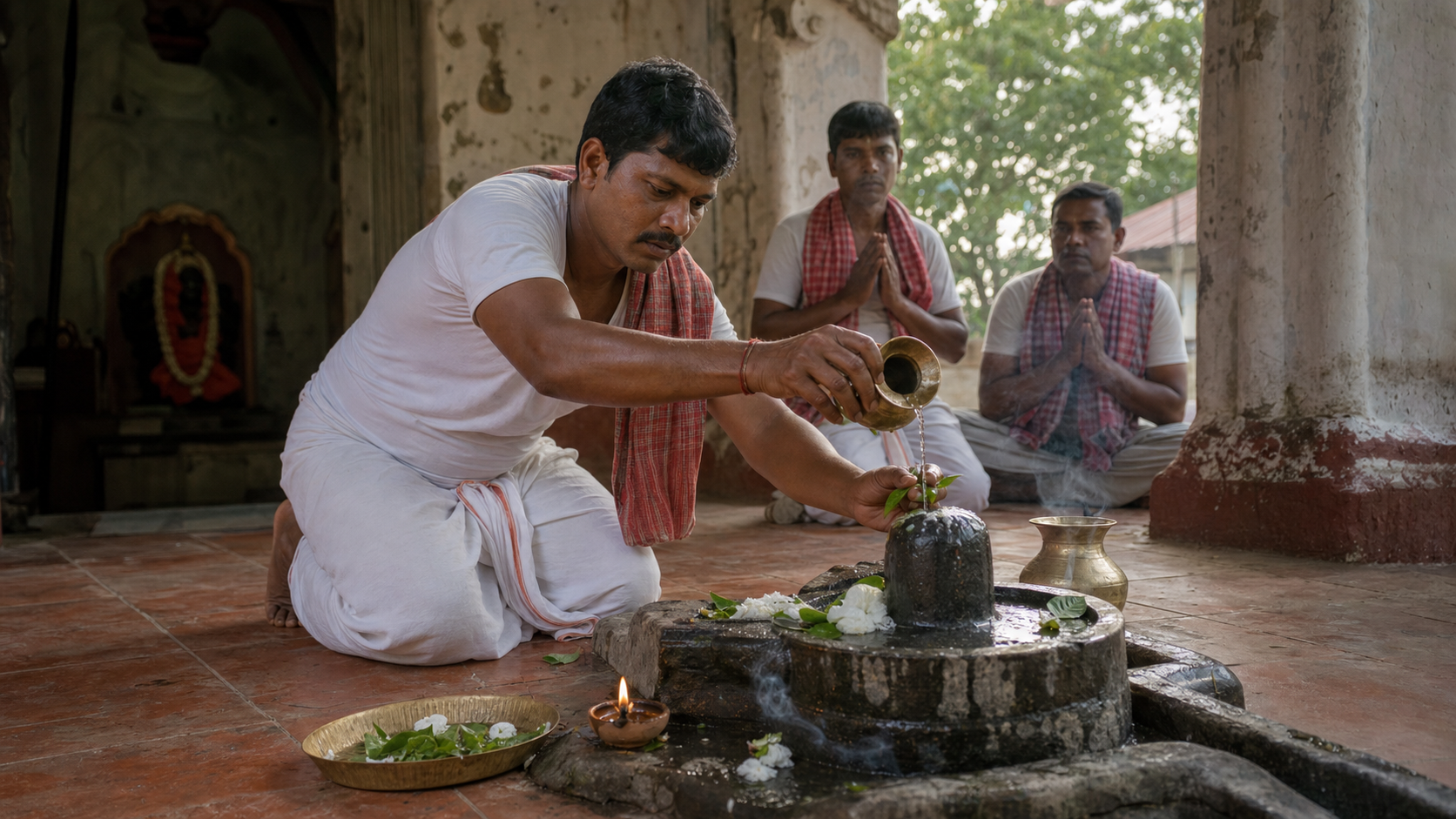
Gajan, also called Shivagajan, is a rural Bengali festival associated with Shiva, intense devotion, symbolic sacrifice, and community solidarity. Those elements belong together. Separating one striking act from the worship and collective life surrounding it produces a distorted picture.
The alternative name Shivagajan gives you your first interpretive anchor: Shiva is central to the form of the observance considered here. The festival is therefore not simply a village fair with religious decoration added to it. Nor is it merely a public test of endurance. Its demanding practices operate within a sacred relationship in which the devotee offers discipline, bodily effort, or sacrifice in pursuit of divine grace.
Keep three levels in view whenever you encounter a Gajan practice:
- The divine level: What is being offered to or sought from Shiva?
- The personal level: How is the devotee expressing surrender, discipline, gratitude, or resolve?
- The communal level: How does the village recognise, support, regulate, and share the observance?
This framework prevents two common mistakes. The first is reducing Gajan to private spirituality, as though the village were only a backdrop. The second is reducing it to folk entertainment, as though the devotee’s religious intention were incidental. Gajan is intelligible only when deity, devotee, and community remain connected.
Do not turn austerity into spectacle
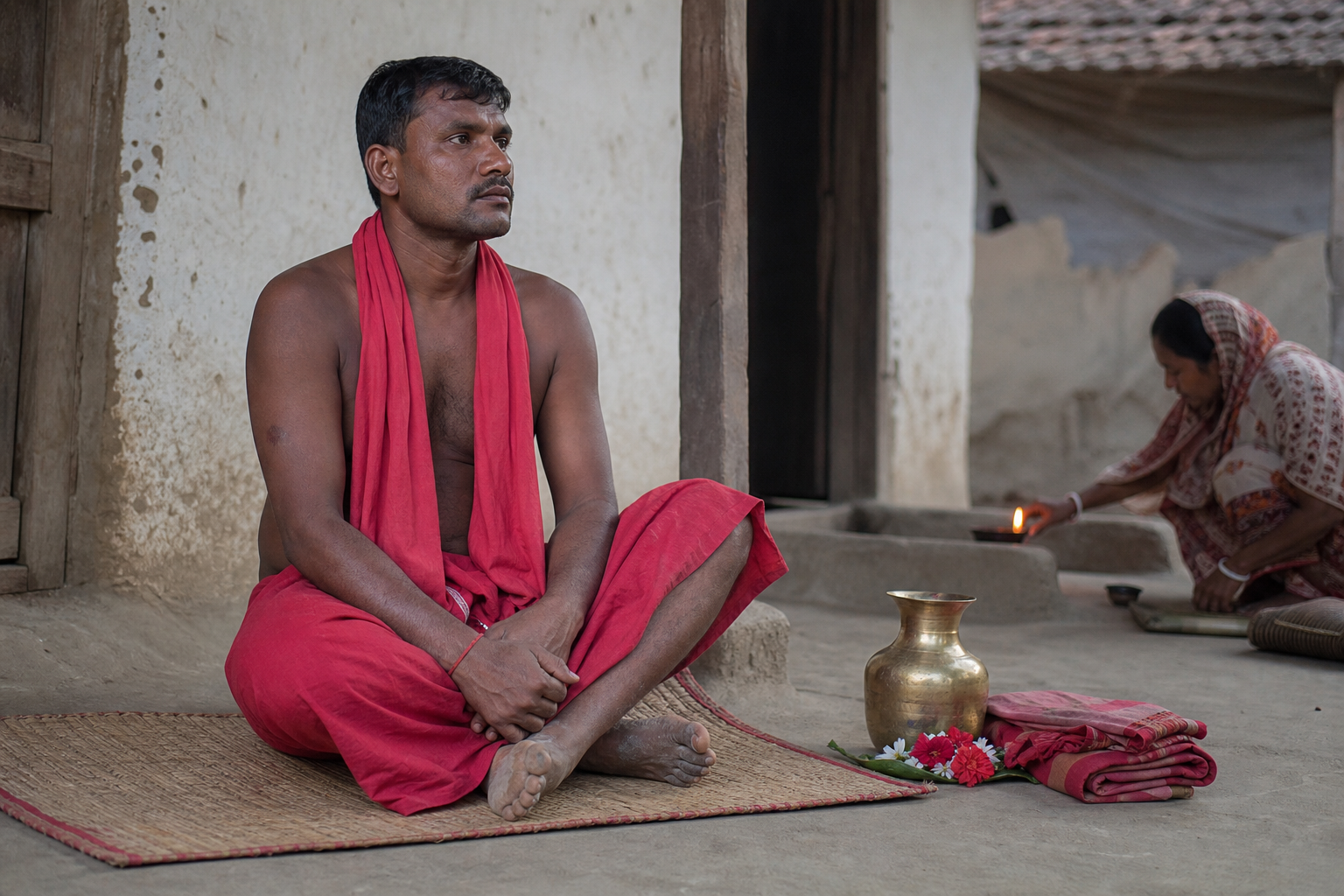
Physical pain can be the first thing an outsider notices and the last thing they understand. Within Gajan’s devotional setting, bodily difficulty is not valuable merely because it looks severe. Its meaning comes from sacrifice, religious intention, and the devotee’s relationship with Shiva.
“Symbolic sacrifice” is an especially important distinction. It directs your attention away from a crude measurement of suffering and toward what the act represents. The body becomes a language of offering. You do not have to romanticise pain to recognise that religious communities may understand voluntary austerity differently from a casual observer.
This distinction should change your conduct. Do not urge a participant to intensify, prolong, or repeat an act for a photograph. Do not imitate a painful practice because it appears to be open to public view. A ritual undertaken within a community’s religious discipline is not a challenge for visitors, and copying it without preparation or guidance can cause injury.
Use your camera only after establishing what is permitted. Public visibility is not blanket consent. Ask a local organiser or trusted resident whether photography is acceptable, whether particular moments are restricted, and where you may stand. If you receive an uncertain answer, keep the camera lowered. The moment will still have meaning even if you do not possess an image of it.
Your language matters after the visit as well. Words such as “bizarre,” “primitive,” or “stunt” erase the devotional logic before your reader has a chance to see it. Describe what you can verify: the local name, the Shiva connection, the form of offering, the role assigned to the act by participants, and the way the community responds. If you do not know what an action means, say that you do not know rather than assigning it a dramatic explanation.
The village is part of the observance, not its scenery
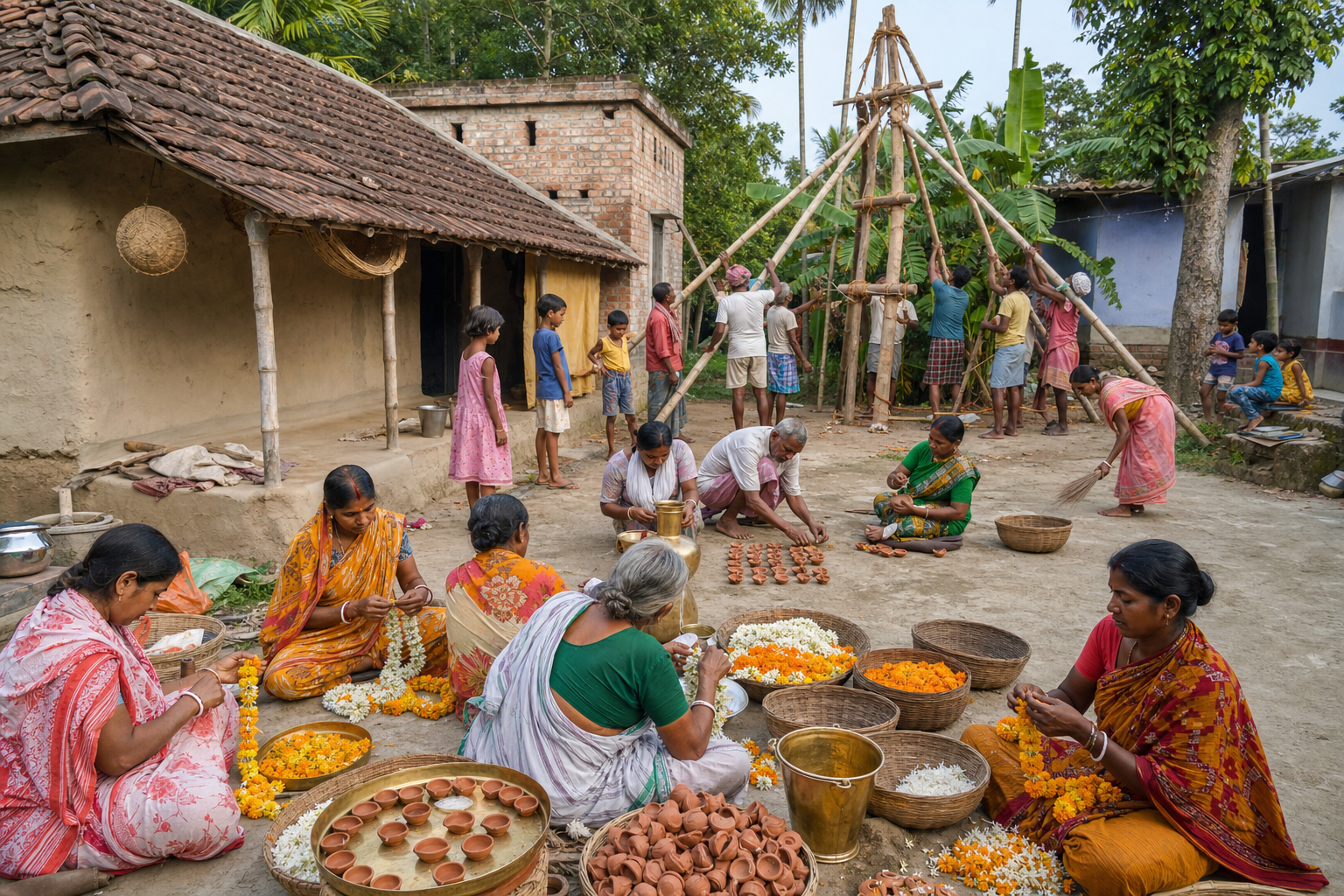
Gajan belongs to a rural world whose rhythms are tied to nature, season, worship, and collective life. That does not mean rural Bengal is frozen outside modernity. It means the festival’s setting carries religious and social meaning that cannot be reproduced by isolating a single image from its place.
Community solidarity is one of Gajan’s defining dimensions. To notice it, look beyond the most demanding ritual moment. Ask who explains the boundaries, who makes space for worship, how residents distinguish participants from observers, and what responsibilities the village attaches to the occasion. These questions reveal the communal structure without requiring you to guess at details.
This is also why you should resist declaring that you have seen “the” Gajan tradition after visiting one place. A village observance is carried by local memory and practice. Record the village name and the terms people use there. Treat those details as locally grounded knowledge, not as an automatic description of every Gajan celebration across Bengal.
When possible, ask one simple question before interpreting an unfamiliar act: “What does this mean here?” The final word is crucial. It invites a local explanation and guards against turning a particular custom into a universal rule.
How to witness Gajan respectfully
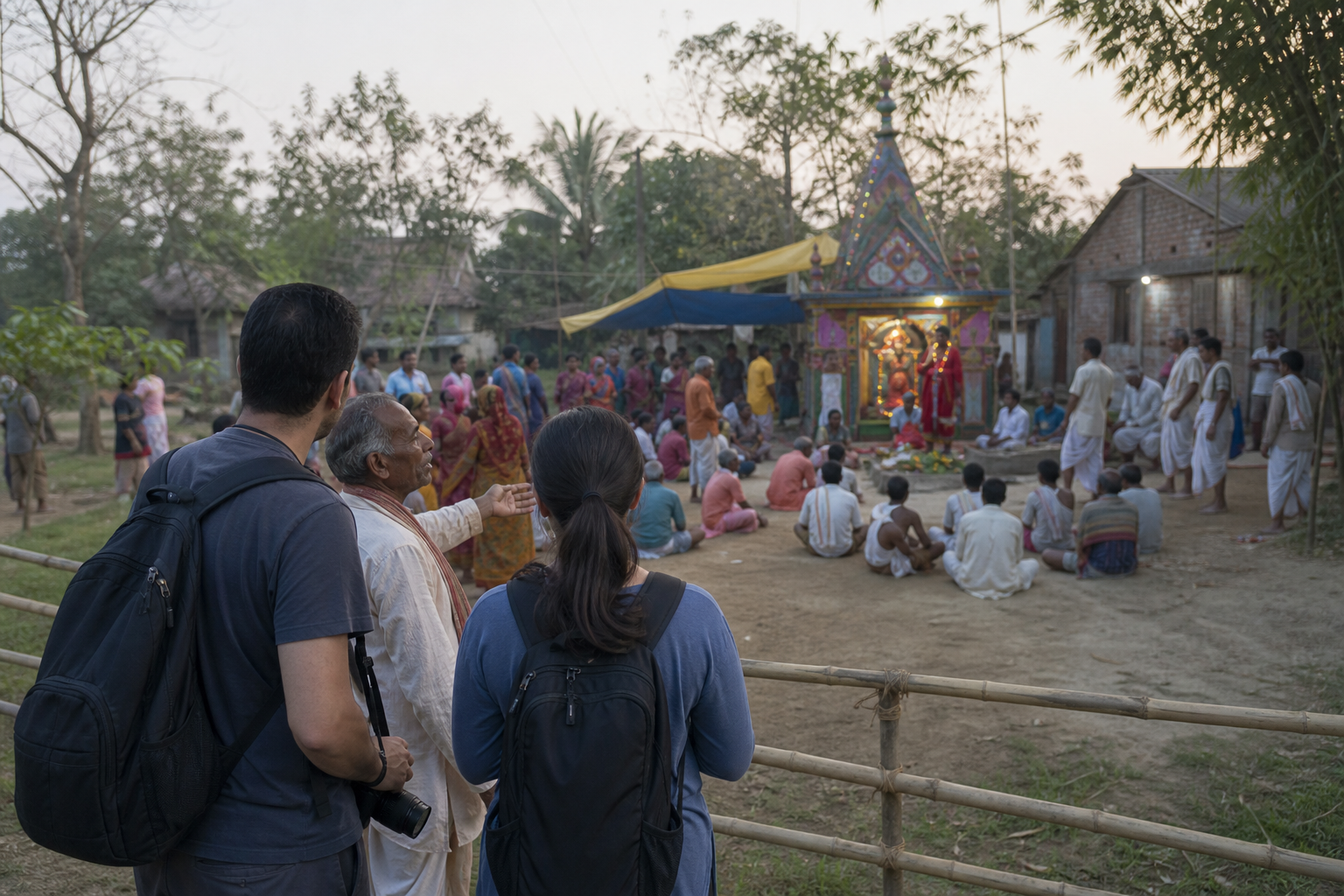
A respectful visit starts before you reach the ritual space. You need local information because the broad name of a festival does not tell you the exact schedule, boundaries, or permissions in a particular village.
- Confirm the observance locally. Ask what residents call it, where it will occur, and which part is open to visitors. Do not rely on an image caption or a schedule from another village.
- Identify a person who can orient you. A local organiser, host, or informed resident can tell you where to stand and when movement or photography would be disruptive.
- Learn the central religious meaning first. Establish the connection to Shiva and ask how participants understand the offering. Do this before asking about visual or physically demanding details.
- Stay outside the working ritual space. Keep access paths clear and follow local directions promptly. A good viewpoint never justifies obstructing worship or the people responsible for the observance.
- Ask before recording. Obtain permission for close photographs, video, or identifiable portraits. Do not request that a sacred or painful action be repeated for your benefit.
- Protect accuracy in your notes. Separate what a local person explained from what you personally inferred. Write down local terms carefully and avoid supplying an interpretation merely because it seems plausible.
- Do not imitate dangerous acts. Visibility does not make an austerity safe or transferable. If an immediate safety concern arises, alert the people responsible for the event and seek local emergency assistance rather than entering the ritual space impulsively.
- Leave with context, not just images. Record how Shiva, sacrifice, season, and village participation fit together. That context is what allows another person to understand the tradition without consuming it as spectacle.
If you are writing or posting about the visit, your first caption should explain the devotional setting rather than advertise intensity. Name the place only when doing so is welcome and safe, distinguish local explanation from your own interpretation, and omit an image if publishing it would expose a private devotional moment.
Key questions about Gajan
Are Gajan and Shivagajan the same festival?
Gajan is also known as Shivagajan in the Shiva-centered tradition discussed here. The second name makes the association with Shiva explicit. When visiting, still use the name preferred by the local community rather than correcting people from a distance.
Is Gajan worship or folk performance?
Its public form may contain visually dramatic action, but the governing frame is devotional. Shiva, sacrifice, disciplined offering, and community participation provide the meaning. Calling it only a performance removes the religious relationship that makes the acts intelligible.
Why does physical pain appear in discussions of Gajan?
Demanding bodily acts can express devotion and symbolic sacrifice. Pain should therefore neither be sensationalised nor treated casually. A visitor’s task is to understand the stated religious meaning, respect boundaries, and never imitate or encourage a hazardous act.
What should you notice besides the most dramatic ritual?
Notice the Shiva-centered purpose, the language of offering, the village’s rules, and the solidarity through which the observance is sustained. Ask how people locally connect the festival with season and sacred life. Those relationships tell you more than the apparent intensity of an isolated moment.
Go to Gajan with one disciplined question: “What does this act mean here to the people offering and sustaining it?” If you can answer in their terms, respect what must remain unrecorded, and describe the festival without stripping away Shiva or the village, you will have done more than watch. You will have learned how to witness a living Dharmic tradition responsibly.
References
