
If you are building your 2026 Datta calendar, do not treat every sacred day as a variation of the same festival. Swami Samarth Prakat Din and Sati Anasuya Jayanti belong to the same spiritual family, but they ask different things of you: one centers the Guru’s accessible grace, while the other brings tapas, restraint, and compassionate strength into household life.
Two firm civil dates can go into your calendar now. The remaining work is to confirm the local tithi, choose a realistic form of worship, and connect ritual with one act of seva or ethical discipline.
Put these two 2026 dates in your calendar first
| Date | Observance | Spiritual emphasis | What to prepare |
|---|---|---|---|
| 20 March 2026 | Swami Samarth Prakat Din | Guru-bhakti, remembrance, parayan, and compassionate service | An image or paduka, lamp, simple naivedya, a chosen recitation, and an annadan or seva plan |
| Monday, 6 April 2026 | Sati Anasuya Jayanti | Tapas, fidelity to dharma, self-mastery, nurturing strength, and household harmony | A simple Atri-Anasuya altar, panchopachara offerings, a sacred narrative or stotra, sattvic food, and charitable giving |
Swami Samarth Prakat Din falls on 20 March in 2026. Prakat means manifestation or becoming publicly accessible; it should not automatically be read as an ordinary biological birthday. The day remembers the Guru’s presence becoming available to seekers through Shri Swami Samarth, the 19th-century mystic closely associated with Akkalkot in Maharashtra.
Sati Anasuya Jayanti falls on Monday, 6 April 2026. Anasuya, the wife of Atri Rishi and mother of Dattatreya in sacred tradition, represents spiritual power exercised through discernment, austerity, care, and disciplined household life. Here, Sati is an honorific for a virtuous woman; it does not refer to a later historical practice.
Key takeaways
- Reserve 20 March for Swami Samarth Prakat Din and 6 April for Sati Anasuya Jayanti.
- Confirm both observances with a trusted local panchang or the temple whose tradition you follow, especially outside India.
- Do not confuse Prakat Din with Swami Samarth’s Mahasamadhi observance, or Sati Anasuya Jayanti with Dattatreya Jayanti.
- Choose a manageable recitation before the day begins. A focused selection is better than a hurried commitment you cannot complete.
- Attach one concrete act of seva or character discipline to each puja so the observance continues beyond the altar.
Let the local tithi settle timing disputes
A Hindu observance belongs first to a lunar tithi, not to the midnight-to-midnight civil date printed on a wall calendar. A tithi corresponds to each 12-degree change in the angular relationship between the Sun and Moon. It can therefore begin or end at any hour, cross a civil-date boundary, or fall differently after conversion to another time zone.
This matters particularly for Sati Anasuya Jayanti. Its anchor is Krishna Paksha Chaturthi. North Indian Purnimant calendars identify the 2026 observance with Vaishakh Krishna Chaturthi, while Amavasyant calendars call the same lunar phase Chaitra Krishna Chaturthi. The different month names do not create two festivals or two competing tithis.
Sunrise can also affect which civil day a local tradition assigns to a festival. Many communities use udaya tithi, the tithi prevailing at sunrise, while a lineage or temple may apply its own established rule. Exact intervals such as Brahma Muhurta and Abhijit Muhurta likewise change with latitude, season, and day length. A time copied from an Indian calendar may therefore be wrong for a devotee in Toronto, London, Singapore, or another location.
Use this sequence instead of trying to reconcile every calendar on the internet:
- Enter the civil date as a planning date: 20 March or 6 April.
- Several days beforehand, check the tithi start and end times in a panchang calculated for your location.
- Check the announced schedule of your temple, matha, or satsang. If you participate there, its communal observance should usually determine when you attend.
- Choose one authority for the household and record it. Mixing sunrise rules from one calendar with muhurta times from another creates confusion without adding devotion.
- If you live outside India, decide whether your community will follow the locally prevailing tithi or synchronize its civil date with Akkalkot. Both approaches can support a sincere observance when the sankalpa is clear and the community applies its choice consistently.
If a local calendar differs by a day, do not assume one side has made a mistake. Compare location, time zone, sunrise, tithi boundaries, and the convention used. The month-name difference between Chaitra and Vaishakh is especially harmless; the underlying Krishna Paksha Chaturthi remains the same.
Build each day around one spiritual movement
A long ritual schedule is not automatically a deep observance. Give each day a clear movement from remembrance to conduct. That makes the festival workable for a family, a solitary devotee, or someone with a full working day.
20 March: move from Guru-remembrance to seva
Swami Samarth Prakat Din centers the Guru as the awakener of insight and the mediator of grace. Shri Swami Samarth’s remembered teaching joins surrender to the Guru, Divine Name remembrance, and practical compassion. Your schedule should therefore contain all three in some proportion.
- Make the sankalpa. State plainly that you are honoring Shri Swami Samarth and dedicating the merit of the observance to collective well-being. Add one behavior you will watch during the day, such as irritability, careless speech, or unnecessary technology use.
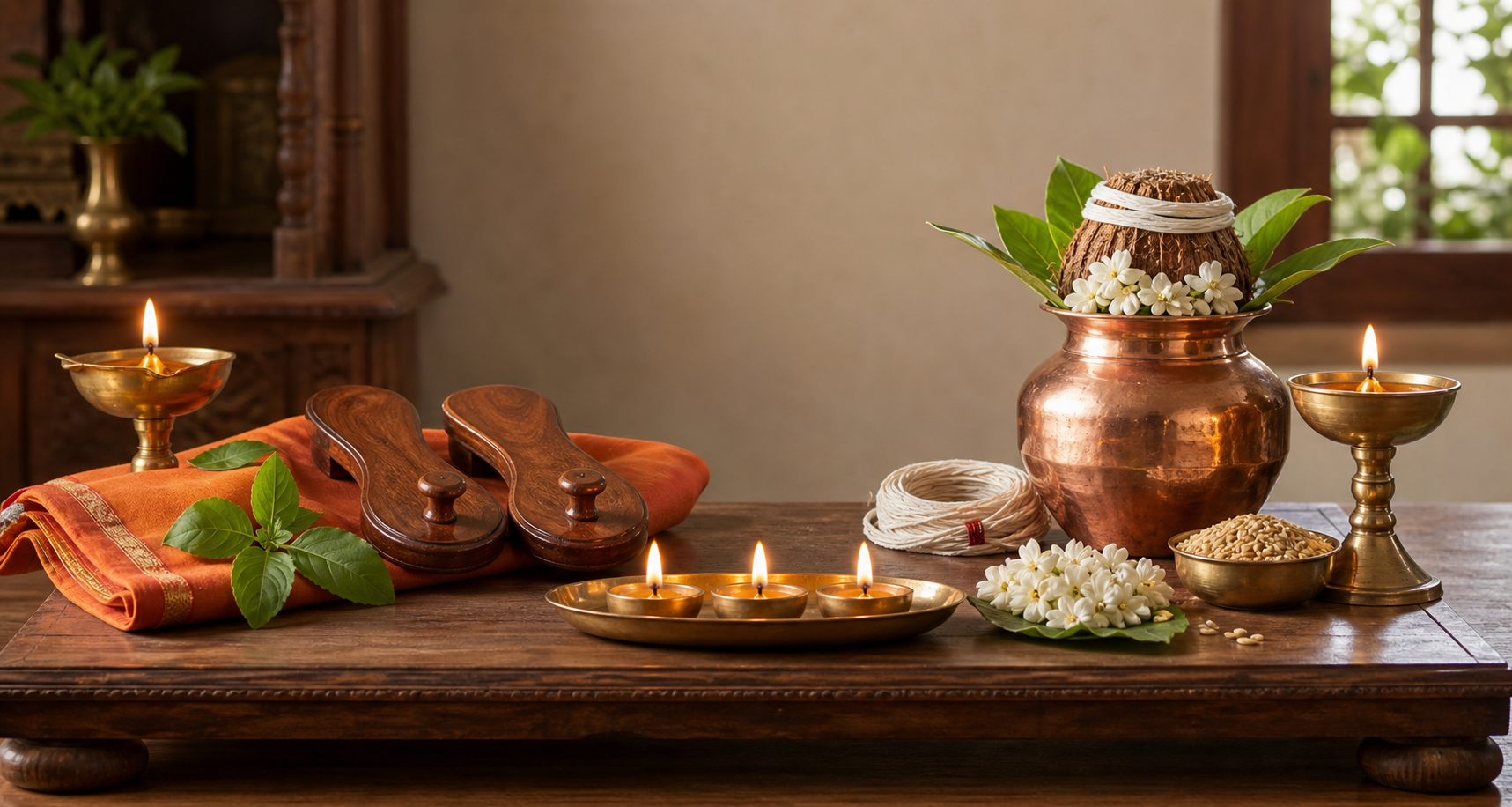
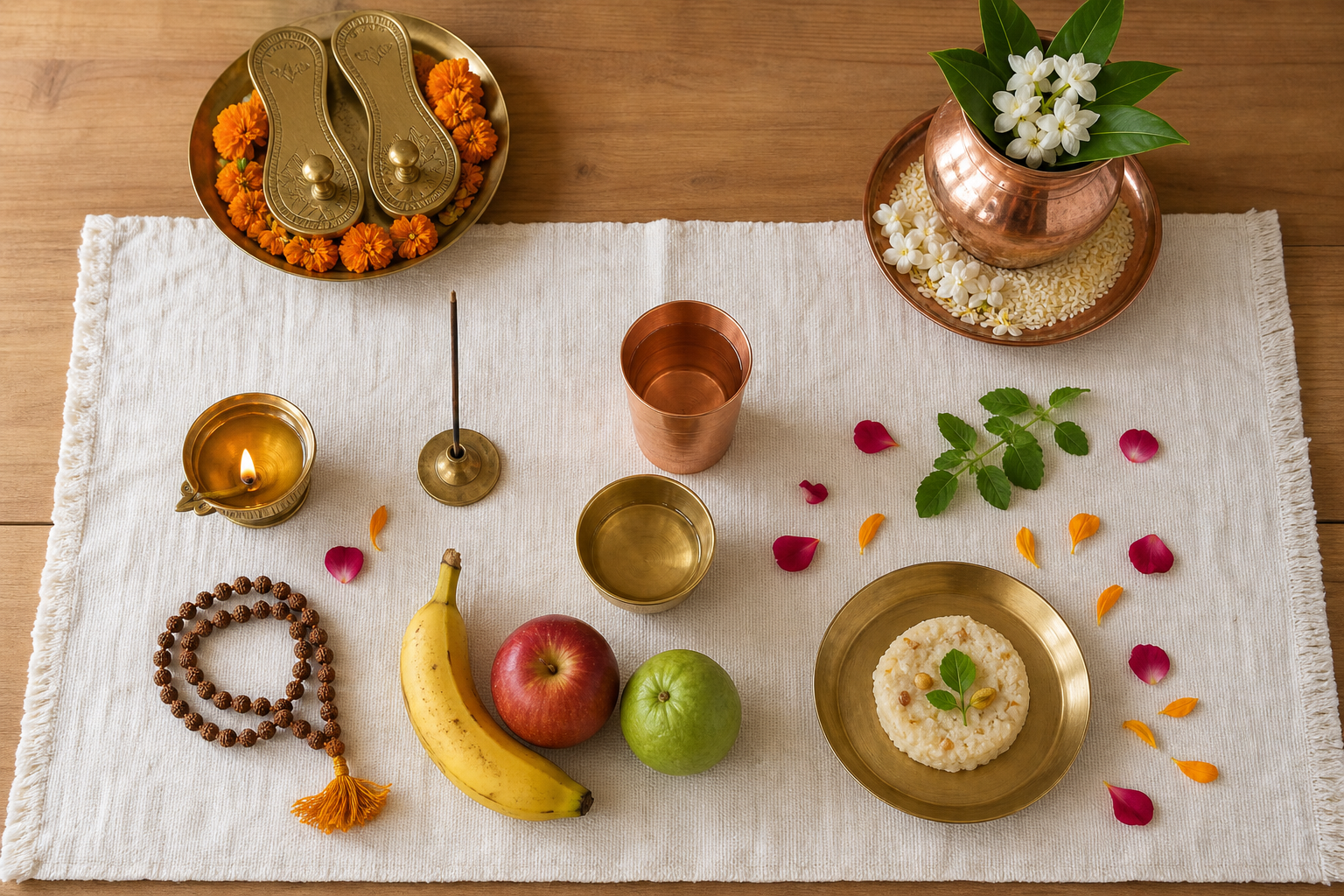
- Prepare a simple altar. Place an image or paduka of the Guru with a lamp, incense, water, flowers if available, seasonal fruit, and sattvic naivedya. Milk-based or sugar-based preparations may be offered where they fit your household custom.
- Begin with nama-japa. Repetition of “Jai Swami Samarth” is accessible even when elaborate worship is not. Dattatreya namavalis or familiar Datta stotras may be included if they already belong to your practice.
- Undertake a realistic parayan. Read from Shri Guru Charitra or a recognized Swami Samarth charitra used in your lineage. Decide the portion beforehand and alternate readers if elders and younger family members are participating.
- Offer naivedya and perform aarti. Keep the pace unhurried. A short period of mauna after worship gives the recitation room to settle rather than letting the household return immediately to noise.
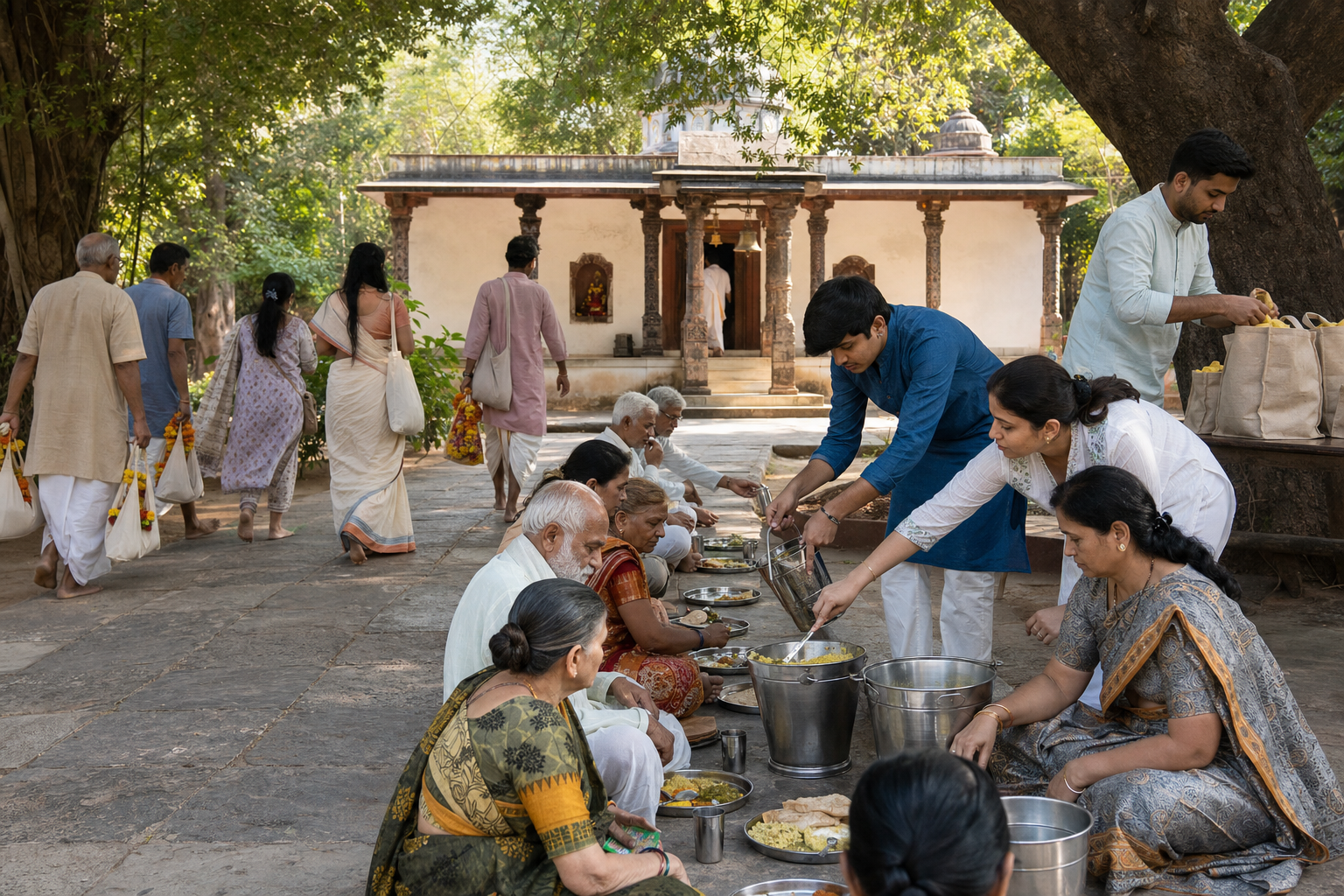
- Complete an act of service. Annadan is especially fitting. You may feed people directly or support a dependable community kitchen, hospital service, or elder-care effort. The important point is that food is offered with dignity, not that the act is made conspicuous.
- Name one virtue for the following week. Choose karuna, daya, kshama, or satya and define a visible practice. “Cultivate compassion” is vague; “serve the evening meal without complaint” or “repair one relationship through truthful, non-humiliating speech” can actually be followed.
If work prevents a day-long observance, use sunrise and sunset as anchors. Perform nama-japa and a brief puja in the morning, arrange the day’s donation or food service in advance, and return for aarti and reflection in the evening. Do not turn an impossible full parayan into a source of anxiety; select a portion you can read attentively and continue it afterward.
6 April: bring Anasuya’s discipline into the home
Sati Anasuya Jayanti is not merely a request for marital blessings. Anasuya’s sacred narrative presents household dharma as a form of tapas supported by ethical intelligence. When the Trimurti approach her hermitage in the guise of mendicants and present an impossible test, she resolves the dilemma through spiritual power and maternal compassion, transforming the deities into infants before they reveal themselves and bless her.
The practical lesson is not passive obedience. It is the capacity to meet a difficult demand without abandoning either dharma or compassion. A household observance should therefore examine how power, speech, duty, and care are being used at home.
- After snana and basic cleaning of the worship space, make a sankalpa for dharma, self-mastery, family health, and household harmony.
- Place images or symbols of Anasuya and Atri Rishi on the altar. If you do not have a dedicated image, keep the arrangement simple rather than substituting an unrelated form.
- Offer panchopachara: sandal paste or water, flowers, incense, lamp, and naivedya.
- Read or retell Anasuya’s sacred narrative. If children are present, ask them to identify the difference between surrendering one’s principles and resolving a conflict through wisdom.
- Recite a familiar Devi stotra, Dattatreya stotra, or both, then conclude with aarti and shared prasada.
- If you undertake upavasa, keep it sattvic and within your capacity. Fruit and milk are commonly used in a partial fast, followed by a simple home-cooked meal without onion or garlic. Fasting is a discipline, not a test of endurance.
- Make dana or annadan part of the day. Some families also honor married women as an expression of respect for marital well-being and the transmission of dharmic values between generations.
Couples can make the observance concrete by choosing one shared correction: stop using contemptuous speech during disagreement, complete a neglected household duty, or agree on a service commitment. A family does not honor Anasuya’s strength by praising harmony in the shrine while protecting habits that destroy it in the next room.
Plan pilgrimage carefully and keep the observances distinct
For Akkalkot, logistics are part of the discipline
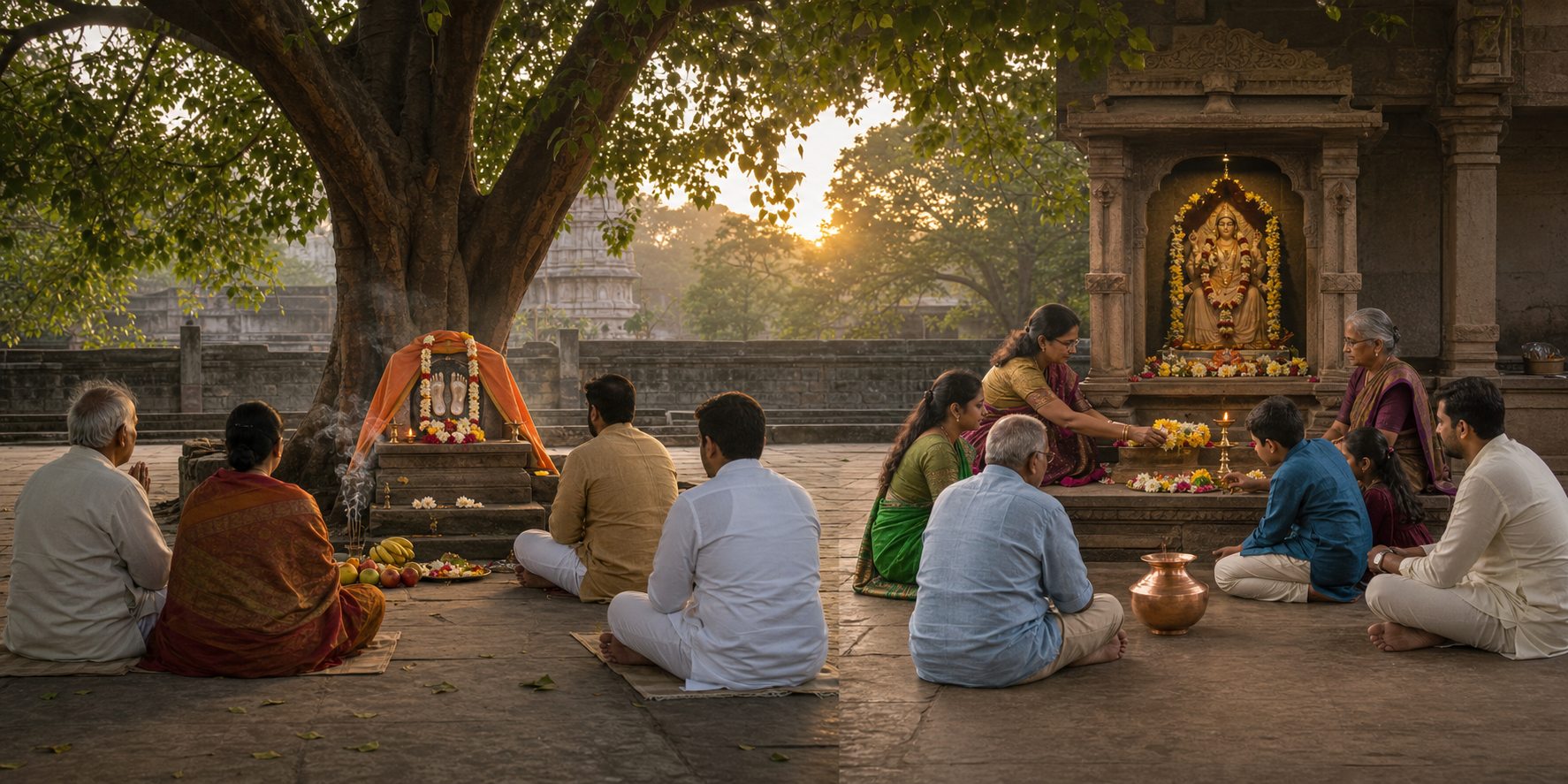
Akkalkot in Solapur district is the principal pilgrimage center for Swami Samarth Prakat Din. The sacred complex associated with the Vatavruksha, the banyan tree beneath which the Swami guided seekers, draws increased attendance for darshan, paduka-puja, abhishek, bhajans, and aarti.
Confirm the temple schedule before travel and arrange accommodation early. Reach the complex early enough to absorb queues without pushing your family into agitation. Carry water and a light shawl, wear simple attire, minimize waste, and maintain quiet near the sanctum. Seniors and children should have time for hydration and midday rest if the plan includes extended parayan or evening aarti.
If you are organizing a local gathering, use a clear arc: paduka-puja or home-style worship, a defined recitation, bhajan or pravachan, aarti, and food service. Larger activity is not always better. One well-run annadan, blood-donation camp, or tree-planting effort is more faithful to compassionate service than several poorly supported announcements.
For Anasuya Jayanti, confirm local programs before travelling
Chitrakoot’s Anasuya Ashram near the Mandakini is closely associated with the memory of Anasuya’s tapas. The Anusuya Devi Temple near Gopeshwar in Chamoli, Uttarakhand, is another revered pilgrimage destination. Do not assume that either site will follow a schedule copied from another region; confirm the 6 April program, access arrangements, and local observance directly before making the journey.
Four distinctions prevent calendar confusion
- Prakat Din and Mahasamadhi are not the same event. Prakat Din marks Swami Samarth’s recognized public manifestation. His departure from the physical body at Akkalkot in 1878 is commemorated separately in late April. Confirm that observance locally rather than assigning it the 20 March date.
- Jayanti language can be loose. Some calendars use Swami Samarth Jayanti colloquially for the appearance commemoration and align it with Prakat Din. Check what the calendar means instead of relying only on the label.
- Sati Anasuya Jayanti is not Dattatreya Jayanti. The former honors Anasuya on Krishna Paksha Chaturthi. Dattatreya Jayanti is a separate observance associated with Margashirsha Purnima. Do not merge their sankalpas or assume that 6 April is Dattatreya Jayanti.
- Chaitra and Vaishakh do not necessarily indicate different dates. Amavasyant and Purnimant systems can give different month names to the same Krishna Paksha Chaturthi.
Before you close your calendar, enter 20 March and 6 April, place a reminder several days before each date to verify local timings, and decide who or what your seva will support. Leave exact muhurta times blank until your local panchang or temple publishes them. That small discipline will give you a coherent observance instead of a last-minute collection of disconnected rituals.
References
- Hindu Pad – Swami Samarth Prakat Din 2026: In-Depth Guide to Date, Rituals, and Akkalkot Pilgrimage
- Hindu Pad – Date, Rituals, and Meaning of Sati Anasuya Jayanti 2026: A Devotional Guide to Vaishakh Chaturthi
