-
Gopi Gita in the Bhagavata Purana: A Soul-Stirring Hymn of Devotion and Divine Longing

The Gopi Gita (Gopika Gita) in the Bhagavata Purana (Canto 10, Chapter 31) is a luminous hymn that expresses the gopis’ devotional longing for Lord Krishna. Emerging after the rasa-lila, it transforms the pain of separation into a refined path of bhakti. Its lyrical beauty, ethical depth, and contemplative tone make it accessible for modern…
-
When Darkness Shields the Divine: Kali’s Jackal Guardianship of Infant Krishna by the Yamuna

This exploration examines a striking puranic motif in which Kali, manifesting as a jackal, guides and protects the infant Krishna along the Yamuna’s banks. It interprets the scene through the Harivamsa–Vishnu Purana tradition, highlighting how Shakti safeguards the unfolding of Sri Krishna’s destiny. Readers gain a clear, academic understanding of the symbolism—darkness shielding light—while appreciating…
-
Arjuna’s Daring Abduction of Subhadrā: Dharma, Devotion, and Unity in SB 10.86.10

SB 10.86.10 preserves a vivid scene of Arjuna’s daring rescue of Subhadrā, a moment that tradition situates within consent and dharma. The narrative’s poetic simile—“like a lion with its prey”—is reframed by commentaries that emphasize bhakti, reconciliation, and familial acceptance. Readers find emotional resonance in the urgency of love guided by wisdom, a theme often…
-
Beyond Death and Sleep: suptotthita-nyāya and the Continuity of Consciousness in Dharmic Thought

SB 10.13.58 conveys a concise yet profound insight: death is akin to sleep, a pause rather than an end, expressed in the principle of suptotthita-nyāya. This analogy, rooted in everyday experience, makes complex questions about consciousness and identity accessible. Read through a dharmic lens, it harmonizes perspectives from Hinduism, Buddhism, Jainism, and Sikhism on continuity,…
-
Utpatti (Utpanna) Ekadashi Vrat Katha: Bhavishyottara Purana Origin, Significance, Benefits

Utpatti (Utpanna) Ekadashi is described in the Bhavishyottara Purana as the origin of the Ekadashi vrata, revealed when Ekadashi Devi emerged from Vishnu’s energy to vanquish the asura Mura. In response to Arjuna’s inquiry, Sri Krishna extols the vrata as a disciplined path to purification, steadiness, and grace. Observed on Margashirsha Krishna Paksha Ekadashi (regional…
-
Babruvahana and Arjuna: A Powerful Mahabharata Tale of Duty, Defeat, and Redemption in Manipur

This retelling of the Babruvahana Katha presents a clear, academically grounded account of how Babruvahana defeated Arjuna during the Ashvamedha Yajna in Manipur. It explains the roles of Chitrangada and Ulupi, the ethical framework of Kshatra-dharma, and why the confrontation was necessary in certain recensions. Readers gain clarity on the specific question, “How did Babruvahana…
-
Sita’s Compassion Tested: Dharma and the Ethics of Lakshmana’s Punishment of Surpanakha

The Aranya Kanda episode of Surpanakha’s attack and Lakshmana’s response invites a careful reading of dharma and compassion. Valmiki’s text does not quote Sita’s immediate reaction, so understanding her stance relies on her consistent character across the Ramayana—rooted in karuṇā and kṣamā. Interpreted through proportionality and restraint, Lakshmana’s non-lethal action reflects kṣātra-dharma: protecting the innocent…
-
Brahmavidya Upanishad Free PDF: Profound Insights on OM, Brahman, and Inner Unity

Brahmavidya Upanishad, a Yajurveda Upanishath, distills core teachings on Brahman and the sacred sound OM into a compact, study-friendly text. The Upanishad shows how OM functions as a practical focus for meditation and mindful breathing, enhancing clarity and inner steadiness. Readers gain a philosophically grounded path that connects Vedic wisdom with accessible practice in Yoga…
-
Mesha Rashi Stotram: Transformative Daily Prayer for Aries (Ashwini, Bharani, Krutthika)

Mesha Rashi (Aries) leads the 12 Rasi kootas in Hindu astrology and is supported by a dedicated Nitya Parayana stotram for daily recitation. Ashwini Nakshatram, Bharani Nakshatram, and part of Krutthika Nakshatram fall under this Rashi, informing the practice’s relevance. Regular chanting traditionally cultivates courage, focus, and disciplined action, qualities aligned with Aries’ dynamic nature.…
-
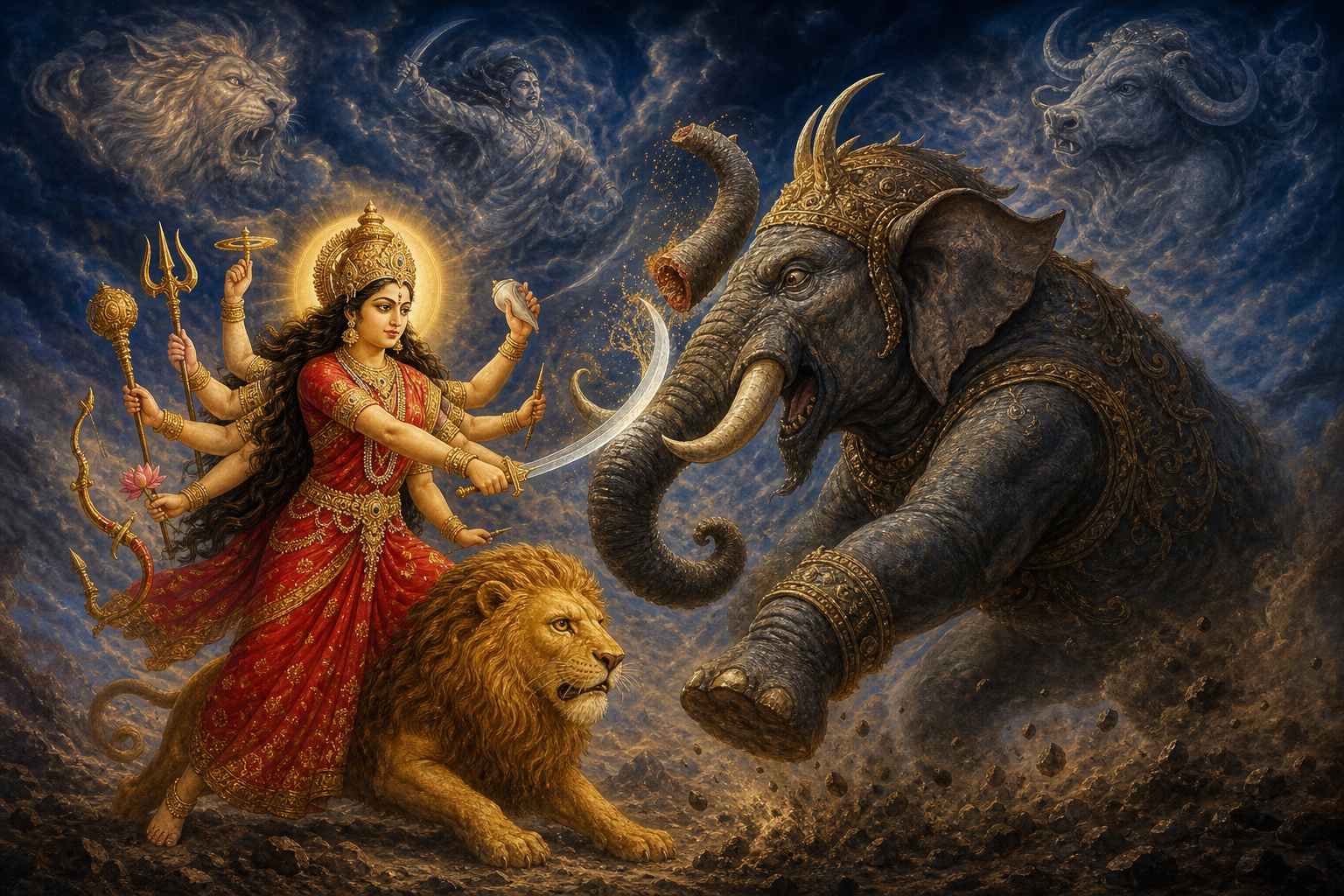
Bhairava and Shiva’s Fierce Compassion: Trimurti Legend, Ego-Cutting Symbolism, Inner Protection

Bhairava represents the raudra, or fierce, aspect of Shiva—not unrestrained anger, but disciplined power that protects dharma and cuts through ego. Puranic narratives describe Shiva manifesting as Kala Bhairava to humble Brahma’s pride, symbolically severing the fifth head that represents arrogance. The legend culminates in Varanasi, where Bhairava becomes the guardian of Kāśī, affirming the…
-
Sage Gopatha’s Legacy: Gopatha Brahmana and Why the Atharva Veda Matters Today

Sage Gopatha is traditionally linked with the Gopatha Brahmana, the only Brahmana of the Atharva Veda and a cornerstone of Vedic literature. The text explains Atharvan ritual and cosmology, emphasizing healing, protection, and communal well-being. Rather than being marginal, the Atharva Veda emerges as a complementary and indispensable voice within the Vedic canon. Readers gain…
-
Why the Puranas Matter Now: Srila Jiva Goswami’s Case for Vedic Truth and Unity

Srila Jiva Goswami’s Sri Tattva-sandarbha argues that the Puranas are indispensable for understanding the unified message of the Vedas. By privileging śabda over perception and inference, this approach presents the Puranas as hermeneutical guides that translate Vedic truths into accessible narratives and practices. The result is clarity: seekers gain a coherent framework that bridges philosophy,…
-
Fifty Transcendent Qualities of Sri Krishna: Rupa Gosvami’s Timeless Portrait of Divinity

Srila Rupa Gosvami’s classic enumeration of Sri Krishna’s qualities offers a clear, contemplative framework for devotion and ethical living. Organized across themes—beauty, intellect, virtue, compassion, and sovereignty—it provides a practical syllabus for daily reflection. Readers gain a succinct yet comprehensive guide to cultivate truthfulness, compassion, self-control, and forgiveness. The portrait aligns naturally with the shared…
-
Dashavatara Moorthy: The Ten Sacred Incarnations of Lord Vishnu and Their Timeless Call to Dharma

Dashavatara Moorthy signifies Lord Vishnu’s ten incarnations as articulated in Hindu scriptures and Puranas, emphasizing divine protection and the restoration of Dharma. Tradition holds that nine avatars have appeared, while the tenth—Kalki—will manifest at the end of the current age. The narratives function as ethical frameworks, demonstrating how righteous action responds to specific historical and…
-
18 Parvas of Mahabharata: A Life-Changing Guide to Dharma, War, and Wisdom

This guide to the 18 Parvas of the Mahabharata dispels the misconception that the epic breeds disorder, showing instead how it clarifies dharma and strengthens ethical discernment. It outlines each Parva—from Adi to Svargarohana—highlighting key teachings such as Vidura-niti and the Bhagavad Gita. Readers across Hinduism, Buddhism, Jainism, and Sikhism will find shared values like…
-
Surpanakha and Rama: A Heart‑Rending Clash of Cultures in the Ramayana’s Moral World

This analysis reframes Surpanakha’s meeting with Rama as a cross-cultural encounter shaped by contrasting ethical codes. It explores how direct desire, marital fidelity, and ascetic restraint collide in Panchavati and why the misreading escalates into conflict. Readers gain a nuanced view of Surpanakha’s agency without moral reductionism. The discussion highlights consent, proportionality, and empathy as…
-
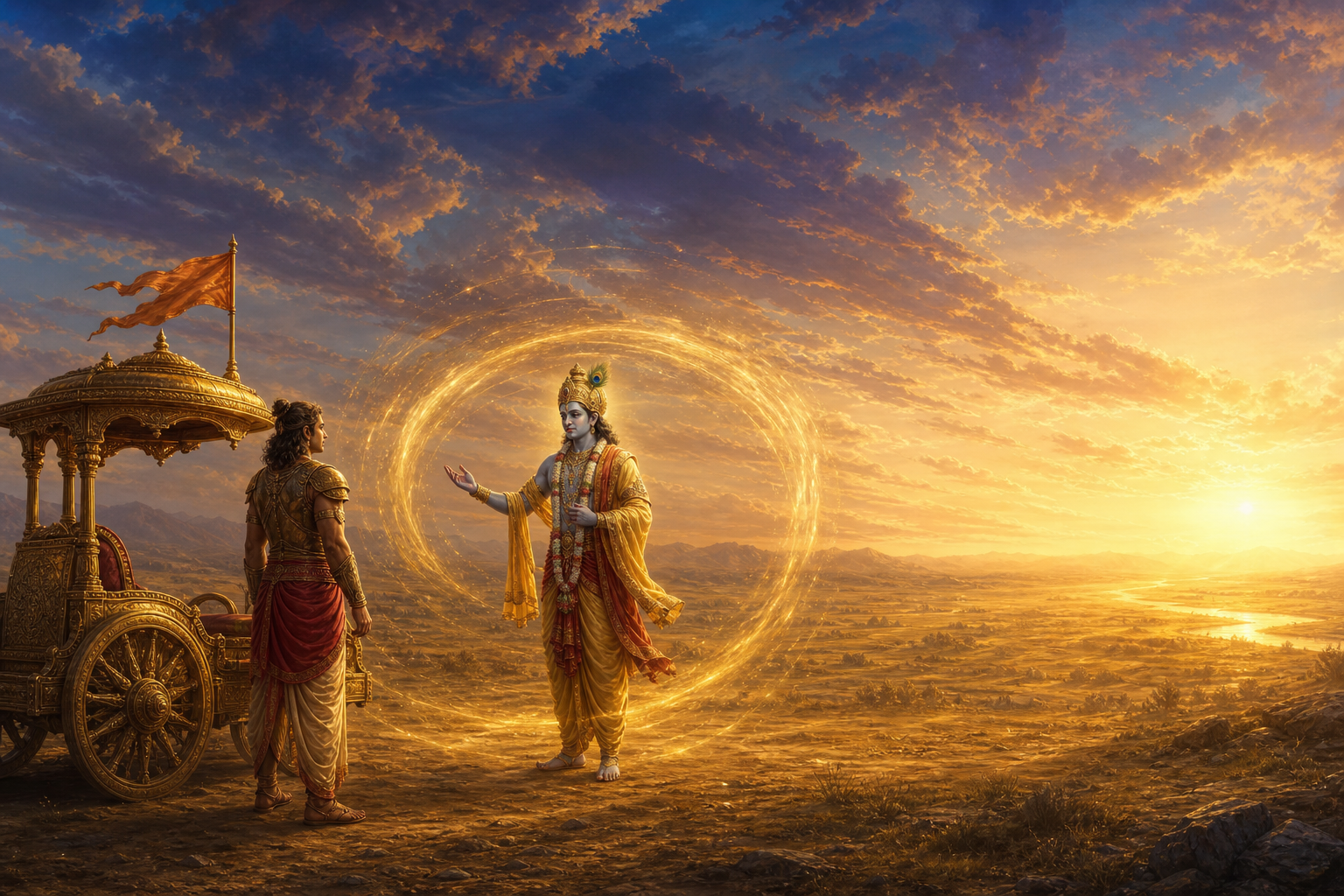
Arjuna’s Battlefield Anxiety: A Timeless Guide to Dharma, Mental Resilience, and Action

The Bhagavad Gita’s opening presents Arjuna in acute distress—trembling, disoriented, and morally torn—offering a precise portrait of battlefield anxiety. Rather than pathologizing, the text frames his vishada as the starting point for ethical clarity and inner steadiness. Krishna’s counsel models a pragmatic sequence: reframing, values-based duty, equanimity, breath regulation, and focused attention. These principles map…
-
Katha Upanishad’s Naciketas and Yama: A Stirring Quest for Death’s Secret, Dharma, and Moksha

The Katha Upanishad frames Naciketas’s encounter with Yama as a disciplined quest for truth that unites ethics and insight. The three boons structure a complete path: reconciliation and dharma, Nachiketagni as ordered action, and the inquiry into death and the Self. Yama’s teaching clarifies śreya versus preya, the chariot allegory, Om as support, and the…
-
King Rantideva’s Final Offering: Compassion, Dharma, and Unity in SB 9.21.8–11

This session on SB 9.21.8–11, taught by HG Nrsimha Kavaca Prabhu, highlights King Rantideva’s extraordinary compassion and unwavering devotion under conditions of scarcity. The narrative shows how he honors every guest—including animals—with full respect and service. It reframes hospitality as a rigorous spiritual discipline, not a social courtesy. The episode connects bhakti with dana, ahimsa,…