
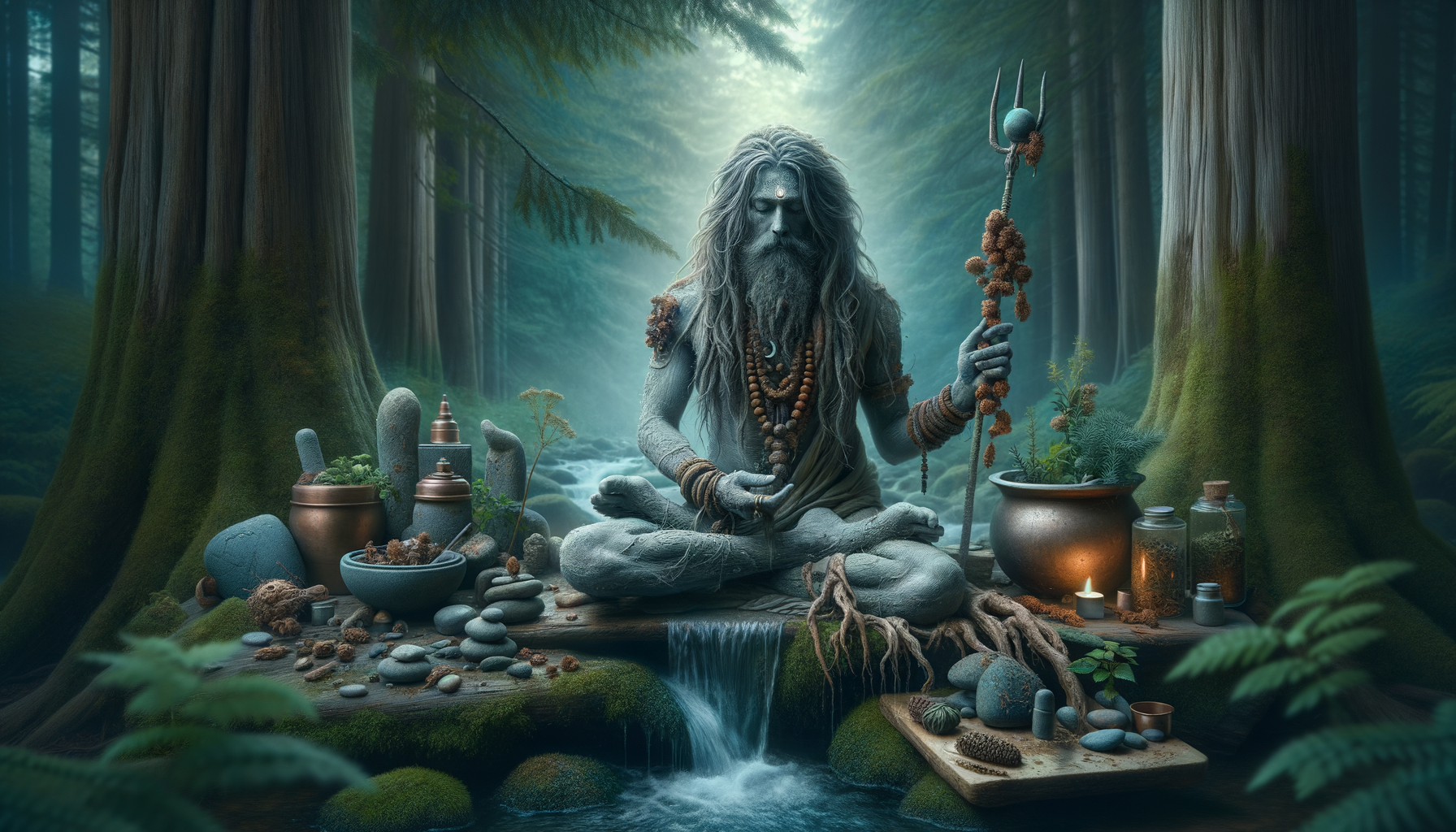
Often misread as solely fierce, Rudra Shiva emerges in the Vedic imagination as a compassionate force: the great physician and healer. Across India’s sacred literature and living traditions, Rudra is invoked not for wrath but for relief, protection, and renewal, embodying a holistic view of well-being that integrates body, mind, and spirit.
Closely linked with untamed forests and lofty mountains, Rudra embodies hidden knowledge of plants, roots, barks, and herbs. As the sovereign of medicines, he is celebrated for tending the wounds of the body and the sorrows of the mind, reaffirming a timeless ethos of care that remains central to dharmic healing practices and Ayurveda.
Vedic hymns praise Rudra as the bearer of innumerable remedies (bheshaja), revealing a deep awareness of nature’s pharmacy within Rig Veda and Atharva Veda traditions. The Mahamrityunjaya invocation to Tryambakawidely associated with Rudra Shivaattests to a ritual heritage that seeks freedom from suffering through mantra, offering, and disciplined attention, while reinforcing the unity of physical and psychological restoration.
Far from temple towns and royal courts, Rudra’s votaries often lived as forest-dwelling ascetics, healers, and guardians of medicinal knowledge. Through careful observation, seasonal practice, and ethical foraging, they preserved practical lore of roots, leaves, resins, and mineralsan “ancient medicine” tradition grounded in ecological sensitivity and the continuity of Vedic wisdom.
Ayurveda, while traditionally linked with Dhanvantari, harmonizes with Rudra’s healing archetype by upholding preventive care, balanced living, and compassionate treatment. Classical vaidyas cultivated a science of diagnosis and remedy guided by ahimsa, diet, daily rhythms, and mind–body balance, aligning therapeutic skill with reverence for life and responsibility toward the environment.
This healing ideal resonates across dharmic traditions. Buddhism venerates Bhaisajyaguru (Medicine Buddha) as an icon of compassionate cure; Jainism centers ahimsa, extending care to all living beings; Sikhism elevates seva and langar as practices that nourish body and spirit, with exemplars such as Bhai Kanhaiya embodying fearless service. Such convergences reflect a shared dharmic commitment to alleviate suffering and uphold human dignity.
In contemporary households, the healing memory of Rudra endures in living practice: lamps are lit during illness, the Mahamrityunjaya is recited in times of crisis, and herbal decoctions are prepared with quiet faith. These rituals, while devotional, also foster calm, focus, and resiliencereminders that psychological steadiness, communal support, and gentle remedies can work together toward holistic health.
Rudra’s healing dimension also illuminates the body–mind connection. Practices such as pranayama, mantra recitation, and meditative observation help regulate breath, attention, and emotion, complementing herbal therapeutics and dietary discipline. This integrative approach, rooted in Vedic insights and refined in Ayurveda, aligns with evidence-informed strategies that reduce distress and support recovery.
Today, the image of Rudra as the great physician invites thoughtful dialogue between traditional knowledge and modern care. It encourages respect for biodiversity, ethical sourcing, and community-based wellness, while affirming unity among Hinduism, Buddhism, Jainism, and Sikhism in the shared vocation of healing. In this light, medicine becomes sacred servicewhere compassion, skill, and wisdom converge for the well-being of all.
Inspired by this post on Hindu Blog.
