
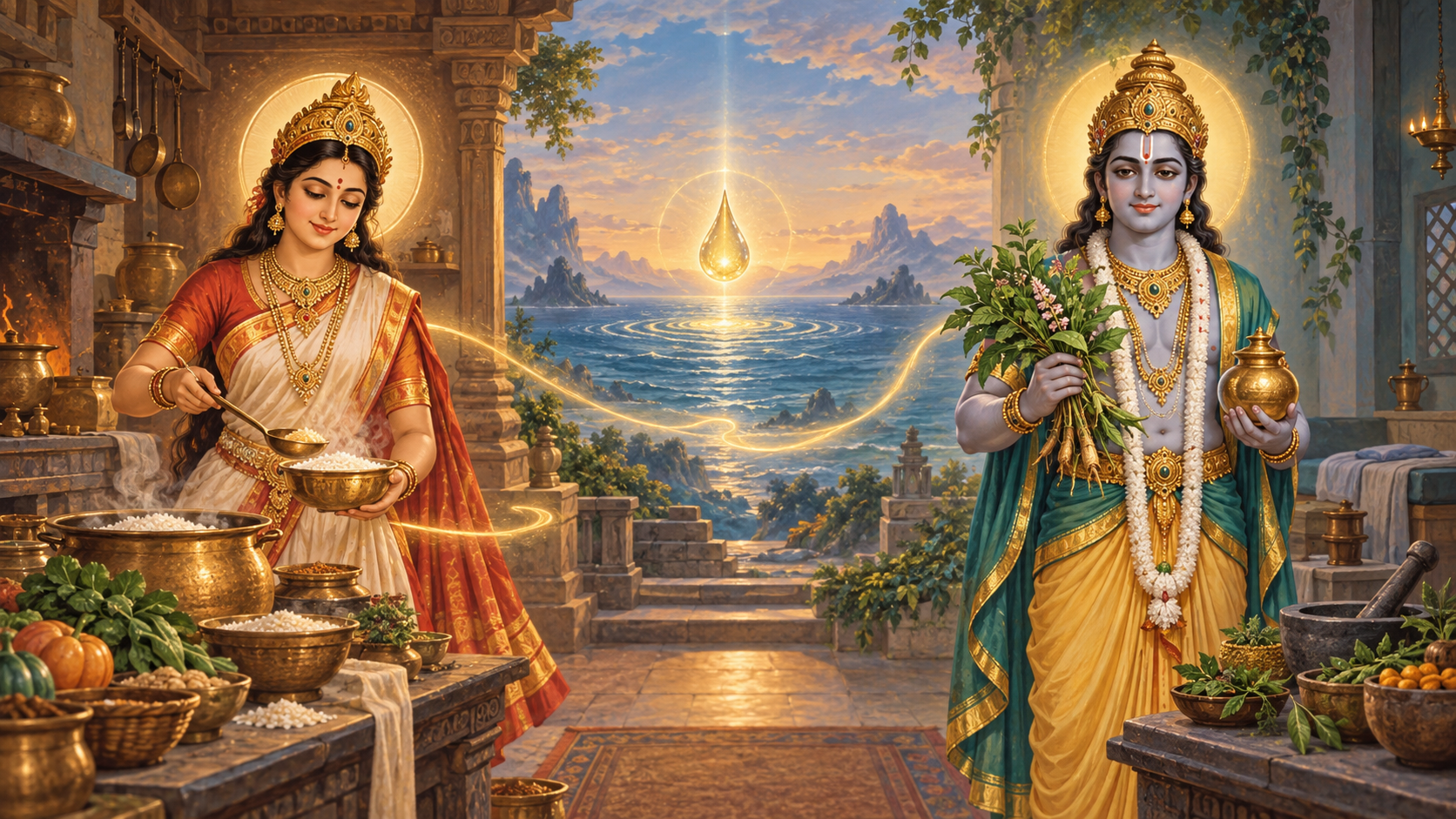
You may be turning to Annapurna or Dhanvantari because illness, caregiving, scarcity, or fear of death has made their presence newly urgent. The practical question is not whether devotion matters. It is how to let devotion guide your conduct without asking it to make a promise it never made.
A sound distinction helps. Annapurna gives you a sacred way to approach nourishment. Dhanvantari places healing within a divine horizon. Amrita confronts you with the meaning of immortality. Food, treatment, and immortality are related, but they are not interchangeable. Keeping them distinct makes your practice safer, clearer, and deeper.
Annapurna begins at the plate, not in abstraction
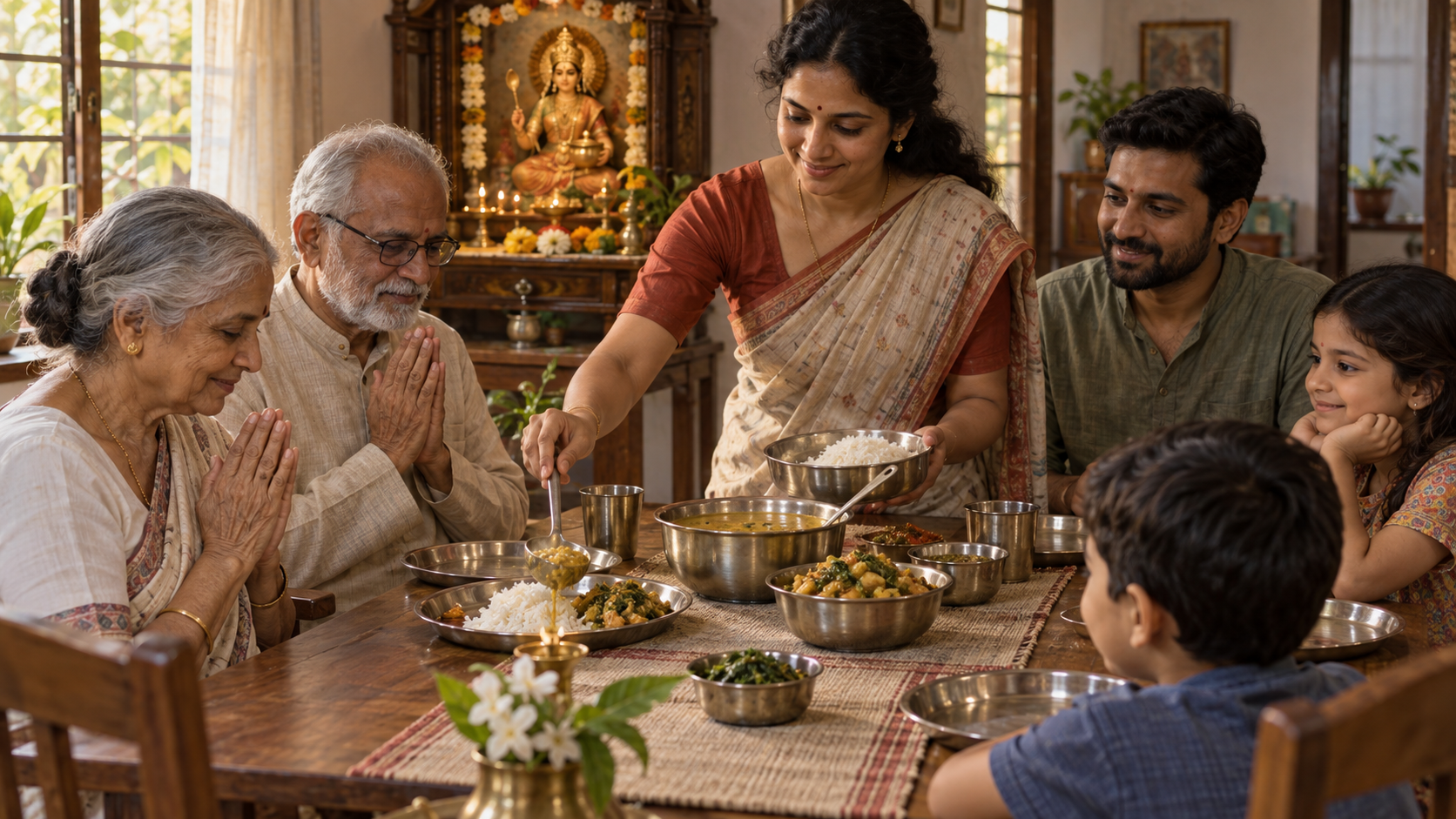
Annapurna is revered as a manifestation of Shakti, and Annapurna Jayanti commemorates her divine manifestation. The observance falls on Margashirsha Purnima; in 2026, Annapurna Jayanti is on December 23. If you plan to observe it, put the date on your calendar, but do not let planning stop at the ritual schedule.
The first discipline of divine nourishment is to see a meal truthfully. Food does not appear by itself. Soil, water, seed, weather, labor, transport, money, cooking, and care meet on your plate. Before your next meal, pause long enough to name some of those dependencies. Thank the person who cooked if that person is present. If you cooked, remember those whose work preceded yours. This turns gratitude from a vague feeling into attention.
The next discipline is distribution. A cupboard can be full while a person in the household is overlooked. A feast can honor abundance while producing avoidable waste. Before preparing a devotional meal, check who will actually eat it, what can be stored safely, and where any genuine surplus can go. If you want to connect Annapurna Jayanti with service, prepare food for someone carrying a caregiving burden, support a trusted community kitchen, or share staples without making the recipient perform gratitude. This is not a claim that one act is the required festival ritual. It is a practical way to make reverence for nourishment visible.
If your sampradaya or family has an established offering practice, follow it with care. But notice what happens after the offering. Is the food handled respectfully? Does everyone who should be fed receive a place? Is the person who cooked also allowed to sit and eat? Divine nourishment becomes credible in the ordinary details that follow worship.
This also changes how you think about hunger. Hunger is not a spiritual failure, and feeding someone is not merely a metaphor. Annapurna can lead your mind toward cosmic abundance, but the person before you still needs an actual meal. Meet material need materially. Let prayer shape the manner in which you do it: without humiliation, carelessness, or waste.
Dhanvantari changes what healing asks of you

The Samudra Manthan is not a scene of effortless recovery. Devas and Asuras churn the cosmic ocean together, despite their conflict, using Mount Mandara as the churning rod and Vasuki as the rope. Dhanvantari’s appearance is bound to the amrita-kumbha, the sacred vessel of immortality. The image places healing and amrita within labor, tension, cooperation, and discernment.
You do not need to turn every detail of the churning into a medical allegory. A modest symbolic reading is more useful: healing is rarely passive. It often requires different people and duties to work together even when the process is uncomfortable. The clinician may understand the disease. The patient knows what is happening in daily life. A caregiver may see where the routine is breaking down. A pharmacist may catch confusion about medicines. Coordination is part of responsible care.
If you or someone in your household is ill, translate that insight into a simple care record. Keep the current instructions from qualified clinicians in one place. Record appointments and questions that need answers. Maintain an accurate list of medicines and the directions supplied with them. Do not fill a gap in the instructions by guessing, and do not change a dose because a devotional experience seemed to indicate it. Ask the appropriate clinician or pharmacist.
Your Dhanvantari practice can accompany this work. Before prayer, identify the next verified action: make the appointment, clarify an instruction, prepare suitable food, arrange transport, or ask a relative for a defined kind of help. After prayer, do that action. The ritual then supports attention and steadiness instead of becoming a reason to postpone care.
It is also important to separate healing from cure. Care may reduce suffering, preserve function, or help a person live responsibly with a condition even when the underlying illness does not disappear. That is not spiritual defeat. Do not burden a sick person with the claim that insufficient faith caused a poor outcome. Such a claim mistakes devotion for control and adds blame where care is needed.
For a real illness, seek qualified medical assessment and follow the resulting care plan. Prayer, mantra, puja, meditation, and family support may have a meaningful place in your life, but they must not be used to delay urgent care or replace diagnosis and treatment. Spiritual practice can help you meet illness; it cannot make an unverified remedy safe.
Amrita must not become a cure claim

The amrita-kumbha belongs to a sacred account of immortality. It does not establish that every liquid called amrita, every consecrated substance, or every commercially packaged remedy can cure disease or prevent bodily death. Sacred language and medical evidence answer different questions.
This distinction matters whenever someone attaches a health promise to a religious word. First, make the promise explicit. What does immortality mean in that claim? Does it mean endless bodily survival, freedom from fear, spiritual liberation, continuity through dharmic action, or remembrance across generations? These meanings are not interchangeable. A metaphor may be spiritually fruitful while remaining medically irrelevant.
If the promise concerns the body, treat it as a health claim. Ask what the substance contains, what condition it supposedly treats, what risks or interactions are known, and whether a qualified professional has evaluated it. A sacred name is not evidence of purity, correct dosage, or safety. If a seller or religious personality guarantees a cure, claims bodily immortality, or tells you to abandon prescribed care, step back. Consult an appropriate clinician or pharmacist before ingesting the substance or changing treatment.
This caution does not empty amrita of meaning. It protects the symbol from being reduced to advertising. The vessel can turn you toward a more demanding spiritual question: if bodily life is vulnerable, what are you nourishing that is not exhausted by appetite, status, or fear? Your lineage may answer through liberation, divine communion, realization, service, or another theological vocabulary. Learn that answer from the teachings and practices of your tradition rather than from a product label.
The relation among Annapurna, Dhanvantari, and amrita can then remain ordered. Nourishment sustains embodied life and creates an obligation to share. Healing calls for disciplined care without guaranteeing cure. Immortality opens a spiritual inquiry that cannot honestly be converted into a biomedical promise. Devotion becomes stronger, not weaker, when it refuses confusion.
Key takeaways for your next meal or period of illness
- At your next meal, pause before eating and name the labor, natural conditions, and care that brought the food to you. Then express gratitude to an actual person where possible.
- If you observe Annapurna Jayanti in 2026, mark December 23 and choose a material act of nourishment alongside worship: prepare a needed meal, support a trusted food effort, or prevent avoidable waste.
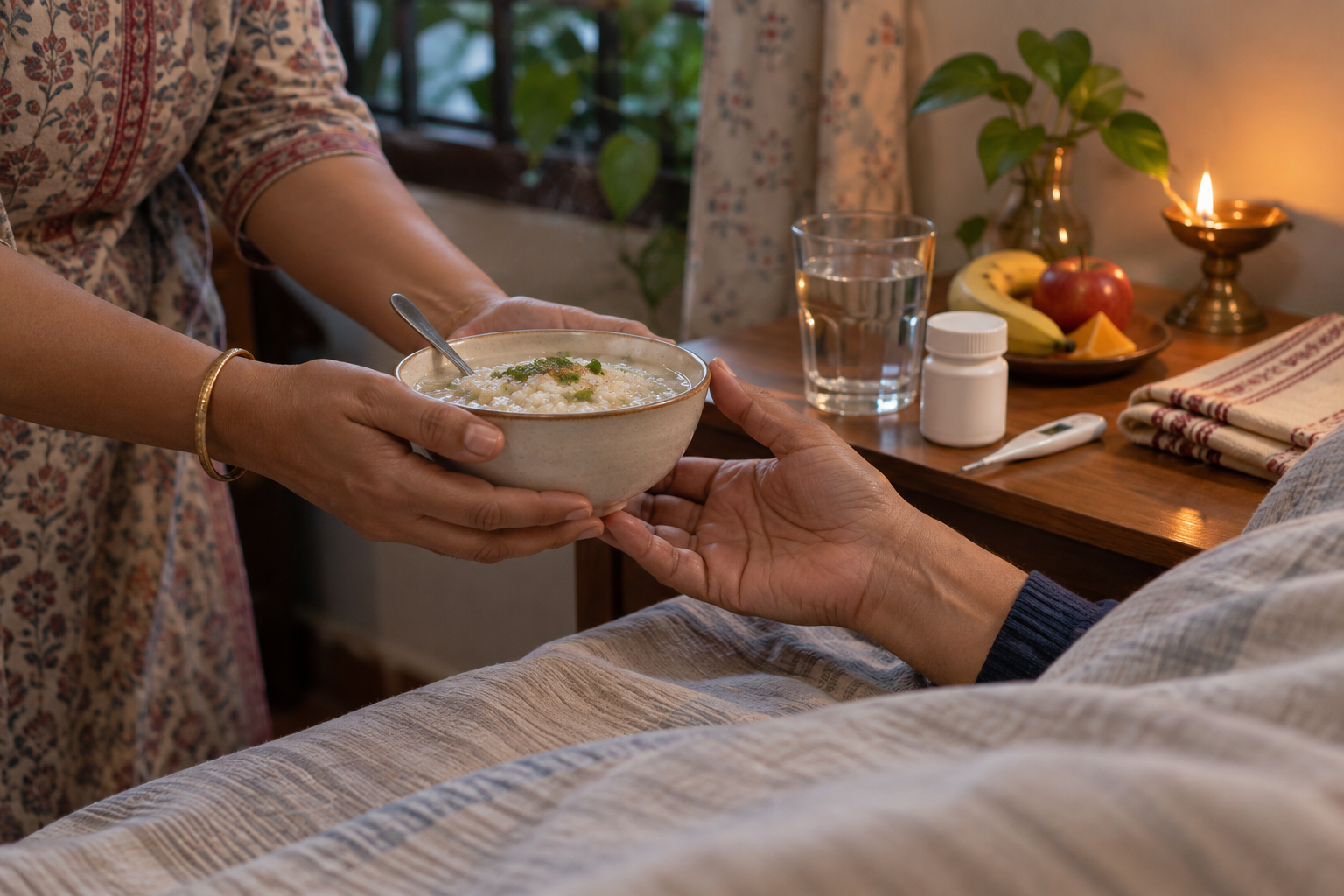
- During illness, place Dhanvantari devotion beside a verified care plan, not in place of one. Use prayer to identify and complete the next responsible action.
- Keep medical instructions, appointments, medicines, and unanswered questions organized. Ask a qualified professional when instructions are incomplete rather than interpreting a sacred symbol as clinical direction.
- When you encounter an immortality or guaranteed-cure claim, require the claimant to state exactly what is promised. Do not alter treatment or ingest an unknown remedy merely because it carries a sacred name.
- Take spiritual questions to the teachers and teachings of your lineage, and bodily health questions to appropriately qualified health professionals. Respecting both domains prevents either from being misused.
Begin with the next ordinary meal. Receive it attentively, make sure another person is not being forgotten, and let one concrete act follow your gratitude. When illness comes, bring the same discipline to care. That is how divine nourishment moves from a beautiful image into dharmic conduct.
References
- Hindu Pad – Annapurna Jayanti 2026
- Hindu Blog – Dhanvantari and the Amrita Kumbha – The Sacred Vessel of Immortality

Leave a Reply
You must be logged in to post a comment.