
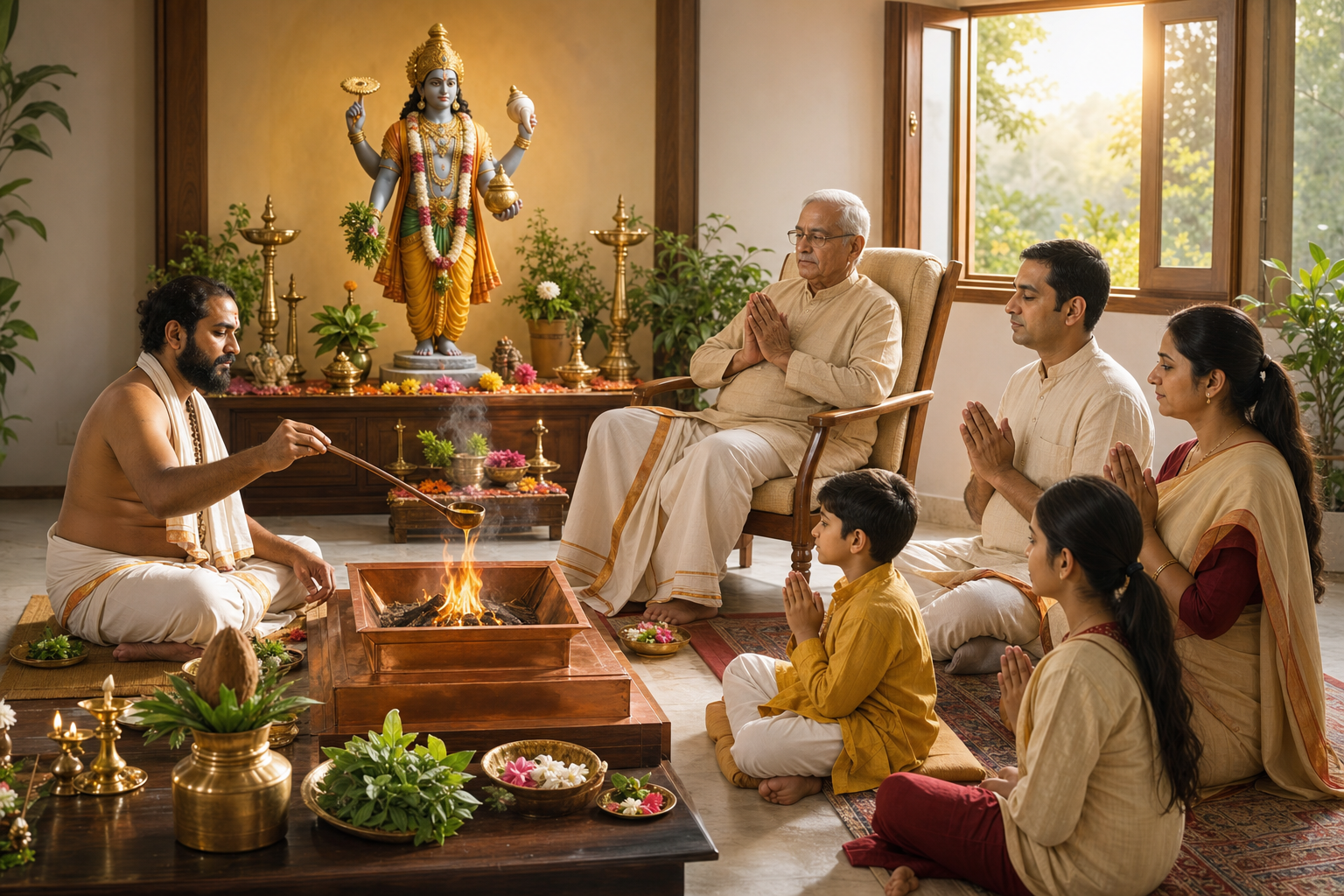
If you are considering a Dhanvantari Homam because you or someone you love is ill, two questions matter immediately: what should you actually arrange, and what can the ritual honestly be expected to do? The sound Dharmic answer keeps devotion and medical responsibility together.
Do not postpone urgent care, diagnostic tests, prescribed treatment, or a necessary procedure while waiting for a homam or an auspicious date. The rite is a spiritual support for healing, courage, disciplined care, and peace of mind. It is not a medical treatment and cannot promise a cure. With that boundary clear, you can approach it with full shraddha rather than with fear or magical expectations.
Key takeaways before you arrange the homam
- Frame the sankalpa around arogya, longevity, relief from suffering, clarity, and strength to follow appropriate care. Do not turn it into a guaranteed prediction about recovery.
- A full priest-led homam commonly lasts about 90 to 150 minutes, depending on the mantra count and additional worship included.
- Ask which sampradaya and textual procedure the priest follows. Smarta, Vaishnava, household, and temple traditions may use different sequences, mantras, counts, and offerings without changing the central devotion to Dhanvantari.
- Use only clean, measured, priest-approved offerings. Ventilation, a properly prepared havan kund, controlled flames, and accommodation for respiratory sensitivities are part of responsible ritual conduct.
- Let the homam end in a practical vrata: continue prescribed care, adopt one sustainable health discipline, maintain a simple japa practice, or support a genuine act of healing seva.
Ask the homam to do the right kind of healing
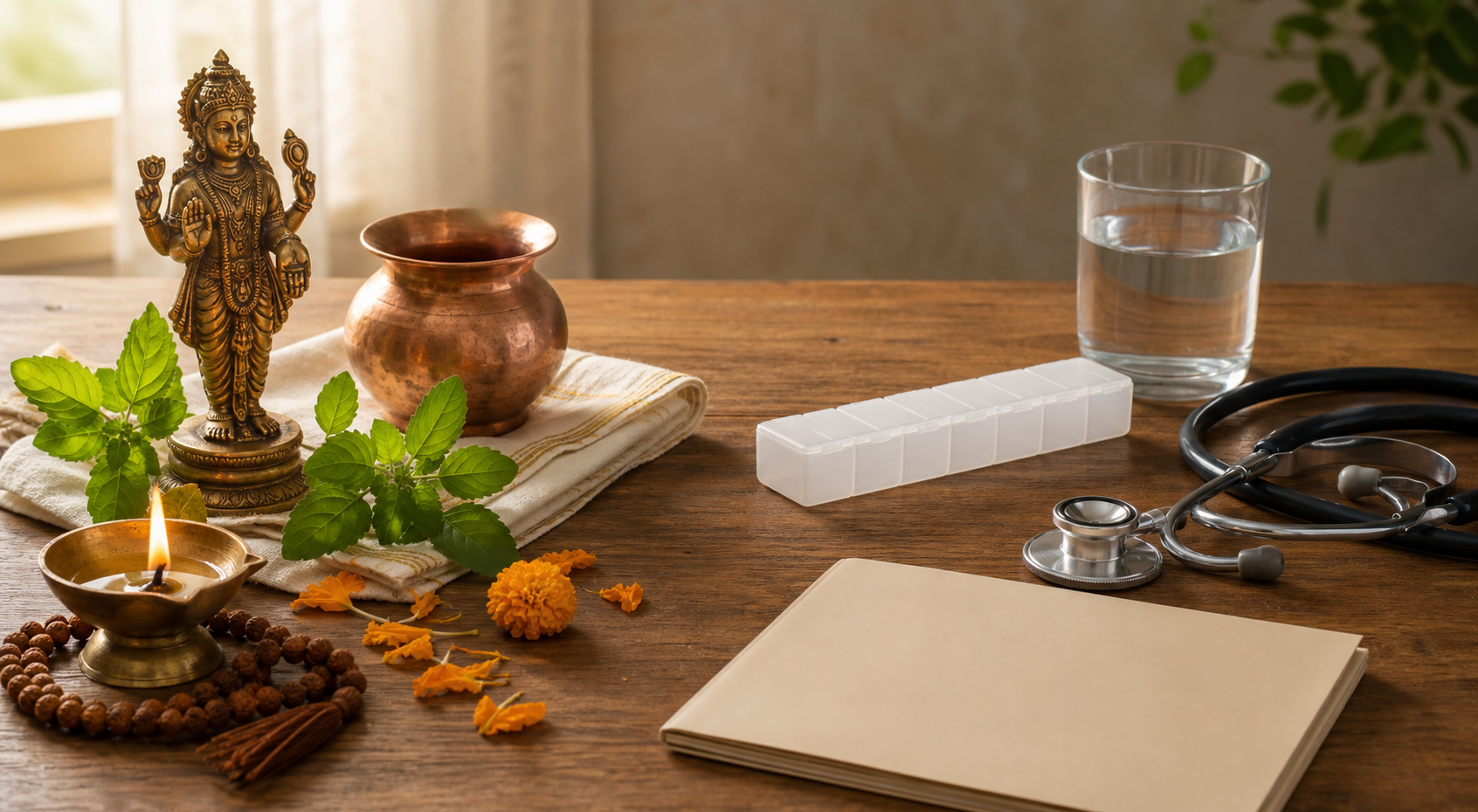
Dhanvantari is remembered as the Divine Physician who emerged during the Samudra Manthana carrying the amrita-kalasha. His association with Vishnu, Ayurveda, health, and the preservation of life gives the homam its central orientation: a prayer for arogya, ayush, and relief from disease and fear. The amrita vessel should not be reduced to a promise that the body will never decline. It directs your attention to life as sacred, care as a duty, and healing knowledge as a form of grace.
The fire gives that prayer a disciplined form. Agni receives the ahutis; the mantra gathers a scattered mind; the sankalpa names the purpose; and every offering marked by svaha becomes an act of surrender. For a person living through illness, this structure can replace helpless repetition with meaningful participation. For relatives and caregivers, it can turn anxiety into prayer, service, and steadiness.
That is spiritually significant, but it is not evidence that smoke, herbs, mantra, or ritual fire directly cures a particular disease. The Ayurvedic language of agni, prana, and tridosha supplies a traditional framework for contemplating balance and disciplined living; it should not be converted into an improvised biomedical diagnosis. Psychological ease, slower breathing, and a calmer outlook may accompany structured prayer and recitation, yet those experiences are different from clinical improvement.
A useful sankalpa therefore does more than demand an outcome. It may pray for the patient’s recovery, the wisdom of physicians, the endurance of caregivers, freedom from fear, right decisions, and the discipline to follow suitable treatment. If the condition is uncertain, you do not need to force certainty into the ritual. A prayer for clarity and strength is itself complete.
Choose a form that fits the family and the patient
A large ceremony is not automatically more sincere than a modest one. Choose the form by considering the patient’s condition, your parampara, the household’s capacity, and whether fire and smoke can be managed safely.
- A full priest-led homam: This is the clearest choice when you want the complete purvanga, kalasha worship, mantra japa, fire offerings, poornaahuti, and concluding rites. It also places decisions about textual variants and offering quantities in trained hands.
- A temple observance: This suits a household that cannot safely prepare a fire space at home or wants to participate within an established ritual environment. Ask whether the sankalpa can include the names and particulars of the intended beneficiaries.
- A guided household observance: Some knowledgeable householders perform a simplified rite after proper instruction. If you have not received such instruction, keep the home practice to puja and Dhanvantari japa instead of improvising a fire ritual.
Dhanvantari Jayanti, observed on Krishna Trayodashi in Kartika and widely associated with Dhanteras, is a prominent occasion. Pushya Nakshatra days and a suitable muhurta chosen through a panchangam are also used. Illness, however, does not obey a festival calendar. Begin necessary healthcare at once; the worship can be arranged at the next practical and traditionally appropriate time.
Before booking, ask the priest these concrete questions:
- Which sampradaya or paddhati will guide the ceremony?
- Which Dhanvantari mantra will be used, and will the japa count be 108, 1008, or another count customary to that lineage?
- Will the ceremony include the Ashtottara Shatanamavali, Bhaishajya Suktam, Vishnu Sahasranama selections, nyasa, abhisheka, or an Ayush Homa?
- How long should the family and the person named in the sankalpa expect to be present?
- Who will provide the havan kund, samidha, ghee, kalasha materials, naivedya, and herbal dravyas?
- How will ventilation and smoke be managed, especially if a participant has respiratory sensitivity?
- What preparation does the priest expect regarding food, bathing, clothing, names, gotra, rashi, and nakshatra?
A trustworthy answer will acknowledge variations rather than pretending that one regional procedure is universal. Fidelity means following a coherent parampara under competent guidance, not assembling every mantra and offering found in circulation.
Know what each stage is doing
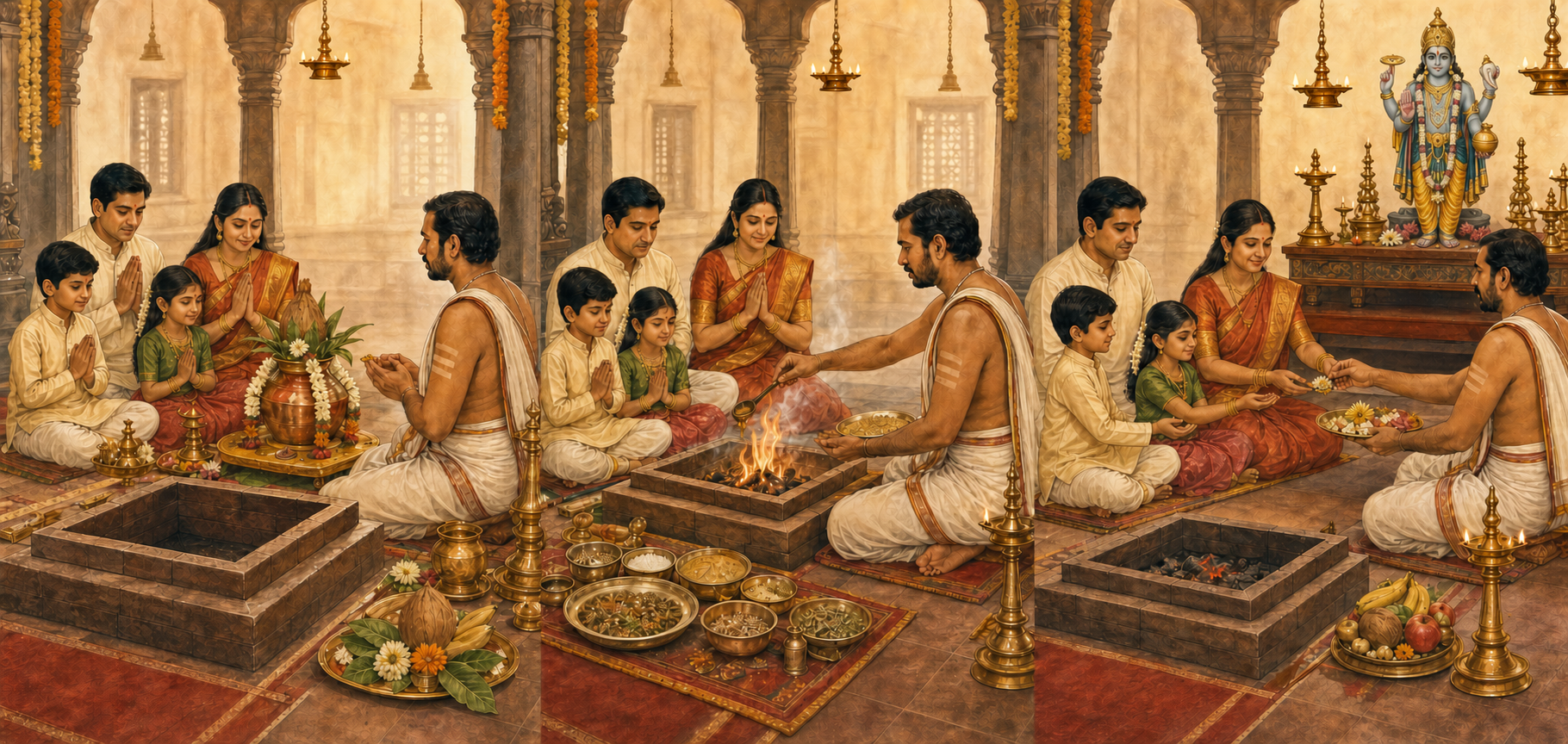
You do not need to memorize the entire vidhi to participate well. You should, however, understand the movement of the rite. The following map will help you recognize what is happening even when your lineage adjusts the order or omits optional elements.
- Personal and ritual preparation: Bathing, clean clothing, achamana, and a sattvic disposition mark the transition from ordinary activity to worship. Ganapati Puja addresses obstacles, Punyahavachana sanctifies the setting, and protective rites establish the ritual boundary.
- Sankalpa: The intention is stated with the participants’ names and, where known and customary, gotra, rashi, and nakshatra. The prayer may name a particular health concern while also asking for arogya, ayush, courage, and the welfare of everyone involved in care.
- Kalasha sthapana and avahana: Dhanvantari is invoked in the consecrated kalasha and worshipped through the prescribed upacharas. An archana with the 108 names may follow. The kalasha will later become central to the concluding abhisheka and theertha.
- Mantra japa: The longer formula used in many traditions is “Om Namo Bhagavate Vasudevaya Dhanvantaraye Amrita-kalasha-hastaya Sarva-bhaya-vinashaya Sarva-roga-nivaranaya Triyambakaya Namaha.” A concise form is “Om Shree Dhanvantre Namaha.” Pronunciation, wording, and count should follow the presiding acharya because paramparas differ. Karanyasa and anganyasa may be included to join bodily awareness, speech, and attention to the mantra.
- Agni pratishtha and ahutis: The fire is established in the havan kund. Small measures of ghee and designated dravyas are offered with the mantra and svaha. Bhaishajya Suktam or selected verses of Vishnu Sahasranama may be added according to the chosen procedure. Your task as a participant is attentive presence, not racing ahead of the priest or treating the count as a mechanical competition.
- Poornaahuti: The culminating offering may include a decorated coconut, cloth, akshata, and navadhanya. Vasodhara, mangala-deepa, and shanti mantras may then mark completion. This is the moment to release possessiveness about the result: the family has prayed and offered; the outcome is not something the ritual enables it to command.
- Abhisheka, prasada, and blessing: The sanctified kalasha is used for abhisheka, theertha is shared, and a raksha-sutra may be tied as a reminder of the sankalpa. Naivedya such as fruit, panchamrita, or panakam is offered before prasada is distributed. Pradakshina and gratitude bring the external rite to a close.
Notice that the ceremony does not culminate merely in extinguishing a fire. It returns sacred water, food, blessing, and responsibility to the participants. The ritual journey moves from purification to invocation, from offering to surrender, and finally from grace to conduct.
Prepare safely, then carry the sankalpa into daily life
Before the ceremony
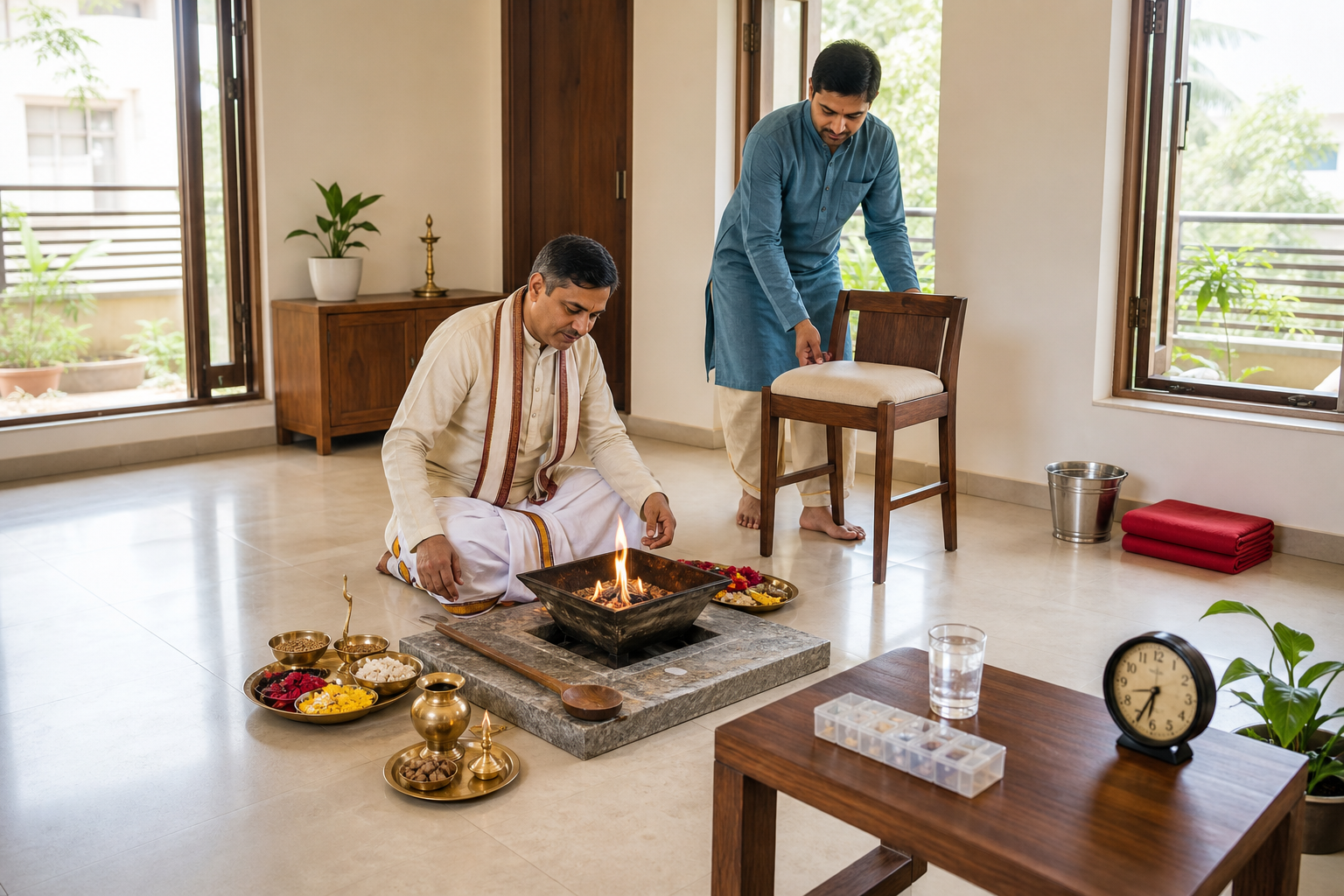
Use a clean, uncluttered, well-ventilated space with a properly prepared havan kund. Keep the fire controlled, use dry and clean fuel, and assign a capable adult to remain responsible for it throughout. Anyone troubled by smoke should sit at a safe distance. If the space or a participant’s health makes fire unsuitable, choose a temple arrangement or a non-fire Dhanvantari puja and japa rather than treating discomfort as a test of devotion.
Common samagri includes ghee, akshata, samidha, sesame, rice, barley, dry coconut, sugar candy, tulasi, sandalwood powder, camphor, and prepared havan material. Some procedures use measured quantities of guduchi, ashwagandha, amalaki, haritaki, and vibhitaki. Do not assume that more herbs produce more benefit. Obtain the priest’s exact list and use only pure, non-toxic substances in the quantities directed.
A sattvic meal pattern before the rite, bathing, and clean attire help establish the intended state of attention. These are ritual disciplines, not a reason for a sick person to ignore nutritional or medication instructions. If fasting or dietary restriction conflicts with medical guidance, protect the patient’s health and tell the priest. Dharma does not require avoidable harm.
After the final arati
The most important follow-through happens after the ceremonial materials have been cleared. Convert the sankalpa into a small set of visible commitments:
- Continue responsible care: Keep appointments and follow the plan agreed with qualified health professionals. If symptoms become acute or worsen, seek appropriate medical help rather than waiting for another ritual.
- Choose one sustainable discipline: Let the homam renew attention to dinacharya, ritucharya, or mindful nourishment, but make changes appropriate to the person and any professional guidance already in place. A modest practice maintained consistently is more useful than an elaborate vow abandoned in a few days.
- Keep the mantra alive: Continue “Om Shree Dhanvantre Namaha” as a simple personal japa if it belongs within your practice. Periodic Vishnu Sahasranama parayana can extend the devotional current without requiring another fire ceremony.
- Remember the caregivers: Include relatives, nurses, physicians, and other healers in prayer and gratitude. Dhanvantari worship honours care itself as seva; it should deepen respect for those preserving life.
- Give the healing intention a social form: Annadanam, a properly organised medicine-donation effort, or support for a legitimate health camp lets private prayer mature into community welfare.
This final movement also reveals why the rite speaks beyond one household. Ahimsa, daya or karuna, and seva are recognisable across Hindu, Buddhist, Jain, and Sikh traditions even though their doctrines and ritual forms remain distinct. A Dhanvantari Homam is specifically a Hindu act of worship, but its resolve to protect life, reduce suffering, and honour compassionate care belongs to the wider moral inheritance of Dharma.
If you are arranging the homam now, take the next steps in the right order: secure any needed medical care, choose a qualified priest or temple, state the health and safety constraints clearly, and write a sankalpa that joins prayer to responsible action. Then let the ceremony strengthen what healing asks of you every day: steadiness, discernment, compassion, and faithful care for life.
References
