
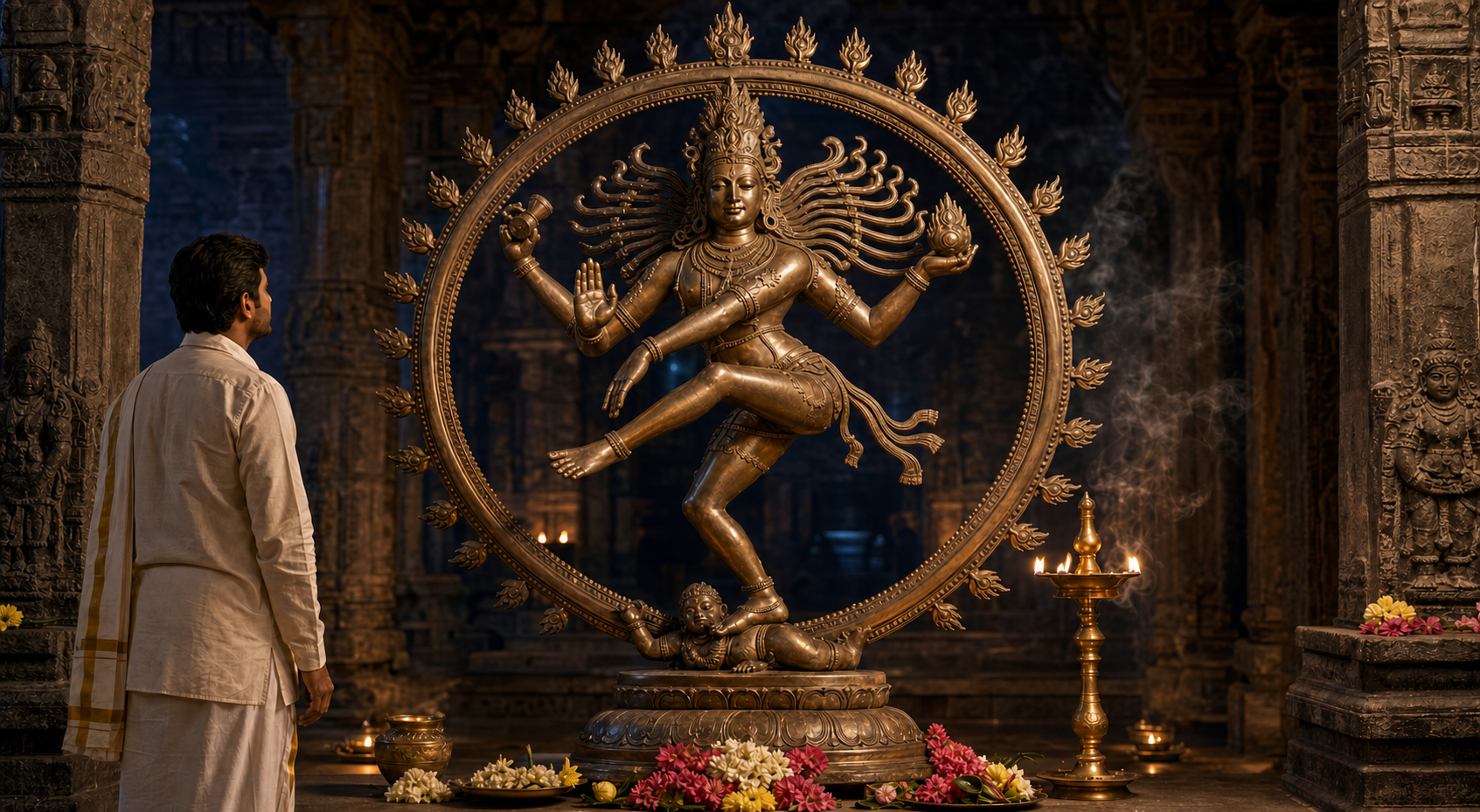
You may know that calling a Hindu mūrti an idol misses the point, yet still find it difficult to explain why. Saying that everything is symbolic only moves the question: symbolic of what, and how can you tell?
The practical answer is to read an icon as a structured visual theology. Its posture, hands, implements, vehicle, setting, proportions and ritual treatment work together. Once you learn that grammar, an elephant-headed Gaṇeśa or many-armed Durgā stops looking like an improbable body and starts communicating a coherent account of divine power, human discipline and liberation.
First determine what kind of sacred form you are seeing
A Hindu icon is not meant to be a physical portrait of a deity. It is theomorphic rather than merely anthropomorphic: human, animal, geometric and composite forms make divine attributes intelligible to embodied minds. Form gives attention somewhere to rest while directing it beyond the visible object.
Three distinctions prevent most elementary misreadings:
- Form is not a claim of limitation. A deity appearing in a particular form does not imply that the divine exists only within that form. Saguṇa worship approaches the sacred through qualities, names and relationships; nirguṇa contemplation emphasizes what exceeds every quality and description.
- A manufactured image is not automatically a consecrated mūrti. A sculpted object may be admired, studied or sold without functioning as a temple presence. Through prāṇa-pratiṣṭhā, a mūrti becomes a ritually enlivened locus of presence within an āgamic tradition. This difference is central, not incidental.
- Many forms do not require many ultimate realities. The Vedic intuition expressed by ekaṁ sat viprā bahudhā vadanti allows truth to be approached through many names and forms. The practice of choosing an iṣṭa-devatā makes that plurality personal: you can cultivate one devotional relationship without declaring every other form false.
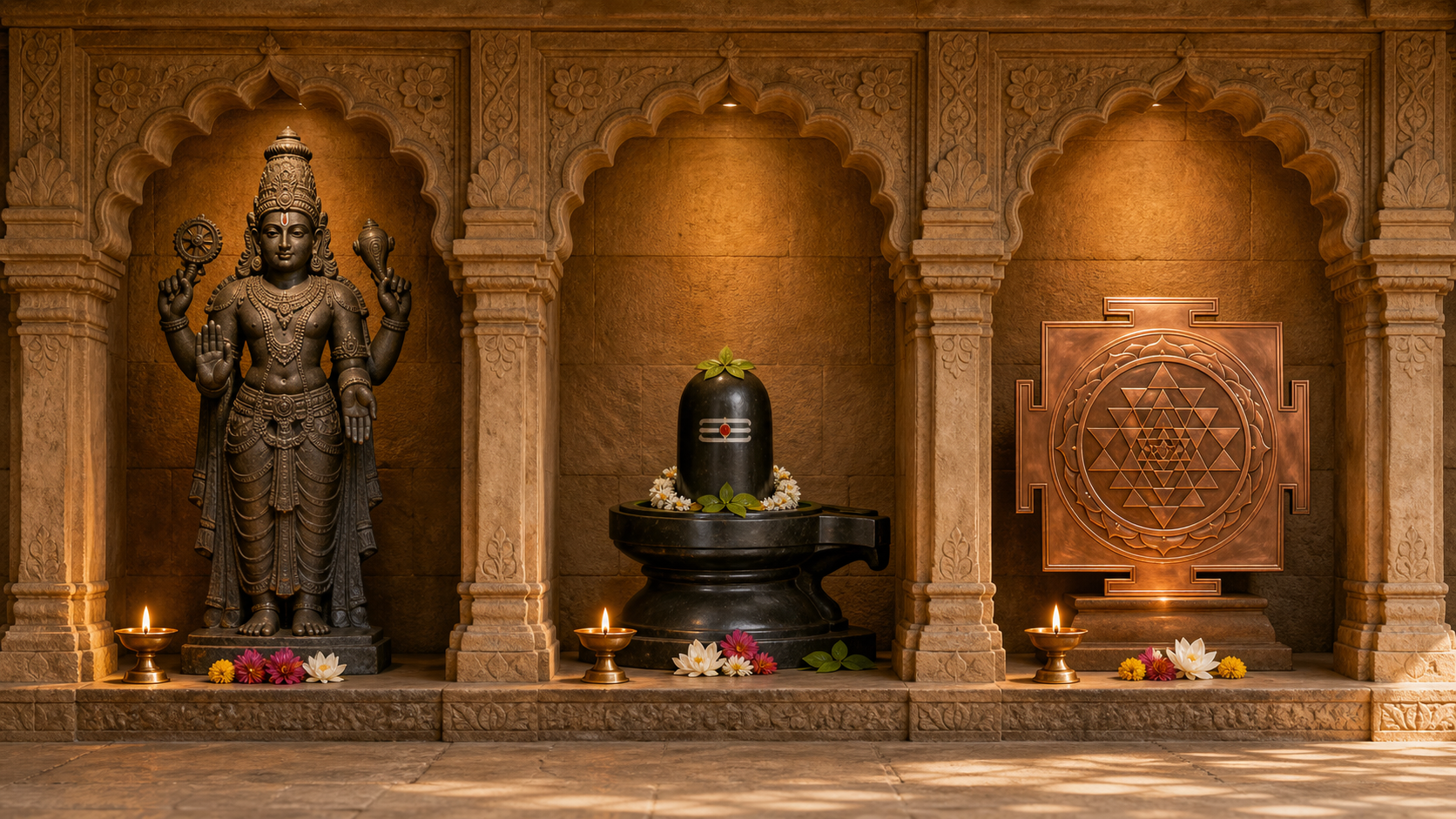
Hindu sacred symbolism also includes forms that are not figurative. The śiva-liṅga, śālagrāma-śilā and yantra concentrate attention without presenting a humanlike divine body. This is why the easy contrast between an image-making Hinduism and wholly imageless religions fails. Hindu practice contains both iconic and aniconic disciplines, often within the same religious world.
When you encounter a sacred form, therefore, begin with two questions: Is it consecrated or merely depicted? Is it figurative, aniconic or a combination of the two? Those questions establish the ritual and metaphysical context before interpretation begins.
Read an icon in five passes rather than decoding isolated objects
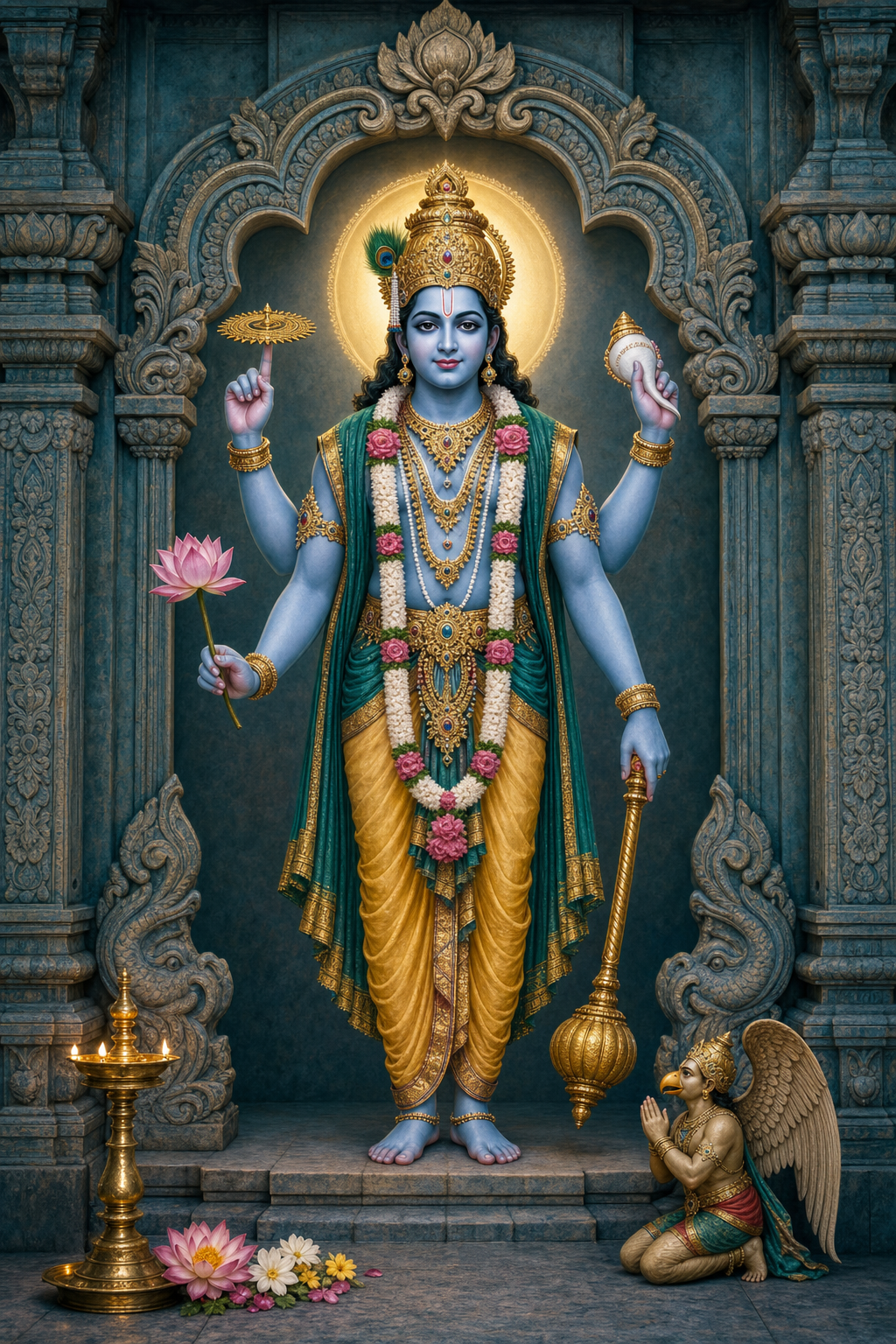
Hindu iconography is not an invitation to free association. Āgamas and śilpa-śāstras prescribe proportions, postures, gazes, gestures, ornaments and attributes. Systems of tāla-māna give sacred figures an iconometric order. Regional and sectarian variations remain, but an image normally belongs to a received visual vocabulary.
Use the following sequence whenever you study a mūrti, temple relief or devotional print:
- Describe before interpreting. Note whether the figure is standing, seated, dancing, reclining or engaged in combat. Observe the direction of the gaze, the expression, the number of faces and limbs, and the surrounding figures. Description slows down the impulse to impose a familiar explanation.
- Read the hands as verbs. A mudrā communicates an action or assurance. Abhaya grants fearlessness; varada conveys giving or blessing. An implement also expresses a capacity: a weapon may cut ignorance, a drum may initiate movement, and a flame may dissolve a completed order. Ask what each hand is doing, not how a biological body could possess so many arms.
- Treat unusual anatomy as concentrated meaning. Multiple arms show powers operating together. Multiple heads can express encompassing knowledge or integrated perspectives. An animal head, hybrid body or radically enlarged feature marks an attribute that ordinary human anatomy cannot carry with equal force.
- Read relationships around the central figure. A vāhana is more than transportation. Its character can represent an impulse, capacity or danger brought into right relationship with the deity. Figures beneath a foot, enemies in combat and attendants at the sides tell you what is being mastered, protected or coordinated.
- Reconnect the image to practice. Ask what response the icon solicits from a worshipper: courage, discernment, listening, surrender, restraint, compassion or remembrance. An interpretation that never reaches conduct is probably incomplete, because sacred symbolism is meant to orient life as well as convey doctrine.
After these five passes, look at the whole composition again. The meaning usually lies in the relationship among attributes. A raised hand of reassurance means more beside a weapon; a serene face means more within a scene of combat; a powerful deity means more when paired with a small, restless animal. The composition is a sentence, not a bag of separate symbols.
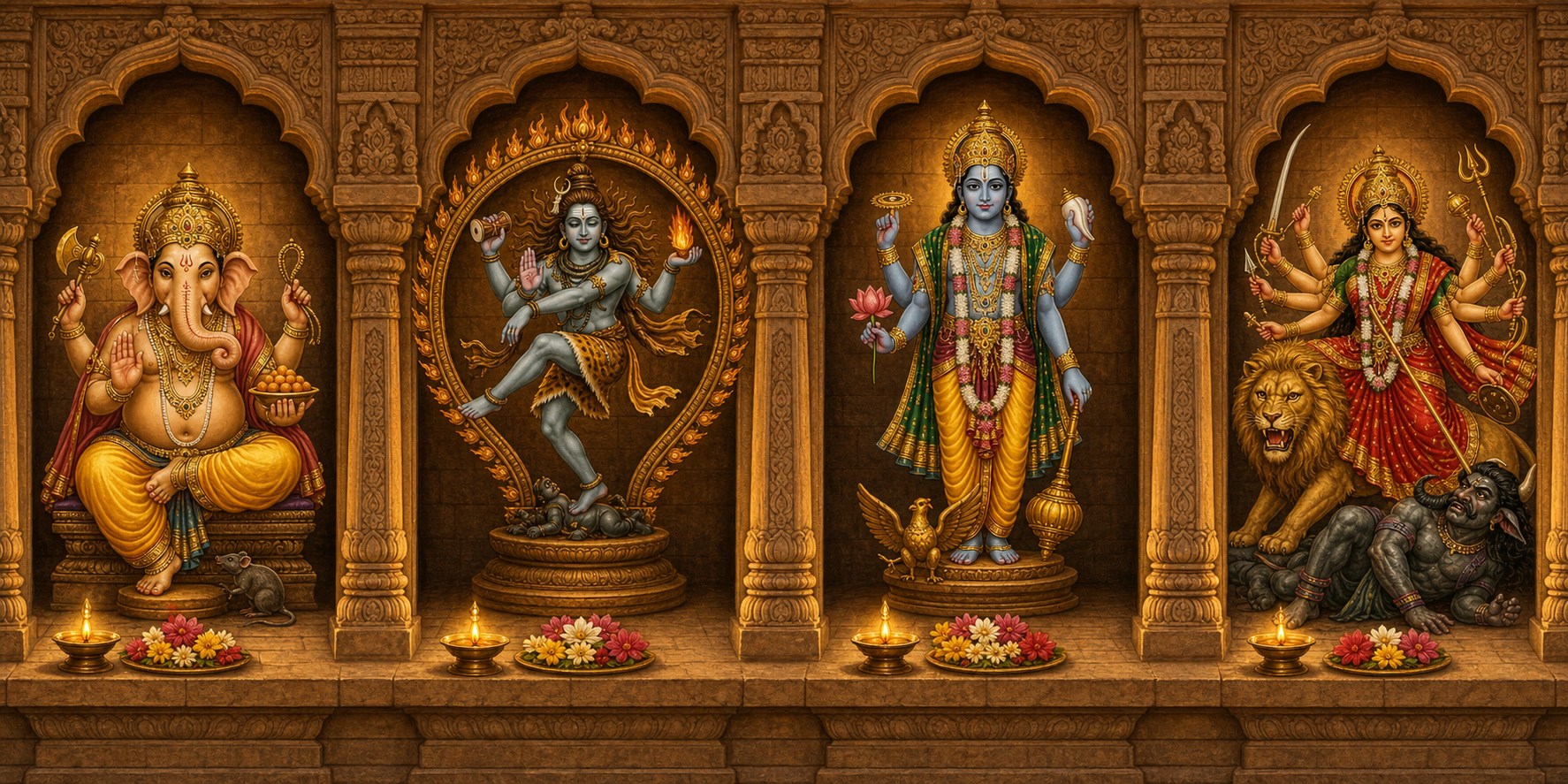
Four familiar icons show how the grammar works
Śiva Naṭarāja: read the hands, then the feet
Naṭarāja brings cosmic process, spiritual diagnosis and refuge into one composition. The surrounding ring of fire presents a cosmos in ceaseless activity. The ḍamaru marks creation and rhythmic time, while the flame held in another hand marks dissolution. These are not disconnected opposites: emergence and withdrawal belong to one dance.
The lower hand in abhaya-mudrā assures fearlessness amid that movement. The lifted foot offers refuge, while the planted foot subdues apasmāra, the dwarf associated with forgetfulness or ignorance. The icon’s practical teaching becomes clearer when you follow this sequence: the world changes, ignorance distorts your relation to change, disciplined awareness overcomes that distortion, and refuge becomes possible without stopping the cosmic dance.
If you remember only the decorative ring or the graceful pose, you miss the argument. On your next encounter with Naṭarāja, trace a line from drum to flame, from abhaya hand to lifted foot, and finally to apasmāra. That path turns the dense symbolism of the dancing Śiva into a readable teaching.
Gaṇeśa: look for disciplined adaptability
Gaṇeśa’s elephant head points toward buddhi and smṛti: intelligence and memory. His large ears reward attentive listening. The broken tusk associates knowledge with sacrifice, while the flexible trunk can perform both forceful and delicate tasks. The modaka represents the inward sweetness of sustained practice.
The mouse-vāhana completes the teaching. A tiny, quick and restless creature sits in relation to immense intelligence. The contrast asks whether restless desire serves discernment or carries it away. Gaṇeśa is therefore not decoded by saying that an elephant means wisdom and stopping there. Wisdom becomes effective through listening, sacrifice, adaptability and mastery of scattered impulses.
Use that cluster as a self-examination before beginning difficult work: What must you hear carefully? What comfort must you sacrifice for knowledge? Does this task require strength or delicacy? Which restless impulse needs direction? The icon has then moved from visual curiosity to sādhana.
Durgā Mahīṣāsuramardinī: distinguish moral force from aggression
Durgā’s many arms make simultaneous capacity visible. In the Mahīṣāsuramardinī form, the weapons received from the devas express powers coordinated toward the defeat of Mahīṣāsura. Her lion reinforces sovereignty and courage. The scene dramatizes sattva overcoming tamas and ordered moral force confronting chaos.
Reducing this image either to decorative femininity or to a general celebration of violence destroys its ethical structure. The relevant questions are more exact: What disorder is being confronted? Why must several divine capacities act together? How does the composure of the central figure govern the scene’s force?
The resulting lesson is demanding. Courage without clarity can become aggression, while clarity without the capacity to act can become passivity. Durgā joins discernment, composure and force in the service of dharma. During Navarātri, you can use the image to name one tamasic pattern that requires coordinated effort rather than a vague wish to improve.
Narasiṁha: treat the boundary-breaking form as the argument
Narasiṁha is neither wholly human nor wholly lion. That liminality is theological precision, not visual excess. The form preserves the integrity of a boon framed through fixed categories while showing that divine action is not imprisoned by those categories.
His fierceness must also be read relationally. The ugra form is terrifying toward destructive power and protective toward the devotee; yogic representations can emphasize interior stillness. Fierce and compassionate are not necessarily contradictions when they are directed toward different objects.
When a sacred image breaks a binary category, resist trying to repair it into something more familiar. Ask what limitation the hybrid form exposes. Narasiṁha teaches through the failure of the categories themselves.
Compare sacred traditions by function, not surface resemblance
Comparative symbolism becomes useful when it clarifies both resonance and difference. A many-armed bodhisattva and a many-armed Hindu deity may share a visual strategy without expressing identical theology. Aniconism in Sikh, Jewish or Islamic settings does not mean an absence of sacred form; word, sound, geometry and disciplined remembrance can perform work that a figurative image performs elsewhere.
The following map identifies a characteristic symbolic route in each case, not an exhaustive rule for every community or historical period:
| Tradition or setting | Characteristic symbolic route | Practice or value emphasized | Misreading to avoid |
|---|---|---|---|
| Hindu traditions | Saguṇa mūrtis alongside aniconic forms such as liṅgas, śālagrāmas and yantras | Darśan, devotion, contemplation and relationship with an iṣṭa-devatā | Treating plurality of forms as metaphysical confusion |
| Buddhist iconography | Bodhisattvas such as Avalokiteśvara may have multiple arms or heads | Compassion represented as an ability to respond in many directions | Assuming shared visual grammar means identical doctrine |
| Jain iconography | Serene, restrained representations of the tīrthaṅkaras | Inner conquest, disciplined awareness and radical ethical restraint | Mistaking visual stillness for an absence of meaning |
| Sikh tradition | Ik Oṅkār and the sonic presence of Gurbāṇī | Divine unity, remembrance and orientation through sacred word | Defining aniconism only as a rejection of images |
| Jewish and Islamic aniconic settings | Calligraphy, geometry and recitation | Transcendence, sacred order and remembrance | Assuming non-figurative art is non-symbolic |
| Christian traditions | A range extending from icon veneration to iconoclastic or image-restrictive approaches | Devotional encounter in some communities and protection of transcendence in others | Speaking of Christianity as if it had one uniform policy on images |
Two axes make these comparisons more precise. The first is cataphatic and apophatic theology. A cataphatic approach speaks through positive names, attributes and forms; an apophatic approach guards transcendence by emphasizing what cannot be adequately represented or said. The second axis is the medium through which attention is trained: image, sound, word, geometry, gesture or ritual space.
Hindu traditions often sustain both theological directions at once. Saguṇa practice permits intimacy with a named and formed divine presence, while nirguṇa reflection denies that the ultimate is exhausted by any name or form. That coexistence resembles some positive and negative theological movements elsewhere, but resemblance should not be inflated into sameness.
Use four questions in any interfaith comparison: What ultimate reality is being affirmed? What medium carries that affirmation? What relationship does the practitioner enter? What ethical or contemplative change is sought? These questions reveal meaningful parallels without erasing each tradition’s doctrines.
Take the grammar into the temple rather than leaving it in a museum
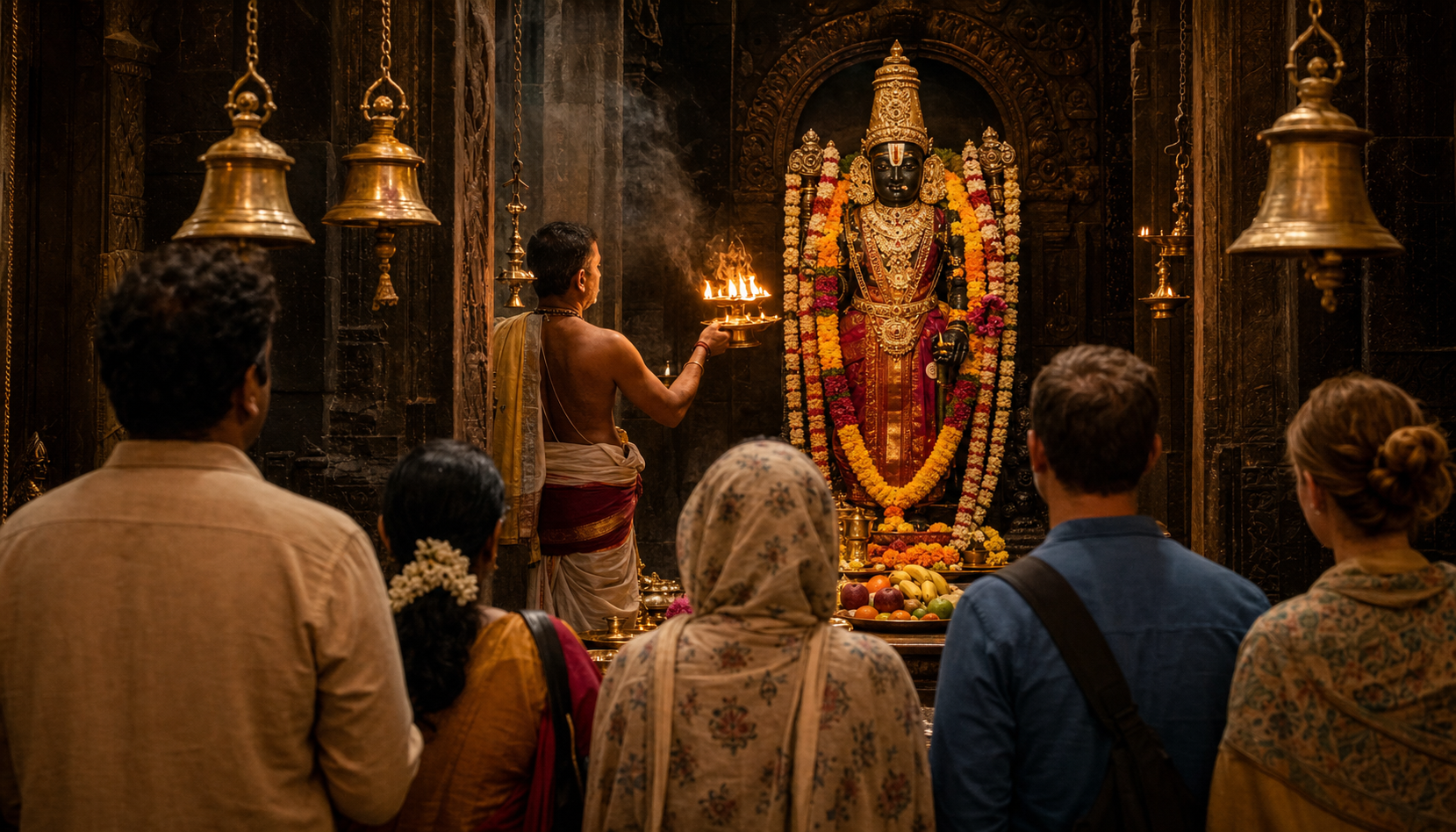
A temple image belongs to an ecology of sacred attention. Darśan makes seeing reciprocal rather than observational: the devotee beholds and presents oneself before the divine presence. Mantra adds sound; gandha adds fragrance; dīpa adds flame; prasāda turns an offering into something received. The senses are coordinated toward one relationship.
The building participates as well. The garbhagṛha concentrates presence, the maṇḍapa gathers communal attention, and pradakṣiṇā lets the body rehearse an ordered relation to the sacred center. A temple plan can function as an inhabited maṇḍala or cosmogram. Sacred meaning is not merely viewed; it is approached, circled, heard, smelled and received.
On your next temple visit, delay the photograph and try this sequence:
- Pause at the threshold and notice how the route narrows or concentrates attention toward the sanctum.
- Identify one mudrā and one attribute before attempting to interpret the entire image.
- Look for the vāhana or secondary figure and ask what relationship it establishes.
- Observe what the ritual adds that a museum display cannot: mantra, flame, fragrance, offering, movement and reciprocal darśan.
- Check your reading against the temple’s lineage, a knowledgeable practitioner or the relevant āgamic explanation. A general symbol dictionary cannot settle every local form.
Key takeaways
- A mūrti is a disciplined sacred form, not a proposed photograph of divine anatomy.
- Consecration distinguishes a crafted image from a ritually established locus of presence.
- Multiple limbs, faces and hybrid features communicate capacities that ordinary anatomy cannot show at once.
- Mudrās, implements, vāhanas and surrounding figures must be read as relationships, not isolated symbols.
- Iconic and aniconic practices can coexist; form and transcendence are not mutually exclusive.
- Comparative symbolism should identify shared functions without claiming that different traditions teach the same doctrine.
- The strongest interpretation ends in practice by clarifying what you are being asked to notice, cultivate or overcome.
Choose one icon rather than trying to master the entire pantheon. Write five lines: posture, hands, unusual features, surrounding relationships and the discipline being taught. Then compare your reading with the form’s living lineage. When those elements begin to make sense together, you are no longer defending an object against the charge of idolatry. You are reading a theology practiced through form.
References
