
-
Karna’s Final Charity: Unbreakable Dāna, Dharma, and Lessons from Kurukshetra

This long-form analysis examines the widely remembered motif of Karna’s final charity on the battlefield of Kurukshetra and situates it within the Mahabharata’s ethical universe. It distinguishes between the critical Sanskrit text and later regional and oral retellings that amplify Karna’s identity as Dāna-vīra. Through the lens of the Bhagavad Gita’s typology of dāna, the…
-
Desire Beyond Need: Dharmic Strategies to Transform Craving into Clarity and Freedom

This article clarifies why, in Hindu thought, desire is not a need but a demand that reaches beyond needand how that demand can be guided rather than suppressed. It maps desire across the puruṣārthas and pañca-kośa models, showing when desire serves dharma and when it becomes compulsion. It integrates insights from the Bhagavad Gita, Yoga…
-
Why the Ramayana Matters Today: Selfless Sacrifice, Dharma, and Ethical Leadership in a Me-First Age

The Ramayana remains profoundly relevant in a culture that often celebrates a me-first mindset. Its ethic of selfless sacrifice, anchored in dharma, offers a rigorous framework for ethical leadership, resilient families, and cohesive communities. Concrete episodesRama’s exile, Sita’s courage, Lakshmana’s boundaries, Bharata’s renunciation, Hanuman’s seva, and Vibhishana’s principled dissentmodel integrity in action. Contemporary research on…
-
Decoding ‘Hindu’: Etymology, Vedic Foundations, and the Timeless Unity of Sanatana Dharma
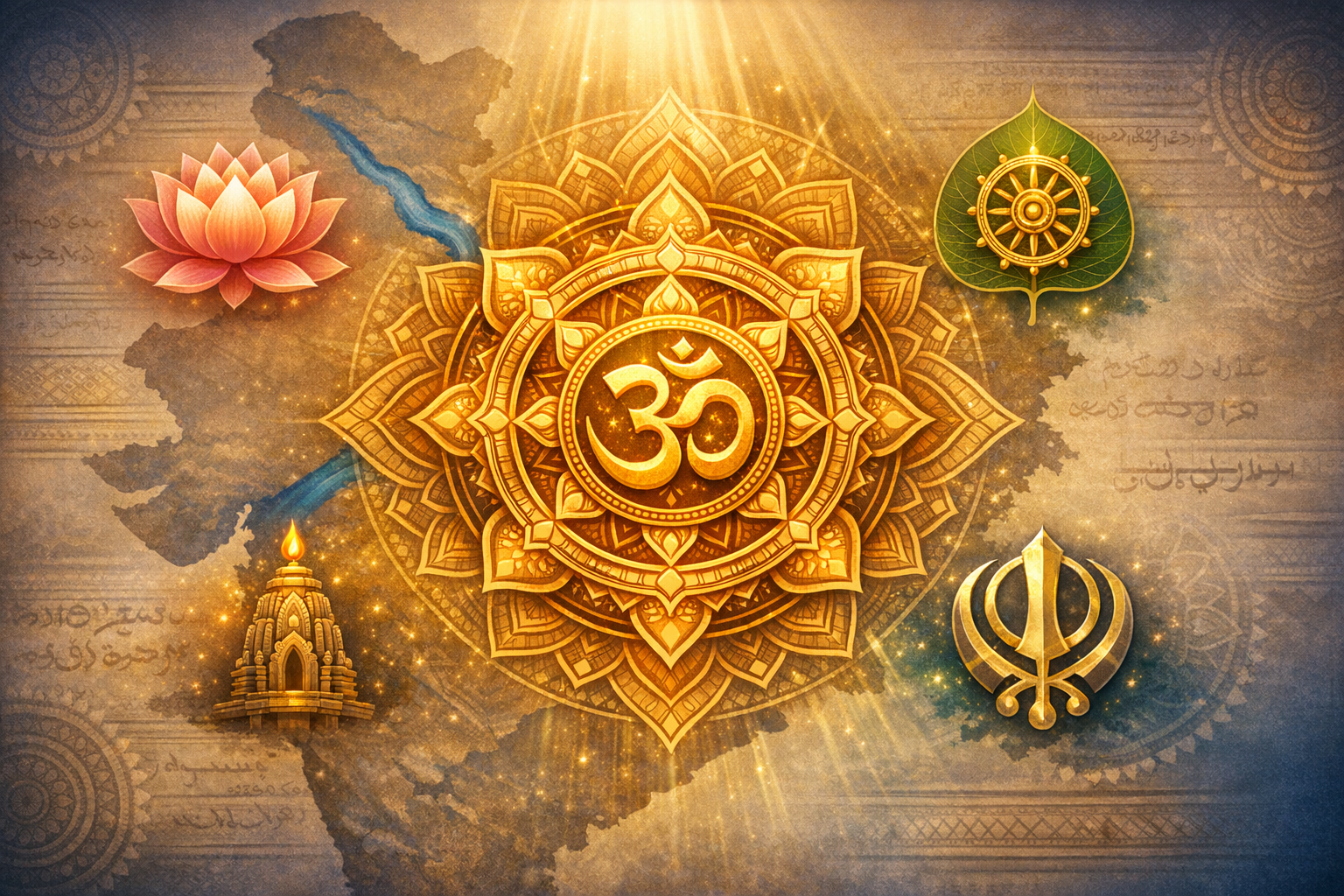
This essay clarifies the relationship between “Hindu,” “Hinduism,” and Sanatana-dharma by tracing the etymology of “Hindu” from Old Persian Hinduš (linked to the Sindhu River) through Greek and Arabic usage to its modern role as a civilizational identifier. It explains why “Hinduism” emerged in colonial discourse as an umbrella for diverse practices, while Sanatana-dharma functions…
-
Historic Tribute at Bhaktivedanta Manor: ISKCON@60 and Dharmic Unity (21 Mar 2026)

Bhaktivedanta Manor’s 21 March 2026 celebration united three milestones: the annual Srila Prabhupada festival, ISKCON’s 60th anniversary, and the fifth consecutive year of hosting this observance. With opening gratitude to organizers, including Mother Guru, the event highlighted how bhakti-yoga, scriptural learning, and seva reinforce community, culture, and ethical living. The program’s academic and devotional balance…
-
Unlocking Swayamprabha’s Inner Light: Ramayana Symbolism, Feminine Resilience, and Modern Relevance

Swayamprabha’s brief yet pivotal appearance in the Ramayana illuminates how inner luminosity, disciplined through tapas and expressed as seva, can convert heartbreak into creative momentum. Positioned in the Kishkindha Kāṇḍa, her guidance reorients Hanuman’s search party from a dazzling cave of māyā back to purpose, modeling threshold guardianship and ethical hospitality. The symbolism converges with…
-
Rajasthan VHP’s 24/7 Helpline: A Critical Look at Safety, Legal Rights, and Harmony

Reports from Jaipur on March 20, 2026, indicate that Rajasthan’s VHP has announced a 24/7 helpline to receive complaints framed as “love jihad” and “land jihad.” This analysis examines how any such community helpline can add value if it adheres strictly to Indian law, due process, and nondiscrimination. It outlines best-practice design principles: bias-aware intake…
-
Defying Ageism with Grace: Surfing, Ashtanga, and Dharmic Wisdom for Radical Self‑Acceptance

Set on Kerala’s sunlit coast, this reflection examines how disciplined surfing and Ashtanga yoga transform ageist narratives into self-acceptance and strength. It explores trauma recovery through graded exposure and breath-led practice, clarifying how the nervous system, vagus nerve regulation, and motor learning support performance at any age. The piece distinguishes outward appearance from true health,…
-
Veda Shasta of Ayyappa: The Awe‑Inspiring Guardian of Vedic Wisdom in Ashta Sastha

Veda Shasta (Veda Sastha) presents Ayyappa as the guardian of Vedic wisdom, uniting scriptural authority with compassionate protection. This in‑depth exploration surveys scriptural roots in the Puranas, iconography that fuses Vedic, Tantric, and Āgamic elements, and temple ritual grounded in Kerala liturgical manuals. It explains how the pustaka, akṣamālā, and protective mudrās become a living…
-
Dhanu Rashi 2026–2027: Powerful Vedic Forecast for Sagittarius MoonMoola, Purvashada, Uttarashada

Dhanu Rasi (Sagittarius Moon) natives in Moola, Purvashada, and Uttarashada 1st charan meet 2026–2027 with Kantaka Shani (4th) stabilising home and process, while Guru shifts from a collaborative 7th‑house phase into an introspective Ashtama Guru. Rahu–Ketu emphasise hands‑on skill growth and experiential learning through most of 2026, then pivot late in the year toward financial…
-
Mithuna Rashi 2026–2027: Precise Vedic Forecasts for Gemini MoonCareer, Wealth, Remedies

This comprehensive Vedic Astrology forecast for Mithuna Rashi (Gemini Moon) maps the 2026–2027 landscape with academic clarity and practical compassion. Saturn’s 10th-house transit prioritizes structure, credibility, and professional ethics, while Jupiter’s move to the 2nd house mid-2026 supports income, savings, and gentle family speech. The nodal shift late 2026 invites risk awareness, better insurance, and…
-
Beyond Death’s Arrow: How Arishtanemi’s Tapas in the Mahabharata Reveals Deathless Dharma

This essay examines how the Mahabharata’s doctrine of tapas frames spiritual discipline as “divine protection,” reading the image of going beyond death’s arrow as a technical claim about fearlessness and clarity. It situates Ariṣṭanemi (Neminātha in Jain tradition) within a shared Dharmic milieu, linking ahiṃsā and aparigraha to the epic’s tapas-centered ethic. Drawing on Shanti…
-
Beyond the Senses: Unveiling Brahman and the Limits of Perception in Hindu Thought

This article explores why, in Hindu philosophy, ultimate reality (Brahman) cannot be captured by the senses or by conceptual thought, and how Vedanta uses shabda-pramana and Upanishadic teaching to reveal the Self. It clarifies the roles of pratyaksha, anumana, and shabda in Indian epistemology, showing why the senses are necessary yet insufficient. It integrates Advaita…
-
Dharma in Action: 10 evidence-based daily practices for a transformative Hindu New Year

The Hindu New Yearmarked as Ugadi, Mesha Sankranti, Vishu, and Puthanduoffers a clear opportunity to align daily life with Dharma. This guide presents ten practical, evidence-informed resolutions grounded in yama and niyama and harmonized with Buddhist, Jain, and Sikh ethics. Each practice includes simple action cues for modern schedules, from mindful speech and ethical consumption…
-
Jagath Samhara Moorthy: How Shiva’s Cosmic Dissolution Fuels Renewal and Liberation

Jagath Samhara MoorthyShiva as the cosmic dissolverexpresses a lawlike rhythm in Hindu cosmology where endings prepare the ground for renewal. Drawing on the Puranas, Upanishads, and Shaiva philosophy, the article clarifies how samhara operates within the five divine acts: creation, maintenance, dissolution, concealment, and grace. It explains the four types of pralaya and situates them…
-
Hindu Sena’s Call for a Nationwide ‘Disturbed Areas Act’: Safeguarding Homes and Harmony

Hindu Sena’s March 2026 appeal for a nationwide ‘Disturbed Areas Act’ spotlights a difficult policy challenge: preventing coercive demographic change while safeguarding constitutional freedoms and property rights. This analysis separates the property-focused ‘disturbed areas’ model from security laws, evaluates Gujarat’s approach, and outlines how a national framework could work through evidence-based micro-notifications, time-bound permissions, and…
-
Unlocking Truth: Six Pramāṇas in Hindu Philosophy and How They Strengthen Modern Thinking

This long-form guide explains the six pramāṇas of Hindu philosophypratyakṣa, anumāna, upamāna, arthāpatti, anupalabdhi, and śabdaand shows how they collaborate to produce reliable knowledge. It clarifies acceptance across Nyāya, Mīmāṃsā, Vedānta, Sāṃkhya-Yoga, Carvāka, and connects these insights with Buddhist, Jain, and Sikh approaches. Readers learn concrete criteria for perceptual reliability, how to build and test…
-
Karma in Hinduism: A Definitive, Practical Guide to Action, Consequence, and Liberation

Karma in Hinduism is a precise ethical and philosophical system linking intention, action, and consequence within the larger pursuit of moksha. Drawing on the Bhagavad Gita, the Upanishads, and allied schools of Hindu philosophy, this long-form guide explains the threefold temporal modelsanchita, prarabdha, and agamialongside the Gita’s categories of karma, akarma, and vikarma. It clarifies…
-
Kalidasa’s Kumārasambhava: Epic Elegance of Śiva–Pārvatī and Skanda’s Sacred Birth

Kumārasambhava by Kālidāsa is a classical Sanskrit mahākāvya that fuses exquisite poetics with profound spiritual philosophy. Through the sacred union of Śiva and Pārvatī and the birth of Skanda (Kārtikeya), the poem dramatizes how tapas, love, and dharma restore cosmic balance. Readers gain a structured overview of the cantos, an introduction to key aesthetic concepts…
-
Vasant Navratri 2026: Dates, Puja Vidhi, Fasting, NavaDurga & Ram Navami’s Sacred Finale
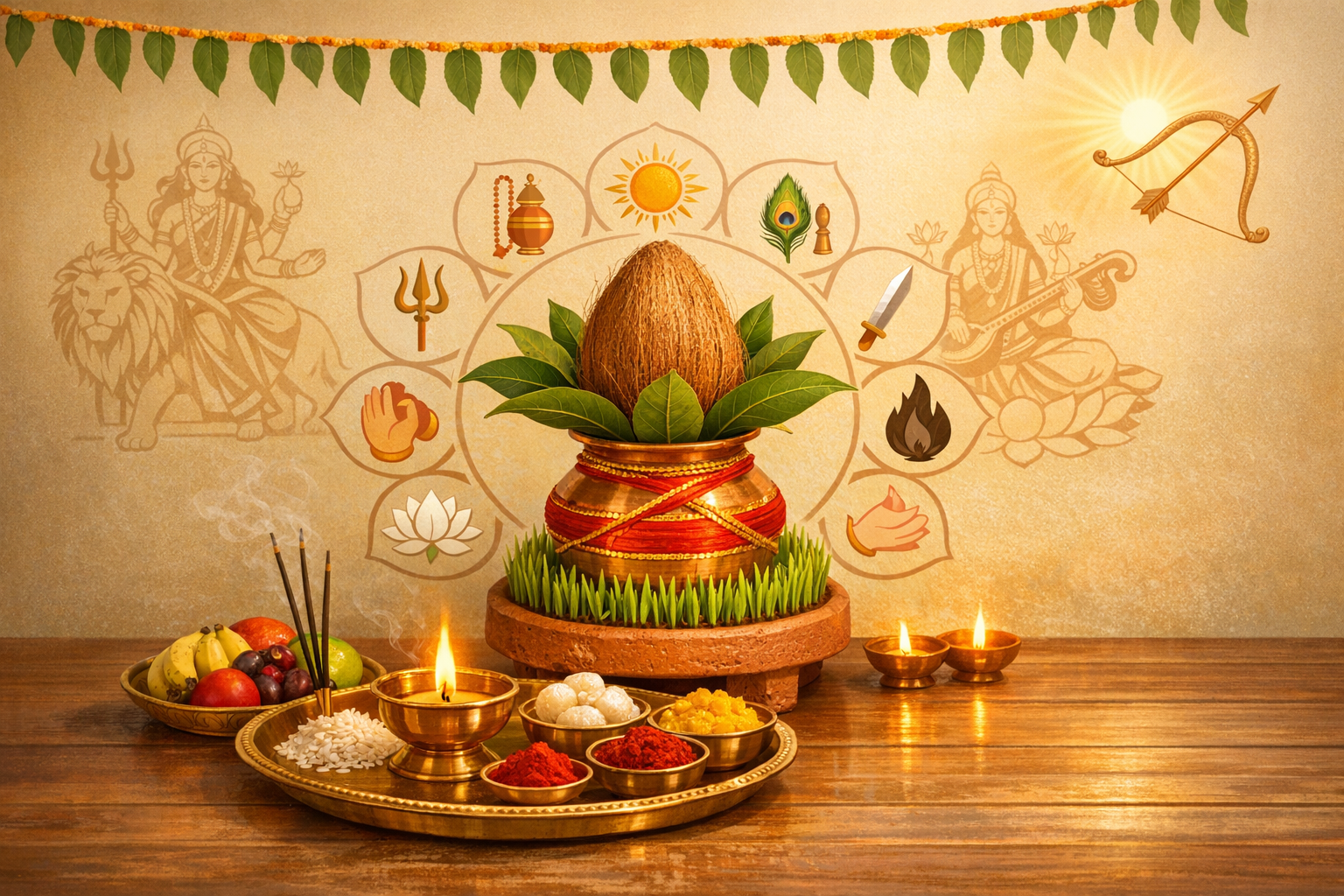
Vasant Navratri 2026 (Basant Navaratri, Chaitra Navratri, Sri Ram Navratri) will be observed from 19 to 27 March 2026, beginning on Chaitra Shukla Pratipada and culminating on Ram Navami. This long-form guide explains the festival’s spiritual architecture, outlines day-by-day observances for the NavaDurga, and details Ghatasthapana, puja vidhi, and fasting practices with attention to health…