
-
Peacock Symbolism in Hinduism: Majestic Vahana of Subrahmanya Swamy and Auspicious Grace
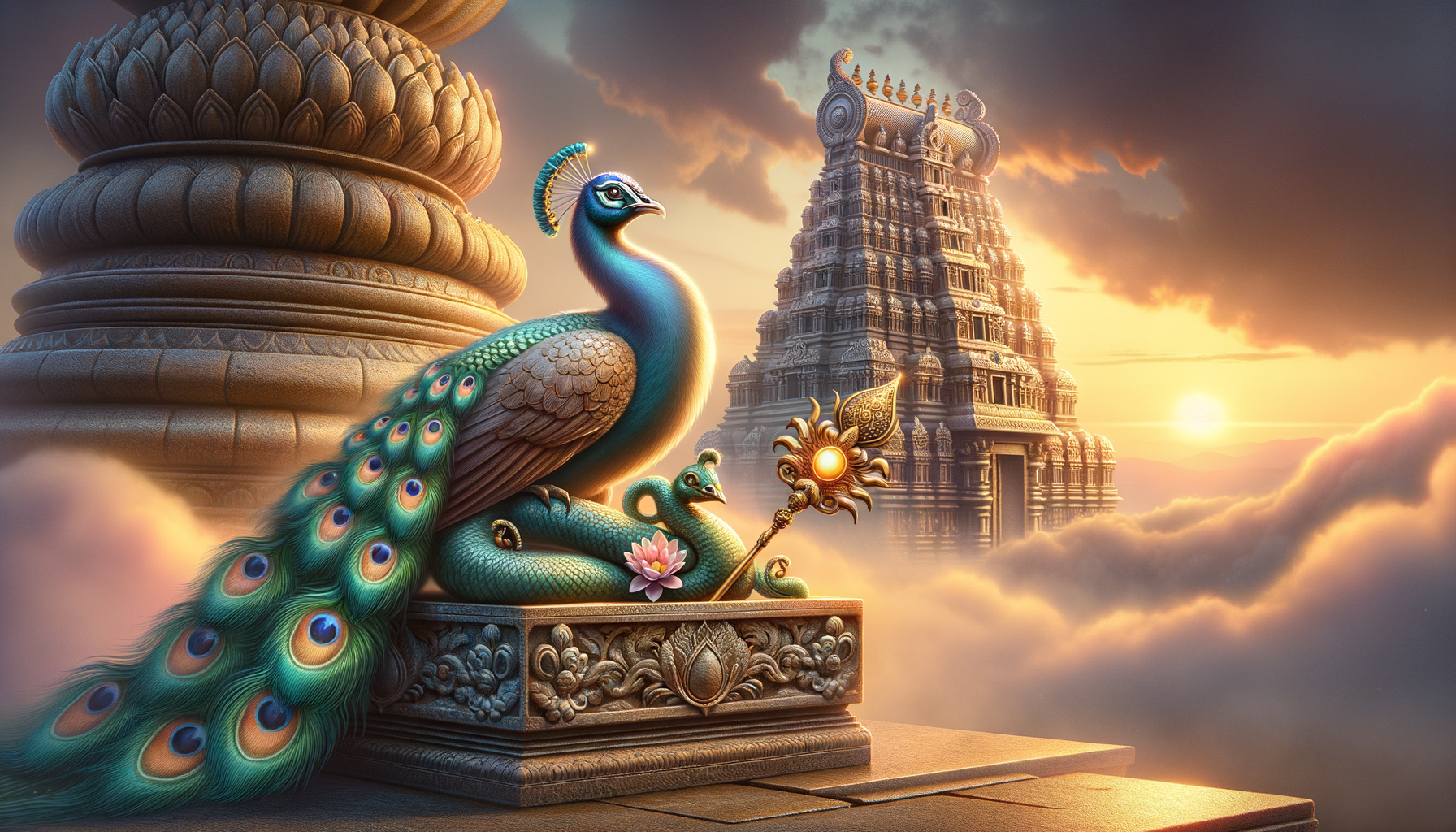
The peacock, vahana of Subrahmanya Swamy (Lord Muruga), symbolizes beauty, courage, and ethical clarity in Hinduism. Its iconographyoften subduing a serpentsignifies victory over ego and ignorance, aligning aesthetics with spiritual discipline. Devotees regard the peacock’s dance and call as auspicious, a sentiment reflected in festivals like Skanda Shashti and Karthigai, as well as in arts…
-
Prithu Chakravarthi: The Legendary Sovereign Who Made Earth ‘Prithvi’ and Renewed Dharma

The Brahma Purana’s account of Prithu Chakravarthi explains why Earth is called Prithvi and presents a powerful model of ethical leadership. By restoring prosperity after the misrule of Vena, Prithu embodies raja-dharmaprotecting Mother Earth and ensuring just abundance. The narrative’s imagery of Earth as a cow, yielding to compassionate stewardship, offers enduring guidance for sustainable…
-
Prasnam Astrology (Prasana Jothidam): Timeless Guidance, Ma Shakti’s Grace, Practical Clarity

Prasnam Astrology (Prasana Jothidam) is a Vedic inquiry method that aligns a sincere question with the chart of its moment, seeking clarity and the grace of Ma Shakti Devi. Practitioners examine Lagna (Ascendant), Nakshatra, planetary lords, and Panchang elements, sometimes integrating ritual omens in lineages such as Kerala’s Ashta Mangala Prasnam. The approach emphasizes ethical…
-
Vel of Murugan: Unlocking Inner Clarity, Courage, and the Compassionate Slaying of Ego

The Vel of Lord Murugan is more than a spear; it is a precise symbolic tool for cultivating inner clarity, dissolving egoic patterns, and aligning life with dharma. Its single-pointed tip represents focused attention and discerning wisdom, transforming philosophy into lived practice. Ritual observances such as Thaipusam and Karthigai reveal the Vel as a visible…
-
Kala Rudra: Shiva’s Awe-Inspiring Face of Time, Destruction, and Renewal Explained

Kala Rudra, Shiva’s awe-inspiring form of time and transformation, reveals the compassionate purpose behind cosmic dissolution. Readers will learn how “Kala” (time) and “Rudra” (purifying force) together symbolize the end of stagnation and the beginning of renewal. The article clarifies iconography across Shaiva traditions while emphasizing the inner meaning: fearlessness, detachment, and clarity. Practical insights…
-
Govind Dev Ji Temple, Jaipur: A Soul-Stirring Krishna Shrine in the City Palace Complex

Situated within Jaipur’s City Palace complex, Govind Dev Ji Temple is a renowned Krishna shrine where living bhakti shapes daily life. Historically installed by Maharaja Sawai Jai Singh II, the deity’s presence reflects a seamless integration of devotion and civic identity. The temple’s Rajput–Mughal aesthetics, open courtyards, and axial alignments exemplify Jaipur’s heritage planning. Daily…
-
Calm Anxiety from Childhood Wounds: Science‑Backed, Dharmic Practices to Restore Safety and Agency

Anxiety rooted in childhood often reflects a nervous system trained to protect, not a personal failing. This analysis traces how early experiences with shame and pressure can imprint persistent anxiety and how grief, loss, and responsibility can catalyze healing. It presents ten practical, trauma-informed methodsgratitude-based inquiry, life simplification, quiet observation and cautious fasting, shock recognition,…
-
Sacred Footsteps in New Vrindaban: Srila Prabhupada’s Timeless Guidance on Simple Living
Srila Prabhupada’s four visits to New Vrindaban offered ISKCON a practical, enduring blueprint for simple, devotional living. His first month-long stay in 1969 emphasized austere contentment, praising modest lodgings, well water, and fresh milk from “Kaliya,” ISKCON’s first cow. These moments translated the Bhakti Tradition into everyday practiceself-sufficiency, cow protection, and sustainable village life rooted…
-
Ghati Subramanya Temple near Bengaluru: Sacred Swayambhu Subrahmanya and Lakshmi Narasimha

Ghati Subramanya Temple near Doddaballapur, about 60 km from Bengaluru, is a revered Karnataka pilgrimage site dedicated to Lord Subramanya with Lord Lakshmi Narasimha also consecrated. The Subramanya murti is venerated as a Swayambhu vigraha, enhancing the shrine’s spiritual gravitas. Visitors frequently describe a calm, reflective atmosphere that supports both devotion and contemplation. The shared…
-
Champa Sashti 2025: Six Sacred Days of Khandoba’s Victory, Devotion, and Community
Champa Sashti 2025 is observed in Maharashtra from November 21 (Shukla Paksha Pratipada) to November 26 (Sashti) in the Margashirsha Month. The six-day festival commemorates Lord Khandoba’s victory over Mani and Malla, symbolizing dharma’s triumph over adharma. Devotees engage in fasting, abhishekam, aarti, and bhajans, with special reverence at temples such as those in Jejuri.…
-
Elevate Every Meal: Pancha‑Prana Mantras for the First Five Morsels in Hindu Dharma
In Sanatana Dharma, eating is honored as a sacred act. This guide presents the Pancha-Prana mantrasOm prāṇāya svāhā, Om apānāya svāhā, Om vyānāya svāhā, Om udānāya svāhā, Om samānāya svāhāoffered with the first five morsels to sanctify nourishment and steady the mind. It explains the Upanishadic basis in the five vāyus, the role of the…
-
Shighra Vivaha Mantras: Calming Practices to Navigate Delayed Marriages with Hope

This guide frames Shighra Vivaha Mantras as contemplative supports for delayed marriages, emphasizing calm and clarity rather than quick fixes. It presents the commonly cited mantra for a Kanya|| OM KLEEM HREEM MATANGI PHAT SWAHA ||with traditional guidance to practice for 40 days. The role of the mother is acknowledged, noting that some traditions suggest…
-
Arjuna’s Battlefield Anxiety: A Timeless Guide to Dharma, Mental Resilience, and Action

The Bhagavad Gita’s opening presents Arjuna in acute distresstrembling, disoriented, and morally tornoffering a precise portrait of battlefield anxiety. Rather than pathologizing, the text frames his vishada as the starting point for ethical clarity and inner steadiness. Krishna’s counsel models a pragmatic sequence: reframing, values-based duty, equanimity, breath regulation, and focused attention. These principles map…
-
Padakrichra and Krichra Fasting: A Compassionate Path to Atonement in Hindu Dharma

Hindu dharma frames atonement as a twofold movement: paschatapa (repentance) and prayaschitta (expiation). Within this framework, krichra fastsespecially Padakrichraoffer a disciplined, stepwise regimen that turns remorse into responsible action. Rather than punitive, these vows are transformative, integrating measured fasting, reflection, and ethical commitments like truthfulness, non-injury, and charity. The practice is most meaningful when guided…
-
Lions and Tigers in Hindu Scriptures: Powerful Symbols of Dharma, Shakti, and Dharmic Unity

Lions and tigers in Hindu scriptures symbolize disciplined strength aligned with dharma rather than domination. Narasimha, the man-lion avatar of Vishnu, exemplifies protective ferocity that restores moral order, while Pārvatī and Durga seated on a lion or tiger embody Shakti’s compassionate guardianship. The tiger’s association with Durga and Shiva transforms raw energy into ethical force.…
-
रामचरितमानस की चौपाइयों का जप: बड़े संकटों से मुक्ति और आत्मबल के सशक्त उपाय

Across the Bhakti tradition, it is widely held that chanting selected Ramcharitmanas चौपाइयाँ strengthens inner stability and helps navigate major crises. The method is simple, disciplined, and compatible with evidence-informed insights on mantra meditation and attention training. By aligning breath, sound, and intention, japa encourages calm affect, moral clarity, and courage for ethical action. Families…
-
Why Margashirsha Maas Matters: Bhagavad Gita’s Revered Month and Living Traditions

Margashirsha Maas (Margashira masam/Margazhi) is revered as the ninth and especially auspicious month of the traditional Hindu lunar calendar. Scripture and tradition converge here: the Bhagavad Gita proclaims māsānām mārgasīrṣo ’ham (10.35), while devotional remembrance celebrates ‘Maasonam Margashirshoham’. Observances during this period emphasize vratas, pujas, Gita recitation around Gita Jayanti, and quiet pre-dawn practices that…
-
Gita Jayanti 2025: Date, Significance, and Inspired Observances on Mokshada Ekadashi

Gita Jayanti 2025 falls on December 1, coinciding with Mokshada Ekadasi during the Margashirsha Shukla Paksha. Recognized as the origination day of the Srimad Bhagvad Gita, it highlights the timeless dialogue that clarifies dharma and ethical action. The observance encourages fasting, recitation, study circles, and community satsangs that make the scripture’s insights practical and uplifting.…
-
Alalanatha’s Sacred Calm: Final Temple Parikrama, Forest Gathering, and Living Heritage

A reflective visit to the Alalanatha Temple concluded the month’s final parikrama with calm focus and cultural depth. Set beneath a mango tree in a serene forest, the gathering revisited sacred narratives associated with the site. Tradition holds that a temple stone softened under Sri Chaitanya Mahaprabhu’s devotion, a memory that conveys the intensity of…
-
Fierce Grace of Kali: A 1981 Russian Psychedelic Short Through Kathakali’s Talking Hands
This piece examines “The Talking Hands of Travancore” (1981), a Russian psychedelic short that interprets the Hindu Goddess Kali through animation and Kerala’s Kathakali. It explains how Kathakali’s mudras and abhinaya act as a semiotic bridge, translating the Kali–Mahisha motif into expressive movement. The analysis highlights cross-cultural collaboration, where Russian experimental cinema engages with South…