
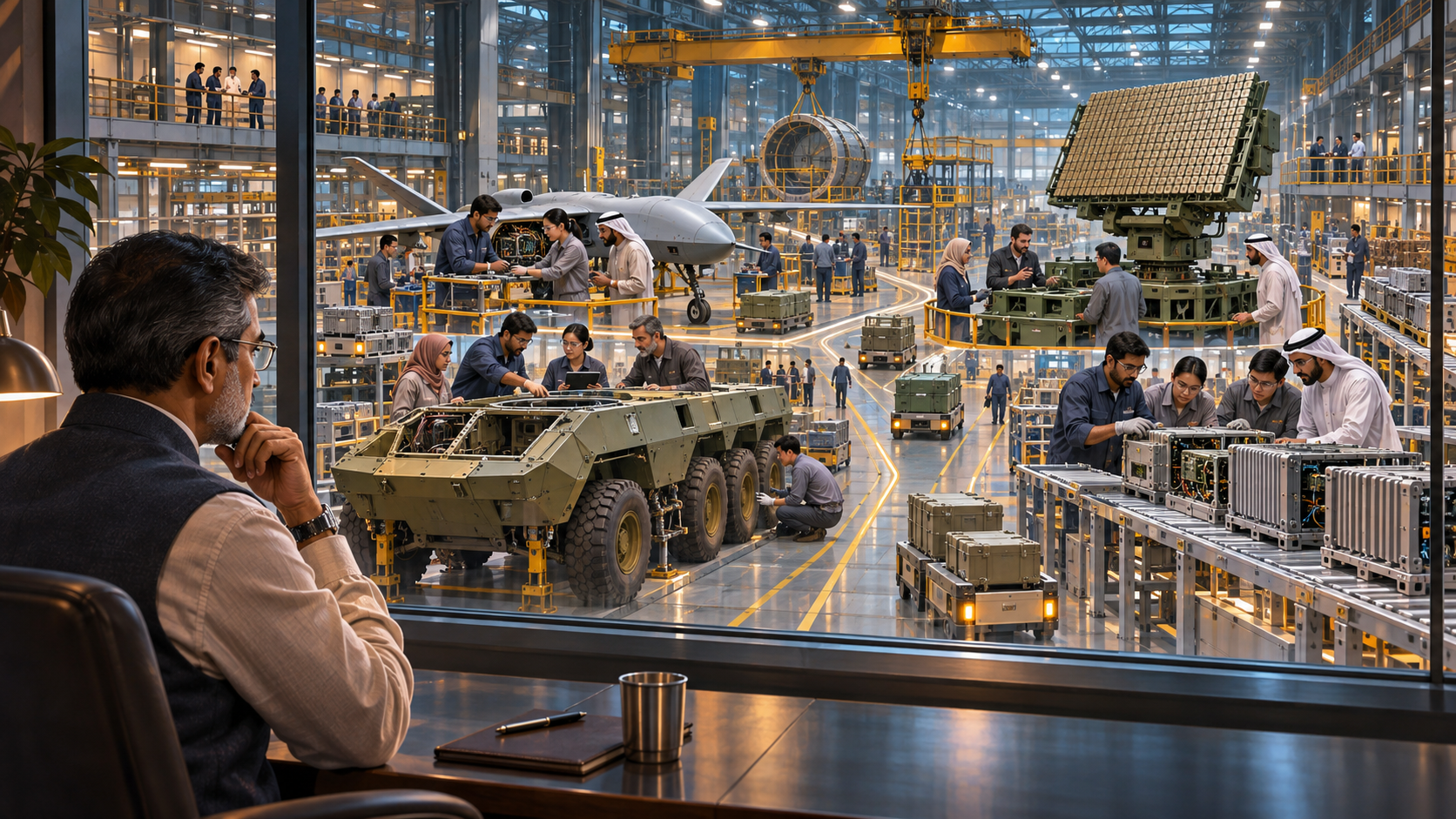
If you are trying to decide whether the Badr pact is an immediate military threat to India, do not begin with the word pact. Begin with what the four participants can actually finance, design, manufacture, train for and deliver.
The right response is neither alarm nor dismissal. Badr is not presented as a collective-defence alliance, but it could give Pakistan a wider route to technology, capital, production capacity and export markets. For India, the most important question is whether that route begins to intersect with Indonesia’s expanding defence relationship with Bharat.
Read Badr as an industrial framework, not a war guarantee
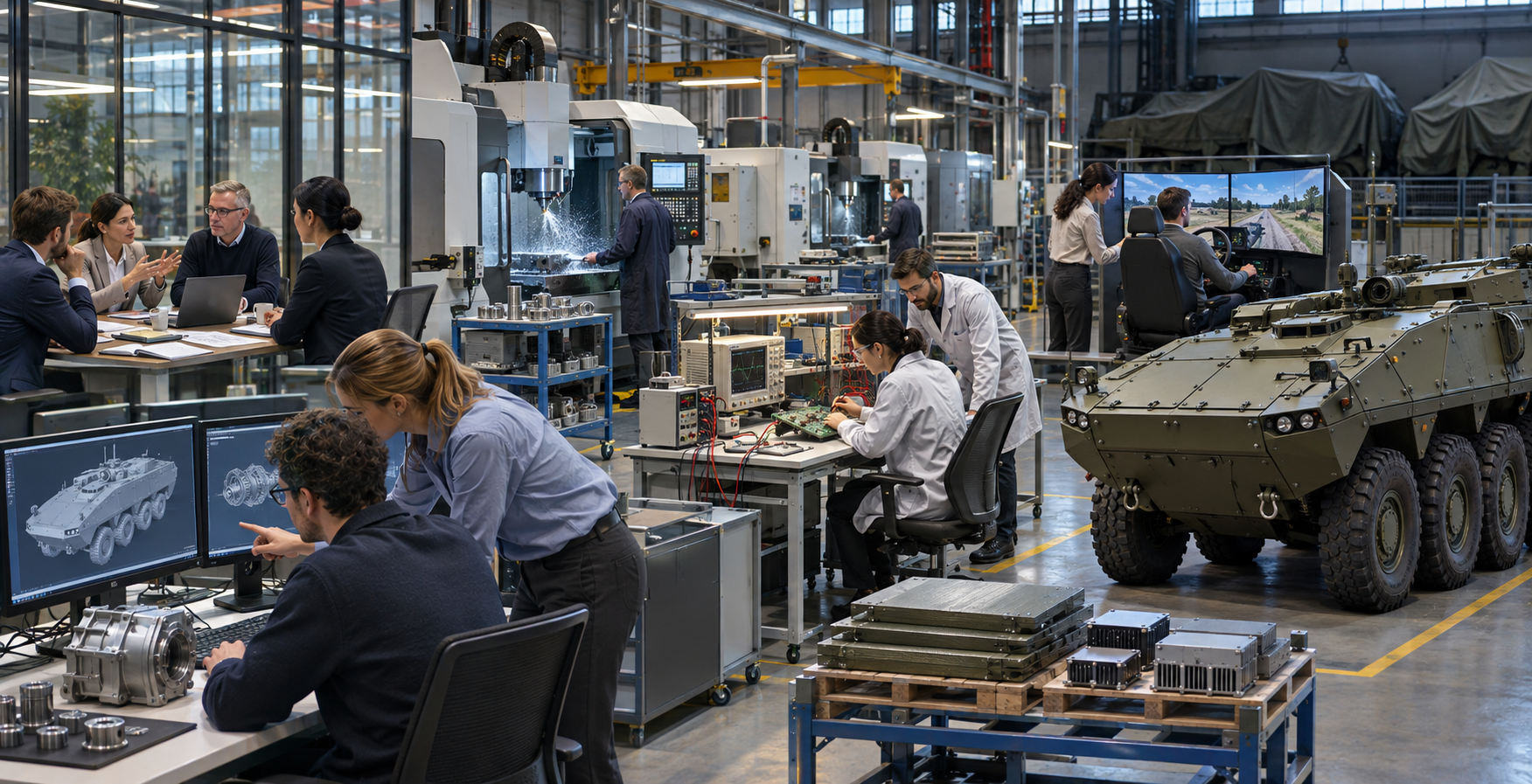
The defence ministers of Pakistan, Türkiye, Qatar and Indonesia signed the Badr Memorandum of Understanding in Doha on 21 October 2026. Its stated scope includes defence manufacturing, research and development, technology sharing and military training.
That is consequential, but an MoU is not a factory, a funded weapons programme or a mutual-defence clause. It establishes a channel through which projects can be negotiated. Whether that channel becomes strategically important depends on what passes through it.
You can separate political signalling from material capability by using a simple evidence ladder:
- Framework signed: the participants have declared an intention to cooperate.
- Programme named: they identify a platform, subsystem, research field or training activity.
- Money and workshare assigned: a participant funds the project and the partners divide design, production and integration responsibilities.
- Facilities and personnel committed: production lines, laboratories, technical teams or recurring training courses appear.
- Delivery achieved: equipment enters service, is exported or begins changing an operational capability.
Badr is currently significant at the first level. India should prepare for the later levels without pretending they have already been reached. This distinction matters because strategic surprise can begin with a seemingly modest industrial agreement, but poor analysis can also manufacture a crisis from a signature alone.
The name deserves attention as well. It recalls the Battle of Badr in 624 CE, remembered in Islamic tradition as Muhammad’s decisive victory over the Meccan Quraysh, who are characterised there as idolaters. For a Dharmic audience, that is not culturally empty symbolism. Yet the historical reference attached to the pact does not identify a weapons programme, target or operational commitment. Treat the name as political signalling, not as a substitute for capability analysis.
The four partners supply different parts of the same machine

Badr becomes more important when you examine the complementarity among its members. No single participant has to provide everything. One can supply integration experience, another capital, another manufacturing demand and another access to technology or export networks.
| Participant | What it brings to Badr | What India should examine |
|---|---|---|
| Türkiye | An established defence-industrial base and systems-integration experience | Which designs, subsystems, production methods or integration skills are offered, and who receives them |
| Pakistan | A search for technology access, investment and additional export opportunities | Whether cooperation removes an existing industrial bottleneck or opens a durable export route |
| Qatar | Financial resources and defence demand | Whether announced projects receive committed funding, orders or other support that moves them beyond the MoU stage |
| Indonesia | An interest in local manufacturing and diversified defence partnerships | Whether Badr activity overlaps with technology, institutions or personnel connected to sensitive cooperation with India |
Pakistan is the principal Indian security concern in this arrangement. The pact could help it pursue capabilities without relying on a single external relationship. Türkiye can contribute industrial knowledge; Qatar can reduce the financing constraint; Indonesia can add manufacturing ambition, scale and another route into wider markets. That combination is the strategic proposition, even before any one project becomes operational.
Military training also belongs in the assessment. Training cooperation is less visible than a production line, but recurring courses can spread technical practice, create institutional relationships and make future joint work easier. India should therefore monitor not only weapons announcements but also the subjects, frequency and participating institutions of Badr-linked training.
India need not settle every broader argument about Türkiye’s or Qatar’s intentions before acting. Their decision to join a framework that could strengthen Pakistan’s defence industry is itself a concrete fact to incorporate into technology-security reviews, procurement-risk assessments and diplomatic engagement. At the same time, participation in Badr does not prove that every Turkish, Qatari or Indonesian defence activity is directed against Bharat. Policy should respond to demonstrated alignment and measurable capability, not to an undifferentiated label.
Indonesia is the hinge, not a partner India should write off
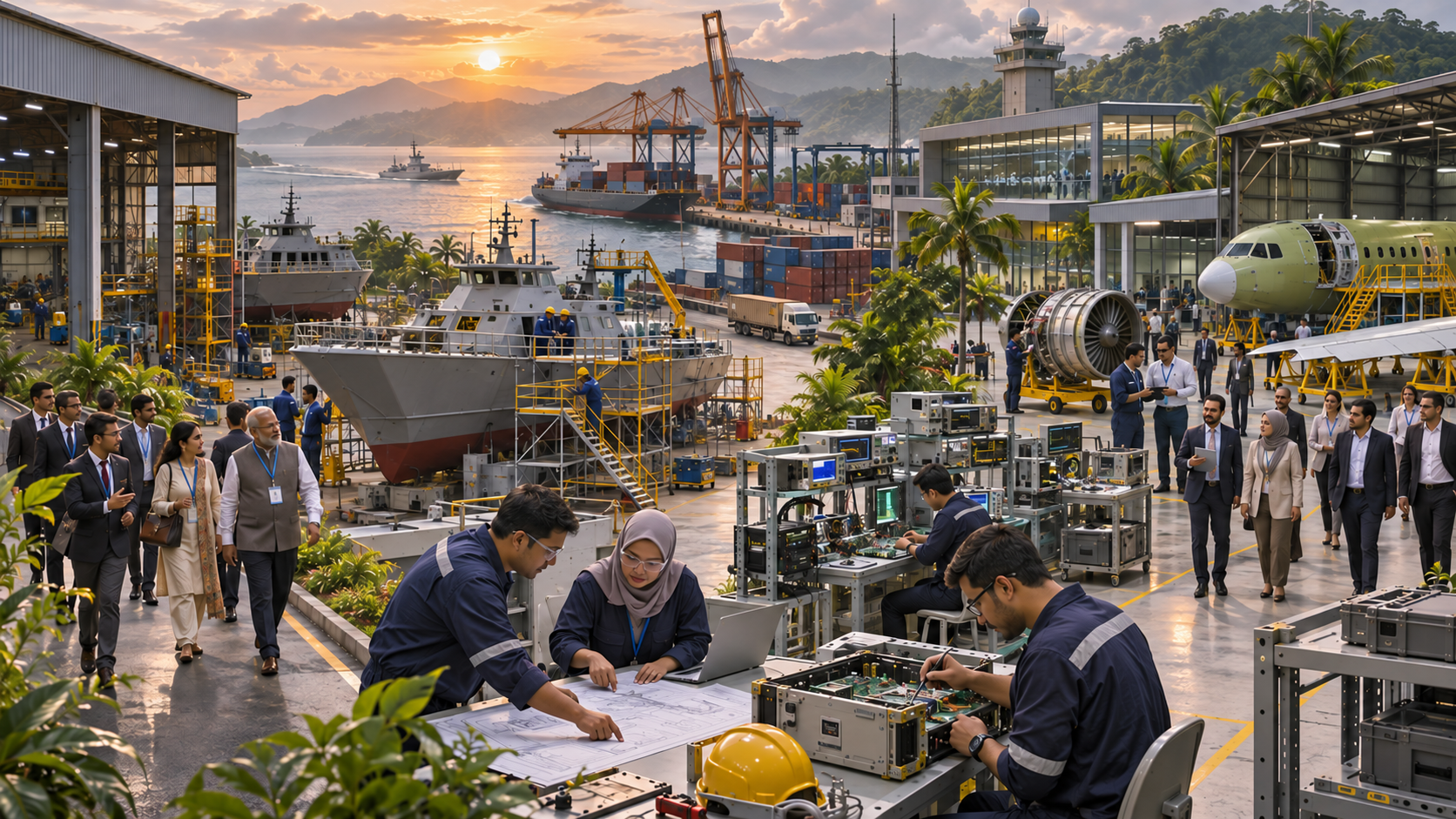
Indonesia is the most sensitive participant because it also has growing defence engagement with India. That creates a possible technology-security problem, but not an automatic breach. Countries frequently maintain several defence relationships at once, especially when they want local production and a more diverse set of suppliers.
The unhelpful Indian responses would be either to assume that Jakarta has entered an anti-India bloc or to proceed as though Badr changes nothing. The useful response is project-level clarity. India should ask where personnel, facilities, data, software, designs and production processes could overlap.
- Define protected technology precisely. Sensitive material should be identified by component, data set, software module and manufacturing process. A vague confidentiality clause is weaker than a clear access map.
- Control onward transfer. Agreements involving sensitive Indian technology should specify who may receive it, whether subcontractors can access it and what consent is required before retransmission.
- Separate teams and systems where necessary. If an Indonesian institution works with both India and Badr partners, compartmentalised personnel, repositories and facilities can reduce inadvertent leakage.
- Review changes, not just the original arrangement. A safeguard agreed before Badr may need revision if a new partner, facility or joint programme later enters the same industrial environment.
- Maintain a direct channel with Jakarta. India needs timely clarification of scope and overlap. Public suspicion is a poor replacement for specific questions asked through defence and diplomatic channels.
Safeguards alone will not preserve the relationship. India must also make cooperation with Bharat valuable to Indonesia’s own goals, especially local capability and partnership diversification. That means reliable project execution, credible workshare and sustained institutional contact. Demanding exclusivity would be unrealistic; demanding clarity around sensitive Indian technology is not.
This approach also avoids pushing Indonesia more deeply toward the other Badr participants. A punitive reaction could turn a manageable technology-protection question into a wider diplomatic setback. Firm engagement gives India a better chance to preserve influence while drawing clear boundaries.
India should track outputs rather than declarations

The practical intelligence task is to turn Badr from a dramatic headline into a structured watchlist. Each announced activity should be recorded against the same fields: project, lead partner, funding, technology contribution, production location, workshare, milestones, training component, intended customer and actual delivery.
Six signals would show that the framework is becoming more than political theatre:
- A named platform or subsystem. General promises become more credible once the partners identify what they intend to build or improve.
- Committed financing or an order. Money and demand distinguish an executable programme from an aspiration.
- A disclosed division of labour. Workshare reveals which partner is supplying design authority, manufacturing, integration, testing or final assembly.
- A dedicated facility or production line. Physical investment raises the cost of abandoning a project and creates lasting industrial capacity.
- Repeated technical or military training. Recurrence matters more than a ceremonial first course because it indicates institutionalisation.
- A delivery, deployment or export. This is the point at which industrial cooperation begins producing an observable defence outcome.
India should then ask a second question: what constraint has the project removed for Pakistan? A programme matters more if it gives Pakistan access to a previously unavailable technology, replaces a vulnerable supply route, expands production, improves systems integration or enables exports. Counting meetings and signatures will not answer that question.
The response should be equally concrete. Protect high-value technologies, reinforce counter-intelligence around exposed programmes, identify supply-chain dependencies, deepen engagement with Indonesia and update assessments of Pakistan’s defence-industrial capacity as evidence emerges. Badr should be a standing analytical file, not a one-week news cycle.
Key takeaways
- Badr is a framework for defence industry, research, technology sharing and training; it is not, on the available facts, a collective-defence alliance.
- The risk to India lies in the combination of Turkish industrial experience, Qatari resources, Pakistani requirements and Indonesian manufacturing ambitions.
- Indonesia requires careful engagement because of its parallel defence relationship with India. Bharat should protect sensitive technology without treating Jakarta as irretrievably hostile.
- The pact becomes materially important when named projects acquire funding, workshare, facilities, recurring training and deliveries.
- India should judge Pakistan’s gains by the industrial constraints that Badr removes, not by the number of meetings held under its banner.
Watch the next project announcement for names, money, workshare and milestones. If those elements are missing, keep the claim in the signalling column. If they appear, India should update safeguards and engagement before the first production line or delivery makes the change harder to contain.
References

Leave a Reply
You must be logged in to post a comment.