

Pakistan’s treatment of religious heritage presents two very different pictures. Prominent pilgrimage projects and official ceremonies can widen access and signal respect, while neglected shrines, contested property and ineffective remedies can leave minority citizens insecure in ordinary life.
The useful question is therefore not whether Pakistan has produced examples of interfaith hospitality. It is whether the same institutional protection reaches every community, including at locally important sites that attract little diplomatic or media attention.
The proper benchmark is ordinary protection, not exceptional visibility
Public ceremonies, restored landmarks and facilitated pilgrimages are legitimate parts of minority policy. They can reconnect displaced families with sacred places and encourage cross-border contact. Their value should not be dismissed merely because they also serve tourism or diplomacy.
They are not, however, substitutes for equal policing, secure property records, impartial prosecution and routine maintenance. A policy succeeds when an unknown worshipper can report damage, contest an occupation or seek conservation assistance without needing foreign attention or intervention from senior officials. This distinction separates visible activity from enforceable rights.
Key takeaways
- Flagship pilgrimage projects are meaningful, but they cannot establish how every minority citizen is treated.
- Heritage disputes require evidence that distinguishes decay, unauthorized development, administrative failure and religiously motivated destruction.
- Constitutional guarantees become credible through accessible remedies, not declarations alone.
- Cross-border pilgrimage access and the daily rights of Pakistani minorities should be evaluated separately.
Farooqabad shows why evidence and early intervention matter
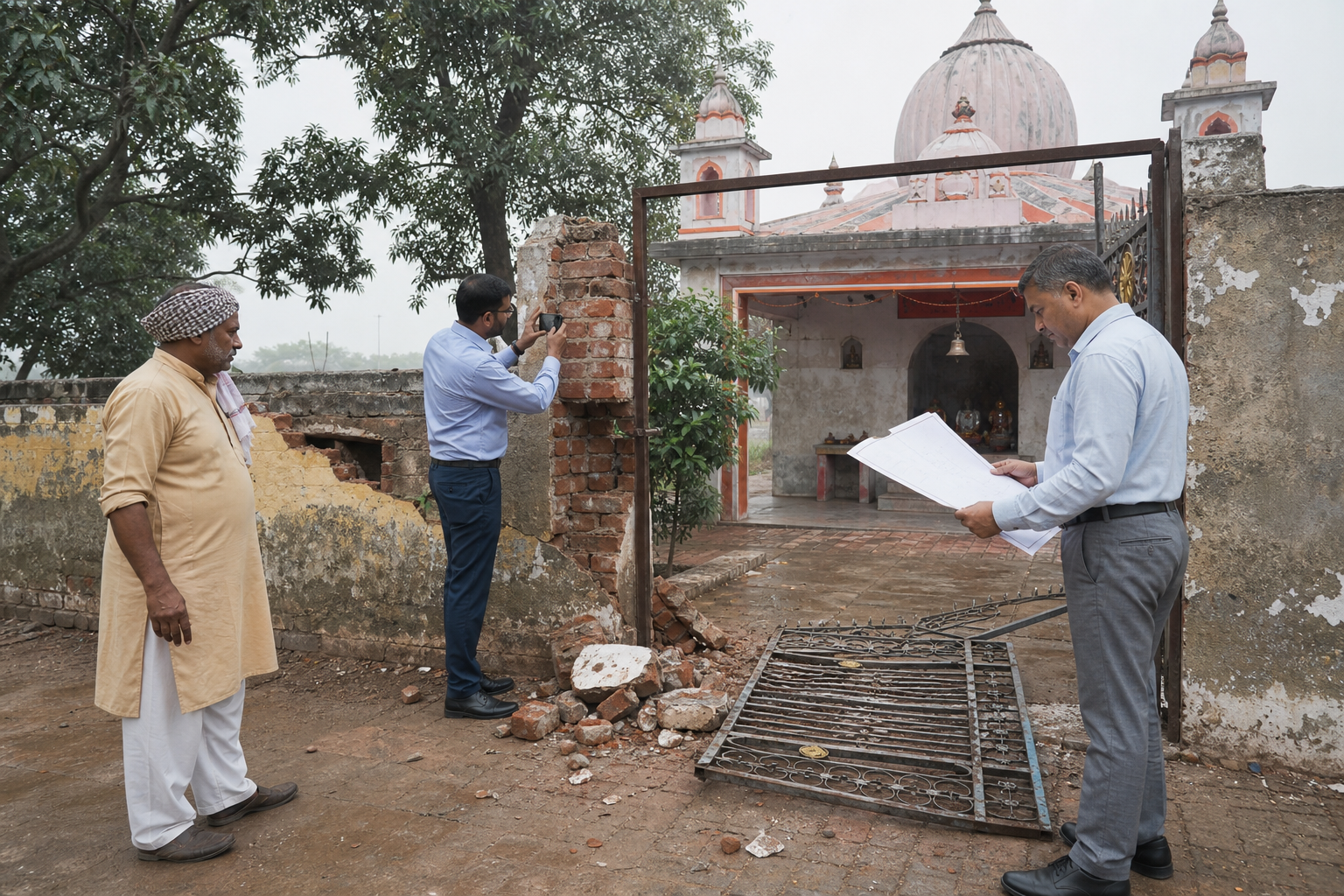
The supplied DharmaRenaissance Blog review identifies the site involved in a reported 2026 incident as Gurdwara Sri Guru Singh Sabha Sahib, also described in Pakistani coverage as a Sikh dharamsala. It places the property in Farooqabad in Sheikhupura district, approximately 60 to 70 kilometres from Lahore, rather than in Faisalabad. The review notes that Faisalabad was historically called Lyallpur and is a different city. That correction matters because accountability begins with establishing which property, authority and legal protections are involved.
According to the review’s summary of reports from late June and early July 2026, part of the approximately 125-year-old structure had suffered a wall collapse associated with deterioration before a local businessman undertook additional demolition without the required approval. Pakistani officials reportedly characterized that later work as unauthorized. Punjab authorities announced an inquiry and restoration, while an interfaith delegation pledged reconstruction and preservation. The review also reports that India’s Ministry of External Affairs condemned the incident and called for investigation, accountability and rapid restoration.
Those reported elements justify serious scrutiny but do not, by themselves, settle motive or responsibility. Structural failure, unauthorized private demolition, deficient regulation, deliberate religious vandalism and state-directed destruction are different findings. Treating them as interchangeable can obscure both wrongdoing and the institutional failures that allowed a vulnerable structure to reach crisis point.
A credible process would disclose the title and heritage status of the property, earlier structural assessments, applications for permission, communications with the Evacuee Trust Property Board, the police response and the authority under which work was performed. It would also secure remaining fabric, catalogue recovered material and prevent new construction while the facts are examined. Uncertainty about motive is a reason for investigation, not for administrative inaction.
Small communities expose the practical meaning of equality
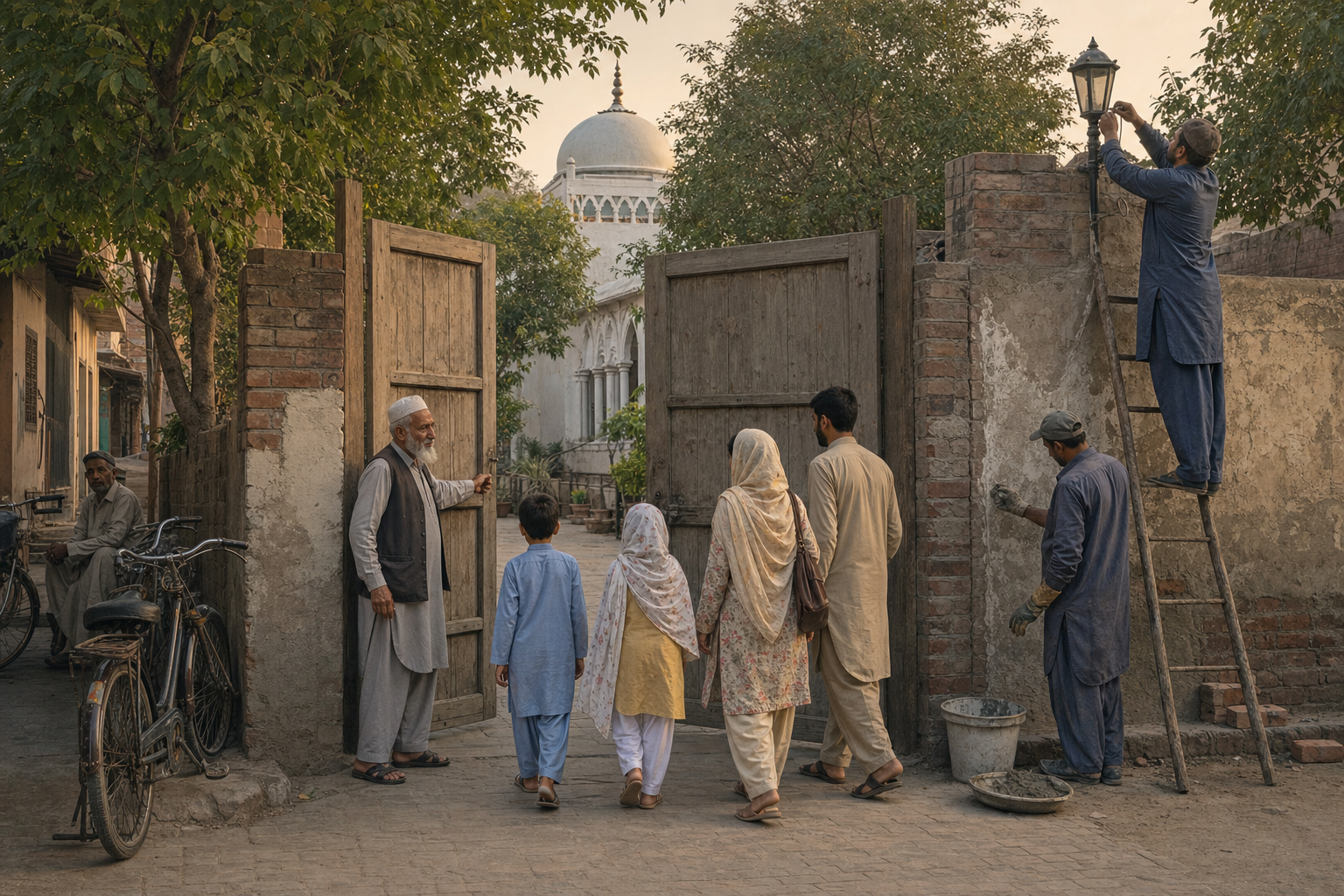
The review cites Pakistan’s 2023 national census table as recording a total population of 240,458,089. Its reported religious classifications illustrate that minority policy concerns millions of people while also encompassing very small communities.
| Reported census classification | Population reported in the review |
|---|---|
| Christians | 3,300,788 |
| Hindu Jati | 3,867,729 |
| Scheduled Castes | 1,349,487 |
| Ahmadis | 162,684 |
| Sikhs | 15,998 |
| Parsis | 2,348 |
| Other categories | 72,346 |
As the review observes, the Hindu Jati and Scheduled Castes classifications together account for more than 5.2 million people, although the census reports them separately. Census categories and patterns of self-identification may be debated, but the governing principle does not depend on population share. A small community holds the same freedom of conscience as a large one, even though limited numbers may weaken local representation and increase dependence on public institutions.
The constitutional picture described by the review combines substantial guarantees with structural exclusions. Article 20 protects citizens’ religious profession, practice and propagation as well as denominational institutions, subject to legal limitations. Article 22 addresses compulsory religious instruction or worship in education; Article 25 provides equality before the law; Articles 26 and 27 concern discrimination in public places and public service; and Article 28 protects distinct languages, scripts and cultures.
At the same time, the review notes that Islam is the state religion, Article 41 requires the president to be Muslim, and Article 91 requires the National Assembly to elect a Muslim member as prime minister. Minority-rights analysis must hold both parts of this framework in view: formal protections create standards against which administration can be judged, while religious qualifications for the highest offices limit the reach of political equality.
Kartarpur cannot serve as a proxy for every local shrine
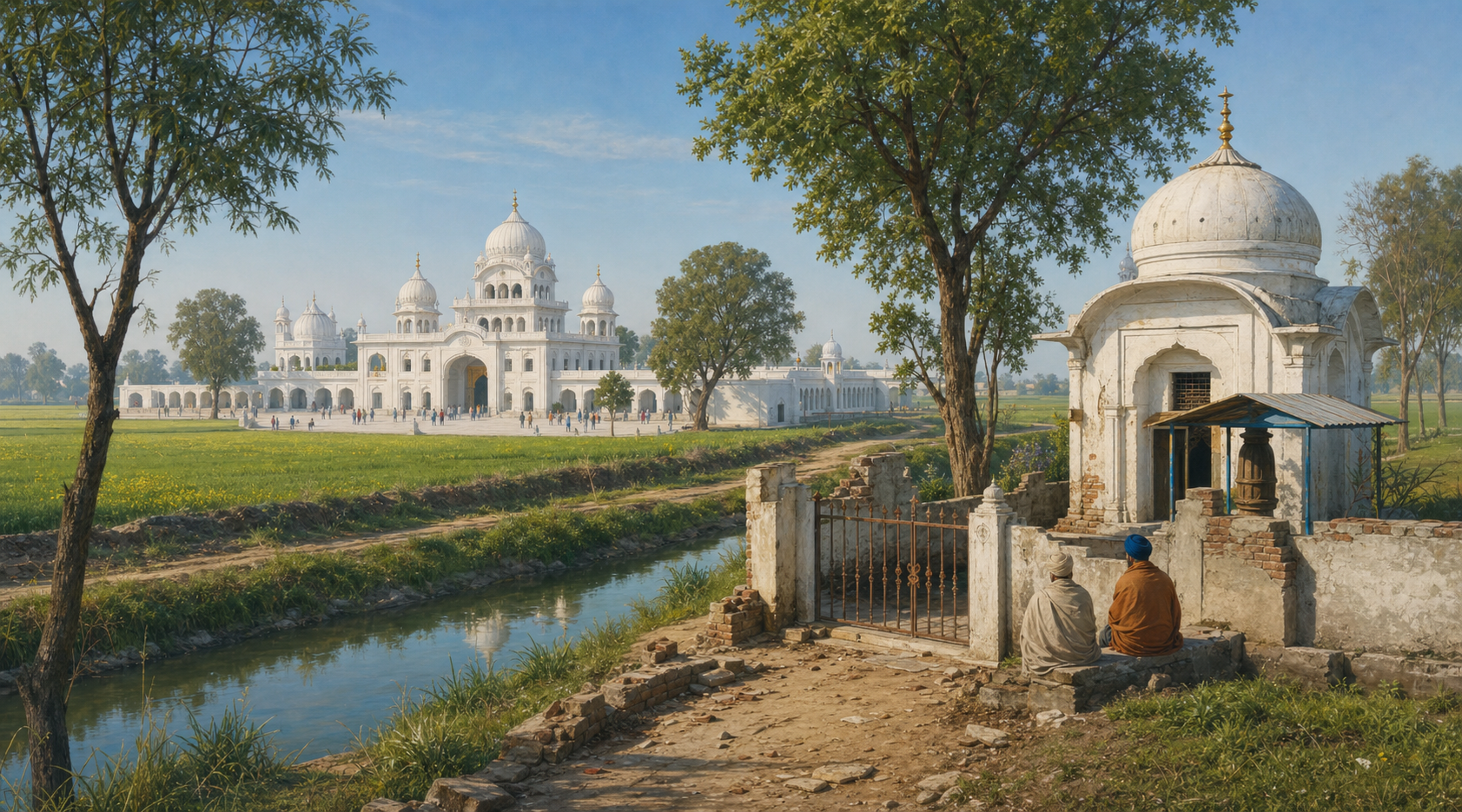
The Kartarpur Corridor demonstrates what concentrated political commitment can achieve. The review reports that the corridor, inaugurated in 2019, created an exceptional route to Gurdwara Darbar Sahib, associated with the final years of Guru Nanak’s life. It also cites Pakistan’s Evacuee Trust Property Board as describing capacity for as many as 5,000 yatrees a day under the bilateral arrangement.
That initiative answered a longstanding Sikh aspiration and remains relevant evidence when Pakistan’s heritage policy is assessed. Yet it cannot prove that lesser-known gurdwaras, temples, churches or other sacred properties receive comparable protection. A heavily monitored international destination and a deteriorating neighbourhood shrine present different administrative tests.
The review further reports that, as of July 2026, India’s official pilgrimage portal listed corridor services as suspended because of the security situation. This illustrates the vulnerability of cross-border access to bilateral conditions and the potential involvement of both states. It also reinforces the need to separate two policy questions: how foreign pilgrims are received during organized visits, and how Pakistani citizens experience religious freedom throughout the year.
A credible heritage policy must end in an effective remedy
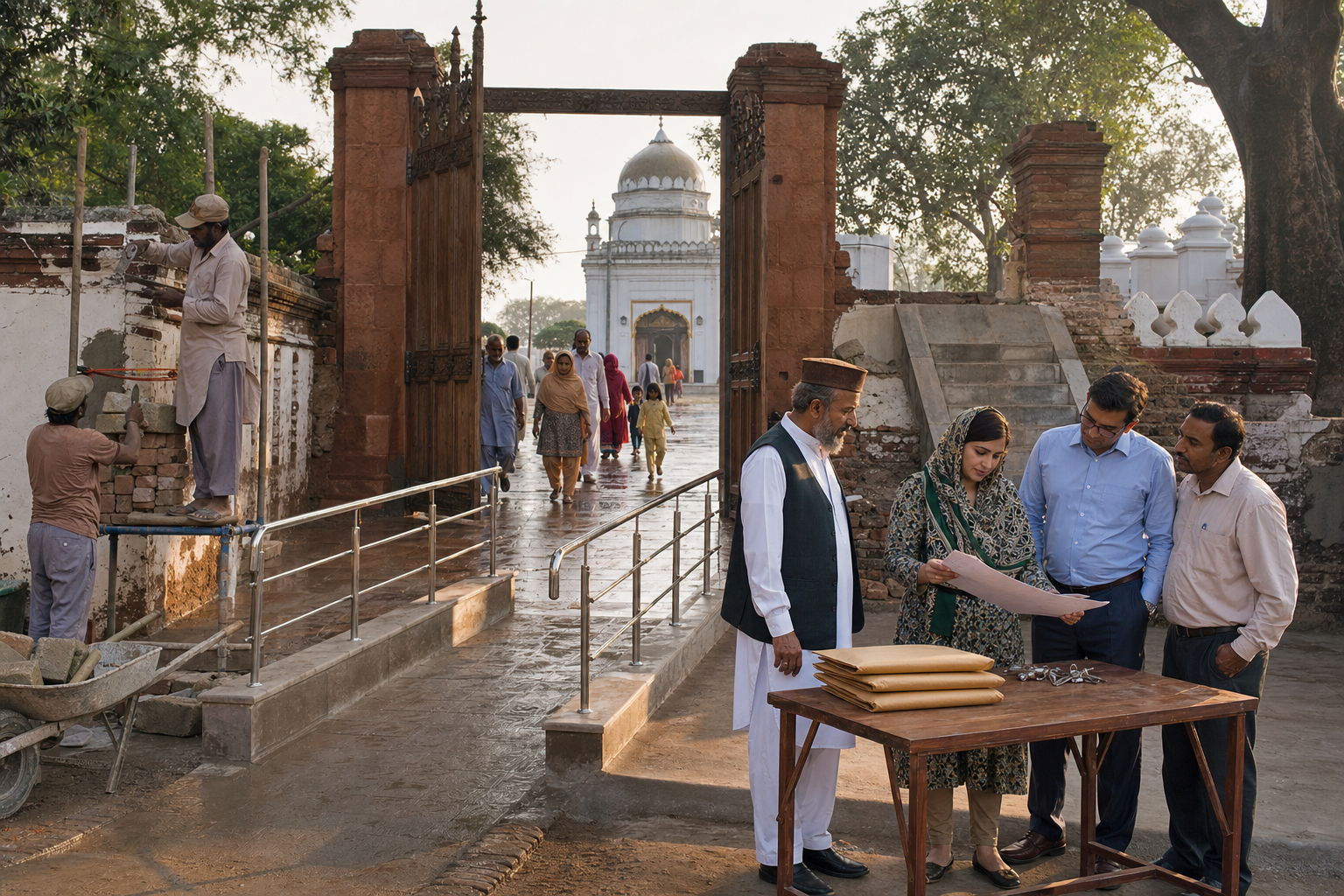
Religious heritage is not simply old real estate. A functioning sacred site can contain ritual practice, community memory, records, objects, kitchens and connections to families displaced during Partition. Neglect can therefore impair cultural continuity as well as worship. Poor reconstruction can cause another kind of loss if surviving historic fabric is replaced without documentation or community consent.
Assessment should follow the full chain of responsibility: whether a site is documented; whether its title and legal status are clear; whether emerging structural risks are detected; whether authorities respond before damage expands; whether an offence is properly investigated; and whether conservation is completed with the affected community’s participation. Public promises should be measured against disclosed timelines, preserved evidence, lawful decisions and finished work.
The most persuasive next step would be to make this standard routine rather than incident-driven. Transparent investigations at contested sites, preventive surveys of vulnerable properties and remedies available without diplomatic attention would allow heritage initiatives to support minority rights instead of merely representing them.