
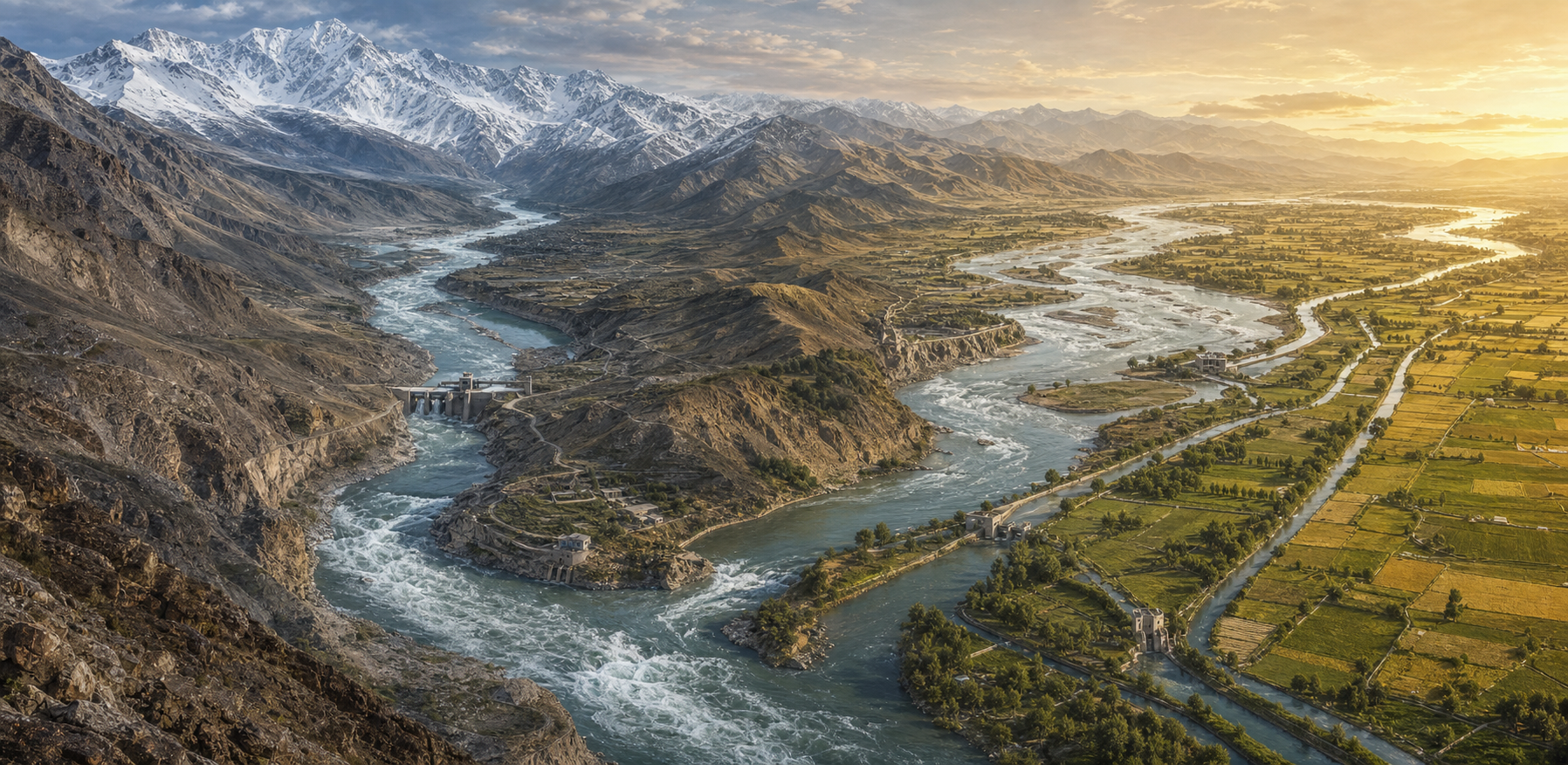
India’s decision to place the Indus Waters Treaty in abeyance after the Pahalgam terrorist attack changed the political meaning of a compact long treated as separate from the wider India-Pakistan conflict. According to the cited analysis, the attack occurred at Baisaran near Pahalgam on 22 April 2025, and India’s Cabinet Committee on Security acted on 23 April.
Understanding the pause requires separating three issues that are often compressed into one: the diplomatic signal sent by India, the rights and procedures written into the treaty, and the practical limits imposed by infrastructure and geography. The pause increases pressure for a reassessment, but it does not by itself settle what a revised water relationship would contain.
Why the April 2025 decision was more than a reaction
The DharmaRenaissance Blog analysis presents the April decision as the culmination of an accumulating dispute rather than an isolated response. Its chronology begins with the constitutional reorganisation of Jammu and Kashmir in August 2019, continues through India’s January 2023 notice seeking treaty modification, and includes a growing conflict over parallel dispute-resolution proceedings.
The source reports that Pakistan downgraded diplomatic relations, expelled the Indian High Commissioner and suspended bilateral trade after the 2019 reorganisation, while continuing to participate in the water treaty. That contrast is central to the Indian strategic argument described in the article: Pakistan continued to value the treaty’s insulation even as the broader bilateral relationship deteriorated, while India increasingly questioned whether such insulation had become one-sided.
The resulting pause therefore operates on two levels. It is a response to the Pahalgam attack, as reported by the source, but it also communicates that water cooperation can no longer be assumed to remain politically untouched by terrorism, diplomatic hostility and disputes over Indian projects. This does not establish a new water-sharing settlement. It changes the conditions under which India is willing to treat the existing settlement as normal.
The treaty created stability by dividing rivers, not sharing each one
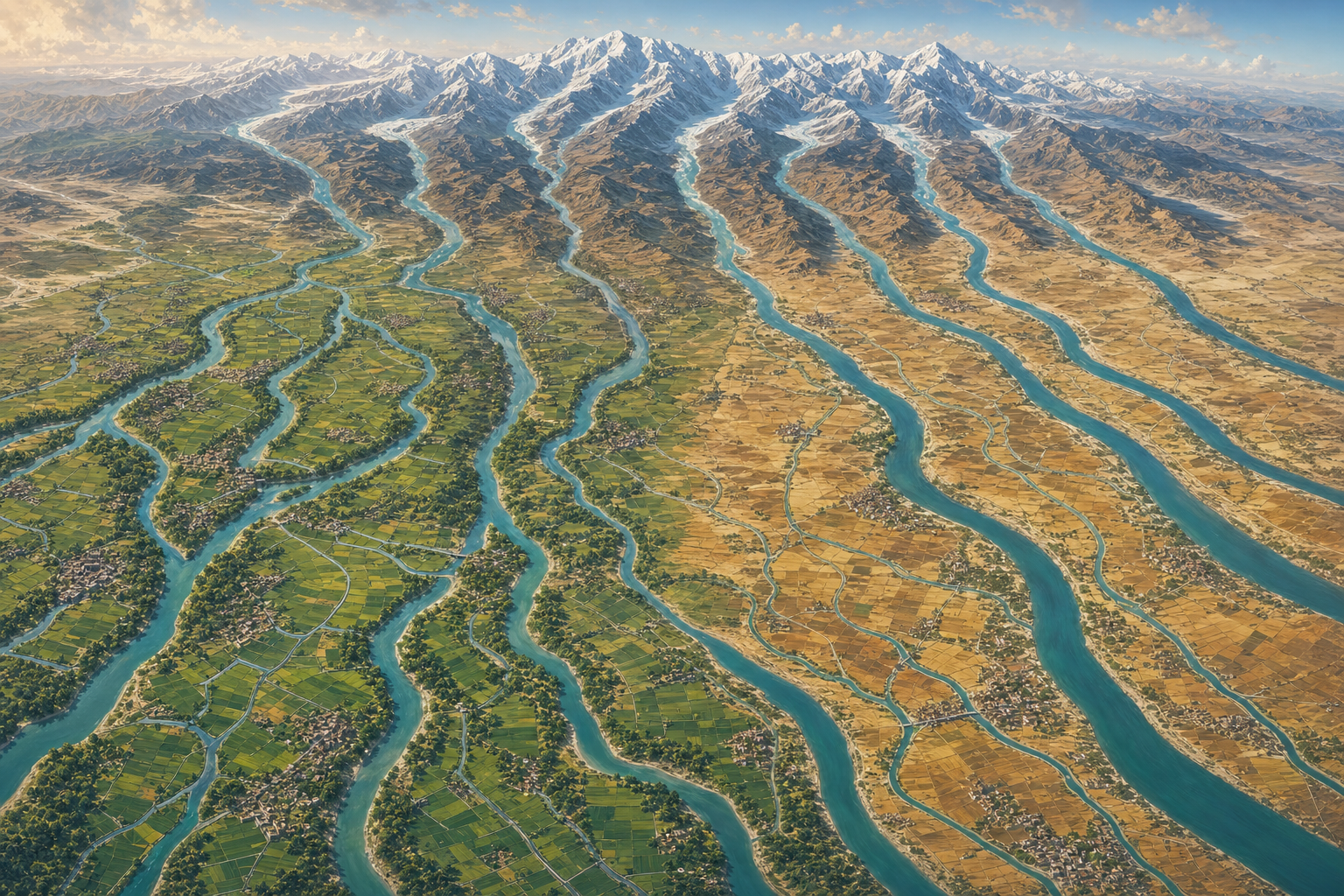
The treaty’s architecture helps explain both its endurance and the grievances surrounding it. The source reports that the agreement was signed in Karachi on 19 September 1960, with the World Bank in a facilitating role. It allocated unrestricted Indian use of the eastern rivers – the Ravi, Beas and Sutlej – while assigning Pakistan the use of the western rivers – the Indus, Jhelum and Chenab. India retained defined rights on the western rivers, including limited irrigation, domestic and navigational uses, non-consumptive uses and treaty-compliant run-of-river hydropower.
This was closer to a partition of the river system than to continuous negotiation over a common volume of water. Allocating groups of rivers reduced the need for daily bargaining, which helped the arrangement function through periods of severe political tension. At the same time, it produced a lasting asymmetry: important western-river stretches run through Indian territory before entering Pakistan, but India’s uses are restricted by treaty rules while Pakistan depends on the protection those rules provide.
The treaty also established the Permanent Indus Commission for communication, inspections, data exchange and the initial handling of disagreements. Its dispute mechanism was designed as a sequence: technical differences could be considered by a Neutral Expert, while disputes of a broader legal character could move toward a Court of Arbitration. In principle, that graduated structure was meant to contain disagreements before they became political crises.
The April pause exposes the tension between the treaty’s original logic and the present Indian position. A mechanism designed to keep water administration separate from strategic conflict is being challenged precisely because New Delhi no longer accepts that separation as an unconditional benefit.
Jammu and Kashmir places development inside the treaty debate
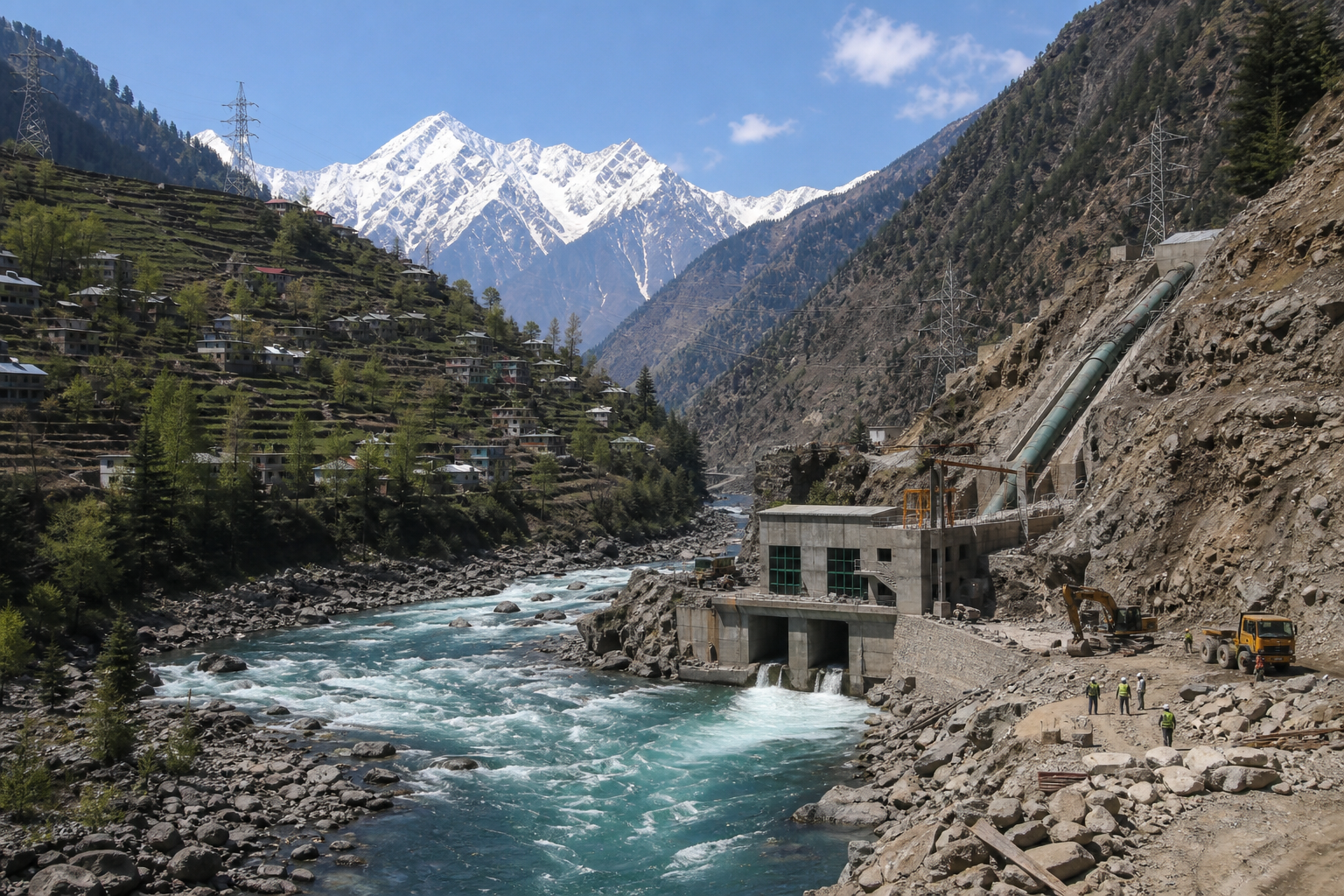
The water dispute is not solely about relations between New Delhi and Islamabad. The cited article places Jammu and Kashmir at the centre of India’s reassessment because the Indus, Jhelum and Chenab are connected to local electricity generation, roads, employment, flood management and mountain infrastructure.
According to the source, Indian debates have long argued that the former state, and subsequently the union territory, carried a disproportionate developmental burden. Projects on the western rivers had to meet treaty design restrictions and could face recurring Pakistani objections. The article does not provide a quantified calculation of that burden, so the claim is best understood as the developmental case advanced within India rather than as an independently measured conclusion.
This perspective changes the framing of treaty compliance. A hydropower project in mountainous terrain is not merely a legal drawing submitted for scrutiny. It can involve tunnels, roads, grid connections, construction employment, sediment management, compensation questions and seasonal hazards. Communities may consequently judge the treaty through the infrastructure and public services they see – or do not see – around them.
The underlying policy question is therefore distributive as well as diplomatic: how should the costs of maintaining a cross-border water arrangement be balanced against the development claims of an upstream region? The source presents the pause as an opportunity for India to give those local claims greater weight, although it does not establish what specific projects or design changes would follow.
A procedural breakdown preceded the political pause

India’s January 2023 notice seeking modification was a major intermediate step. As the source explains, India associated the need for change with altered circumstances since 1960, population and environmental pressures, clean-energy requirements, repeated objections to Indian projects and dissatisfaction with the operation of the dispute process.
That notice did not itself amend the treaty. The article notes that Article XII provides for modification through a duly ratified treaty between the two governments. India’s notice was nevertheless politically significant because it formally questioned whether the inherited arrangement could remain unchanged while strategic, ecological and developmental conditions evolved.
The disputes concerning the Kishenganga and Ratle hydropower projects then revealed a deeper procedural problem. The source reports that India preferred the Neutral Expert route for technical issues, while Pakistan sought proceedings before a Court of Arbitration. The World Bank eventually facilitated appointments associated with both tracks after earlier efforts to pause the competing processes.
India objected that simultaneous proceedings undermined the treaty’s intended sequence. Pakistan’s position, as presented by the source, was that its concerns warranted adjudication. The Court of Arbitration asserted its competence and continued despite India’s non-participation, while the Neutral Expert process also advanced on technical questions.
This conflict matters beyond the two projects. If parallel forums can examine overlapping issues, the parties may disagree not only about engineering specifications but also about which institution has authority to decide them. A treaty intended to organise disagreement then risks generating additional uncertainty through its own procedures. Seen in that context, the 2025 pause reflects a crisis of institutional trust as well as a security response.
What the pause changes – and what remains unsettled
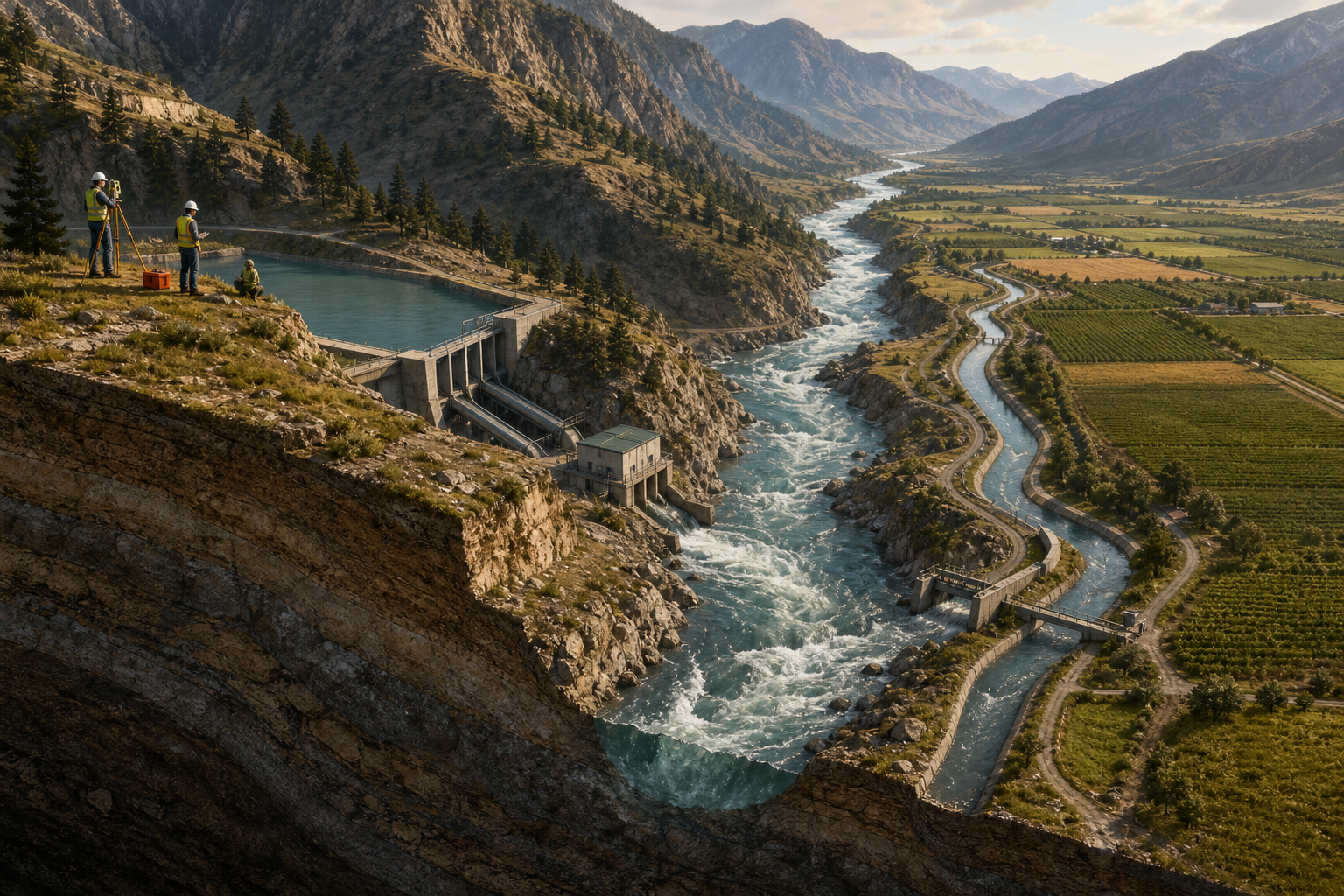
Placing the treaty in abeyance gives India political leverage and signals that continued cooperation cannot be separated indefinitely from the surrounding security relationship. However, the supplied source does not establish an immediate hydrological outcome, identify a replacement allocation, or show that the treaty text has been mutually amended. Those questions should not be treated as automatic consequences of the announcement.
The distinction between leverage and capacity is especially important. A diplomatic pause can alter official engagement, project policy and negotiating incentives. Physical control over river flows, by contrast, depends on terrain, seasons and existing or future infrastructure. The source’s strongest evidence concerns the legal and strategic reassessment; it does not support precise claims about how much water could be stored, redirected or withheld.
Key takeaways
- The April 2025 decision followed the Pahalgam attack but emerged from a longer sequence involving Kashmir, treaty-modification demands and procedural disputes.
- The treaty reduced routine conflict by allocating groups of rivers, yet its design also left India with restricted upstream rights and Pakistan with lower-riparian dependence.
- Jammu and Kashmir’s energy and infrastructure needs give the treaty debate a regional-development dimension that interstate diplomacy alone cannot capture.
- Parallel Neutral Expert and Court of Arbitration proceedings weakened confidence in the treaty’s graduated dispute mechanism.
- Abeyance creates bargaining pressure, but it is not the same as a mutually negotiated amendment or a demonstrated change in river flows.
The durable question is no longer simply whether the 1960 framework survived earlier crises. It is whether India and Pakistan can construct a future arrangement that distinguishes technical water administration from unresolved security demands without pretending that the two exist in separate political worlds. Progress will be visible through the usability of communication channels, the handling of competing legal forums and any negotiation that clarifies the relationship between India’s permitted uses and its demands for modification.