
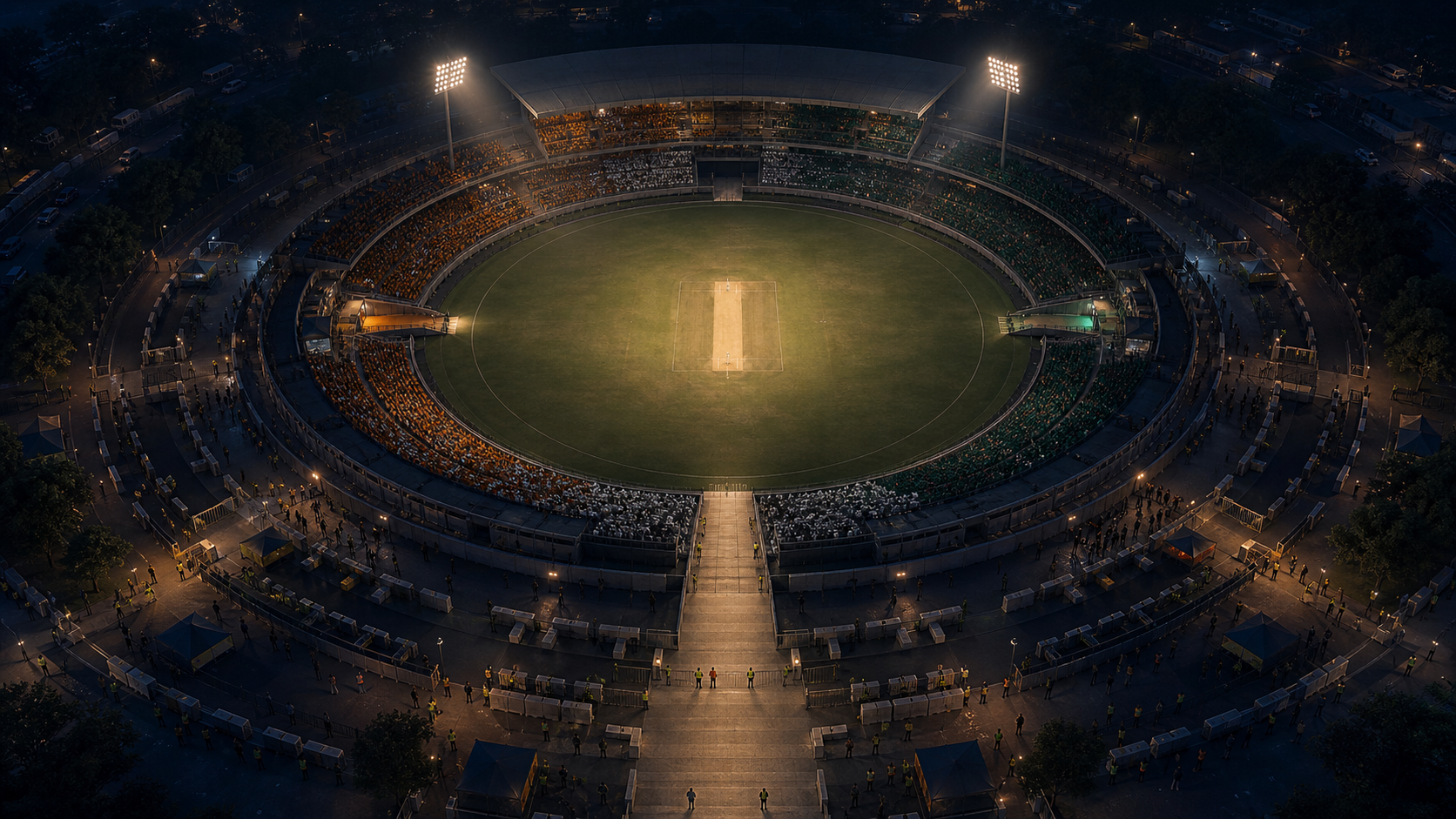
If you are asking whether India should play Pakistan, a simple yes or no will mislead you. A multinational tournament fixture is not the same political act as arranging a bilateral series, but neither is it an event without political meaning.
You need a way to judge three things at once: whether the match is safe, what signal participation sends, and whether that signal respects people harmed by terrorism. The answer may vary by fixture. The standard should not.
Key takeaways
- Judge operational safety, political legitimacy, and public conscience separately. Passing one test does not mean passing all three.
- Distinguish a scheduled multinational fixture from a voluntarily arranged bilateral series. They carry different degrees of political endorsement.
- Demand a visible chain of responsibility: who assessed the risk, who made the decision, and what red lines would stop the match.
- Do not call cricket a peace initiative unless it has a defined diplomatic purpose and some way to judge whether that purpose was achieved.
- Direct criticism toward governments, boards, and organizers. Firmness against terrorism does not justify hostility toward athletes, supporters, or ordinary people across the border.
The fixture type changes the policy judgment

Hindu Janajagruti Samiti opposed a February 15 T20 World Cup clash on the ground that “terror and sports cannot coexist”. That is a clear moral red line: normal sporting relations should not obscure unresolved concerns about cross-border terrorism. It does not, by itself, settle every institutional question created by a multinational competition.
Public arguments become confused because three different judgments are usually compressed into one emotional question.
- Operational safety: Can players, officials, workers, and spectators be protected under the formal threat assessment? This is an evidence question, not a measure of how angry or relaxed the public feels.
- Political legitimacy: Would participation look like normalization without a corresponding change in conduct or accountability? This is a question about the signal sent by institutions.
- Moral conscience: Would the presentation of the match trivialize terrorism or the continuing pain of its victims? This is a question about dignity and public memory.
A secure venue can still carry a troubling political message. A symbolic boycott can express resolve without improving physical security. Treating either fact as the whole answer produces a weak policy.
The kind of fixture also matters. A bilateral series is a deliberately arranged engagement between the two cricketing systems. It therefore carries a more direct implication of normalization. A World Cup fixture is scheduled within a competition involving many countries and shared rules. Playing it can mean compliance with that tournament structure rather than approval of the opposing government.
That distinction is not an excuse to declare tournament cricket apolitical. Participation, withdrawal, handshakes, official statements, and broadcast presentation all communicate something. The practical requirement is clarity: institutions should say whether they are permitting a specific tournament obligation or reopening a broader sporting relationship. The public should not have to infer policy from ceremony.
Use a security-first test before taking a position
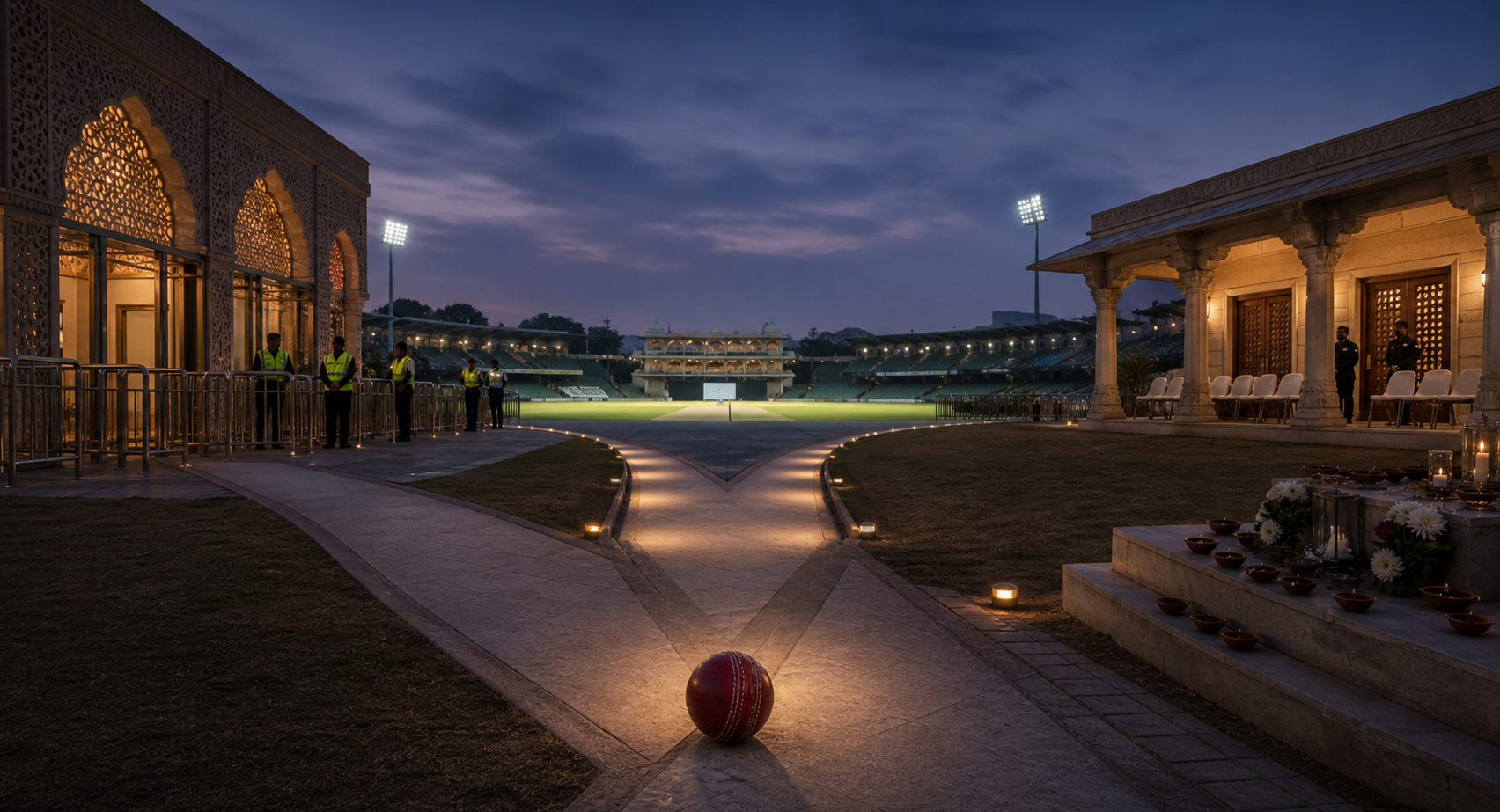
You do not need access to classified intelligence to ask disciplined questions. You do need to avoid substituting social-media claims for the people formally responsible for security.
- Identify the decision and its constraints. Is this a tournament fixture already created by the competition, or a new bilateral engagement chosen by the boards? What role belongs to the government, the BCCI, and the event organizer?
- Ask whether a formal security assessment exists. The public does not need operational details that could expose protective arrangements. It can reasonably expect to know that an authorized assessment occurred, which institution accepted responsibility, and whether the advice supports proceeding.
- Separate match-day risk from the wider political dispute. A venue may be judged safe even though terrorism remains a serious policy concern. Conversely, a politically useful appearance cannot make an unsafe event acceptable.
- Demand red lines before a crisis. What change in the threat assessment would stop the match? What political conditions rule out voluntary bilateral cricket? A standard invented after an incident is damage control, not policy.
- Protect the full event environment. Security planning must account for athletes, officials, stadium staff, spectators, and surrounding public activity. Focusing only on the playing eleven leaves most of the event outside the frame.
- Require an honest public explanation. If participation is limited to tournament compliance, say that plainly. If it is intended as diplomacy, state the intended diplomatic result. Generic language about unity cannot replace an explanation of policy.
The BCCI and event organizers typically act through government advice and formal security assessments. Public accountability should therefore focus on the chain of responsibility, not on pressuring players to make national policy at the boundary rope.
Sports diplomacy must prove more than a handshake

Cricket can humanize people whom political rhetoric has reduced to an enemy image. That possibility matters. An ordinary supporter across the border is not interchangeable with a state institution, an extremist organization, or a person who commits violence.
But human contact and state accountability are different outcomes. A cordial match may soften public attitudes. It cannot, by itself, demonstrate that a terrorist threat has diminished, that an enabling structure has changed, or that justice has advanced. The absence of an incident during one fixture shows that the event was conducted safely; it does not prove that the larger conflict has improved.
Before accepting “sports diplomacy” as the justification, ask four questions.
- What specific relationship is supposed to change: public attitudes, official communication, or a defined political negotiation?
- What reciprocal action, if any, accompanies the match?
- What observable result would count as progress?
- What happens if the spectacle is used as evidence of normal relations while the underlying security concern remains unresolved?
If officials cannot answer those questions, “tournament participation” is a more accurate description than “peace initiative.” Precision matters because a vague promise of goodwill can become an alibi for avoiding harder questions.
A Dharmic response keeps moral distinctions intact

Security politics creates two temptations. One is sentimental normalization that asks victims and citizens to forget unresolved violence for the duration of a spectacle. The other is collective hostility that treats athletes, supporters, and an entire population as morally identical to terrorists or state decision-makers. A Dharmic response should reject both.
Restraint toward people can coexist with firmness against violence. Ahimsa does not require indifference to aggression, and national resolve does not require contempt for civilians. The useful moral distinction is between opposing an institution’s decision and demeaning a human being because of nationality or religion.
You can put that distinction into practice in several concrete ways.
- Decide what you actually oppose. If your concern is physical danger, wait for the formal security judgment. If it is normalization, distinguish a bilateral invitation from a tournament fixture. If it is personal conscience, you can decline to watch or financially support the event without abusing the team.
- Use answerable demands. Ask who approved the fixture, which category of engagement it represents, and what conditions would reverse the decision. “Explain the red line” is harder to evade than a general expression of anger.
- Aim criticism upward. Governments, cricket boards, and tournament organizers make policy. Players should not be forced to improvise geopolitical doctrine in an interview or blamed for following an institutional decision.
- Do not circulate unverified security claims. Rumors about threats or protective arrangements can create panic and interfere with responsible assessment. Challenge the policy without pretending to possess evidence you have not seen.
- Apply the principle consistently. If you support refusing every fixture, acknowledge that withdrawal from a multinational competition may bring sporting or administrative consequences. If you permit tournament participation but oppose bilateral cricket, state that distinction before the next high-profile match, not after public pressure rises.
A precise public position might therefore be: India should not arrange voluntary bilateral cricket while terrorism and accountability remain unresolved; participation in a multinational fixture should require government clearance, a formal security assessment, and an explanation that it does not represent wider normalization. You may choose a stricter red line, but it should be equally clear about its scope and consequences.
Before the next fixture, write your own standard in one sentence. Name the type of match, the evidence you require, and the action you support. That small discipline keeps patriotism from becoming impulse and prevents the language of peace from becoming a substitute for accountability.
References
