
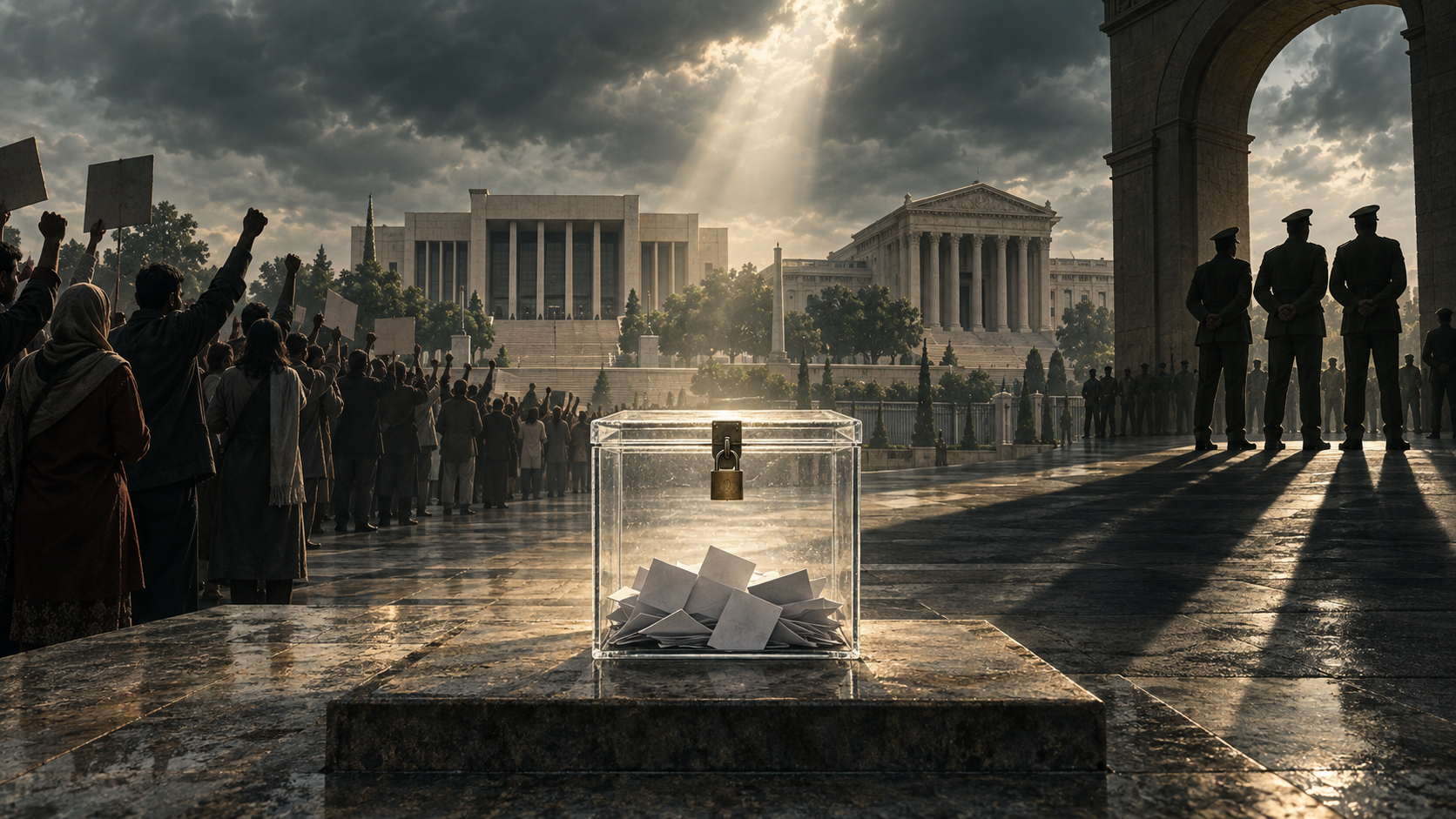
If you are trying to decide whether Pakistan’s turmoil is a democratic uprising, an undeclared coup, or simply another round of elite conflict, do not begin with the latest arrest or speech. Begin with a harder question: who can determine when elections occur, who may contest them, and whether courts can restrain the institutions that wield force?
That test reveals why the Pakistan Army can lose public approval yet retain decisive power. It also prevents a Bharat-facing reader from mistaking hostility to the generals for institutional democracy. The chronology examined here ends in May 2023, so use it to understand the machinery of the crisis rather than as a claim about present-day officeholders.
Start with four pressures, not one dramatic confrontation
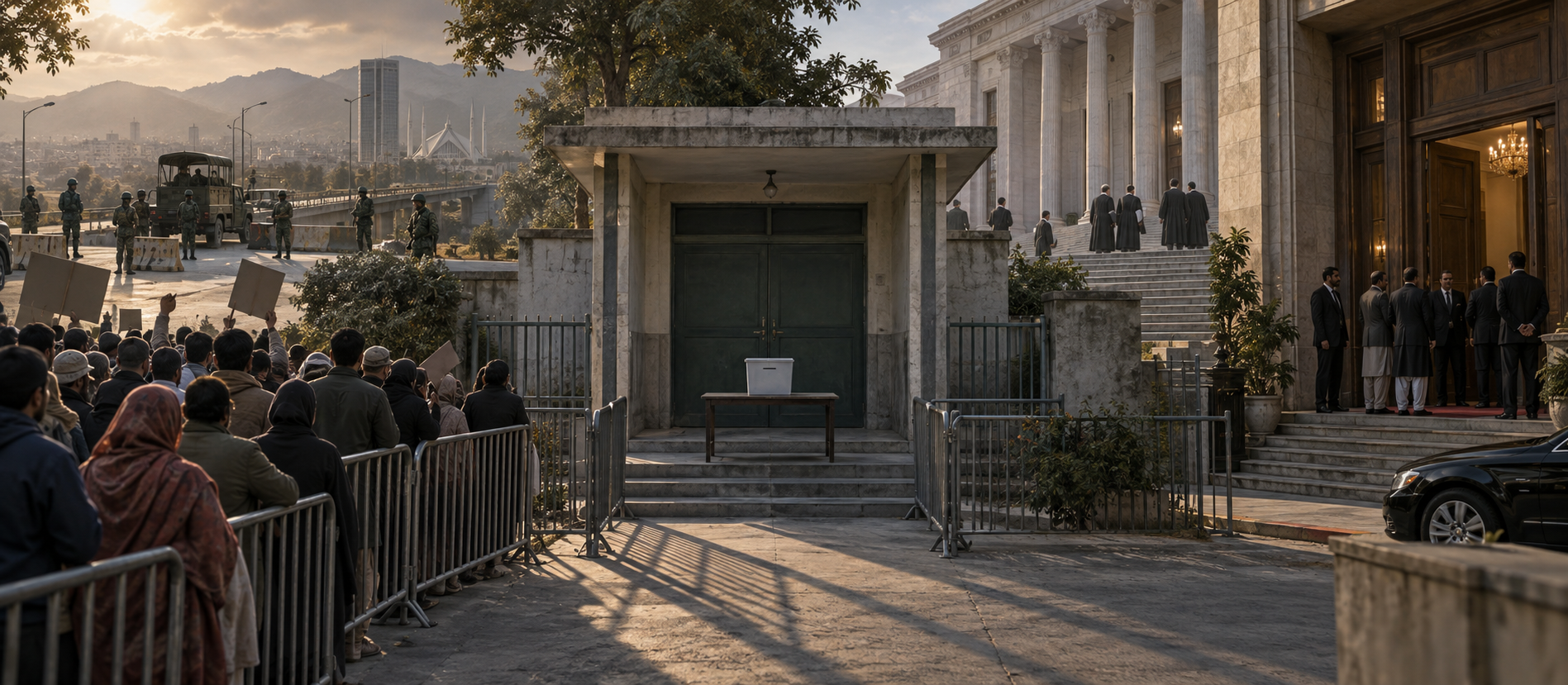
Pakistan’s political crisis was not produced by one quarrel between Imran Khan and an Army chief. Four pressures were moving at different speeds, and each narrowed the room for compromise.
- The economic clock: Pakistan was attempting to satisfy difficult conditions attached to a US$6 billion IMF loan. Saudi Arabia and the UAE also made their assistance dependent on the IMF requirements being met. Foreign-exchange reserves fell to about US$4 billion, leaving the civilian government to impose painful measures while its popularity declined.
- The electoral clock: Imran Khan’s Pakistan Tehreek-e-Insaf, or PTI, wanted an early election while his street appeal was strong. The coalition government formed by parties in the Pakistan Democratic Movement, or PDM, had an incentive to wait, hoping that additional time would improve the economy and its electoral prospects.
- The military clock: Khan’s rupture with General Qamar Bajwa became entangled with competition inside the Army, particularly around Lieutenant General Faiz Hameed and the succession to the office of Army chief. General Asim Munir then inherited both that political confrontation and questions about his authority over the nine Corps Commanders.
- The security clock: The 2022 floods displaced large numbers of people while the Tehreek-e-Taliban Pakistan revived its campaign. The Taliban’s return to power in Afghanistan after the American withdrawal had altered the environment in which the TTP operated.
You should therefore be sceptical of explanations that reduce everything to Khan’s personality. Economic distress made the government vulnerable. Delayed elections made the opposition impatient. Security deterioration strengthened the institutional argument for military influence. Rivalries around senior appointments made an ordinary constitutional transfer of power personal for the men who controlled coercive authority.
The practical lesson is to compare these four clocks whenever the crisis escalates. A government may survive a protest yet remain trapped by an approaching loan decision. An opposition may dominate the streets yet lose leverage if an election is postponed long enough for its coalition to fracture. An Army chief may appear dominant in public while privately needing to demonstrate control over senior commanders.
Why the Army can dominate without announcing martial law
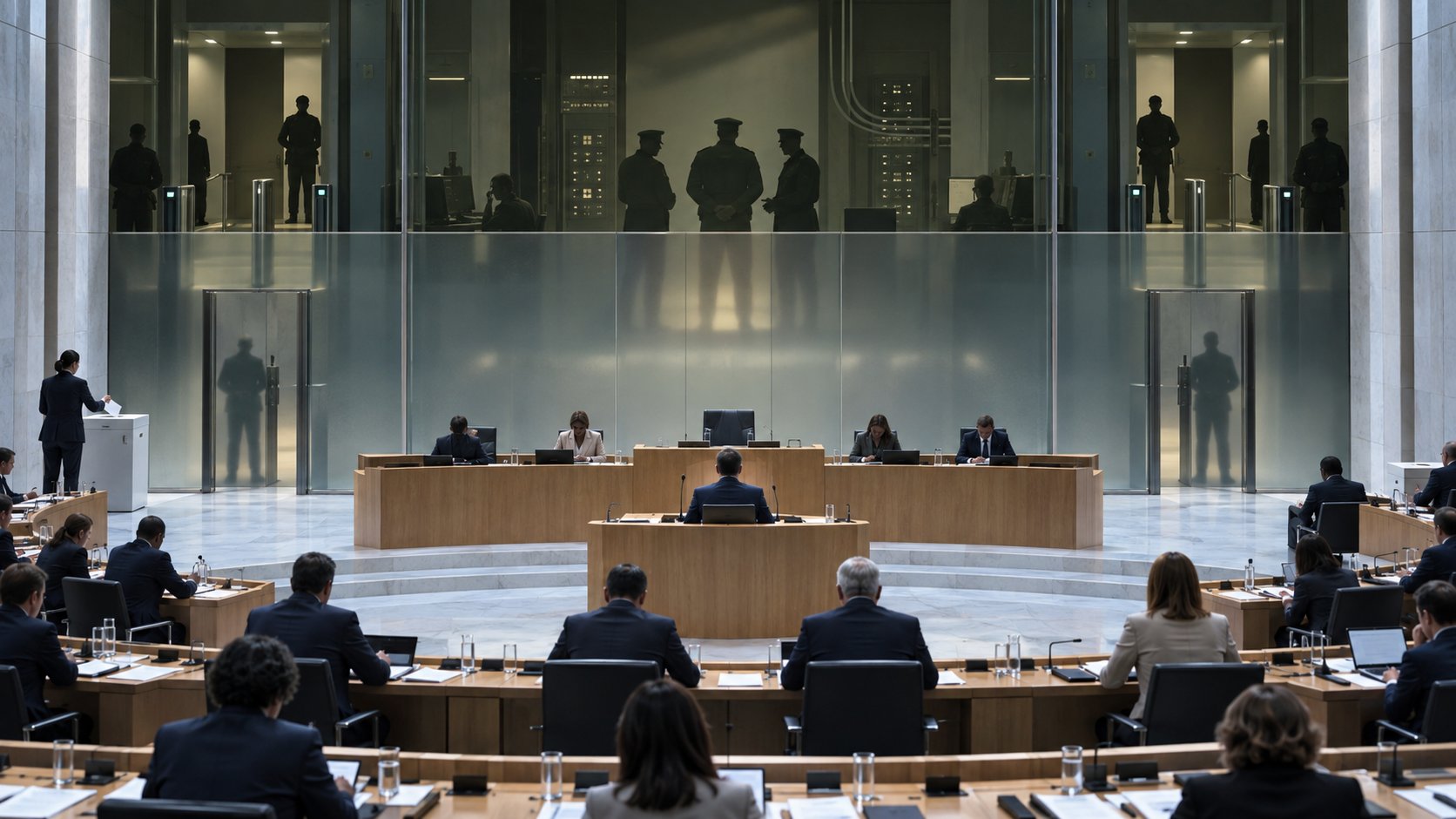
A classical coup is easy to recognise: soldiers remove the government, suspend constitutional arrangements, and rule openly. A virtual coup is less visible. Civilian ministers remain in office, parliament continues to meet, and courts still issue orders, but the range of politically possible outcomes is constrained by the military establishment.
Three tests help you identify that arrangement.
<!– wp:list {