
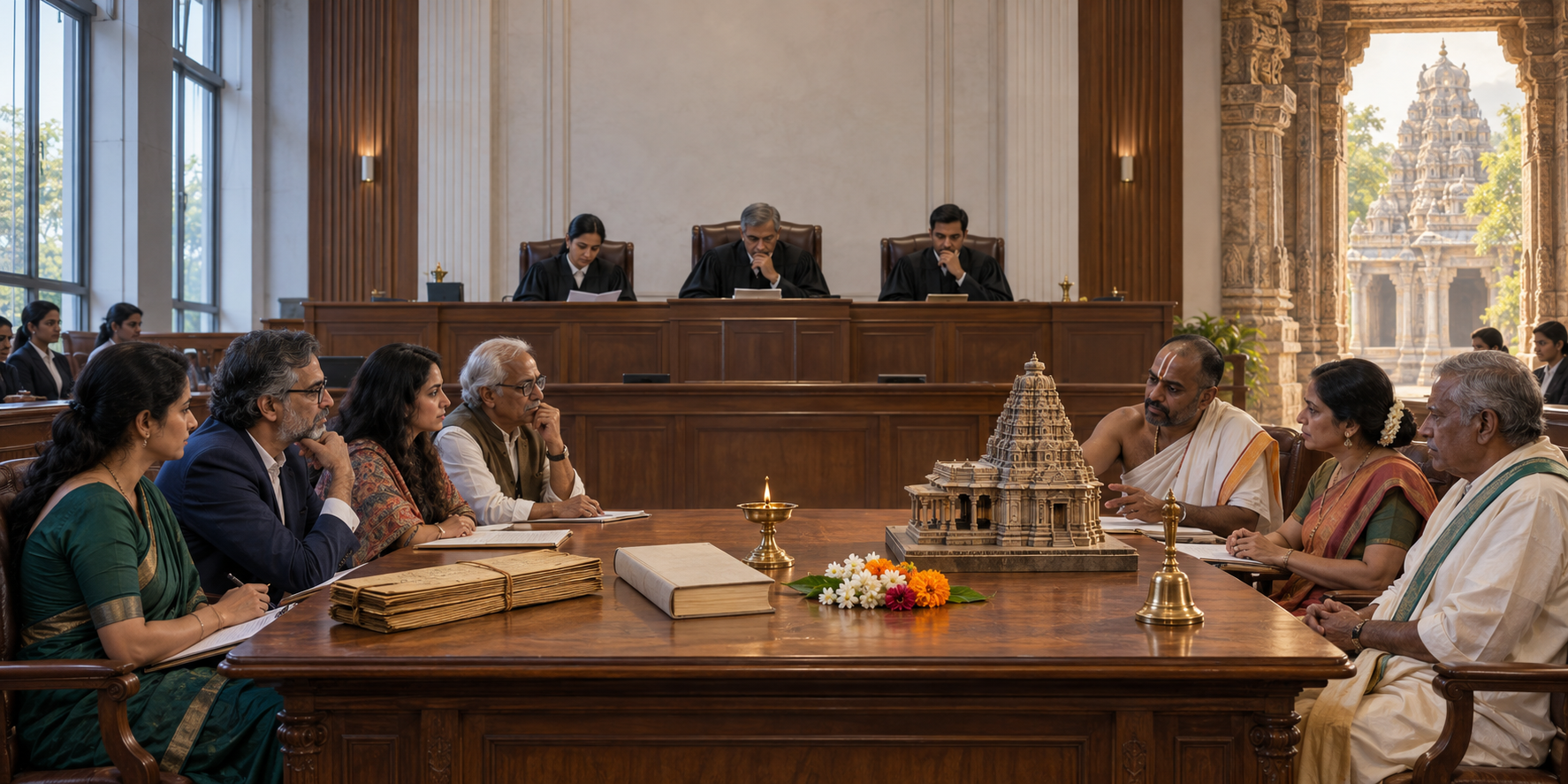
If a court is deciding the fate of a temple custom, festival or sampradaya practice, you need more than a bench that can parse statutes. You need judges who can distinguish scripture from commentary, principle from local custom, and living tradition from a convenient description created for litigation.
This is not a demand that judges become believers. It is a demand that they become competent in the subjects they adjudicate. Judicial reform should treat cultural literacy as a professional capacity: learned systematically, tested through evidence, limited by relevance and made visible in judicial reasoning.
The real failure is category error, not insufficient reverence

Controversies involving Dahi Handi, Deepavali, Holi and Sabarimala have left many Hindus asking whether courts understand the traditions they regulate. That concern cannot be answered by demanding automatic deference to every practice. It can be answered by requiring courts to establish what a practice actually is before judging its legal status.
Cultural literacy matters because a Dharmic tradition operates at several levels. Confusing those levels can distort the entire dispute:
- Text: What does a named scripture, sutra, smriti or commentary actually say?
- Authority: What standing does that work have within the particular sampradaya or institution before the court?
- Interpretation: Is the passage a command, an ideal, a description, an argument or a later commentator’s conclusion?
- Practice: How is the tradition embodied by its custodians, and where do legitimate variations exist?
- Legal relevance: Which part of that cultural record bears on the precise question the court must decide?
A quotation cannot answer all five questions. Neither can a generalized claim about what “Hinduism” supposedly requires. A court can otherwise mistake one commentator for an entire tradition, a regional convention for a universal rule, or a modern activist’s preference for the inherited position of a temple or sampradaya.
The first reform is therefore procedural. Before reaching a conclusion in a culturally sensitive case, the judicial record should answer several concrete questions: Which tradition is involved? Who has historically interpreted it? Which texts and commentaries are relevant? Is the disputed act central, optional, local or contested? What evidence supports each answer?
A judge does not have to accept a tradition’s internal claims as legally decisive. The judge does have to understand those claims accurately. Neutrality begins after comprehension, not in place of it.
A judicial curriculum must lead from civilisational grammar to case application
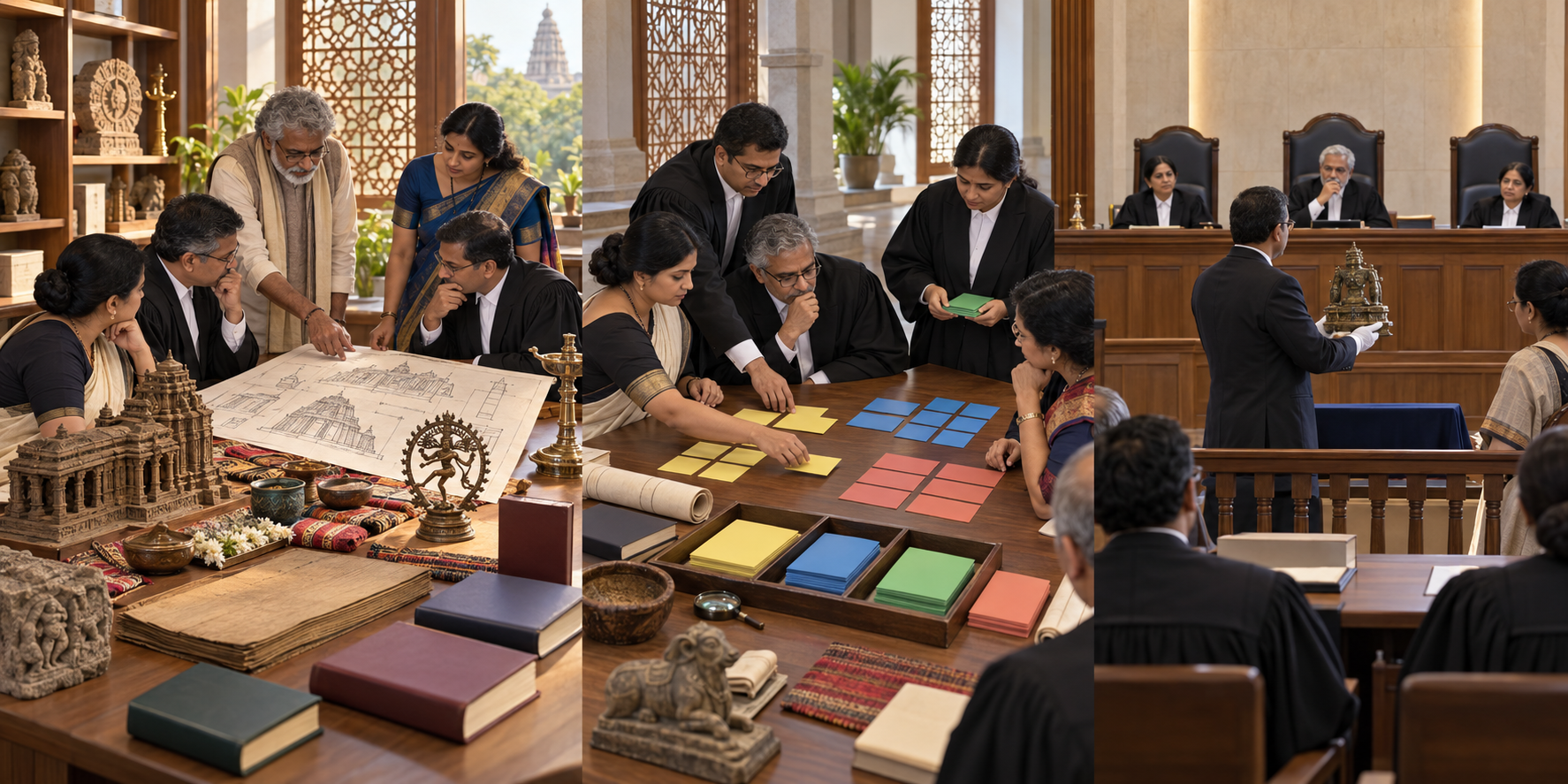
K. Parasaran offers a useful model of what legal-cultural competence can look like. His early training came from his father, Kesava Aiyengar, who was both a lawyer and a Vedic scholar. Parasaran recited sacred works in court when they were relevant and drew principles of modern law from the Ramayana and Mahabharata. The important formula is depth joined to relevance. Scriptural display without legal purpose would be ornament; legal analysis without cultural understanding can become abstraction.
No short course can reproduce a lifetime of training. A realistic curriculum can still teach judges how the intellectual landscape is organized, where to seek qualified assistance and how to prevent serious category errors.
Foundation: the grammar of Sanatana civilisation
The foundation should introduce the Ten Principal Upanishads, Maharshi Valmiki’s Ramayana, Bhagavan Veda Vyasa’s Mahabharata and the eighteen Puranas. These works should not be presented as interchangeable legal codes. The immediate purpose is to recognize their genres, recurring concepts, narrative methods and different kinds of authority.
Literary formation also matters because civilisational meaning is carried through language, character, metaphor and inherited memory. The Pancha Mahakavyas provide a defined literary sequence: Kumarasambhava and Raghuvamsa by Kalidasa, Kiratarjuniya by Bharavi, Naiśadha-carita by Sri Harsha, and Śiśupāla-vadha by Magha.
Judges do not need to memorize this corpus. They should be able to identify what kind of work is being cited, why a litigant treats it as authoritative and what further evidence is needed before using it in a judgment.
Jurisprudence: texts, schools and commentarial development
The next stage should map the Indian jurisprudential archive. It should include the Manusmriti, Yajnavalkyasmriti, Parasarasmriti and Naradasmriti; the Apastambha, Gautama and Baudhayana Dharmasutras; Kautilya’s Arthasastra; Vatsyayana’s Kamasutra; Hemadri’s Chaturvarga-Chintamani; Jimutavahana’s Dayabhaga; Vijnanesvara’s Mitakshara; and Vidyaranya Swami’s Parasara-Madhaviya.
The central lesson is not that these works can be lifted whole into contemporary adjudication. It is that Indian thought contains an extensive record of reasoning about law, duty, authority, social order and human purposes. Commentaries such as Dayabhaga and Mitakshara also teach a vital judicial lesson: interpretation develops through argument. A quotation detached from its school, commentator and context may conceal more than it reveals.
P.V. Kane’s five-volume History of Dharmasastra belongs at the advanced stage. It can orient serious learners across a large jurisprudential field without encouraging the false idea that one isolated verse settles every question.
Application: make the learner produce judicial reasons
The curriculum should end with case exercises rather than a memory test. Give the learner a disputed custom, competing textual claims, a relevant commentary, testimony from practitioners and a constitutional objection. Require a short judicial memorandum that identifies the tradition, separates agreement from disagreement, evaluates the evidence and explains which cultural facts affect the legal conclusion.
That exercise reveals whether cultural study has become judicial competence. A judge who can recite titles but cannot weigh claims has acquired information, not literacy. A judge who can explain why one authority is relevant, why another is not and where the court’s legal judgment begins has learned something usable.
Practitioners belong in the record, not in the judge’s chair
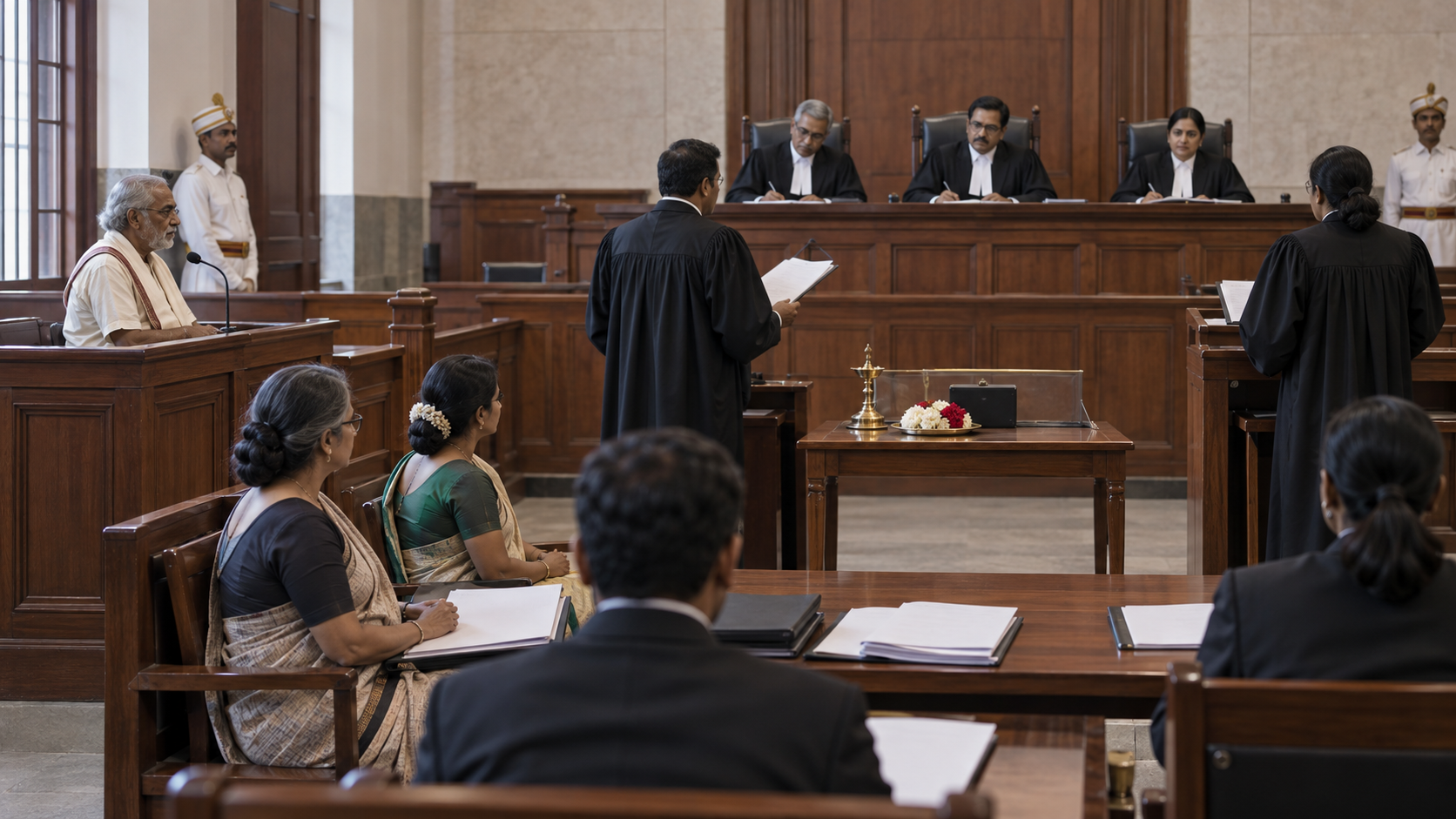
Books alone cannot fully explain a living tradition. Courts hearing Hindu matters should be able to receive disciplined assistance from genuine practitioners of the sampradaya involved. A textual scholar can clarify language and commentarial history. A practitioner can explain ritual meaning, institutional authority and lived continuity. A historian can help identify change over time. These roles overlap, but they are not identical.
The word “genuine” creates its own problem. Courts should not decide authenticity through fame, political agreement or a witness’s confidence. A culturally informed process needs safeguards:
- Identify the exact temple, lineage, sect, order or community whose practice is disputed instead of appointing a spokesperson for all Hindus.
- Require each participant to disclose training, institutional role, textual basis and any relationship to the parties.
- Place explanations in writing so the opposing side can identify omissions, mistranslations and competing interpretations.
- Hear more than one qualified position where the tradition contains a material internal disagreement.
- Separate claims about what a community believes from the court’s decision about what the law permits.
- Explain in the judgment which cultural evidence was accepted, which was rejected and why.
Practitioner assistance must not become a religious veto over constitutional adjudication. It should prevent the opposite error: deciding the constitutional question through an inaccurate account of the practice. The court remains responsible for law. Cultural witnesses help it identify the thing to which the law is being applied.
The same guardrail applies to judicial education. No judge should face a devotional test, an oath of belief or pressure to accept a theological conclusion. Training should examine competence: Can the judge recognize genres, locate authority, detect contested interpretation and ask the right evidentiary questions?
A Hindu curriculum must also not be treated as a substitute for understanding every Dharmic religion. Buddhist, Jain and Sikh institutions have their own texts, authorities and living structures. The method can be shared, but the material must follow the community whose rights and institutions are actually before the court.
Key takeaways for a workable judicial reform
- Cultural literacy is subject-matter competence, not a demand for judicial belief.
- A court should establish the identity, authority, interpretation and lived form of a practice before ruling on it.
- The curriculum should move from foundational literature to jurisprudential works and then to case-based reasoning.
- Texts must be read by genre, school and commentary; an isolated verse is not a complete legal argument.
- Practitioners should inform the evidentiary record while judges retain responsibility for the legal conclusion.
- Reform needs transparent reasons showing how cultural evidence affected, or did not affect, the judgment.
What you can do before the next Hindu case reaches judgment
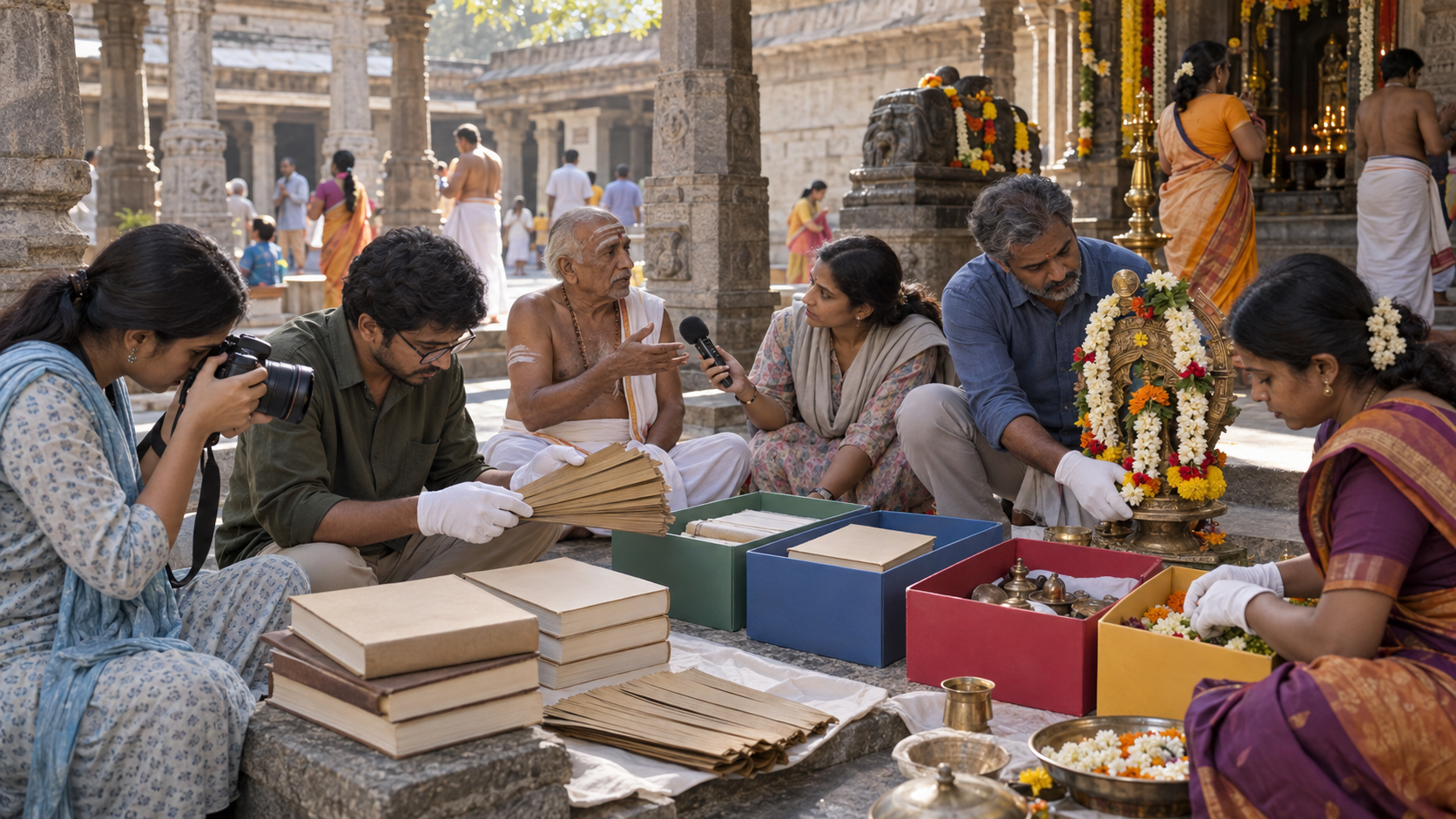
If you are worried about judicial cultural illiteracy, indignation alone will not repair the record placed before a court. The most useful work happens before a judgment is written.
If you support a temple, lawyer or civic organization
Help assemble a cultural-context file under six headings. Counsel must decide what is admissible and tactically appropriate in a particular proceeding, but this structure makes the underlying work more precise:
- Practice: Describe the exact act under dispute, including its participants, setting and sacred purpose. Avoid slogans such as “ancient tradition” when a precise description is available.
- Bearer: Name the institution, sampradaya, lineage or custodial body that maintains the practice. Do not substitute a celebrity commentator for the relevant community.
- Authority: Record the exact text, passage, commentary, edition and translation being relied upon. Explain the authority assigned to it within that tradition.
- Interpretation: State how the cited material connects to the practice. Identify disagreement rather than hiding it.
- Continuity and variation: Document what has remained stable and what differs by region, institution or school. Variation does not automatically disprove authenticity, but it must be acknowledged.
- Legal relevance: Connect each cultural fact to the actual issue before the court. Material that does not help resolve that issue should not crowd the record.
This method also protects Hindu litigants from weak cultural claims made on their behalf. A dramatic assertion that collapses under examination can damage a sound case. Accuracy is not a concession to the opposing side; it is part of Dharma and part of competent advocacy.
If you are assessing a culturally sensitive judgment
Read the reasons with a diagnostic checklist instead of stopping at the outcome:
- Does the judgment identify the specific tradition and institution involved?
- Does it distinguish primary texts, commentaries, later interpretations and current practice?
- Were relevant practitioners heard, and were their qualifications and disagreements examined?
- Does the court explain which claims were facts, which were theological positions and which were legal conclusions?
- Would the legal reasoning still be intelligible to a reader who understands the tradition from within?
If the answer fails at a particular step, criticize that failure precisely. Point to the mistranslation, missing authority, category error or unexplained rejection of evidence. A specific criticism can guide better adjudication. A general accusation about motive usually cannot.
If you are advocating institutional change
Ask for a defined reform package rather than a ceremonial lecture on Indian culture. A serious proposal should contain a foundational reading sequence, guided instruction on Dharmasastra and commentary, case exercises, a transparent method for receiving practitioner assistance, and written evaluation based on judicial reasoning. It should also provide tradition-specific modules when Buddhist, Jain, Sikh or distinct Hindu institutions come before a court.
Begin with one practice and build one exemplary cultural-context file. Show how the correct text, qualified practitioner and clear map of authority would change the questions a court asks. That is a concrete foundation for reform: not reverence demanded from the bench, but understanding made unavoidable before judgment.
References
- DharmaRenaissance Blog — A Cultural Curriculum for Judicial Reforms
