

If you came away from the 2023 Karnataka election asking whether the BJP needs a new face, a sharper Hindutva message or a better manifesto, each question captures part of the problem. None captures the whole of it. The party’s Karnataka weakness is structural: campaign energy has too often concealed gaps in state leadership, internal discipline, political communication and succession planning.
Narendra Modi can still energise the BJP’s base, but a burst of central rallies is not a substitute for a state party that voters recognise, trust and hold accountable between elections. The work after 2023 is therefore not to invent one more campaign formula. It is to build a Karnataka BJP that can convert ideological clarity and cadre strength into durable state-level credibility.
Begin with a constituency diagnosis, not a statewide excuse
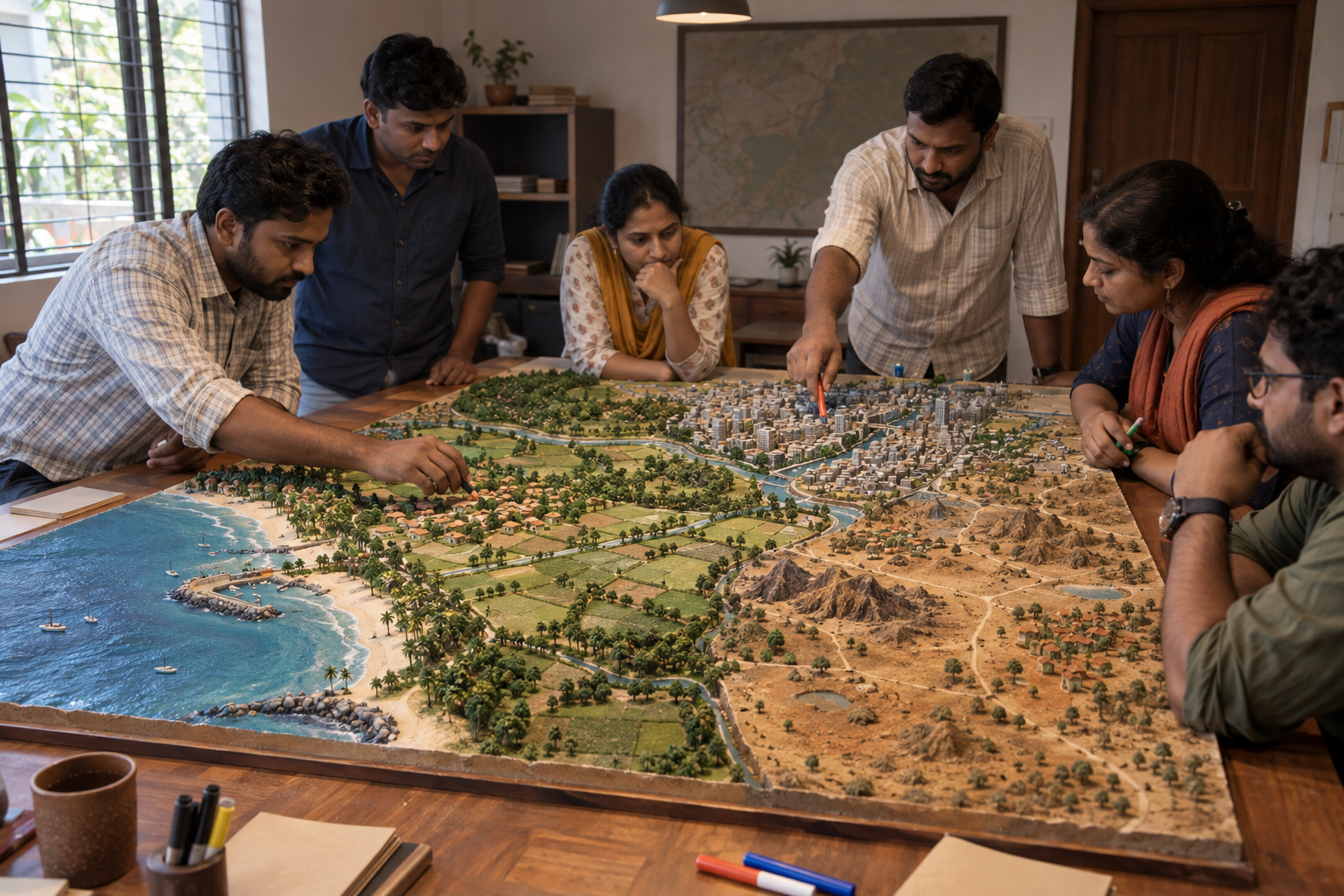
An election verdict shows where a party failed to convert support into seats. It does not, by itself, identify the mechanism. A convenient explanation such as anti-incumbency can hide several different failures: an unpopular candidate, a local factional dispute, weak delivery, an unconvincing manifesto or an opponent who defined the contest first.
Four weaknesses deserve separate examination in Karnataka: failure to consolidate power, persistent factionalism, poor perception management and inadequate preparation of the next generation of leaders. Treating them as one communications problem would merely produce louder publicity around the same organisation.
The review should begin below the level of television debates and senior-leader meetings. BJP workers are a strategic asset precisely because many of them remain active for reasons beyond campaign payment. Their knowledge is most valuable when the party asks specific questions and permits answers that may embarrass local office-bearers.
- Where did a functioning booth organisation fail to persuade voters outside the committed BJP base?
- Where did disputes between leaders reduce worker participation or confuse the campaign?
- Which manifesto commitments could voters recall without prompting, and which sounded borrowed or implausible?
- Which state and local leaders retained credibility when national campaigners were absent?
- Where did the opposition establish its description of the BJP before the BJP explained its own record and purpose?
Candidate reports alone cannot answer these questions because candidates have an incentive to blame circumstances outside their control. Local workers alone cannot answer them either because factions can shape their testimony. The useful diagnosis comes from comparing booth activity, candidate explanations, local organisational disputes and the reasons voters gave for their choices. The result should be a constituency map that distinguishes candidate problems from organisational, governance and narrative problems.
This distinction matters for the BJP’s ideological direction. A weak result in one constituency does not automatically prove that Hindutva was too strong or too weak. It may show that the party invoked an ideological identity without connecting it to local leadership and competent administration. Before changing the message, the BJP must establish whether voters rejected the proposition or doubted the people and machinery presenting it.
Key takeaways
- Do not use anti-incumbency as a catch-all explanation; classify each constituency by its actual failure.
- Keep Narendra Modi as a major campaign asset, but make the Karnataka unit capable of carrying the political argument without him.
- Resolve factionalism through visible rules for responsibility, candidate selection and dispute settlement.
- Replace a reactive or borrowed manifesto with a Karnataka-specific governing and Dharmic proposition.
- Treat gains in Old Mysore as the beginning of institution-building, not as proof that the region has permanently realigned.
Build a Karnataka leadership team before choosing its next face
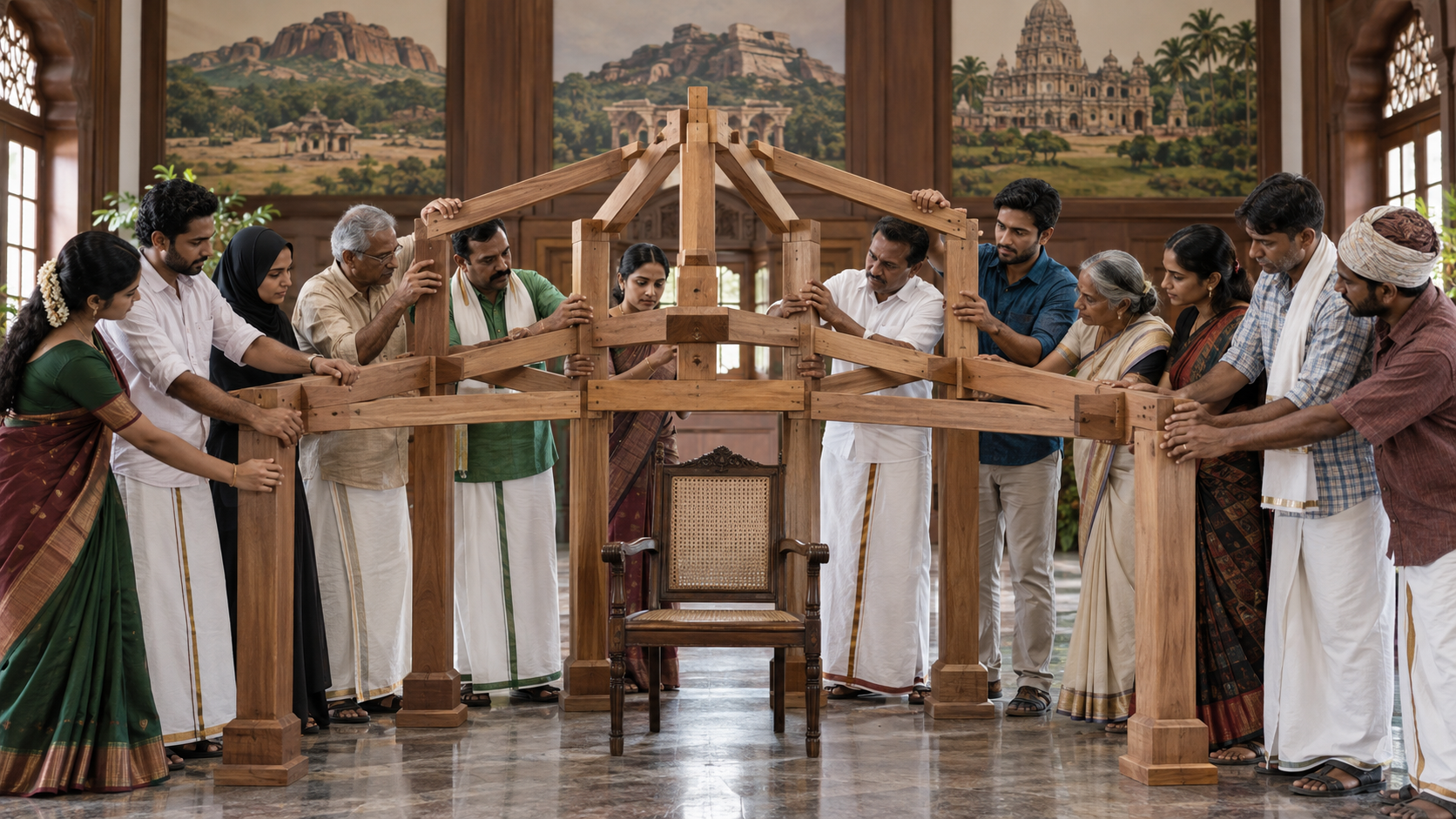
Leadership renewal is often reduced to finding a chief-ministerial candidate. That is too late and too narrow. A credible state face emerges from an organisation whose political, legislative and communications responsibilities are already clear. Installing a name above an unresolved factional structure only makes that person the next arena for the same conflicts.
Yeddyurappa, Eshwarappa, Suresh Kumar and C.T. Ravi represent different aspects of a generation that acquired standing through long association with the party. Basavaraj Bommai’s elevation made a difficult question more visible: how can the BJP welcome leaders from outside its original structure while preserving ideological continuity and the confidence of its cadre? The answer cannot be permanent suspicion of every entrant. Nor can it be advancement without demonstrated organisational commitment.
The party needs a leadership architecture, not a public purge. That architecture should make several distinctions explicit:
- Political leadership: the people who articulate the BJP’s Karnataka position and accept responsibility when it fails.
- Legislative leadership: the team that turns opposition or governing activity into a sustained public record rather than a sequence of isolated confrontations.
- Organisational leadership: the people responsible for cadre development, constituency health and the settlement of internal disputes.
- Policy leadership: recognisable figures who can explain the party’s economic, administrative, cultural and law-and-order programme in concrete terms.
- Succession leadership: younger figures given real constituencies, issues and organisational burdens through which they can earn authority.
These roles may overlap, but responsibility must remain identifiable. If every setback belongs to an unnamed collective while every success belongs to a national leader, Karnataka will never produce accountable state leadership.
Factional discipline also has to become procedural. Candidate selection should assess public standing, constituency work, ideological reliability and the ability to retain the cooperation of local workers. A defeated aspirant should not automatically receive a decorative position in exchange for silence. The party should first determine whether that person can perform a useful role without undermining the selected candidate.
Internal disagreement is not the same as indiscipline. Leaders should be able to challenge an assessment before a decision is made. Once a decision is made, however, public sabotage must carry a predictable organisational consequence. Selective enforcement merely tells every faction that influence matters more than rules.
Power consolidation should therefore mean coherence, not the suppression of every competing view. The practical test is simple: can a Karnataka voter identify who speaks for the party, what that person is responsible for and what happens when a BJP leader openly damages the collective campaign? Until the answer is clear, changing the face at the top will remain cosmetic.
Replace a borrowed campaign pitch with a Karnataka proposition

The BJP’s 2023 manifesto appeared rehashed and imitative, including an accommodation with the freebie-centred electoral grammar associated with the AAP. That creates a basic credibility problem. A party cannot present itself as ideologically anchored while allowing its state offer to look like a hurried response to whatever its competitors have promised.
The final phase of the campaign supplied several openings. Mallikarjun Kharge’s insult directed at Modi, the Congress promise to ban the Bajrang Dal and the language about protecting Karnataka’s sovereignty allowed the BJP to place ideological questions at the centre of public attention. These were useful campaign moments, but an opponent’s self-inflicted errors cannot become the governing proposition of a state party. A reactive narrative expires when the controversy passes.
A durable Karnataka proposition needs connected layers rather than a catalogue of unrelated promises.
- A governing compact: identify the administrative outcomes for which a BJP government would accept responsibility, name the institutional owner of each commitment and explain how progress would be shown publicly.
- An economic argument: when challenging an opponent’s record, use comparable indicators and identifiable decisions. Claims of damage without evidence may excite supporters but will not persuade a voter deciding between competing governing records.
- Civic equality: explain what equal application of law means in practice. If the BJP alleges appeasement, it should name the policy, show the unequal treatment and state the lawful correction it proposes.
- A positive Dharmic agenda: move beyond responding to attacks on Hindu organisations. Address transparent temple administration, the freedom of cultural institutions, protection of lawful religious activity and the security concerns of Hindu workers through specific administrative commitments.
- Public accountability: distinguish a promise from an aspiration. Voters should be able to see who owns a commitment and what evidence would demonstrate that it has been fulfilled.
The Dharmic component is especially important. Hindutva becomes electorally brittle when it appears only after an opponent provokes Hindu sentiment. Cultural confidence should be visible in the party’s routine policy work, its treatment of institutions and its willingness to defend equal citizenship without adopting reckless or legally vague rhetoric. The BJP should be able to explain what it will protect, through which institution and under what principle.
Perception management is not a polite term for spin. It is the discipline of connecting a claim to proof, proof to consequence and consequence to a remedy. If the issue is law and order, identify what happened, what the state did and what should change. If the issue is economic performance, show the relevant decision and measurable effect. If a viral allegation is false, correct the exact falsehood rather than producing a generic speech about hostile media.
This also requires message discipline in Kannada and through trusted local voices. National leaders can establish the broad ideological frame. State leaders must translate it into Karnataka’s administrative and political context. A manifesto released as a final campaign object cannot perform that work. The proposition has to become recognisable through the party’s conduct well before the next election campaign.
Turn the Old Mysore opening into permanent organisation
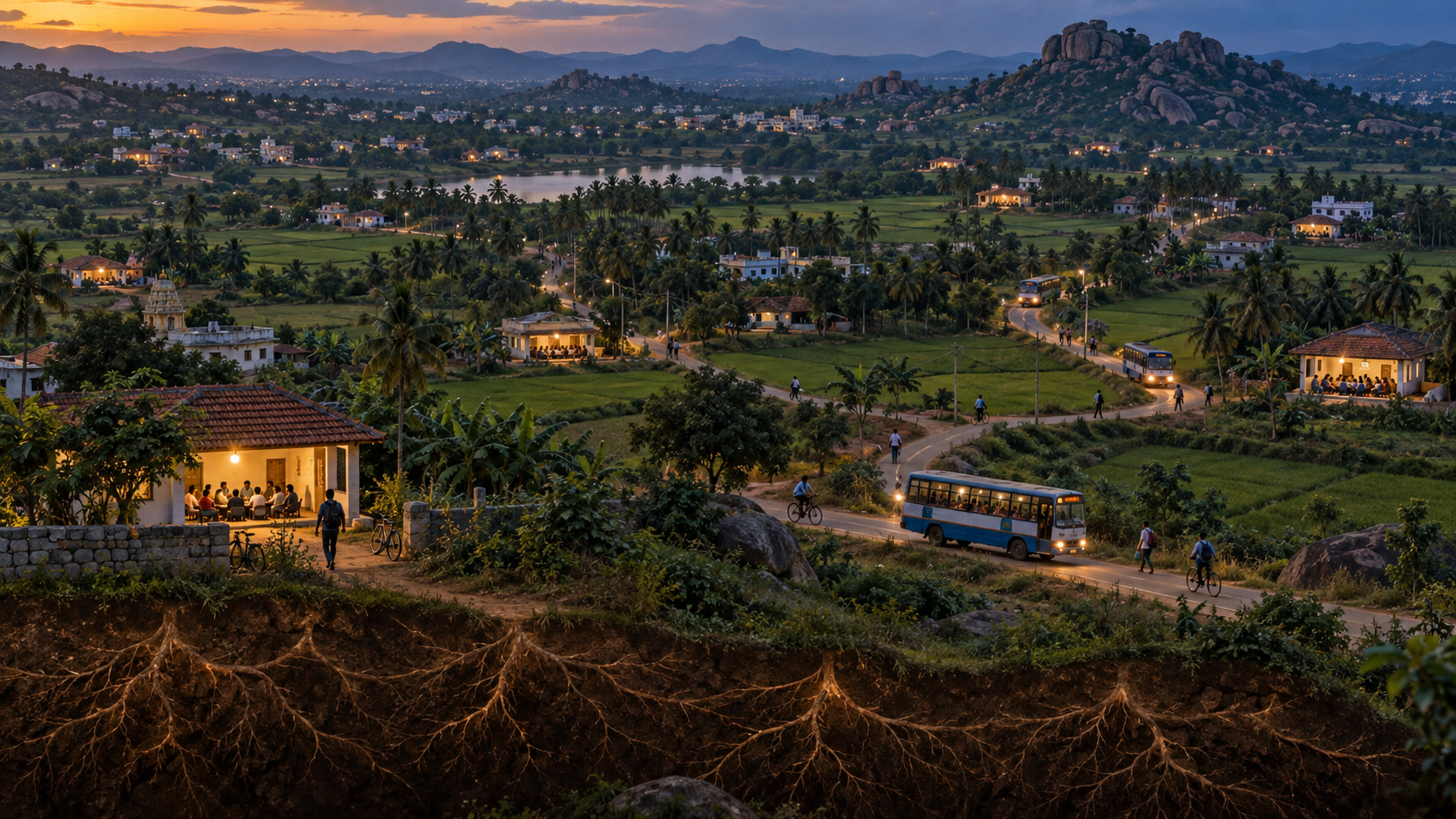
The BJP’s inroads into JD(S) strongholds in the Old Mysore region, visible after the 2019 general election, created an important opening. The mistake would be to interpret an opening as a completed realignment. Reduced energy or media attention around a rival party does not mean that its local relationships, community networks and accumulated loyalties have disappeared.
Old Mysore therefore requires patient organisation rather than episodic attention from national campaigners. The BJP has to develop leaders whose legitimacy is local, whose work continues outside election season and whose political vocabulary is not imported wholesale from a different region. Voters should encounter the party through people who can address local governance and cultural concerns, not merely repeat a national slogan.
Recruitment from the JD(S) or Congress may sometimes expand the BJP’s reach, but recruitment is not organisation. A prominent entrant can bring a personal network while weakening local workers who spent years building the party. Before admitting or advancing such a leader, the BJP should ask whether the move enlarges the organisation, merely transfers a faction or creates another unresolved contest over tickets and authority.
Integration should carry obligations. An entrant should work through the local organisation, demonstrate compatibility with the party’s principles and help develop people beyond a personal circle. Existing workers, in turn, should not receive a permanent veto merely because they arrived earlier. The standard must be contribution to a stronger and more coherent institution.
The party should also avoid treating communities as blocks that can be acquired through one intermediary. Durable expansion comes when families, occupational groups, local associations and cultural institutions encounter BJP workers through ordinary public activity. That makes the relationship harder for a single defection or ticket dispute to reverse.
The test of progress in Old Mysore is not the size of a rally. It is whether the local unit remains active when no national figure is present, whether it can produce credible candidates from within its own work and whether voters can describe a reason to support the BJP that is grounded in the region as well as the nation.
Use Modi as an accelerator and judge recovery between campaigns
Narendra Modi remains the BJP’s strongest national campaigner. Yogi Adityanath, Himanta Sarma and Annamalai also bring recognisable records, ideological confidence and the ability to energise workers. Karnataka should continue to use that strength. The strategic error is asking visiting leaders to compensate for a state unit that has not settled its own leadership, record or message.
A national campaigner can amplify a credible proposition. He cannot manufacture local credibility at every constituency, reconcile feuding ticket-seekers or maintain public trust after the campaign convoy leaves. If Karnataka leaders become visible only when sharing a platform with central figures, voters learn that real authority lies elsewhere.
The BJP should also plan against a competent opposition. The public rivalry between Siddaramaiah and D.K. Shivakumar, the Congress’s campaign errors and uncertainty around the JD(S) may create opportunities, but rival parties can reorganise. A strategy dependent on their continued weakness is not a strategy the BJP controls.
You can tell whether the post-2023 reset is genuine by watching for observable changes:
- Karnataka leaders explain state policy without waiting for a national controversy to give them a subject.
- Internal discipline applies to influential figures as well as ordinary workers.
- Prospective leaders receive substantial organisational and policy responsibilities before they are advertised as future faces.
- The party’s governing offer becomes recognisable before manifesto season and is supported by evidence rather than adjectives.
- Old Mysore units produce rooted leadership instead of depending mainly on high-profile entrants.
- Dharmic commitments appear in administrative proposals, institutional conduct and lawful protections, not only in responses to Congress provocations.
- Workers can carry uncomfortable constituency feedback upward without having it filtered into praise for the local faction in control.
If you are a BJP worker or sympathiser, choose one local issue and follow it through the organisation. Ask who owns it, what remedy the party proposes and what evidence will show progress. Reward leaders who remain present after the cameras leave. A party becomes accountable when its own supporters stop accepting crowd size as a substitute for institutional work.
The next Karnataka campaign should be the public expression of work already completed, not the moment when leadership, policy and organisation are hastily assembled. That is the standard worth applying from now on.
References
- DharmaRenaissance Blog — Karnataka 2023 Elections: Options for the BJP
