
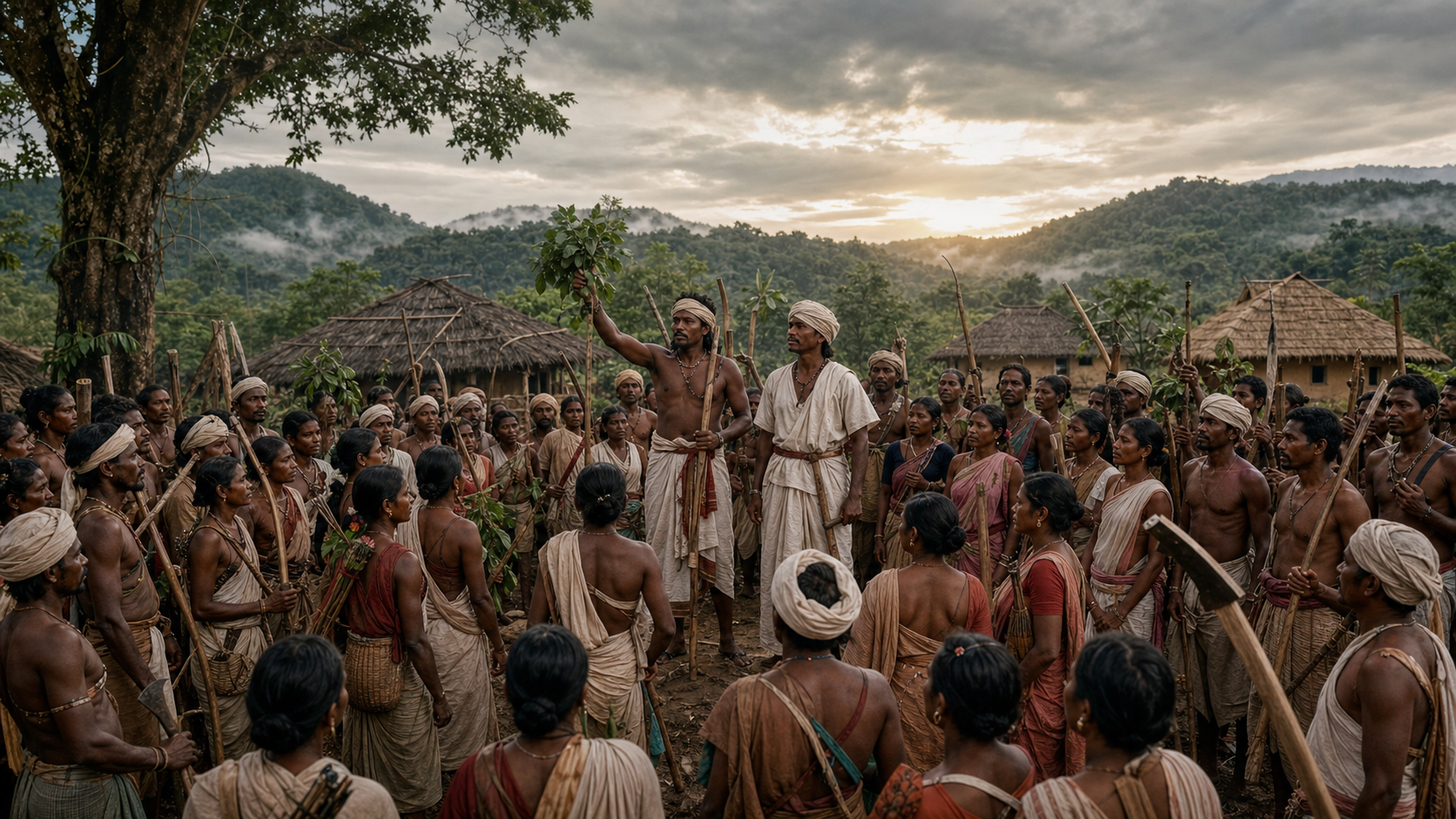
The Santal Hul is best understood not simply as an armed confrontation, but as a struggle over who could control land, labour, justice and village life. The supplied DharmaRenaissance Blog account places the uprising in 1855, two years before the better-known revolt of 1857, and traces its emergence to the everyday workings of colonial rule in eastern India.
Reading the movement through political economy, community organisation and historical memory reveals why its significance exceeds its military outcome. It also explains why Hul Diwas, observed on June 30 according to the source, remains an occasion for restoring Adivasi agency to the wider history of resistance to British rule.
Key takeaways
- The available source presents the Hul as a rejection of an interconnected system of colonial revenue demands, indebtedness, dispossession and coercive administration.
- Its mobilisation relied on trusted village networks, oral communication and collective organisation rather than urban institutions or print-based politics.
- Sido, Kanhu, Chand and Bhairav Murmu occupy a central place in its leadership, while Santal memory also preserves the political roles of Phulo and Jhano Murmu.
- The uprising was suppressed by superior colonial force, but the administrative changes that followed indicate that resistance compelled the state to reconsider how the region was governed.
- Placing the Hul before 1857 broadens the geography and social composition of India’s anti-colonial history.
How settlement was transformed into dispossession
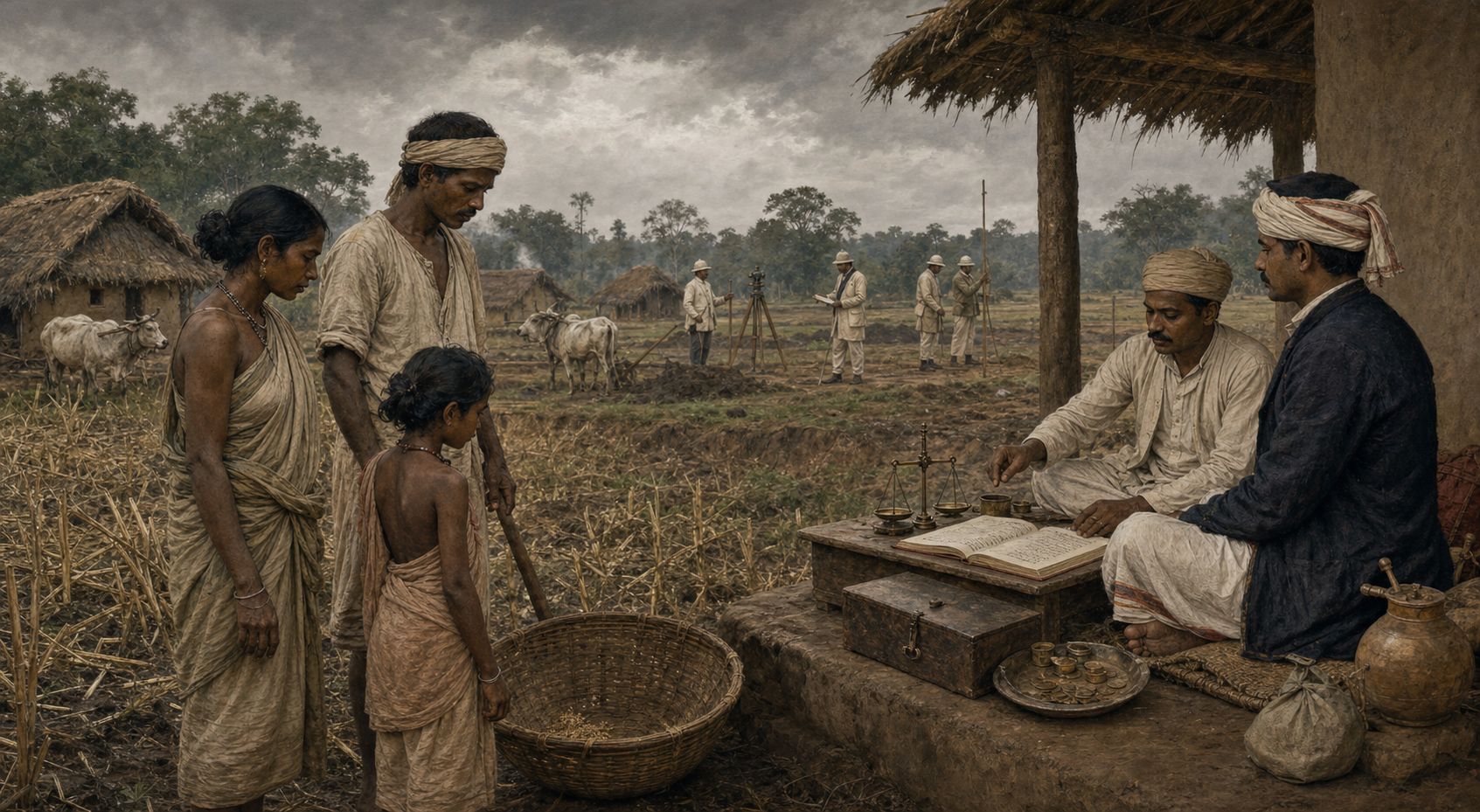
The contradiction at the heart of the Hul began with cultivation itself. The DharmaRenaissance account reports that the East India Company encouraged Santal settlement in Damin-i-koh, the forested region around the Rajmahal hills, during the early nineteenth century. Santal cultivators cleared land, established villages and made the area agriculturally productive, thereby creating the settled and taxable landscape sought by the colonial administration.
That productivity did not secure control for the communities whose labour created it. As settlement expanded, the source says, moneylenders, traders, zamindars, police personnel and court agents acquired growing influence. These were not separate pressures operating at the margins of village life. Together, they formed a chain through which revenue policy could be translated into private debt, legal vulnerability and physical coercion.
Debt was particularly destructive because it could convert a temporary need into lasting dependency. The account describes loans involving unfair interest, manipulated records, false accounts and coercive recovery. Inability to repay could cost cultivators their crops, cattle, land or labour. The resulting grievance was therefore larger than opposition to a particular tax or an isolated abusive official: those who had made the land productive could be subordinated on, or removed from, that same land.
This connection between cultivation and dispossession clarifies the movement’s moral intensity. The source interprets the Santal word “Hul” as carrying the meanings of rebellion, uprising and liberation. Within that account, it expressed a collective refusal of humiliation and a demand to restore dignity and moral order. Land was consequently not just an economic asset under dispute; it was bound to community continuity, autonomy and the legitimacy of social authority.
Bhognadih turned dispersed grievances into collective action
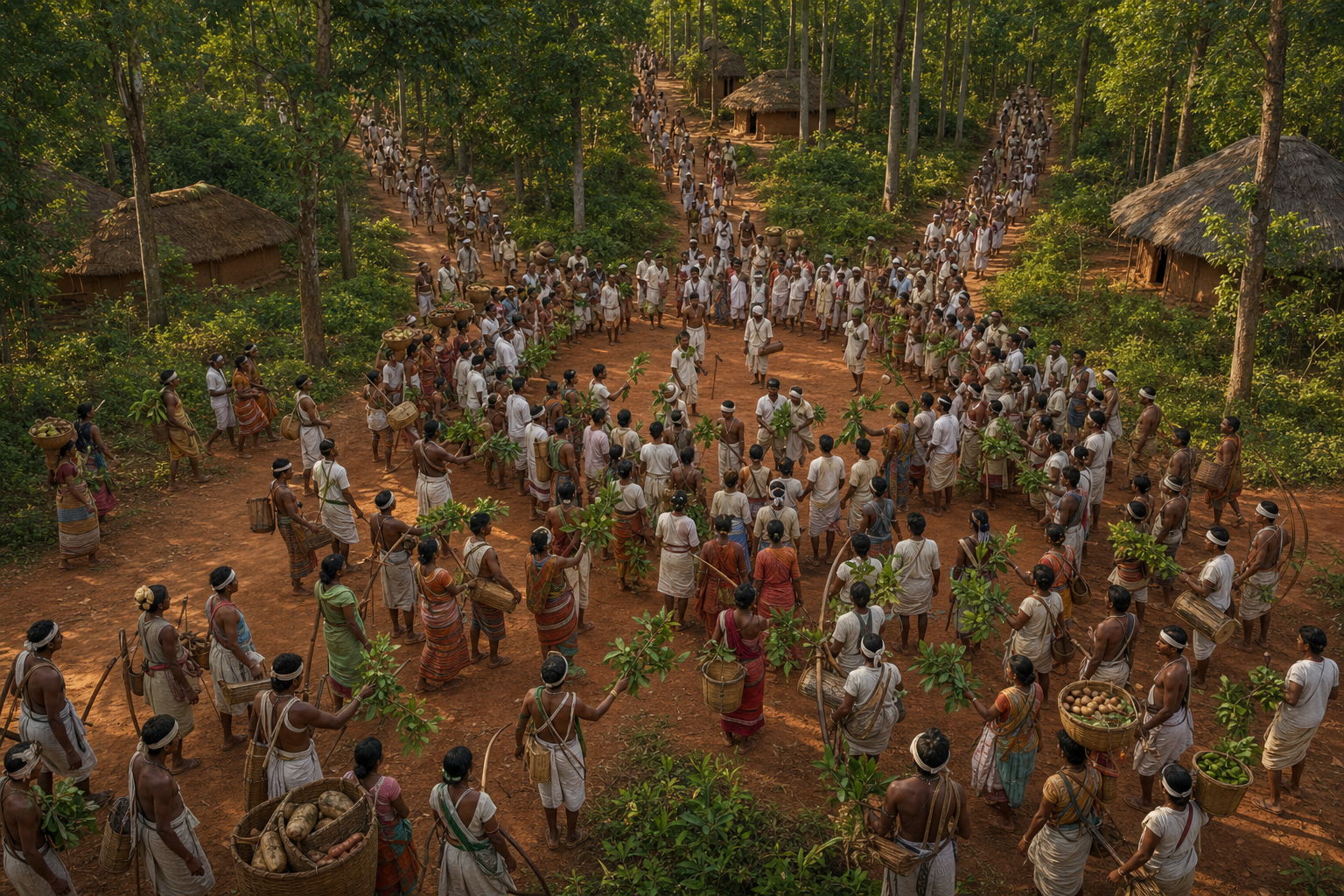
The decisive transition from suffering to organised resistance is located by the source at Bhognadih, in present-day Jharkhand. It reports that thousands gathered there on June 30, 1855, following a call associated with Sido and Kanhu Murmu. Their brothers Chand and Bhairav are also identified as leaders of the uprising.
Bhognadih matters not only as the site of a large assembly, but as the point at which grievances distributed across settlements became a shared political purpose. The targets named in the account included British authority as well as oppressive landlords, predatory moneylenders, corrupt officials and violent policing. This range shows that colonial power was encountered through a whole local structure, rather than through distant Company officers alone.
The movement’s communications illuminate a form of politics rooted in community institutions. According to the source, songs, drums, messengers, oral traditions and village meetings carried the summons between settlements. Kinship and ritual spaces helped establish trust. Such methods should not be mistaken for an absence of organisation: the same account describes arrangements for intelligence, supplies and defence.
The source further states that several accounts record support from other marginalised rural groups, although it does not quantify or fully define that participation. This qualified claim suggests that the Hul’s appeal could extend beyond a single identity where different communities encountered related forms of exploitation. At the same time, the uprising remained grounded in Santal social experience and should not be detached from that foundation.
Military defeat did not erase the Hul’s political effects
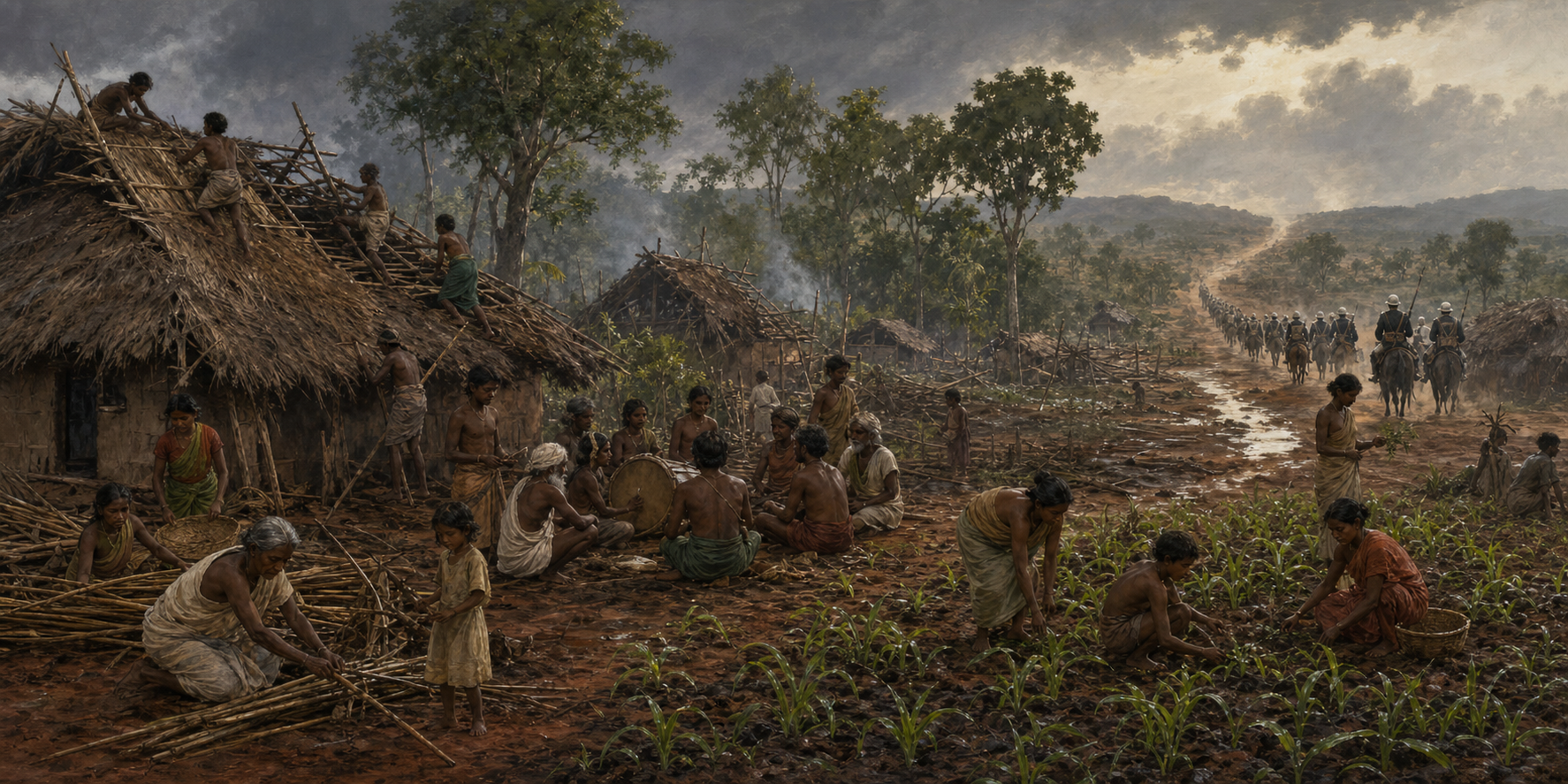
The material imbalance was severe. The DharmaRenaissance article describes rebels using bows, arrows, axes and other traditional weapons against colonial troops equipped with firearms and backed by the administrative capacity of the East India Company. It reports that the movement spread through areas connected to present-day Jharkhand, Bihar and Bengal, attacking symbols of exploitative authority and disrupting colonial confidence.
The Company’s response, as presented in the source, included military operations, arrests, executions, destroyed villages and mass violence. Thousands were reportedly killed, while settlements were devastated. Because the supplied account gives no more precise casualty figure, the scale is better acknowledged without assigning an unsupported total.
Judging the Hul only by whether it defeated the colonial army would obscure its political consequences. The source links the uprising to the subsequent creation of the Santal Parganas as a distinct administrative arrangement and to later land protections represented by the Santhal Parganas Tenancy framework. It does not claim that these measures ended colonial domination. Rather, it treats them as evidence that the state could no longer dismiss Santal grievances as scattered disorder.
This distinction is important: reform after repression can acknowledge the force of a grievance without fulfilling the aims of those who rebelled. The administrative response therefore belongs to the Hul’s legacy, but it should not be confused with the self-rule, dignity and restored social order that the source identifies with the movement’s aspirations.
Oral memory reveals actors whom official archives obscure
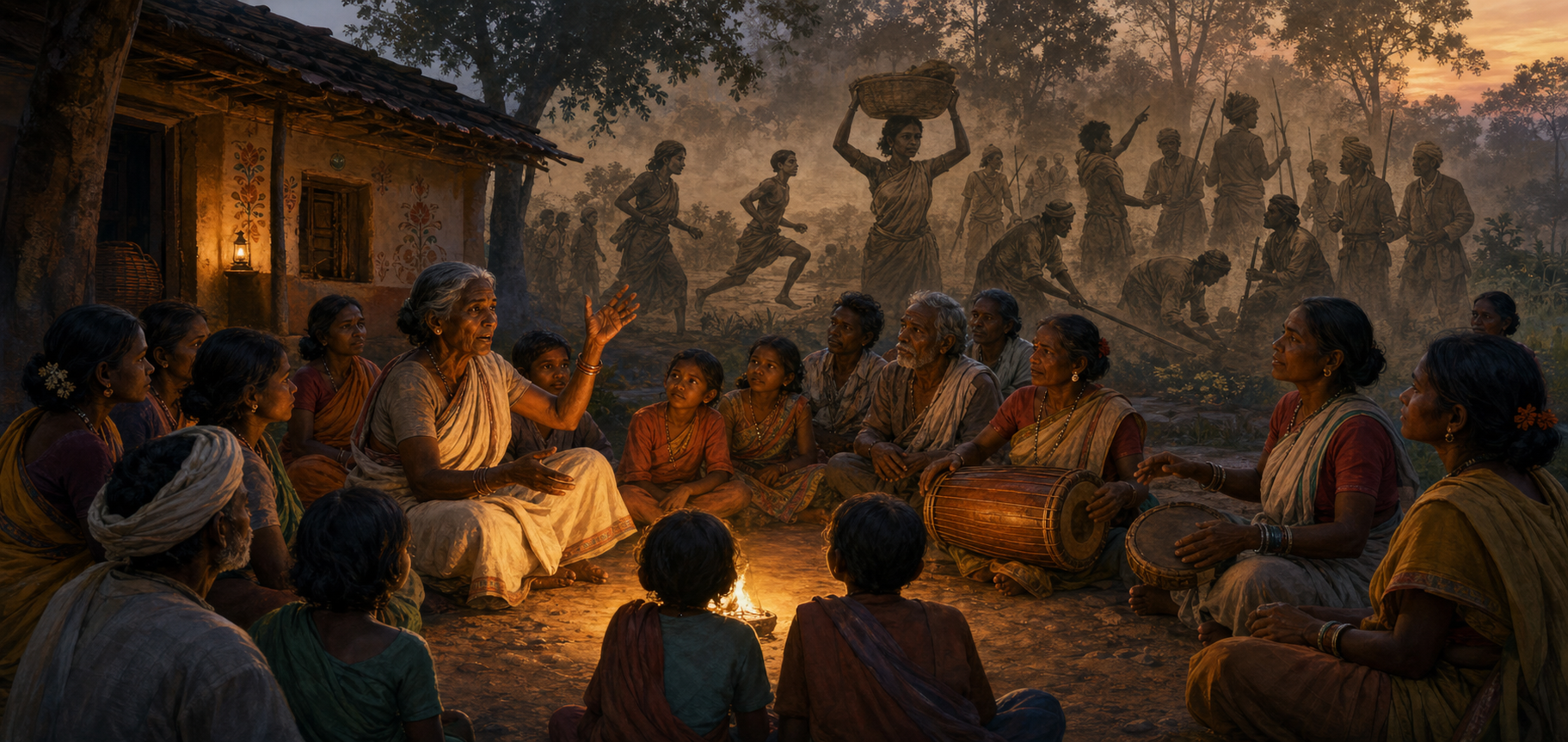
The relationship between written archives and community memory is especially significant in accounts of Phulo and Jhano Murmu. The source acknowledges that colonial documents provide limited evidence about their precise actions. It nevertheless reports that Santal oral traditions remember the sisters as organisers, mobilisers and fighters, associating them with message-carrying, supplies, intelligence, morale and resistance to colonial camps.
These claims require careful presentation. Limited official documentation does not permit every remembered episode to be reconstructed as a settled archival fact. Yet colonial silence cannot automatically establish historical absence, particularly when official records were produced by institutions that did not readily recognise Adivasi women as political participants. The responsible approach is to identify the kind of evidence involved and preserve what Santal memory says without overstating what the surviving written record demonstrates.
Remembering Phulo and Jhano also changes the analytical frame. If rebellion depended on sustaining households, moving information, gathering provisions and protecting village society, then political participation cannot be restricted to formal command or battlefield action. The source’s account places women within the infrastructure of resistance and community survival, making their contribution structural rather than ceremonial.
Hul Diwas consequently preserves more than the names of individual leaders. It carries a debate about whose testimony counts, which forms of action are recognised as political, and how an Adivasi community transmits its own account of the past. Sido, Kanhu, Chand, Bhairav, Phulo and Jhano emerge in this remembrance as members of a leadership tradition connected by kinship, land and collective duty.
Why the Hul changes the familiar chronology of freedom
Placing the Santal Hul in 1855 challenges a national narrative that begins armed resistance with the revolt of 1857. This does not require diminishing the later upheaval. Instead, the chronology becomes wider: anti-colonial action had already taken organised form in the villages, fields, forests and hill settlements of eastern India.
The shift is geographical as well as chronological. It recognises that freedom was contested outside cantonments, legislatures, courts and major cities, and that cultivators confronting debt and dispossession were making political claims even when their language and institutions differed from those of later national organisations. The Hul thus connects the history of colonial governance to the history of land, showing how economic extraction could become a question of sovereignty and dignity.
The source also relates the movement’s moral force to a wider civilisational emphasis on reverence for land, community obligation, ancestral memory and resistance to predatory power, while insisting that the Hul remain understood on Santal cultural terms. Holding both points together avoids absorbing a distinct Adivasi history into an overly general story while still recognising its place within India’s larger experience of colonial rule.
Future remembrance will be strongest when it keeps those layers visible: the specific institutions that enabled exploitation, the community systems that made resistance possible, and the different forms of evidence through which the participants are known. That approach can move the Hul from an annual commemoration at the margins of public history toward sustained study of land, governance and historical justice.