
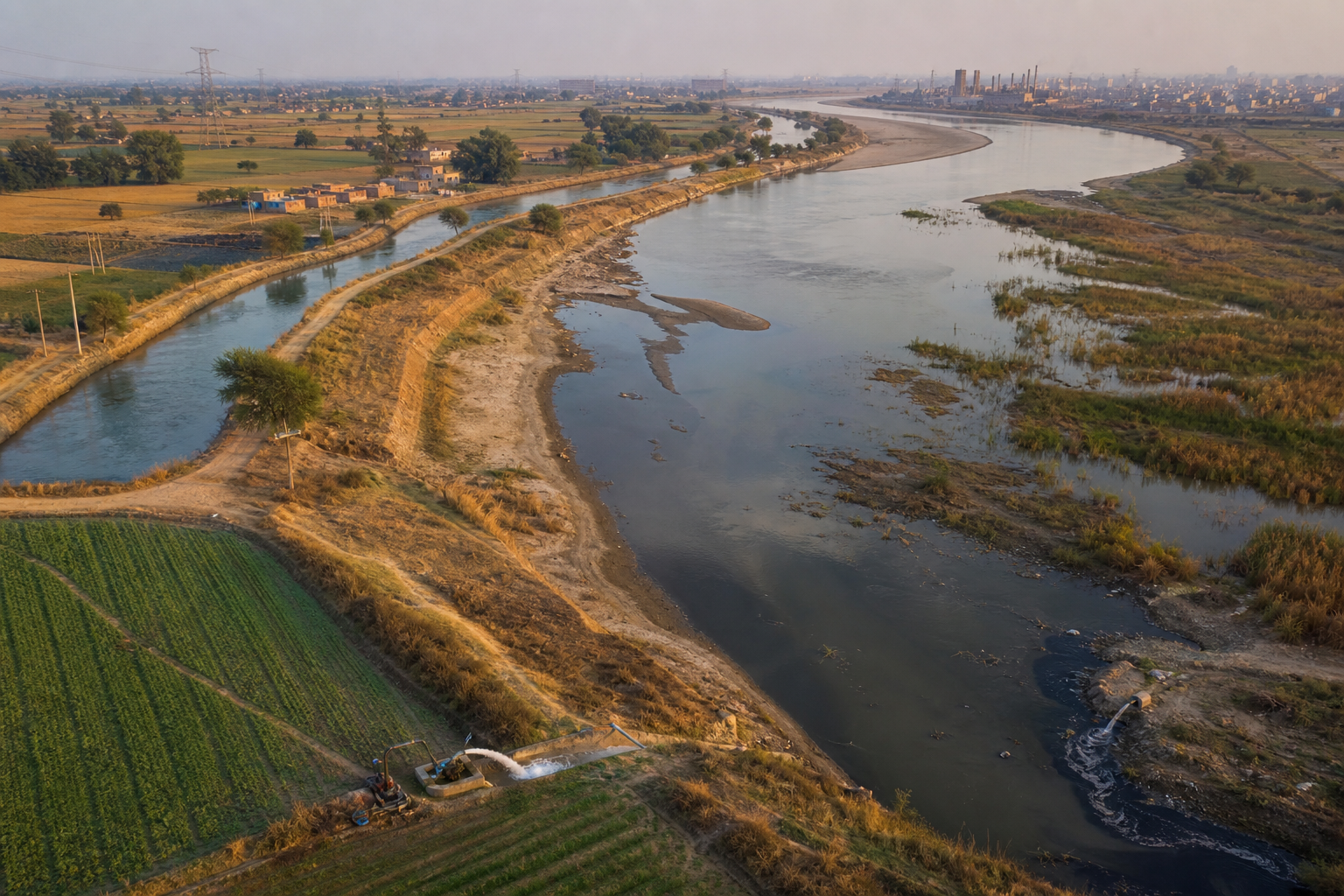
If you are trying to decide whether Punjab’s water crisis is mainly an interstate dispute, a farming problem or a pollution problem, the honest answer is that all three are reinforcing one another. Solving only the most visible dispute would leave families dependent on unsafe supplies, farmers drilling deeper wells and rivers too depleted to recover.
The useful question is therefore not simply who receives how much water. It is how Punjab and its neighbours can meet legitimate needs without consuming the rivers, aquifers and wetlands on which future claims depend. That requires a water budget people can inspect, agricultural support farmers can trust and a basin agreement that changes when the hydrology changes.
Read the crisis as one connected water budget
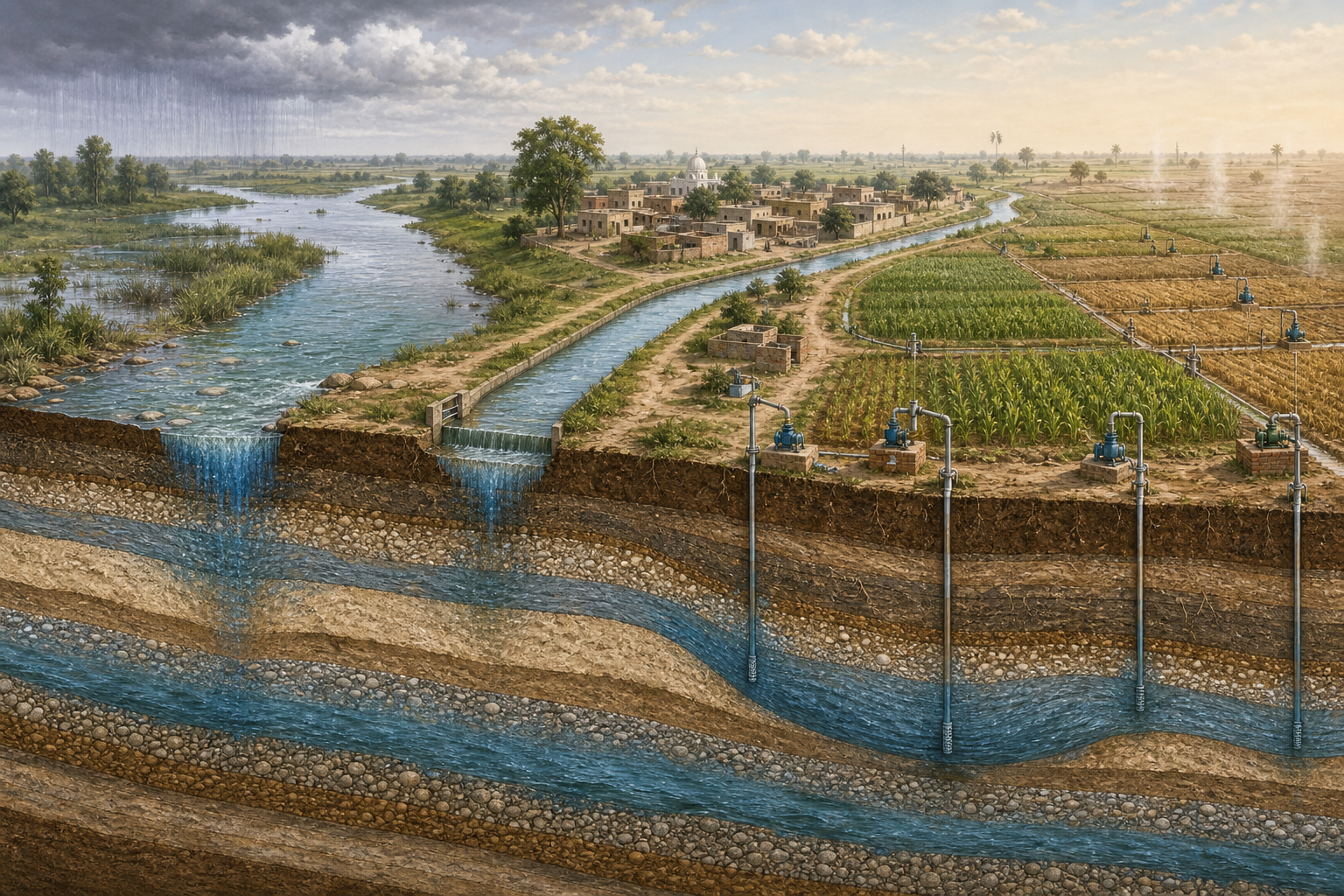
Punjab’s water is often discussed as if rivers, canals and tube wells were separate systems. They are not. When a canal does not deliver reliably, especially near the tail of its command, a farmer turns to groundwater. When the water table falls, the next well must reach deeper. When pollution makes a river, drain or shallow supply unusable, demand shifts again to whatever cleaner source remains.
That chain produces three deficits at once:
- A surface-water deficit: the Sutlej, Beas and Ravi systems face reduced lean-season flows, while fragmented habitats and inadequate provision for environmental flows weaken river ecology.
- A groundwater deficit: widespread tube-well dependence has pushed water tables downward in many blocks, turning the aquifer into a reserve that is repeatedly withdrawn but insufficiently replenished.
- A usable-water deficit: salinity, agricultural residues and urban or industrial waste can leave water physically present but unsuitable for a household, farm or ecosystem.
This is why a claim about Punjab having surplus water cannot be judged from an annual river total alone. The meaningful test is seasonal and local. How much arrives during the lean period? How much must remain in the river? Are tail-end communities receiving their share? Does the proposal reduce groundwater pumping or merely move the pressure somewhere else?
You can apply four questions to any canal, allocation or transfer proposal:
- What is the season-by-season availability, rather than the headline annual quantity?
- What ecological flow will remain in the river before the distributable amount is calculated?
- Who gains or loses reliable delivery within each canal command, including villages at the tail?
- Will the proposal slow aquifer depletion, or will unreliable delivery send farmers back to tube wells?
If those answers are absent, the proposal is not a complete water plan. It is an allocation claim detached from the physical system that must honour it.
The SYL dispute is real, but it is not the whole crisis
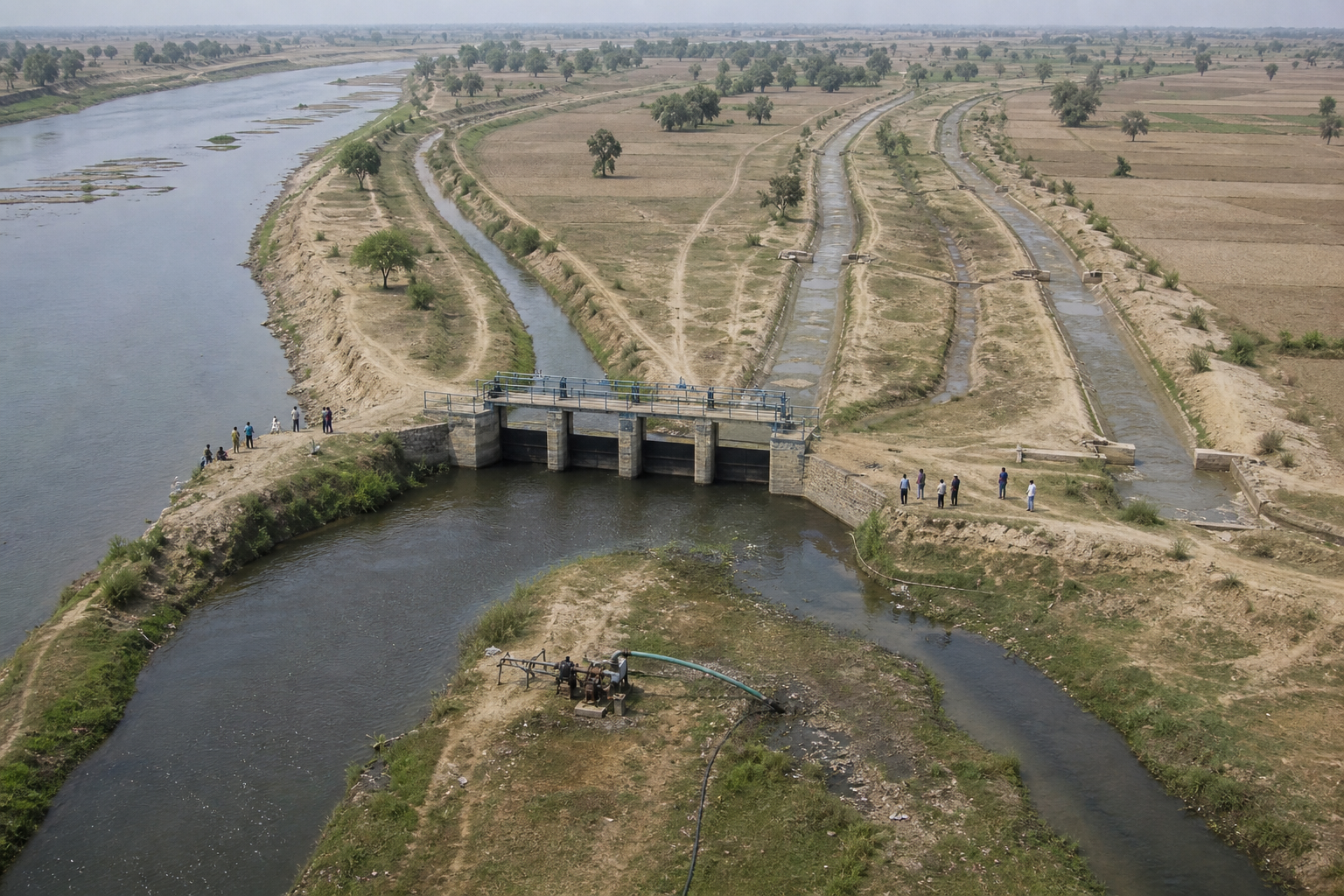
Punjab’s present arrangements sit on several historical layers. British-era projects such as the Upper Bari Doab and Sirhind canals reorganised surface flows. After Independence, the 1960 Indus Waters Treaty placed the eastern rivers—the Ravi, Beas and Sutlej—at India’s disposal. Interstate allocations then carried part of that water beyond Punjab, particularly to Haryana and Rajasthan. Punjab’s reorganisation in 1966 and later agreements made the dependencies more contentious.
The Sutlej-Yamuna Link, or SYL, consequently became more than a canal. For Punjab, it came to embody an argument about riparian justice, historical allocation and the danger of committing water while local aquifers are declining. For Haryana, it represents an asserted entitlement and the infrastructure needed to receive it. Rajasthan also depends on eastern-river allocations. These interests cannot be made to disappear by treating one state’s concern as illegitimate.
Legal and constitutional processes determine rights and obligations. Hydrology determines whether those obligations can be carried out without exhausting the basin. A court direction can settle a legal question; it cannot create lean-season flow, restore an aquifer or clean polluted water. Durable federal policy must therefore connect legal decisions to current, transparent measurements.
A credible interstate settlement needs an eastern-rivers basin council with a narrow, practical mandate. It should publish the data used for seasonal decisions, account for ecological requirements before treating the remainder as available, compare canal delivery with groundwater stress and revise operations when monsoons, snowmelt or other climate-sensitive conditions alter supply. The council should not erase state governments. It should give them a common factual record on which disagreement can be tested.
This reframes the political choice. Punjab need not deny the legitimate needs of neighbouring states to insist that allocations respect river health and local water security. Haryana and Rajasthan need not accept opaque scarcity claims to support adaptive management. Every state gains when the basin’s actual condition is visible; every state loses when a fixed promise is maintained by quietly emptying groundwater.
The farm economy must stop rewarding aquifer depletion
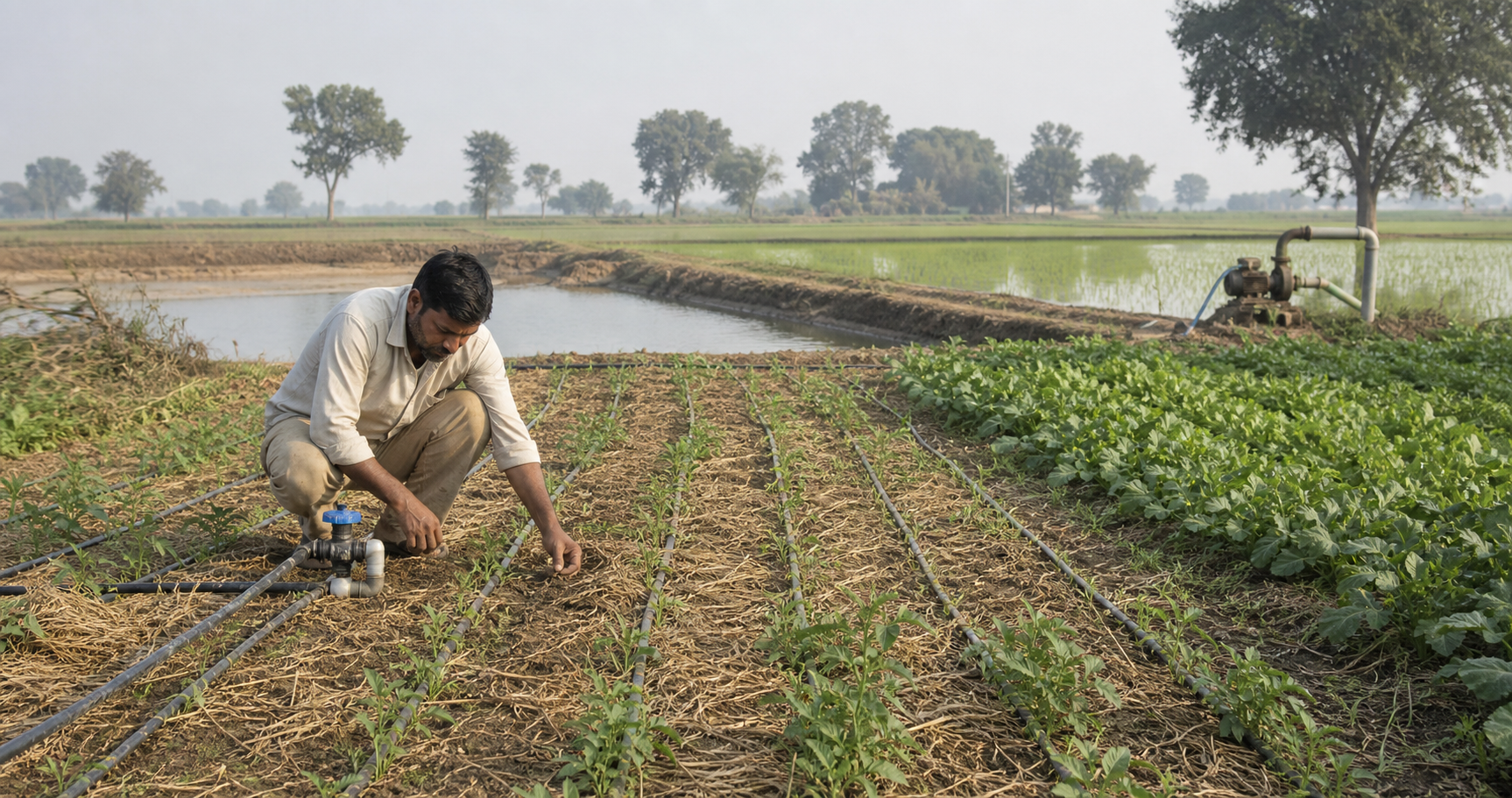
Punjab helped secure India’s food supply through the Green Revolution. The same policy architecture encouraged a paddy-wheat cycle backed by procurement, irrigation infrastructure and growing tube-well use. The resulting problem is not that farmers chose irrationally. They responded rationally to the market and policy signals placed before them.
Paddy also carries water out of Punjab in an indirect form. Water used to grow a crop leaves the producing region when that crop is sold elsewhere; this is often described as virtual-water export. Punjab has borne much of that hydrological cost without an equally strong system for recharge or for purchasing lower-water alternatives.
Telling a farmer to diversify while leaving price and market risk on the farm will not correct the incentive. A workable transition requires assured procurement and price support for maize, pulses and oilseeds. The buyer, quality terms and price mechanism need to be credible before sowing decisions are made. Otherwise, paddy remains the safer livelihood choice even where it is the riskier water choice.
Farm-level conservation should then support—not substitute for—that economic change:
- Prepare a field water budget. Record the irrigated area, crop, water source and duration of each irrigation. The purpose is not paperwork for its own sake. It is to identify which fields and crop stages create the highest pumping demand.
- Use micro-irrigation where the crop and field make it suitable. Equipment should follow a crop plan; installing it without changing incentives or maintaining the system will not by itself repair the aquifer.
- Repair delivery inequity. Target canal maintenance and lining where measured losses or unreliable conveyance are forcing tail-end farmers onto wells.
- Diversify through groups where possible. Farmer cooperatives can aggregate maize, pulses and oilseeds, coordinate buyers and reduce the market risk that an individual farmer would otherwise carry alone.
- Measure the result in pumping avoided. Acreage announcements are not enough. The important outcome is whether the change reduces dependence on groundwater while protecting farm income.
For a farmer considering a switch, the first question should not be whether a lower-water crop is agronomically possible. It should be whether procurement, price protection, storage and a buyer are in place. For a policymaker, the order is the reverse: build that dependable market first, then ask the farmer to change.
Protecting Punjab’s aquifers is not a retreat from national responsibility. A food-security system that liquidates the producing region’s water base undermines its own future. Bharat needs Punjab to remain productive, which means rewarding production that fits the land’s hydrological limits.
Polluted water must be treated as lost water
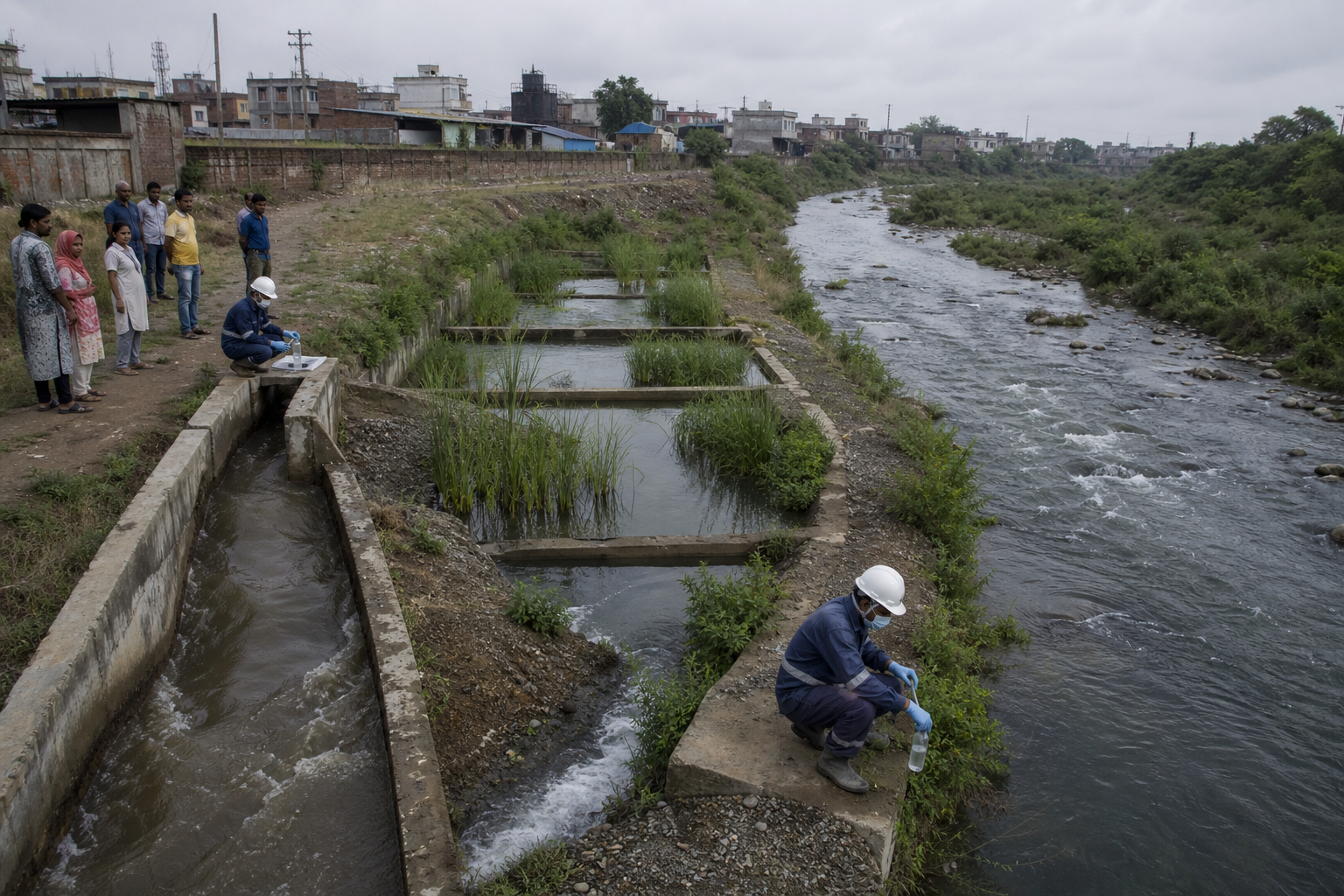
Scarcity is not only a question of volume. Water that exposes a family to unacceptable contamination is not a usable supply. Punjab’s concerns include salinity and agricultural residues, as well as reported pockets of elevated heavy metals and uranium in parts of the Malwa belt. Urban sewage and industrial discharge, including pollution carried through the Buddha Nullah, place additional pressure on river ecology and downstream communities. Harike wetland is affected by the condition of the wider Sutlej-Beas system.
You cannot establish chemical safety from colour, smell or taste. Where contamination is suspected, the useful first step is testing by a competent laboratory for the contaminants relevant to the locality. A result should identify what was measured and the units used, not merely label the water good or bad.
Do not assume that boiling solves a chemical contamination problem. Boiling can address some biological hazards when properly done, but it does not remove dissolved salts, metals or uranium. If a validated result indicates chemical contamination, use a verified safe supply and obtain treatment guidance tied to the measured contaminant. A generic household filter may not address it.
At the system level, pollution control should be managed as source prevention rather than an endless downstream clean-up:
- Require industrial facilities to comply with effluent limits and make monitoring results available to affected communities.
- Upgrade urban wastewater treatment to the level required before discharge, including tertiary treatment where necessary.
- Measure water upstream and downstream of major discharge points so that a clean reading at the treatment plant cannot conceal deterioration farther along the channel.
- Link enforcement to corrective action and repeat testing, rather than treating a single inspection as closure.
- Restore environmental flows alongside pollution control. Dilution is not a licence to discharge waste, but a living river still needs enough water to sustain wetlands, habitats and natural functions.
Households should not be expected to solve public pollution with private filters. Emergency access to safe drinking water may be a necessary immediate response, but the durable obligation remains with utilities, industries and public authorities that control treatment and discharge.
Build a water compact that communities can verify
Punjab does not need to choose between scientific management and dharmic stewardship. The conviction that jal is sacred gives water policy a moral direction: do not take what cannot be renewed, do not pass contamination downstream and do not protect one community by making another invisible. Measurement gives that conviction practical force.
Gurdwaras organising jal sewa and Sikh, Hindu, Buddhist and Jain institutions hosting water-health work can help convert concern into local capacity. Their most valuable role is not to replace the state. It is to make conditions visible, help vulnerable families reach safe supplies and keep public attention on commitments after a campaign ends.
A village, ward, gurdwara or farmer cooperative can begin with one defined water body or supply—not an unfocused promise to save all water. The practical sequence is:
- Name the unit. Choose a pond, canal reach, drain, cluster of wells or drinking-water supply with clear boundaries.
- Record a baseline. Track rainfall, water level or delivery reliability as relevant, and use competent testing where water quality is part of the concern.
- Publish the record. Put dates, locations, measurements and responsible contacts on an open noticeboard or dashboard so residents can see change over time.
- Match the intervention to the cause. A polluted drain needs enforcement and treatment; a falling aquifer needs lower withdrawals and suitable recharge; an unreliable canal needs delivery correction. One remedy cannot stand in for another.
- Assign responsibility. Identify what the community can maintain and what must be escalated to the irrigation, pollution-control, municipal or public-health authority.
- Review after each season. Compare the intervention with water levels, delivery and quality results, then continue, change or stop it on evidence.
Recharge work needs the same discipline. Ponds, check dams and managed aquifer recharge can be useful where local conditions support them, but only clean water should be introduced into an aquifer. A structure that collects contaminated runoff can move pollution underground instead of solving scarcity. Site selection and water quality therefore matter as much as the number of structures built.
At the state and basin levels, a complete recovery programme should connect six commitments: safe household supply, enforceable pollution control, crop diversification with assured markets, community groundwater budgets and suitable recharge, scientifically defined environmental flows, and transparent interstate management. Each commitment needs a responsible institution and a result the public can examine.
Key takeaways
- Punjab’s river dispute cannot be separated from groundwater depletion and water pollution; pressure moves between all three systems.
- An interstate allocation is credible only when it uses seasonal data, protects an environmental flow and shows its effect on local aquifers.
- Farmers cannot carry diversification risk alone. Assured procurement and price support must make maize, pulses and oilseeds dependable choices.
- Boiling is not a remedy for dissolved salts, metals or uranium. Chemical concerns require validated testing, a verified safe supply and contaminant-specific treatment guidance.
- Jal sewa becomes durable when communities monitor a defined water source, publish the results and hold the responsible authority to a measurable commitment.
If you want to judge the next water announcement, ask for the seasonal water budget, the ecological reserve, the groundwater consequence and the institution accountable for delivery. If any one of those is missing, press for it before accepting another promise. Punjab’s renewal will begin when water is governed not as an inexhaustible entitlement, but as a shared inheritance whose condition everyone can see.
References
