
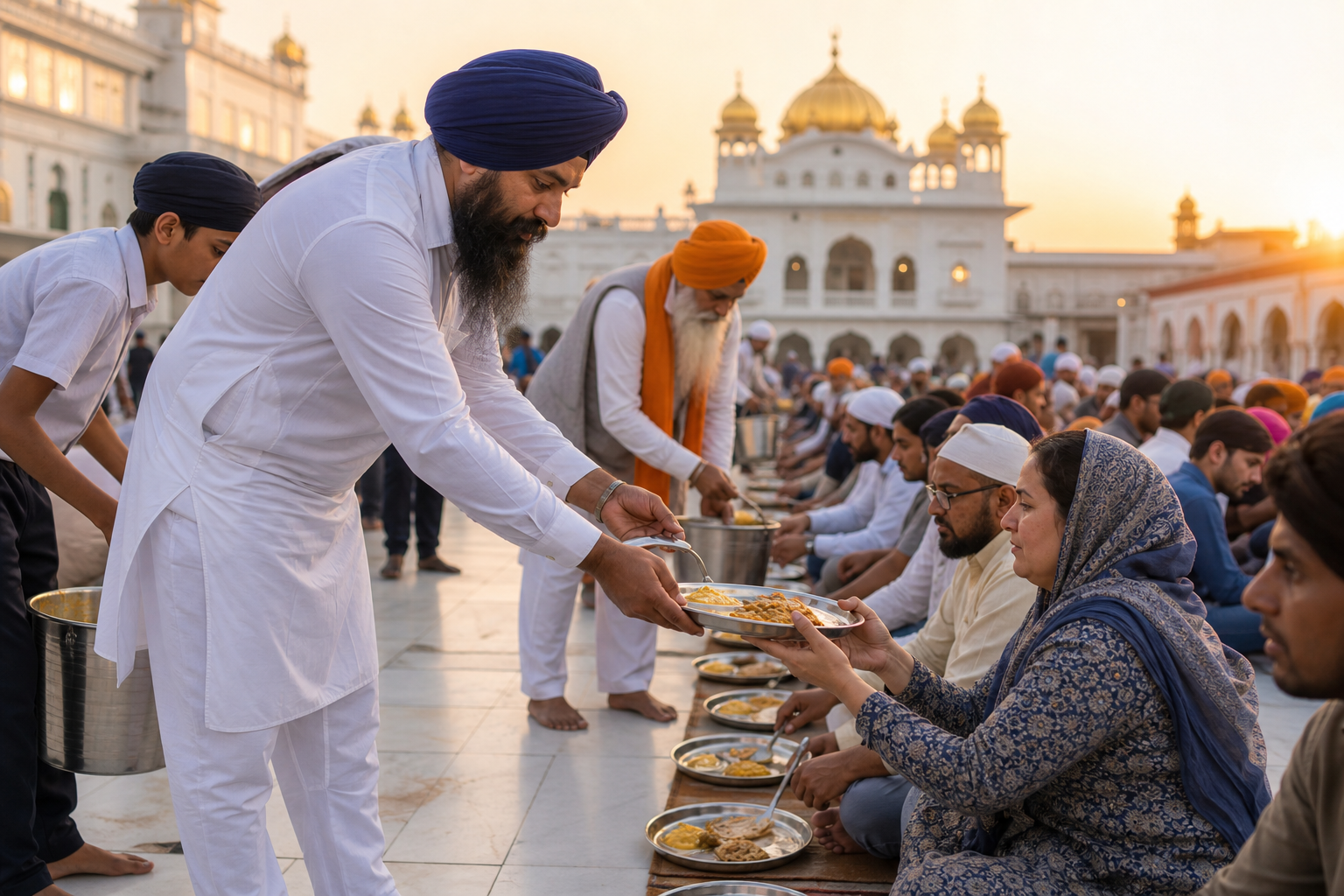
If you are trying to explain why service and religious freedom belong together in Sikh thought, begin with a demanding question: will you serve someone whose beliefs differ from yours, and will you defend that person’s right to remain different?
The Sikh answer connects three commitments. Faith disciplines the self. Seva directs that discipline toward the welfare of others. Courage protects the freedom without which faith would cease to be a genuine choice. This connection gives you a practical way to understand Sikh public life, from a Nagar Kirtan in Amritsar to Guru Tegh Bahadur’s sacrifice in Delhi.
Faith, service, and freedom form one ethical chain

Sikh devotion is not meant to end with a private feeling or an identity label. It should shape conduct. Humility has to affect how you treat people. Compassion has to become service. Reverence for truth has to produce the courage to resist coercion.
This is visible when a Nagar Kirtan carries devotional singing and reverence for the Guru Granth Sahib into civic space. The procession does more than move worshippers through a city. It makes a moral claim in public: sacred remembrance should encourage compassion, humility, responsibility, and sarbat da bhala, the welfare of all.
The phrase “welfare of all” is the hinge. If service benefits only people who already belong to your group, it may still be generosity, but it has not yet reached the full ethical horizon expressed by sarbat da bhala. The harder test is whether your concern crosses religious, social, and institutional boundaries.
You can use three questions to test whether a religious activity is carrying that ethic into practice:
- Faith: Does the activity cultivate truthfulness, humility, discipline, and responsibility in the participant?
- Seva: Does it meet a real need while preserving the dignity of the person being served?
- Freedom: Does it respect the other person’s conscience, including the right to worship differently or not accept your beliefs?
All three questions matter. Faith without service can become self-absorption. Service without respect for conscience can become pressure disguised as generosity. A defence of freedom without moral discipline can become a slogan invoked only when one’s own community feels threatened.
Sikhism shares an ethical horizon with Hindu, Buddhist, and Jain traditions through values such as ahimsa, compassion, truthfulness, and concern for the common good. That does not mean the traditions are interchangeable. You honour unity in diversity by identifying real ethical convergence while allowing each path to retain its teachings, disciplines, sacred memories, and vocabulary.
Seva turns public devotion into public trust
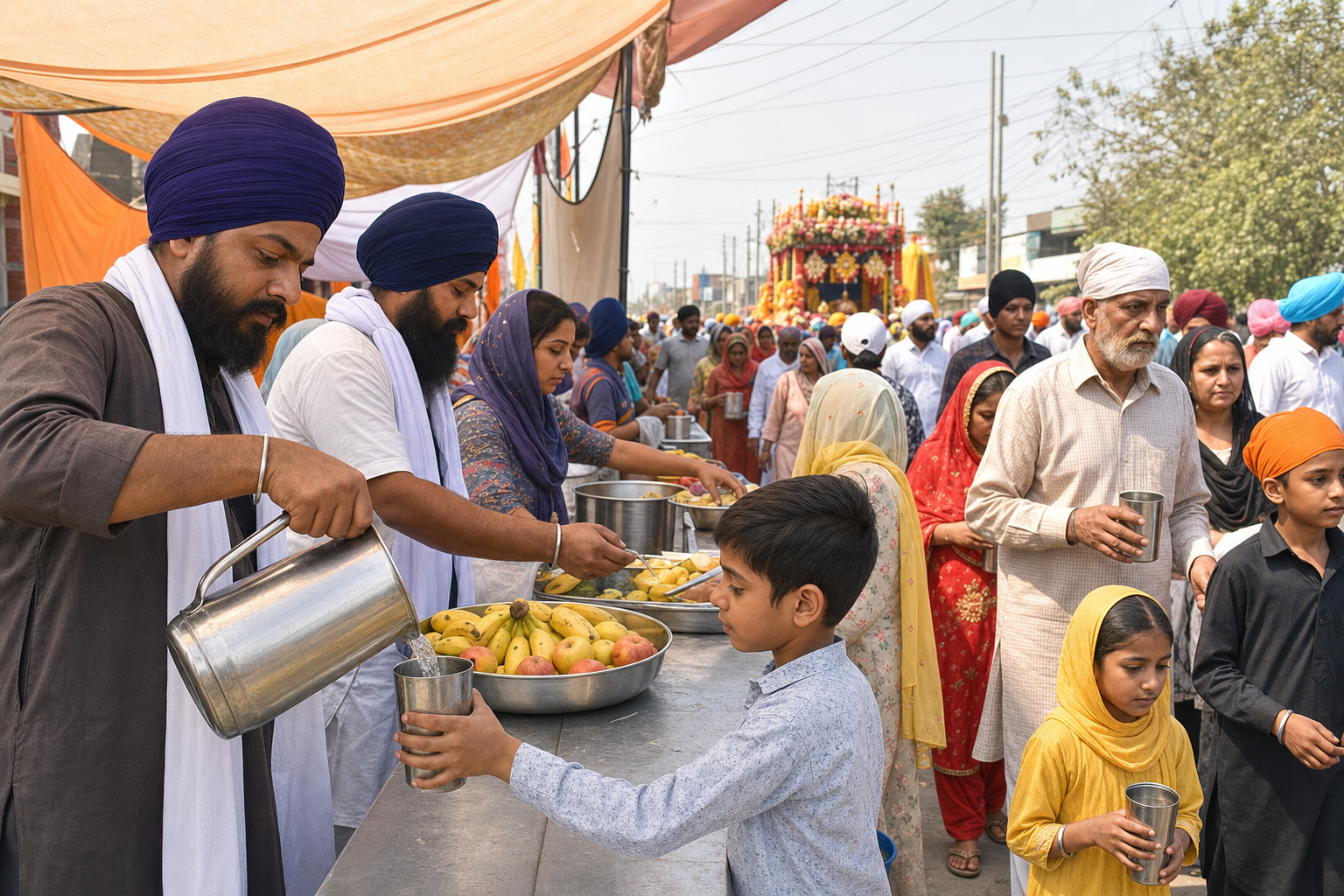
A large procession can display devotion, but its conduct reveals whether devotion has become responsibility. Routes must be managed. Participants need clear roles. Public order matters. Neighbours and institutions have to be treated with respect. Service has to remain dignified amid the visibility and scale of the occasion.
The Nagar Kirtan led by students of Khalsa College, Amritsar, under the Khalsa College Governing Council shows why youth participation is more than symbolic. Students do not preserve a tradition merely by appearing in it. They preserve it by accepting responsibility: coordinating with others, exercising discipline, serving participants, and learning why the practice exists.
This is an important distinction for any gurdwara, school, family, or community association. Giving young people ceremonial visibility may create a photograph. Giving them supervised responsibility builds continuity. Ask them to help define roles, communicate expectations, solve practical problems, and explain the ethical purpose of the event afterward.
If you are organizing a procession, commemoration, service activity, or interfaith gathering, apply this five-part check:
<!– wp:list {