
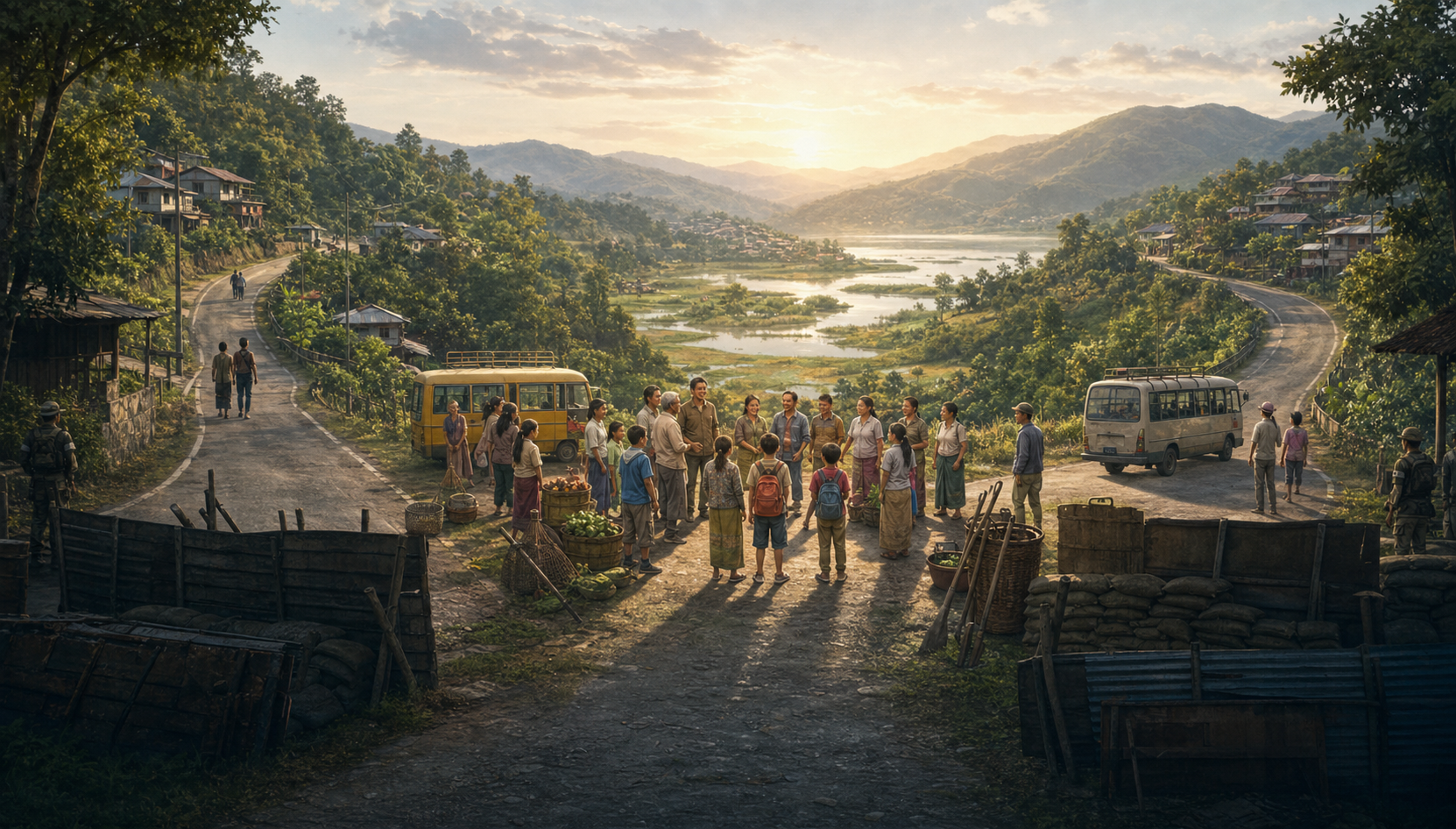
Manipur’s crisis cannot be reduced to one court order, one constitutional demand or a simple contest between two communities. The source account instead depicts an interlocking conflict in which land, representation, armed mobilisation, administrative inequality, territorial aspirations and historical fear reinforce one another.
The practical question is therefore not only how violence can be stopped, but how residents can again travel, study, farm and participate in public life without depending on communal separation for safety. A workable peace architecture must connect impartial security, negotiated institutional reform and the patient restoration of civic relationships.
Why a single-cause account cannot explain the conflict
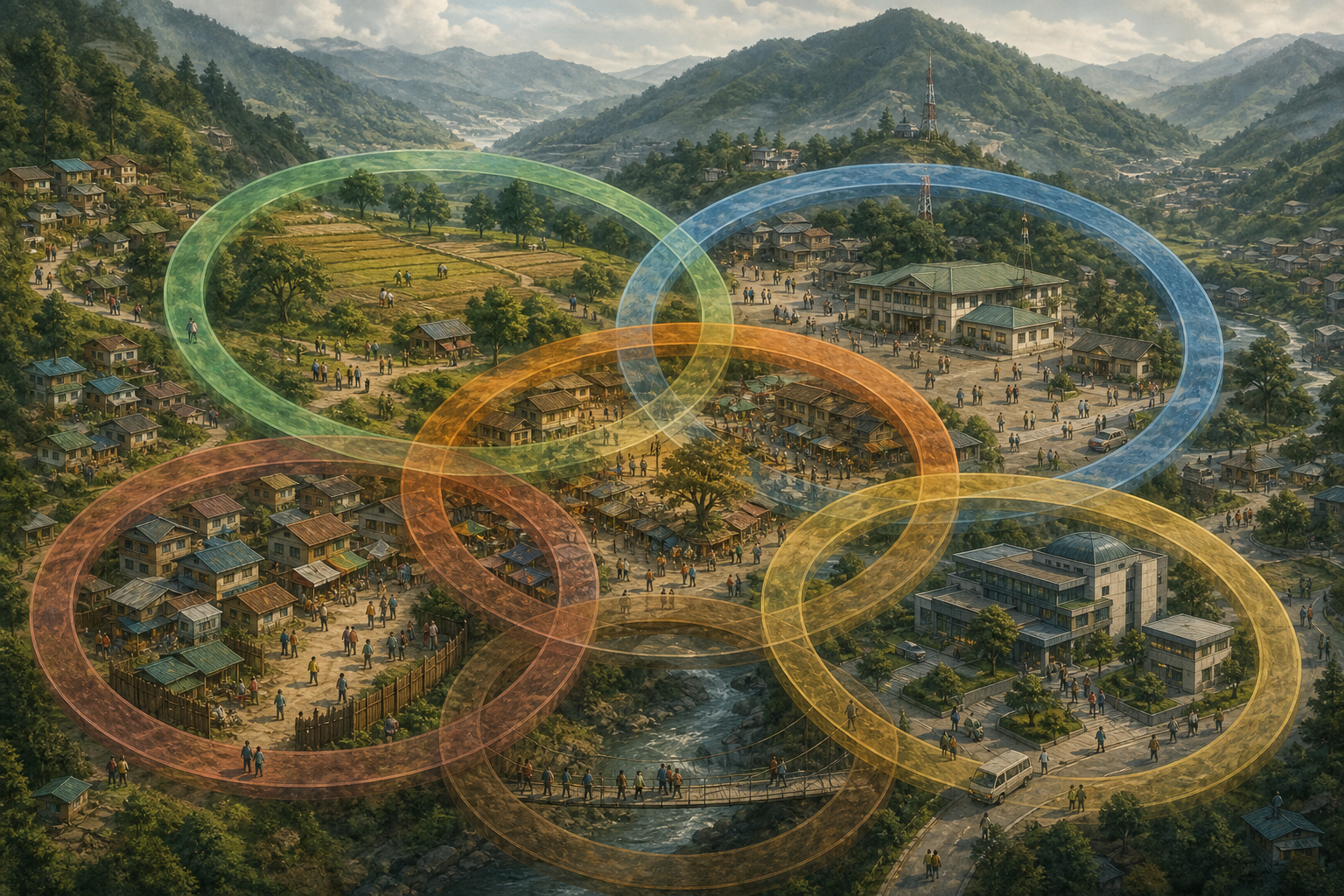
The supplied DharmaRenaissance account identifies the violence that began on 3 May 2023 as the immediate rupture, while describing its foundations as much broader. It reports mass displacement, communal segregation, armed mobilisation, disrupted highways, political changes and repeated dialogue efforts over the following years. It also argues that Scheduled Tribe status, although central to the dispute, sits within a larger system of land restrictions, hill-valley governance, insurgent legacies, illicit weapons, narcotics, uneven development, instability in neighbouring Myanmar and distrust of policing.
This distinction matters because a trigger is not the same as a complete cause. The account reports that a Manipur High Court direction in March 2023 called for expedited consideration of a Meitei petition concerning Scheduled Tribe recognition. It describes the Meitei demand as combining claims of indigeneity, cultural protection, demographic anxiety and access to constitutional safeguards. Opponents, meanwhile, fear that recognition for a comparatively influential population could weaken existing reservations and tribal land protections. These positions express different perceptions of vulnerability; treating either perception as fabricated would make negotiation harder.
The conflict’s labels can also obscure Manipur’s internal diversity. The source describes numerous hill communities with distinct clan, village, linguistic, customary and religious affiliations, noting that broad Naga and Kuki-Zo classifications do not always align with self-identification. It reports that the current Constitution (Scheduled Tribes) Order contains 34 entries for Manipur, including combined and umbrella formulations, while Meiteis are not presently included. Peacebuilding must consequently make room for smaller communities rather than assuming that a bargain between two large political blocs represents everyone.
Key takeaways
- The immediate violence grew within a wider system of disputes over land, status, governance, security and political belonging.
- Protection must be community-neutral: civilians cannot be treated as proxies for armed organisations, criminals or political movements.
- Land reform, Scheduled Tribe recognition and hill governance require constitutional deliberation and negotiated safeguards, not coercion by street or weapon.
- Physical security is only the first threshold; durable peace also requires mobility, functioning institutions, livelihoods and renewed civic contact.
- A settlement dominated by broad ethnic categories risks excluding smaller communities and reproducing the insecurity it is meant to end.
Security must protect people without assigning collective guilt
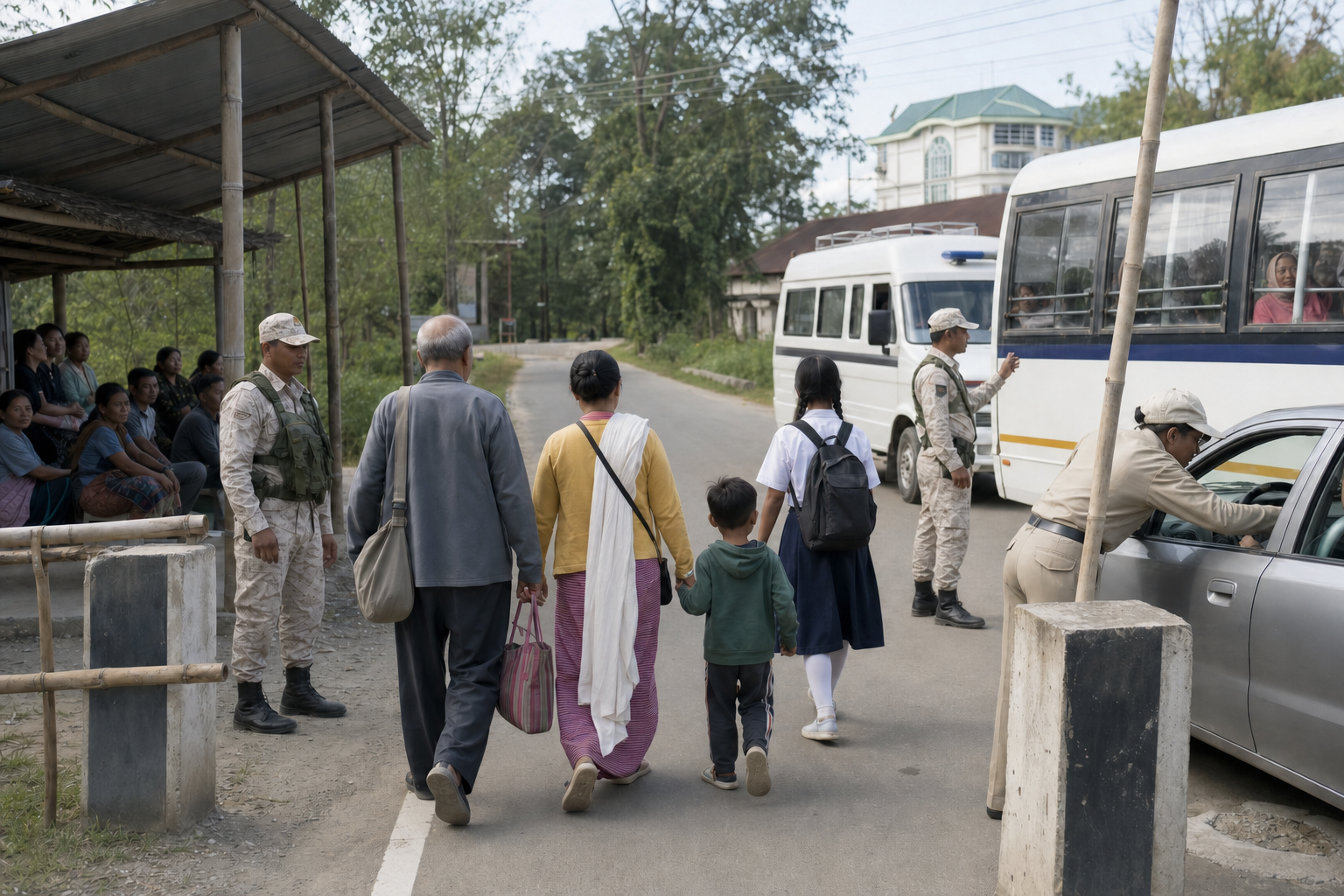
The first task is to prevent further harm and reduce the coercive power of armed actors. Yet the source makes an important operational distinction: militants are not interchangeable with civilians, refugees are not interchangeable with traffickers, and customary bodies are not interchangeable with armed organisations. Religious or ethnic identity is likewise not evidence of criminal responsibility. When authorities blur these categories, they can deepen community fear while weakening the intelligence and public cooperation needed for effective policing.
A rights-bound security policy would apply the same evidentiary standard across communities. Violence, extortion, weapons offences and organised crime should be investigated as acts committed by identifiable people and networks. Protection of settlements, roads and relief access should not depend on which group controls nearby territory. Accountability should also be visible enough to challenge the belief that public institutions selectively tolerate violence.
Restoring movement is especially significant. The source’s description of security buffers, inaccessible campuses, unreachable fields and disrupted highways shows that separation affects far more than residence. It changes education, work, trade, health access and the practical meaning of citizenship. Reopening shared space must therefore proceed through assessed security conditions and trusted arrangements, rather than through declarations of normalcy that residents do not experience as credible.
Land, status and representation require one political bargain
The hill-valley divide is simultaneously physical, legal and political. According to the source, the Imphal Valley concentrates population, state institutions, education and economic activity, while the hills cover most of Manipur’s territory, have more difficult connectivity and retain distinct customary land systems. Hill residents can therefore experience a shortage of infrastructure and influence even as valley residents experience congestion, scarce land and exclusion from hill areas. Both grievances can exist at once.
The account links this divide to the Manipur Land Revenue and Land Reforms Act, 1960, which it says does not extend to notified hill areas; the Manipur (Hill Areas) District Councils Act, 1971; Article 371C; and the Hill Areas Committee. These arrangements provide protections, but the source also points to contested jurisdiction, delayed elections and unequal administrative capacity. This means that changing one component in isolation could merely transfer insecurity from one population to another.
A political process should accordingly consider land protection, urban pressure, local authority, infrastructure and representation as connected questions. Tribal land safeguards need not preclude negotiated mechanisms for public infrastructure or economic exchange. Relief for valley congestion need not imply unrestricted acquisition in protected areas. The essential test is whether rules are lawful, transparent and accepted as protection against dispossession rather than as a route to it.
The Scheduled Tribe question belongs in that comprehensive process. Constitutional recognition affects more than symbolism, while its implications cannot be determined through communal mobilisation alone. A credible deliberation would have to hear the claimed need for Meitei cultural and demographic protection, the fears of existing Scheduled Tribes, and the interests of smaller communities whose voices may be lost inside larger coalitions. Its legitimacy would depend as much on the procedure and safeguards as on the eventual decision.
Reconciliation must rebuild everyday interdependence
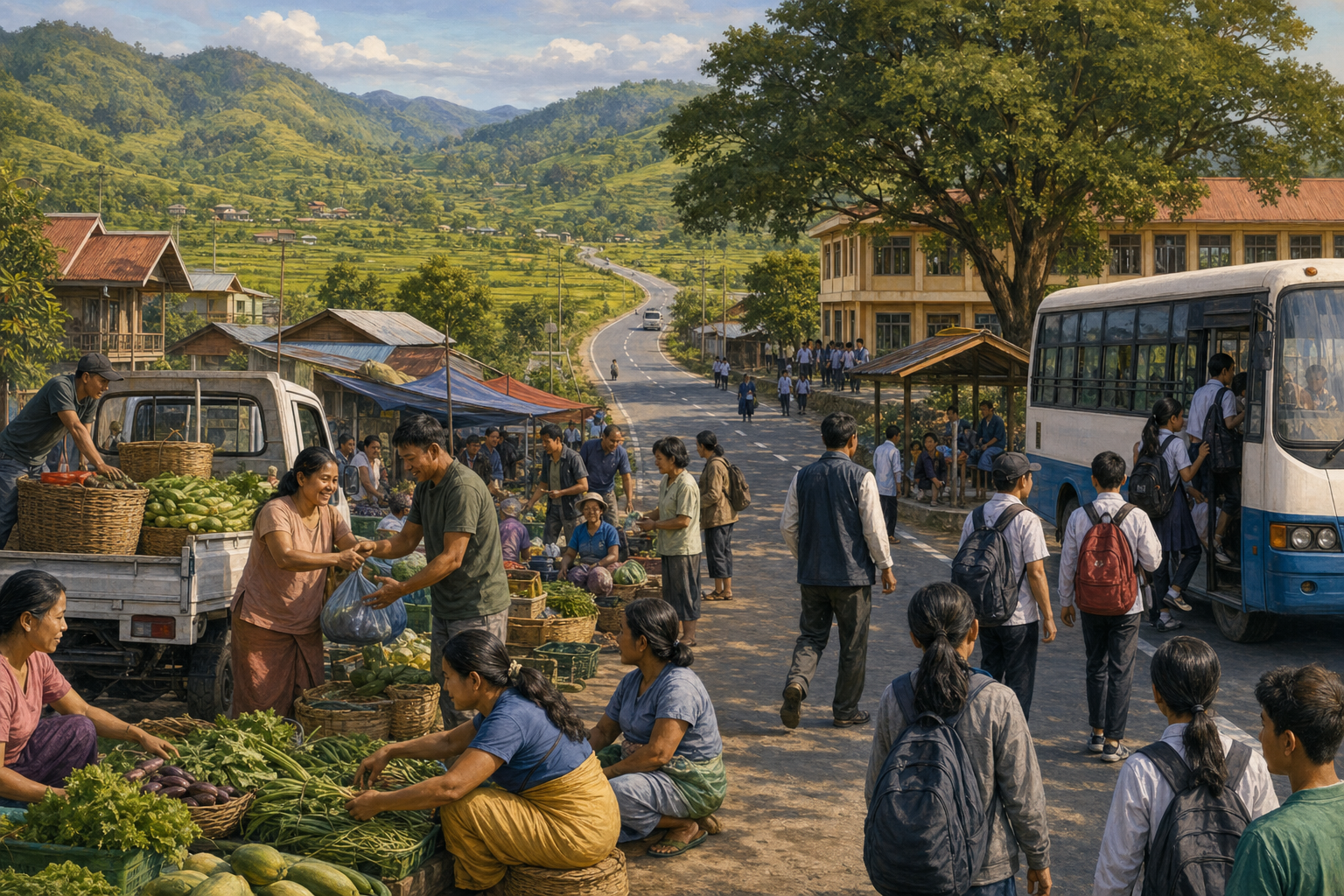
Manipur’s earlier conflicts warn against treating present hostility as timeless. The source recalls Naga-Kuki violence during 1992-1997, Kuki-Paite conflict during 1997-1998 and Meitei-Pangal violence in 1993. It presents the state’s history not as uninterrupted harmony, but as a mixture of warfare, exchange, alliance, negotiated access and coexistence. That layered past matters because selective memory can make a current division appear permanent even when social relationships have repeatedly changed.
Reconciliation should begin with concrete civic needs rather than demands for immediate emotional unity. Displaced residents need conditions for safe, voluntary and dignified return or resettlement. Students need continuity of education. Farmers and traders need predictable access. Local institutions need channels through which disputes can be raised without armed sponsorship. These are general peacebuilding priorities, but the source’s account of interrupted mobility and segregated life makes them directly relevant to Manipur.
Cultural life can support that recovery when it creates sustained contact rather than ceremonial symbolism. The source points to performance, handloom traditions, indigenous knowledge, polo and sporting achievement as parts of Manipur’s shared social capital. Such fields cannot substitute for justice or political negotiation. They can, however, provide settings in which cooperation becomes ordinary again, especially when participation includes hill, valley and smaller communities on equitable terms.
The most credible route forward is staged but integrated: impartial protection makes dialogue safer; legitimate dialogue enables institutional reform; and fair institutions make social reconnection less dangerous. Manipur will move beyond containment when residents no longer need ethnic separation to secure daily life and when no community’s future is imagined through another’s exclusion.