
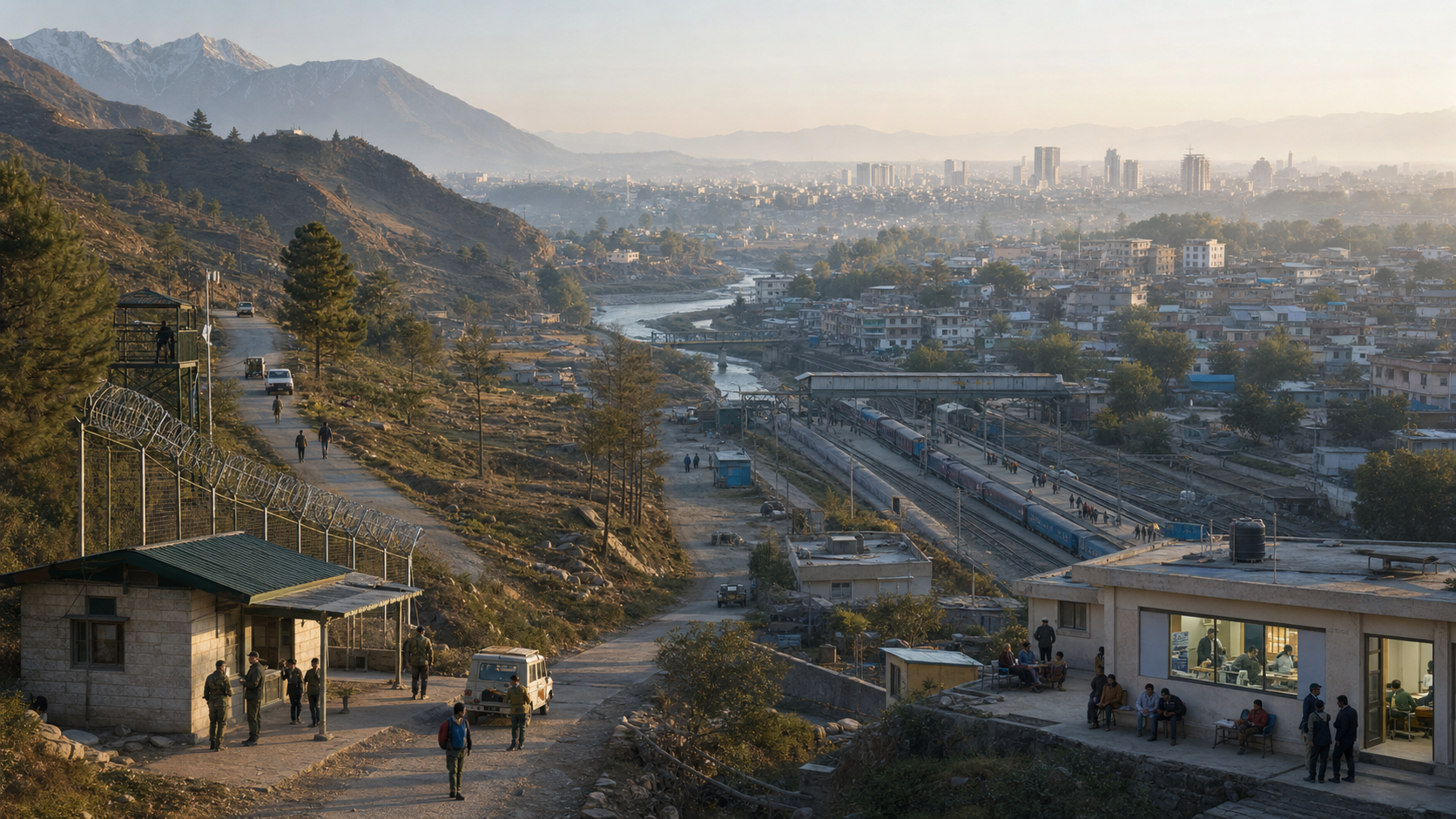
India’s planned demographic inquiry could widen the border-security debate from fences and patrols to the administrative systems through which people settle, work, obtain documents and access public services. Its value will depend on whether it can separate measurable demographic change from assumptions about why that change occurred.
The supplied material contains one publication’s account rather than several independently reported sources. The committee’s composition, mandate and expected fieldwork should therefore be understood as reported details, not as cross-publication corroboration.
A field inquiry with a much wider policy horizon
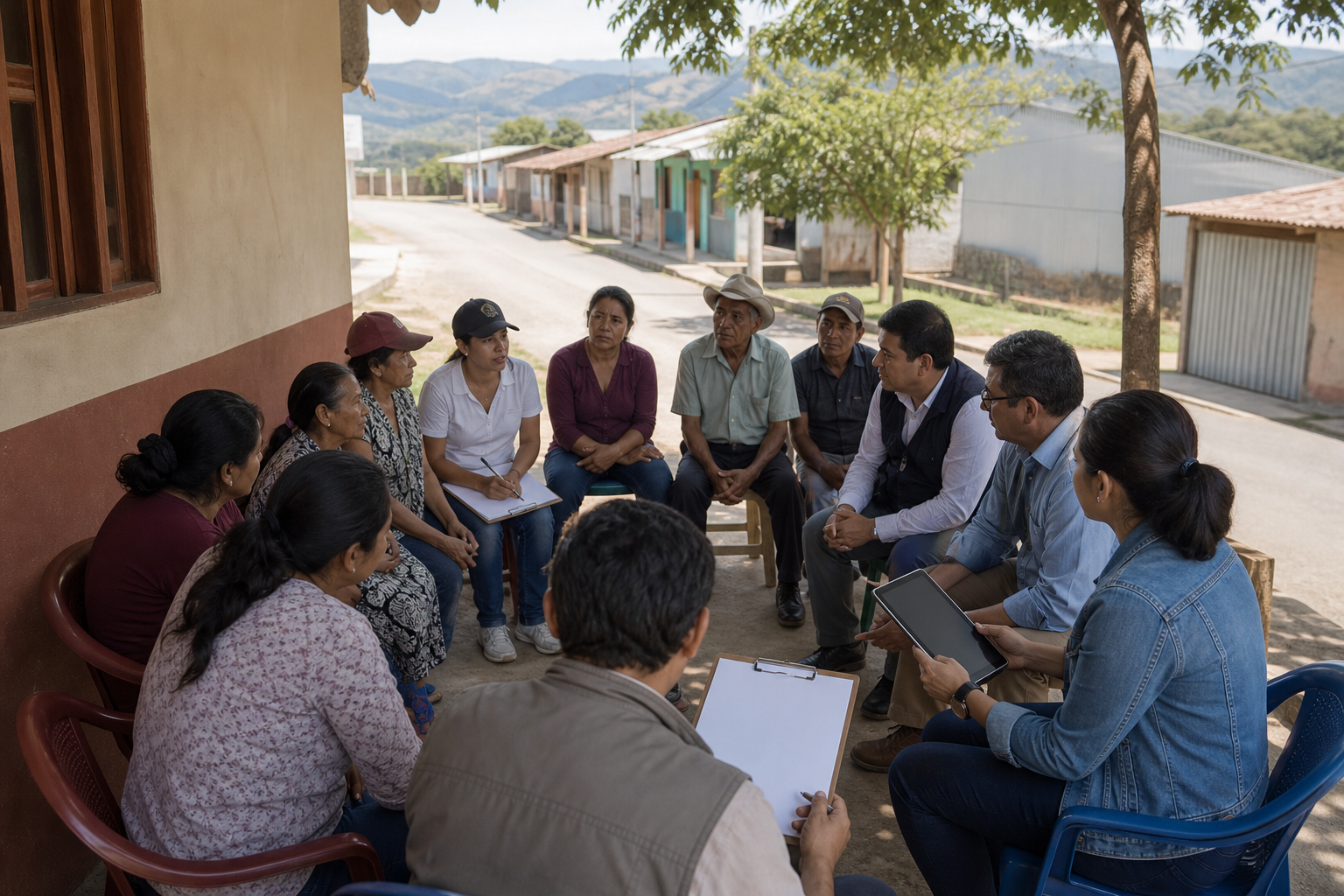
DharmaRenaissance Blog reports that the Ministry of Home Affairs constituted a six-member High-Level Committee on Demographic Changes under retired Supreme Court judge Justice Prakash Prabhakar Naolekar. According to the article, the committee followed Prime Minister Narendra Modi’s announcement of a High-powered Demography Mission on August 15, 2025, and is expected to recommend policy, legislative, administrative and operational responses to abnormal demographic shifts.
The reported move from desk review to field visits is important because national or state-level totals can conceal sharply different local patterns. The article says the committee is preparing to examine border districts, metropolitan centres, industrial towns, tribal regions and other sensitive locations. It also reports that a questionnaire has been prepared for states and Union Territories to help identify districts, wards, industrial belts and settlement clusters requiring closer inquiry.
The article identifies the 2011 Census as the last completed national census baseline available for comparison. A baseline can show where growth or population composition appears to have changed, but it cannot by itself establish the cause. The panel’s central analytical task is therefore not simply to locate statistical variation. It must determine whether a pattern reflects births and deaths, lawful domestic migration, distress-driven movement, administrative error, illegal immigration or some combination of these factors.
Why the security chain extends from the border to the city
The source’s most consequential framing is that irregular entry does not remain confined to the frontier. It reports official concern that people entering through vulnerable border stretches may travel along transport corridors, enter informal labour markets, rent accommodation and settle in growing urban areas. The article also raises the possibility that forged or fraudulently obtained identity documents and informal political protection can make later detection more difficult.
These are risks to be investigated, not proof that every fast-growing settlement contains undocumented migrants. Nevertheless, the border-to-city perspective changes the institutional question. Border forces may encounter an entry event, while police, municipal authorities, employers, landlords, welfare offices and identity-issuing systems encounter later stages of settlement. Weak coordination anywhere along that chain can make a frontier measure less effective.
Industrial and metropolitan fieldwork could consequently be as significant as visits to border villages. If the inquiry finds credible links between irregular entry and inland settlement, possible responses would need to encompass labour registration, document-fraud investigations, municipal record quality and communication among central, state and local authorities. If it finds that growth is chiefly attributable to lawful internal migration, the appropriate response would instead concern housing, services and urban planning. Similar population figures can therefore lead to very different policies once their causes are established.
Demographic indicators require corroboration and due process

The article says a field inquiry may examine birth and death registrations, school enrolment, voter-list changes, land records, ration-card issuance, Aadhaar-linked identity claims, police records, border apprehension data and local administrative testimony. Taken together, these sources could reveal inconsistencies or converging patterns that would remain invisible in any single dataset.
As a general analytical principle, however, each indicator is ambiguous when viewed alone. Rising school enrolment may follow natural growth or lawful migration. A voter-roll discrepancy may reflect duplication, delayed deletion or an underlying eligibility problem. Missing documentation can result from irregular status, but it can also reflect poverty, displacement or weak historical recordkeeping. Aadhaar-related information can assist identity checks, yet an identity claim and proof of citizenship are not automatically the same legal question.
A credible method would therefore begin with aggregate patterns, test them against independent administrative records and move to individual findings only through a defined legal process. Demographic variance should function as a prompt for inquiry rather than a presumption against a religious, linguistic, ethnic or occupational group.
The source also identifies difficult downstream questions: how doubtful documents should be verified, how contradictory legacy records should be assessed, how children born in India to undocumented parents should be treated under applicable law, and what safeguards can prevent genuine citizens from being excluded. It suggests that any operational response may have to address identification, verification, legally justified detention, diplomatic confirmation, deportation where possible and prosecution of document-fraud networks. Every stage would require reviewable decisions and reliable records if enforcement is to remain both effective and humane.
One national mandate must accommodate distinct border regions
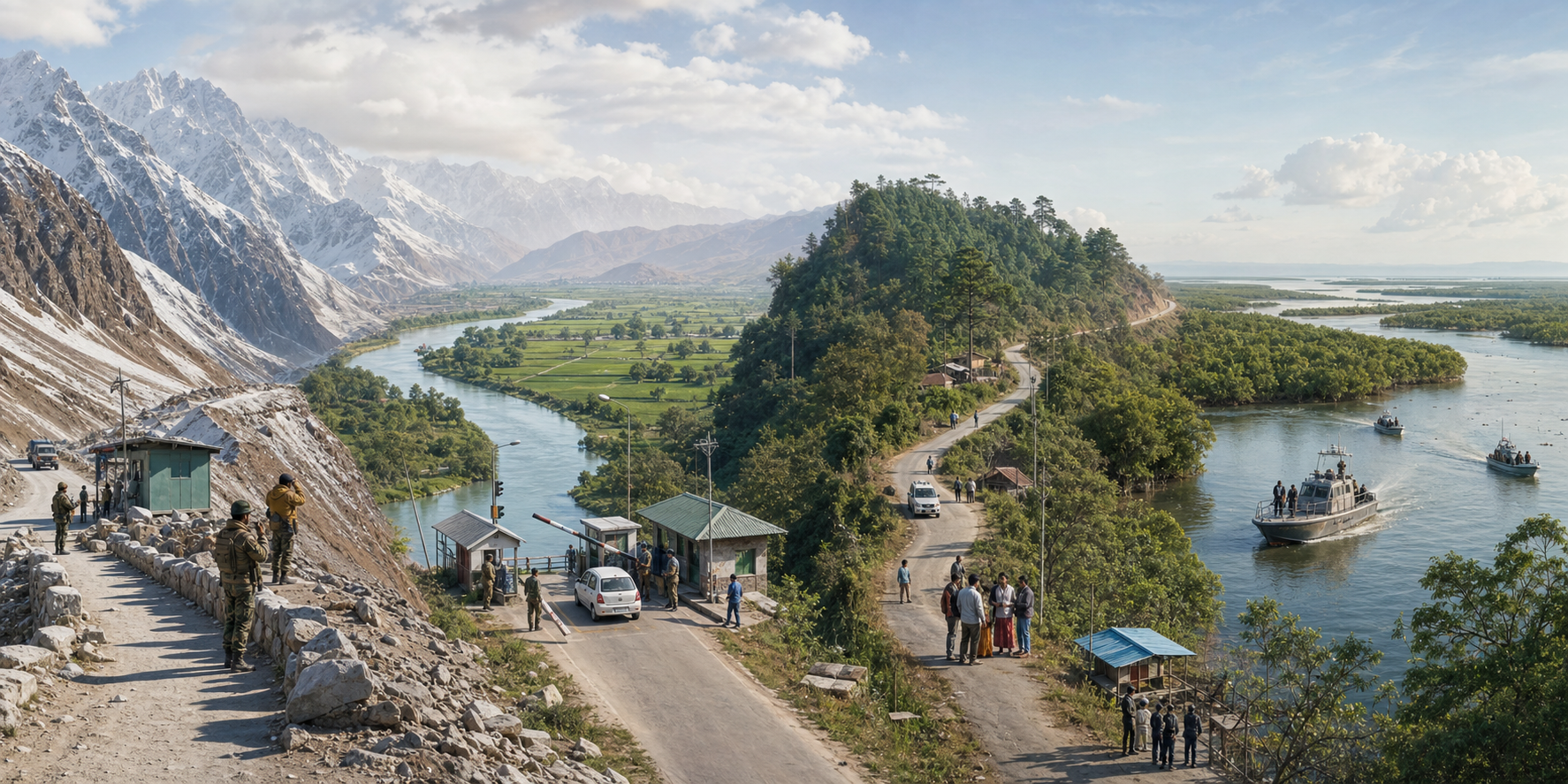
The expected itinerary reported by the source includes areas in West Bengal, Assam, Manipur, Mizoram, Tripura, Meghalaya, Bihar, Uttar Pradesh and Rajasthan. Yet the article cautions, in effect, against treating them as a single operational environment.
Its account associates Assam and West Bengal with riverine geography, shared-language zones and long histories of cross-border movement. It describes Tripura through the legacy of major demographic change after Partition and 1971. In Manipur, Mizoram, Meghalaya and other parts of the Northeast, the inquiry would intersect with tribal identities, customary land systems and concerns about cultural preservation. Rajasthan presents another configuration involving desert terrain, proximity to Pakistan and smuggling routes. Inland industrial locations raise questions centred more on employment, rentals, municipal records and document verification.
This variation argues for common evidentiary standards but locally adapted instruments. Surveillance or border infrastructure may be relevant in one place, while tribal land protections, labour-market registration or better municipal verification may matter more elsewhere. Uniform definitions and safeguards can support fairness without forcing every region into the same enforcement template.
Regional sensitivity also has a social purpose. The source notes that sudden pressure on land, wages, services and cultural institutions can generate genuine local anxiety, while careless debate can convert that anxiety into communal suspicion. Transparent findings would allow specific administrative failures or illegal networks to be addressed without assigning collective guilt to communities.
What a credible outcome would have to deliver

Key takeaways
- The inquiry’s central task is causal: a demographic change is an indicator to explain, not evidence of illegal immigration by itself.
- Border enforcement and inland governance form one chain encompassing travel, work, housing, identity records and welfare administration.
- No single administrative dataset can reliably determine citizenship or migration status; corroboration and case-level review are essential.
- Common legal standards should coexist with responses suited to riverine, tribal, desert, metropolitan and industrial settings.
- Effective enforcement requires safeguards for lawful residents as well as action against illegal entry and document-fraud networks.
The panel’s eventual influence will rest less on the breadth of its itinerary than on the quality of its method. Clear definitions, auditable evidence, opportunities for review and region-specific recommendations could turn a politically charged subject into a durable system of border and migration governance. Without those features, demographic statistics may intensify suspicion while leaving the underlying administrative weaknesses unresolved.
The forward-looking test is whether field inquiry produces institutions capable of distinguishing citizens, lawful migrants and irregular entrants consistently over time. That capacity would protect sovereignty and social cohesion together, rather than treating one as the price of the other.