
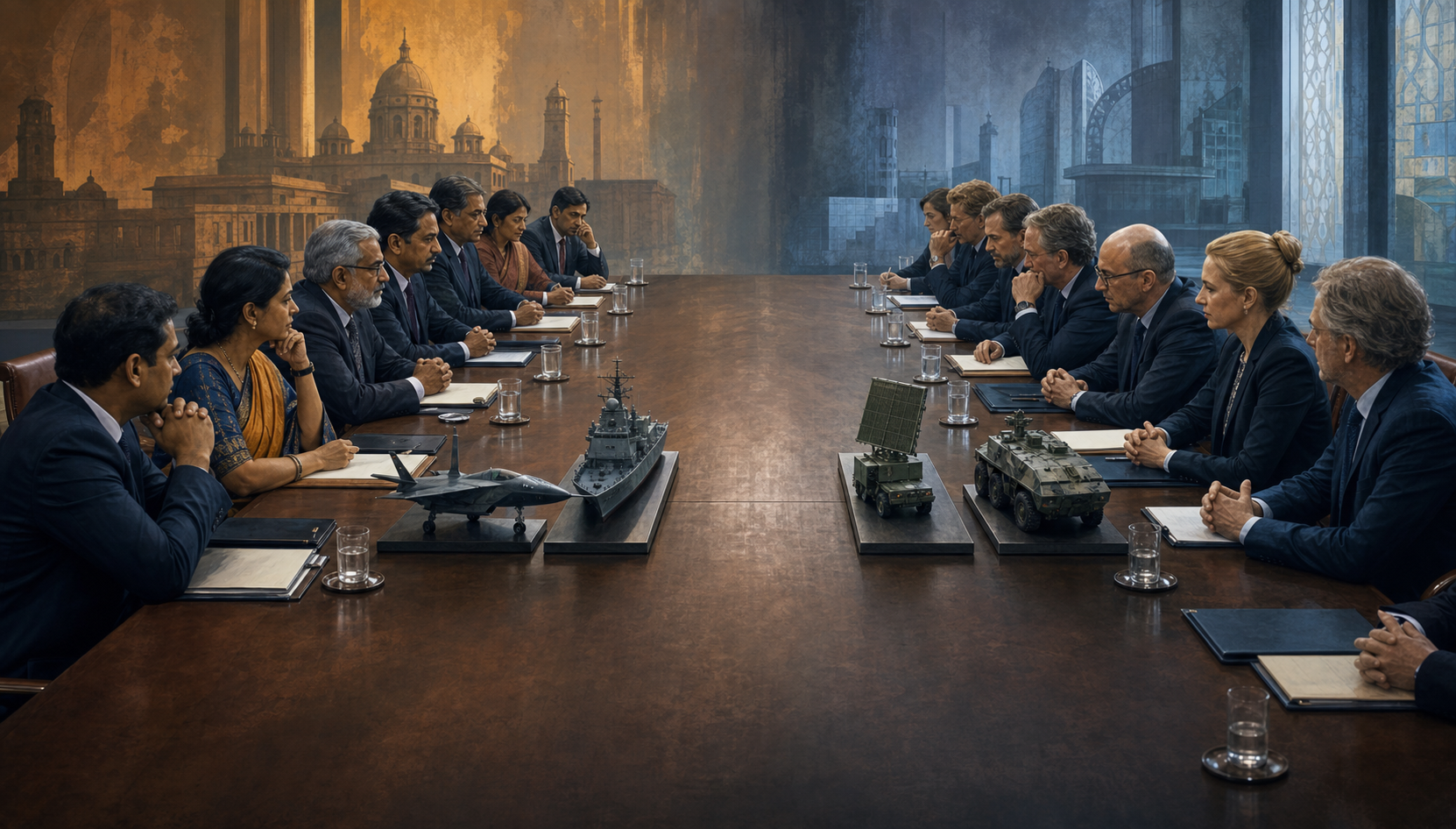
India-Europe security relations now carry a difficult contradiction: European governments want a deeper strategic partnership with India, while some of their defence relationships are viewed in New Delhi as strengthening India’s principal regional adversary.
The resulting dispute is about more than individual arms shipments. It connects Pakistan, India’s dependence on Russian military systems, European criticism of Moscow, counterterrorism policy and the standards by which each side judges the other’s strategic choices.
When weapons sales become a test of political trust
The immediate argument was articulated by External Affairs Minister Subrahmanyam Jaishankar during an engagement in Finland in June 2026. As reported by DharmaRenaissance Blog, he challenged European criticism of India’s relations with Russia by observing that Indian weapons had not been used against European countries, whereas European arms had affected India’s security environment. His sharpest formulation was: “Europe sells weapons, which are used to attack India.”
The significance of that statement lies in its demand for reciprocity. European governments often expect India to evaluate Russian trade and defence cooperation in light of European security. India, in turn, expects Europe to consider how its own military relationships affect Indian security. Strategic partnership becomes difficult when either side treats its threat perceptions as universal and the other’s as secondary.
Two questions should nevertheless be kept separate. One is whether a European-origin system has been employed directly in hostilities against India. The other is whether European transfers have improved the overall capabilities of a military that India considers a threat. The source article advances both concerns, but the arms-transfer information it discusses primarily establishes supplier-recipient relationships. Transfer data alone does not prove the operational history or end use of every delivered system.
This distinction does not make the broader Indian concern irrelevant. Defence relationships can include equipment, maintenance, training, integration and long-term institutional contact. Their political meaning may therefore exceed the battlefield significance of any one delivery. For New Delhi, the relevant measure is not simply the size of a sale but whether it contributes to a military balance that Indian planners must confront.
Pakistan and the difference between commerce and capability
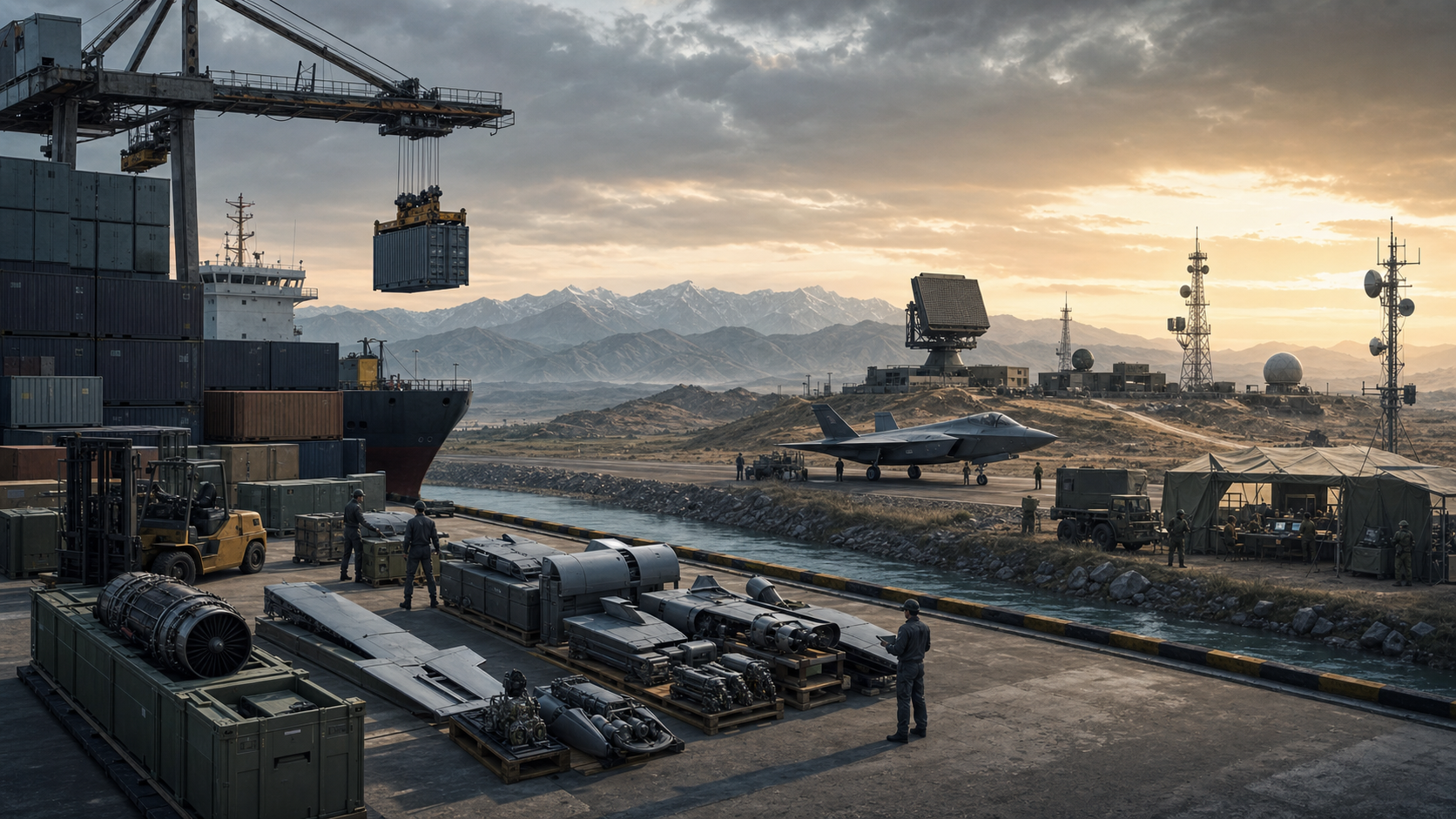
DharmaRenaissance Blog reports that Pakistan received military equipment from European suppliers during 2021-2025, referring specifically to shares of Dutch and Swedish arms exports. The article draws on the Stockholm International Peace Research Institute’s Arms Transfers Database, which uses trend-indicator values to compare volumes of major conventional-weapons transfers over time. It also acknowledges an important limitation: those values are not equivalent to purchase prices, battlefield effects or evidence of political intent.
For India, however, capability is cumulative. A radar, sensor, component, naval platform or support system need not be strategically decisive by itself to improve a recipient’s wider military posture. The source places this concern against a history of wars, border crises, proxy militancy and terrorist attacks involving Pakistan since 1947. That history explains why transactions that European exporters may regard as limited or routine can acquire much greater significance in Indian debate.
The counterterrorism dimension intensifies the disagreement. The article says the 2025 Pahalgam attack, attributed by Indian authorities to Pakistan-linked terrorist networks, renewed Indian concern about a gap between international declarations against terrorism and material engagement with Pakistan. It also reports that Jaishankar urged Polish Foreign Minister Radoslaw Sikorski to maintain zero tolerance for terrorism and avoid conduct that could strengthen terrorist infrastructure in India’s neighbourhood.
These reported claims should not be converted into a blanket conclusion that every European relationship with Pakistan supports terrorism. The narrower and more defensible point is that European governments cannot assume their stated intentions will settle the matter for India. They must explain what is being transferred, how end-use risks are assessed and why the transaction will not undermine the security of a country they simultaneously describe as a strategic partner.
Russian dependence cannot be reduced to a purchasing preference
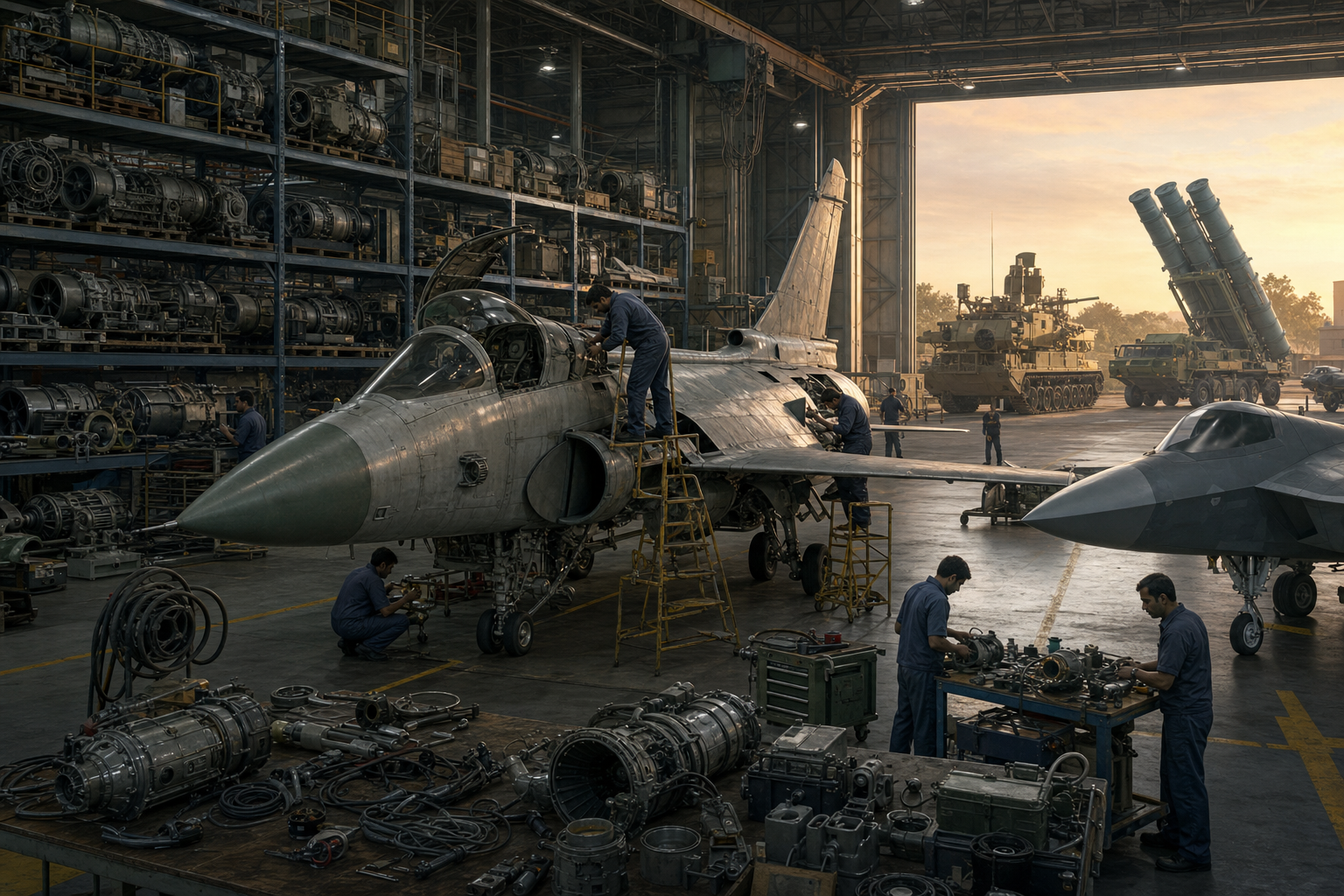
The dispute over European arms is inseparable from pressure on India to reduce its relationship with Russia. According to the source, Western criticism increased after the Russia-Ukraine war began in February 2022, focusing on India’s purchases of Russian oil and its continuing defence ties with Moscow. New Delhi’s stated considerations include cost, availability, national interest and a large inventory of Russian-origin military equipment.
Changing a defence supplier is structurally different from replacing an ordinary commercial vendor. Aircraft, tanks, submarines, air-defence systems and missiles create requirements for spare parts, maintenance expertise, compatible munitions, training and upgrades. A new procurement decision may therefore have consequences extending across the useful life of an existing force. Diversification can be a strategic objective without being an immediate operational possibility.
The source also provides historical context for India’s position. It describes the relationship with Moscow as the product of decades of military cooperation, technology transfers and diplomatic alignment during periods when Western capitals were ambivalent about Indian security concerns or supportive of Pakistan. It notes that Russia’s more recent engagement with Pakistan has itself caused concern in India, preventing the older partnership from being treated as unconditional or permanently immune to reassessment.
This produces a credibility problem for Europe. Calls for India to diversify away from Russia will be less persuasive if European alternatives are seen as politically conditional, unreliable in a crisis or accompanied by military support for Pakistan. The strongest European case is therefore not a moral lecture about whom India should avoid. It is a practical offer of dependable supply, technology cooperation and demonstrated sensitivity to India’s threat environment.
The reciprocal bargain behind a stronger partnership
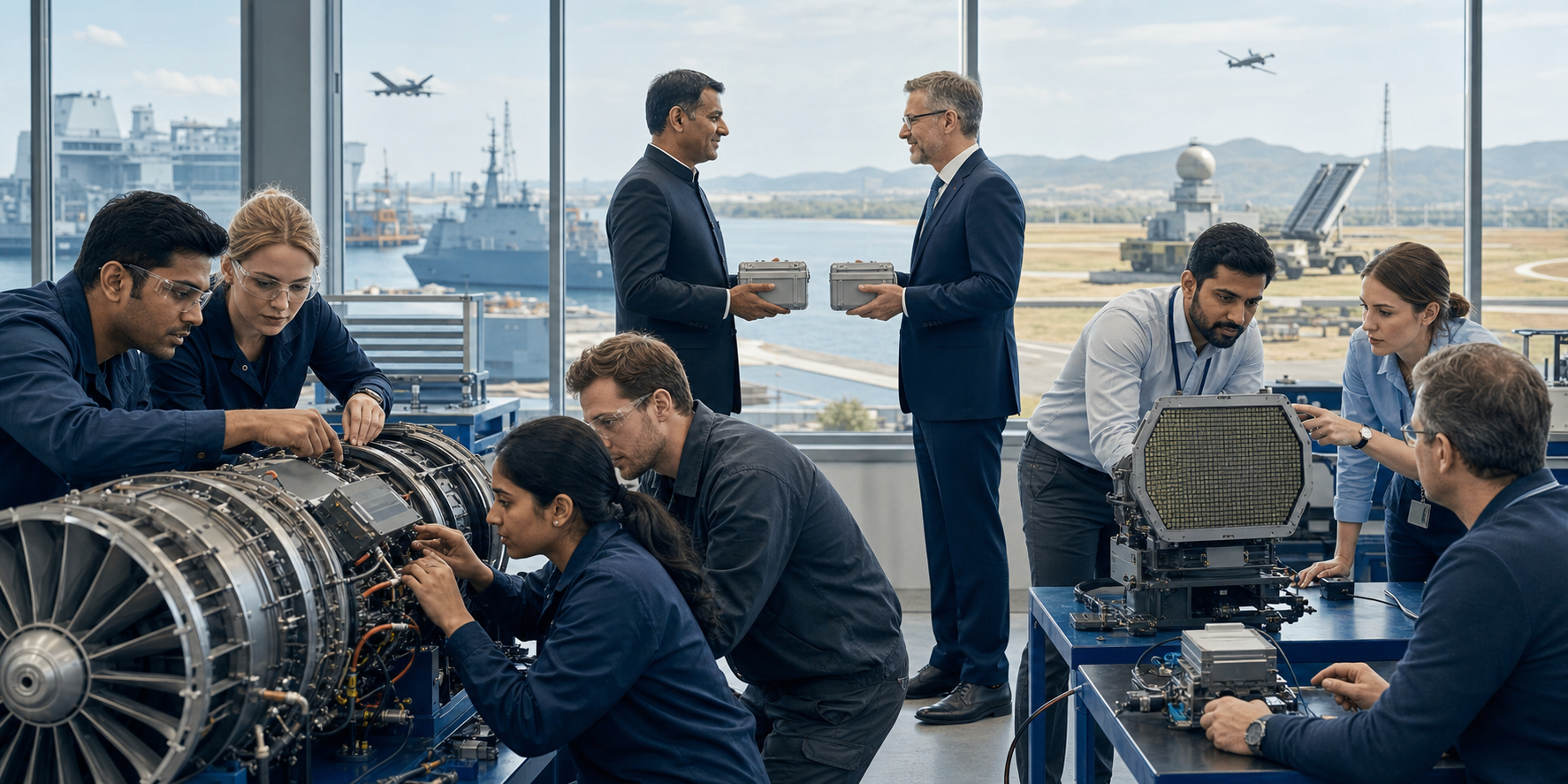
DharmaRenaissance Blog identifies several reasons European states seek closer relations with India: its market, manufacturing potential, technology sector and role in the Indo-Pacific. Those interests can support a substantial security relationship, but commercial enthusiasm and political declarations will not by themselves resolve disagreements over Pakistan or Russia.
The source also recognises possible European rationales for exports to Pakistan. Transfers may be presented as regulated, defensive, commercially limited or part of broader regional engagement. Such explanations deserve consideration, especially because arms exports do not all have the same military purpose. Yet their persuasiveness depends on transparent risk assessment rather than labels. A nominally defensive system can still alter operational confidence, surveillance capacity or the regional balance.
India has reciprocal responsibilities. If it wants European governments to account for Indian security concerns, it must communicate those concerns with enough precision to distinguish between objectionable capabilities and ordinary diplomatic contact with Pakistan. It must also explain how its own defence diversification, export controls and partnerships will address the legitimate security interests of prospective European suppliers. Strategic autonomy is most credible when it is paired with predictable policy rather than presented as exemption from scrutiny.
A more durable relationship would therefore rest on measurable conduct: detailed end-use safeguards, consultations before sensitive transfers, dependable maintenance arrangements, co-production where interests align and candid discussion of terrorism-linked risks. None of these mechanisms requires India and Europe to adopt identical foreign policies. They require each side to recognise that the other’s security cannot be treated as an afterthought.
Key takeaways and a practical agenda
- European criticism of India’s Russia ties is weakened when New Delhi sees European defence relationships as strengthening Pakistan.
- Arms-transfer volumes are useful evidence of supplier relationships, but they do not independently establish price, intent, battlefield effect or the end use of every system.
- India’s Russian-origin inventory creates long-term maintenance and compatibility constraints, making diversification a phased security problem rather than a simple purchasing choice.
- Trust will depend on transparent export controls, credible end-use safeguards and reliable European alternatives that account for India’s regional threat perceptions.
The next phase of India-Europe security cooperation will be shaped less by rhetorical agreement than by whether defence policy becomes genuinely reciprocal. If Europe treats Indian concerns about Pakistan as seriously as it expects India to treat European concerns about Russia, the arms dispute can become a basis for clearer rules and stronger cooperation rather than a permanent source of mistrust.