
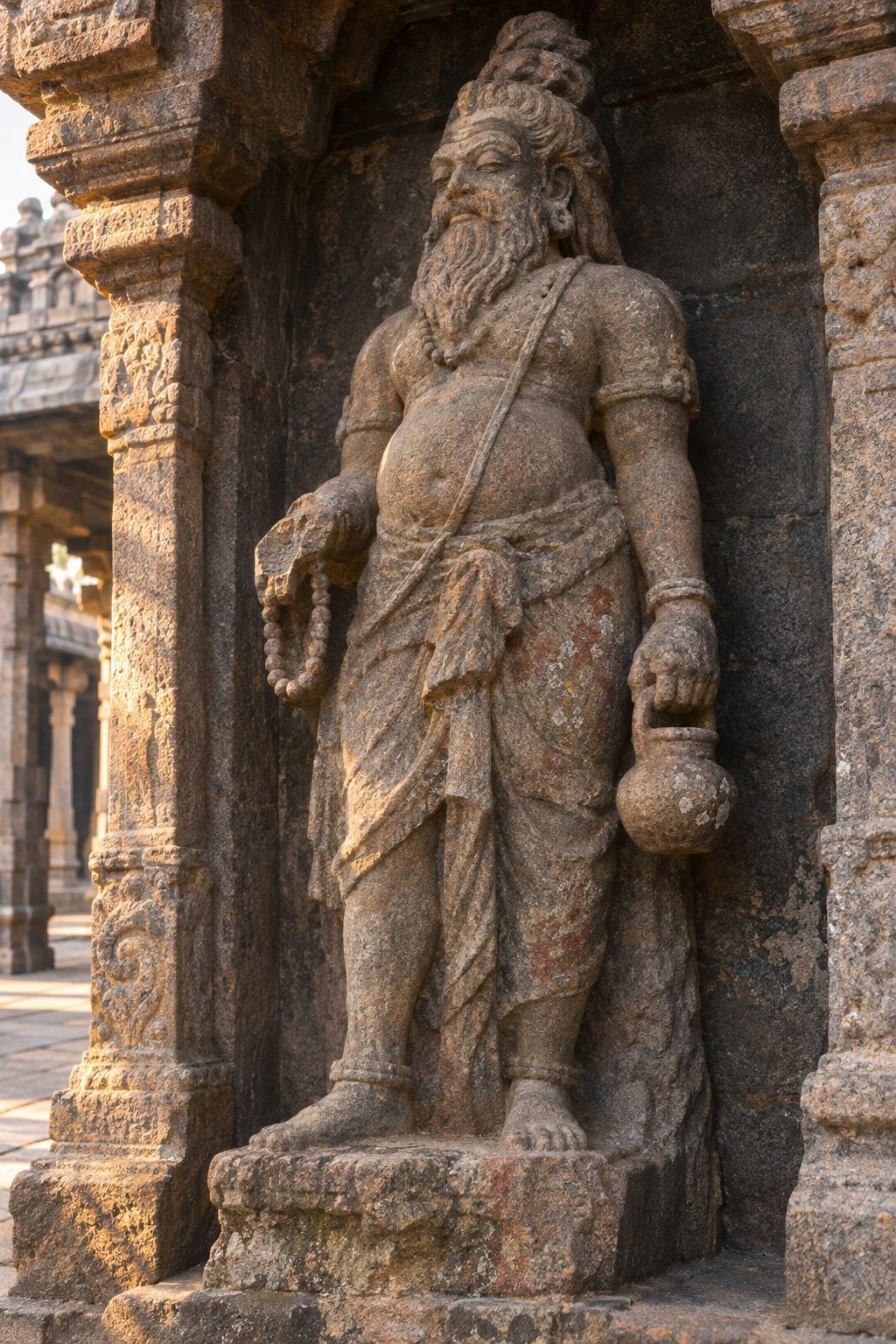
You are standing before a weathered temple sculpture: a bearded ascetic, compact in build, holding what may be a water vessel or a string of beads. The label is missing, the hands are damaged, and someone nearby calls the figure Agastya. How can you tell whether that identification is sound?
The reliable method is to read the whole image. Agastya is recognized through a cluster of bodily features, ascetic objects, gestures, and temple context. No beard, pot, posture, or wall direction is enough by itself. Once you know how the clues work together, you can distinguish a probable Agastya from a generic rishi without pretending to have more certainty than the sculpture permits.
Begin with a cluster of clues, not one attribute
First decide whether the figure belongs to the visual category of a rishi. Look for signs of disciplined ascetic life: matted or carefully bound hair, a beard or moustache, a sacred thread, restrained clothing, prayer beads, a water vessel, a staff, or an object connected with learning. Preservation varies, so an image need not retain every feature.
Agastya is often differentiated by a compact, mature body, sometimes with a full abdomen, combined with the appearance and equipment of a venerable ascetic. The body should not be treated as caricature. It is part of an iconographic type: spiritual authority expressed through a recognizable physical form.
The most useful evidence falls into four groups:
- Ascetic identity: matted hair, beard, sacred thread, simple clothing, or a staff.
- Body type: compact proportions and a mature, sometimes full-bodied appearance rather than the form of a youthful attendant.
- Objects of discipline and knowledge: a kamandalu, rosary, manuscript, or teaching gesture.
- Context: placement among sages, association with a teaching program, a surviving inscription, or an identification preserved by the temple’s own tradition.
Each group matters because its features can appear elsewhere. A water vessel can belong to another ascetic. Prayer beads can identify disciplined practice without naming the practitioner. A beard establishes age or sagehood, not Agastya specifically. Confidence rises only when independent clues converge.
Read the sculpture from the head down
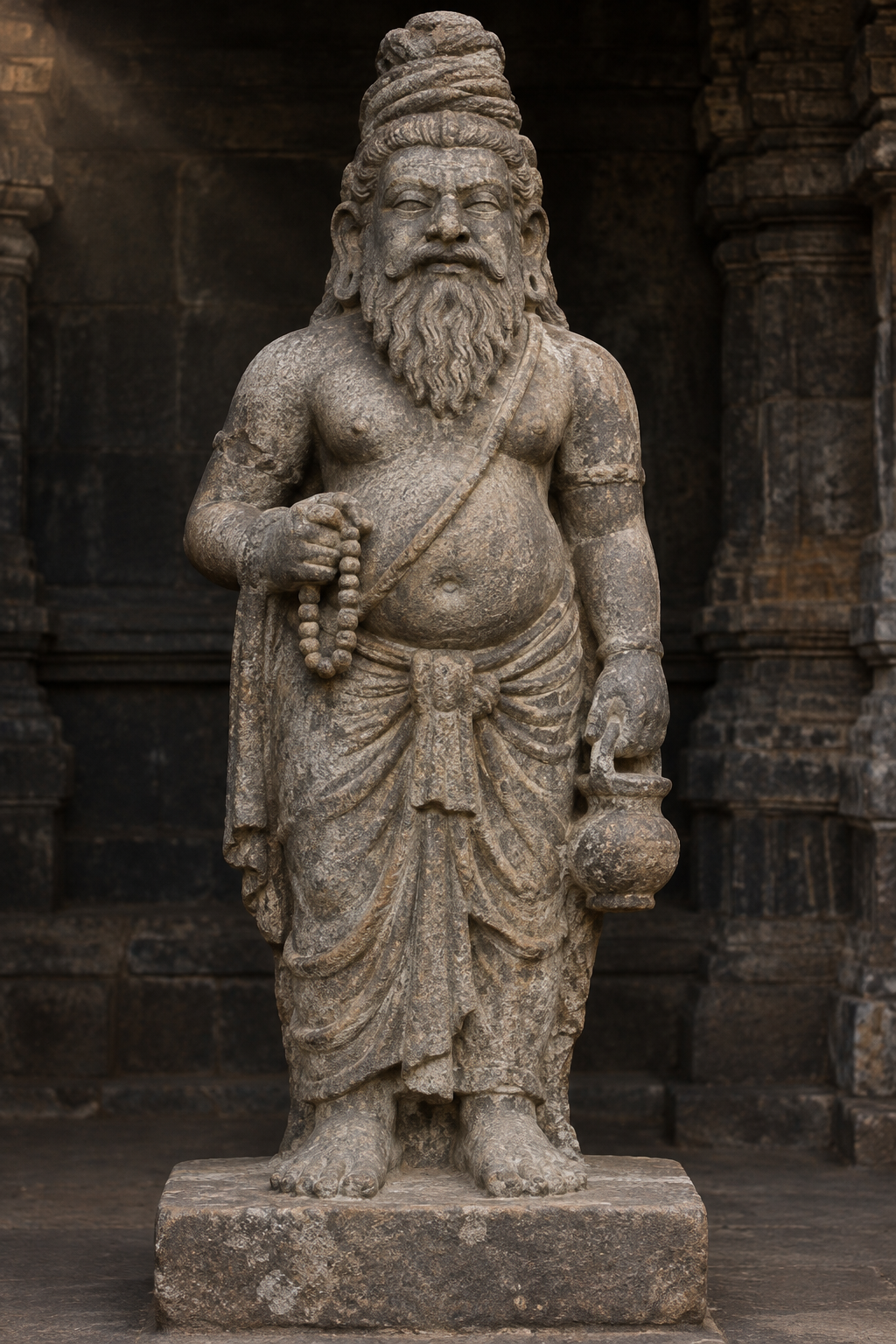
Hair and face establish the rishi type
Begin with the head because its details often survive even when projecting hands and attributes have broken away. Look for hair treated as an ascetic coiffure rather than a royal crown. A beard and moustache can reinforce the identity of an elderly sage, but their length and styling vary with period, region, material, and workshop.
Do not reject an identification merely because the face is smooth or the hair is difficult to read. Surface erosion can erase shallow carving, while later coatings can obscure individual strands. Record what is visible before deciding what ought to be there.
Body and posture show status, not literal height
A standing Agastya may look compact beside taller deities or attendants. A seated image may emphasize composure and teaching. In either case, relative scale can reflect sacred hierarchy, the dimensions of a niche, or the design of a larger panel. It is not a measurement of the sage’s historical height.
Pay attention to the abdomen, shoulders, and center of gravity. A full abdomen joined to an aged ascetic face is more useful than either detail in isolation. If the body is compact but the figure carries weapons, royal ornaments, or the costume of an attendant, the resemblance is probably superficial.
Hands reveal the figure’s work
The kamandalu is the portable water vessel of an ascetic. A rosary, also called an akshamala or japamala, points toward mantra, contemplation, and disciplined repetition. A manuscript or teaching gesture directs attention toward learning. These objects fit a sage remembered as a teacher, a codifier associated with grammar and medicine, and a spiritual guide closely linked with South India.
Do not make the identification depend on which hand holds an object. Sculptural programs have variants, and a damaged image may have lost the very attribute that once made it unmistakable. When a hand is broken, inspect the surviving grip, the outline beside the body, and any support connecting the lost object to the torso. Mark the attribute as uncertain if the evidence remains ambiguous.
Clothing and ornaments separate ascetic from royal imagery
Simple drapery, a sacred thread, and limited ornament generally support a rishi identification. Yet simplicity is relative. Temple sculptors did not always portray spiritual renunciation by removing every ornament, and ceremonial images may be decorated during worship. Read the carved form beneath temporary adornment whenever you can do so respectfully.
The attributes are not decorative props. Together they present a disciplined person whose authority rests on tapas, learning, transmission, and spiritual maturity. That combination is more significant than any single anatomical detail.
Separate Agastya from nearby look-alikes
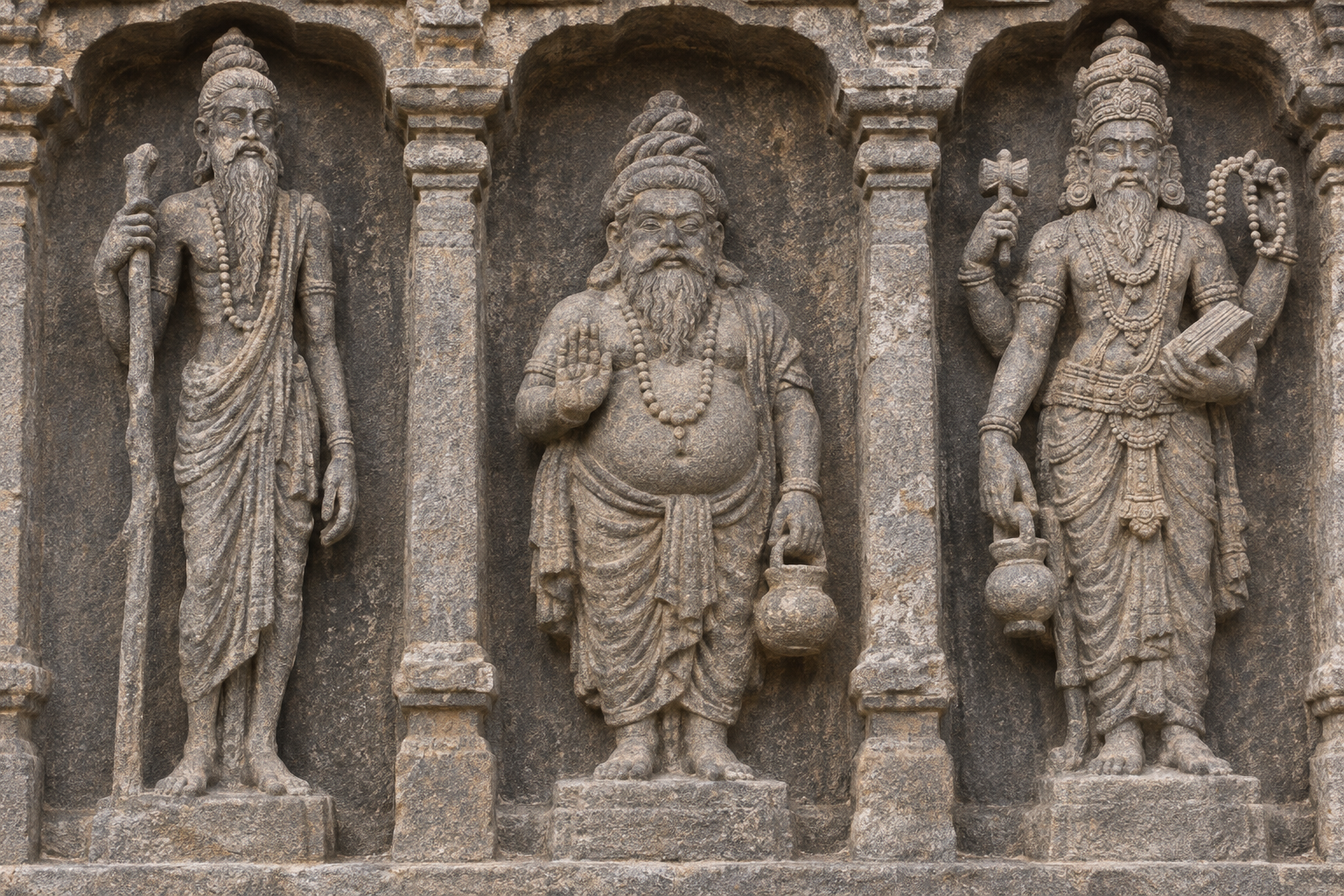
The hardest cases are not radically different figures. They are other venerable teachers and rishis who share the same visual vocabulary. Use comparison to narrow the possibilities, but allow an unresolved identification when the evidence does not go further.
| Possible identity | Why confusion happens | What to check next |
|---|---|---|
| Agastya | Mature ascetic form, compact proportions, water vessel, beads, manuscript, staff, or teaching gesture | Look for several features together, then test them against the panel, label, and temple tradition |
| Another rishi | Beard, matted hair, sacred thread, rosary, and kamandalu are shared ascetic signs | Check whether the figure belongs to a named group and whether any individual attribute or inscription survives |
| Dakshinamurti | Both can appear as authoritative teachers in a Shaiva setting | Look for a divine rather than human-rishi iconographic program, including additional arms, divine attributes, pupils, or an elaborate teaching composition |
| Brahma | Beard, rosary, water vessel, and the appearance of aged knowledge can overlap | Examine the head for additional faces and the figure for the attributes and status of a deity |
| Donor, saint, or temple teacher | A portrait-like figure may be bearded, seated, or shown in prayer | Look for anjali, a dedicatory inscription, portrait placement, and the absence of a complete rishi attribute cluster |
A group of seven sages gives useful context because Agastya is regarded as one of the Saptarishis. It does not automatically tell you which member is Agastya. Unless an inscription, individual attribute, or established local identification separates the figures, the responsible conclusion may be “a Saptarishi figure, possibly Agastya” rather than a definite name.
Wall direction is also supporting evidence, not a label. Temple plans, renovations, displaced sculptures, and local conventions can all complicate placement. A south-facing figure is not Agastya merely because the sage has a deep association with South India. Identify the person from the image and its program before using geography or orientation to strengthen the case.
Key takeaways for identifying Agastya at a temple
- Start broad: establish that you are looking at a rishi before trying to name him as Agastya.
- Use independent clue groups: combine the head and hair, body type, hand-held objects, clothing, and architectural context.
- Give the kamandalu and rosary proper weight: they support an ascetic identity, but neither is an exclusive emblem of Agastya.
- Do not treat damage as absence: a broken hand means the attribute is unknown, not that the image never possessed one.
- Check the whole composition: neighboring figures, pupils, divine attributes, panel structure, and inscriptions can overturn a first impression.
- Ask an open question: ask a priest, guide, or custodian, “What name is used for this figure here?” This is more informative than asking them to confirm your guess.
- Record confidence honestly: use “confirmed” for a clear label or unequivocal temple identification, “probable” when the iconographic cluster and context agree, and “possible” when only some features survive.
If photography is permitted, take one image of the entire architectural setting before taking close views of the face and hands. A tightly cropped photograph may preserve a rosary while losing the neighboring figures that explain who carries it. Also note whether an object has been moved from its original niche; present location and original context are not always the same.
Write down the local identification exactly as it is given. Temple tradition is part of the image’s living history, but it should not be silently converted into an inscriptional claim. “Worshipped here as Agastya” and “named Agastya in a surviving label” are both valuable observations, and they are different kinds of evidence.
Why Agastya’s southern presence matters
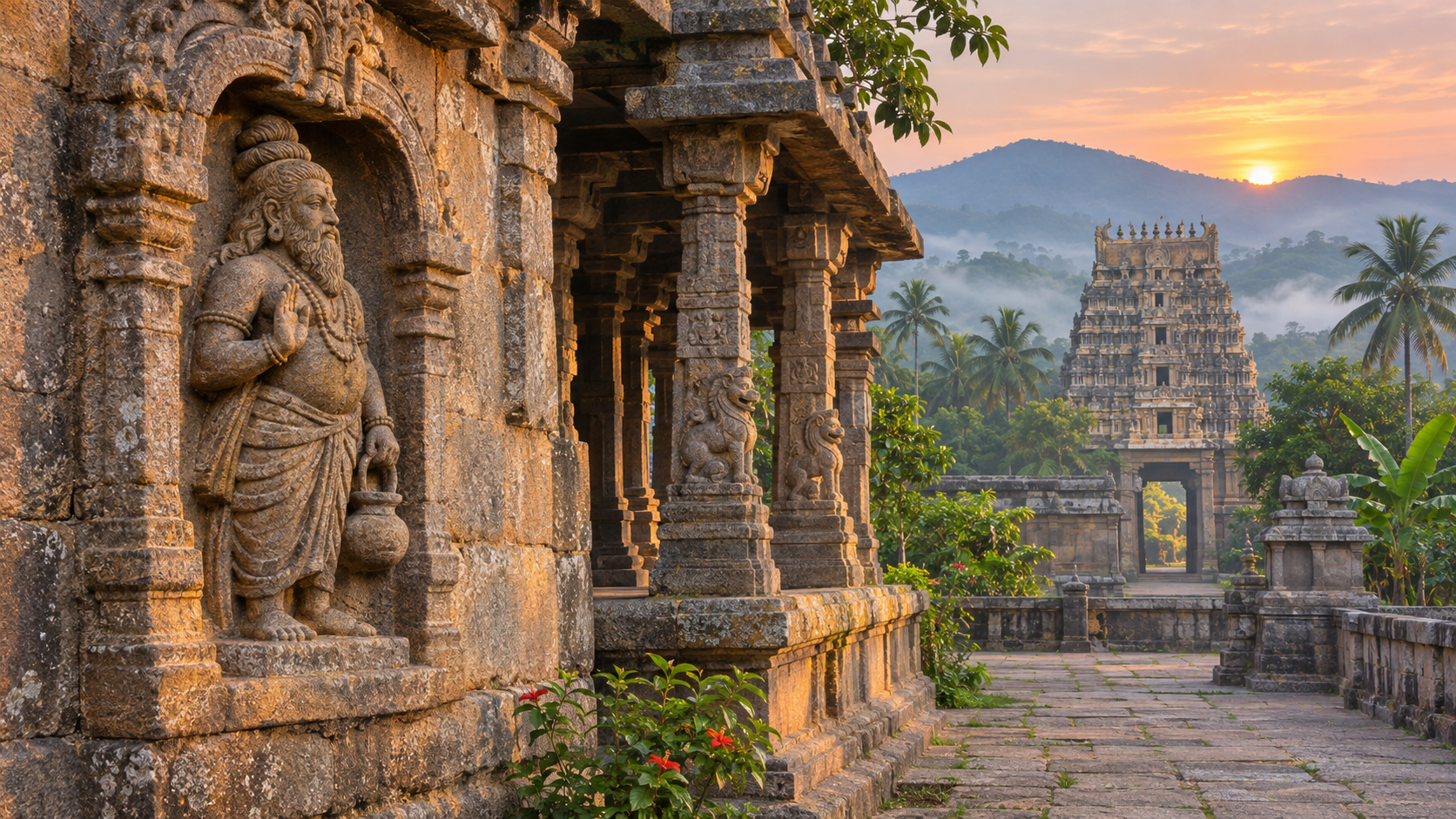
Correct identification is only the first step. Agastya’s form gathers several kinds of authority into one image. He is remembered as a great rishi and spiritual teacher, while his associations with grammar and medicine connect sacred discipline to organized knowledge. His especially strong relationship with South India makes the icon a statement about where that knowledge lives and how it is transmitted.
The rosary evokes repeated practice and inner discipline. The water vessel marks the self-contained life of the ascetic. A manuscript or teaching gesture presents knowledge as something preserved, embodied, and passed onward. The mature body makes authority visible without turning the sage into a king. In this reading, learning and tapas are not competing paths; they reinforce one another.
For a Dharmic viewer, Agastya also resists a simplistic division between a supposedly northern sacred tradition and a separate southern world. His honored place in South Indian memory expresses civilizational continuity across regions while preserving a distinctly southern relationship with the sage. That is an interpretation of the icon’s religious meaning, not a shortcut for proving every historical theory about language, migration, or chronology.
A sculpture can securely show that a community gave Agastya sacred presence within a particular temple program. It cannot, by itself, settle a sweeping historical argument. Keeping that boundary clear protects both the religious significance of the image and the quality of your historical reasoning.
On your next temple visit, pause before assigning the name. Make four notes: head, body, hands, and context. If the ascetic form, compact mature body, knowledge-bearing objects, and temple tradition converge, Agastya becomes a strong identification. If only the beard or vessel survives, leave the name open and keep looking. That patient attention turns recognition into a more informed form of darshana.
References

Leave a Reply
You must be logged in to post a comment.