
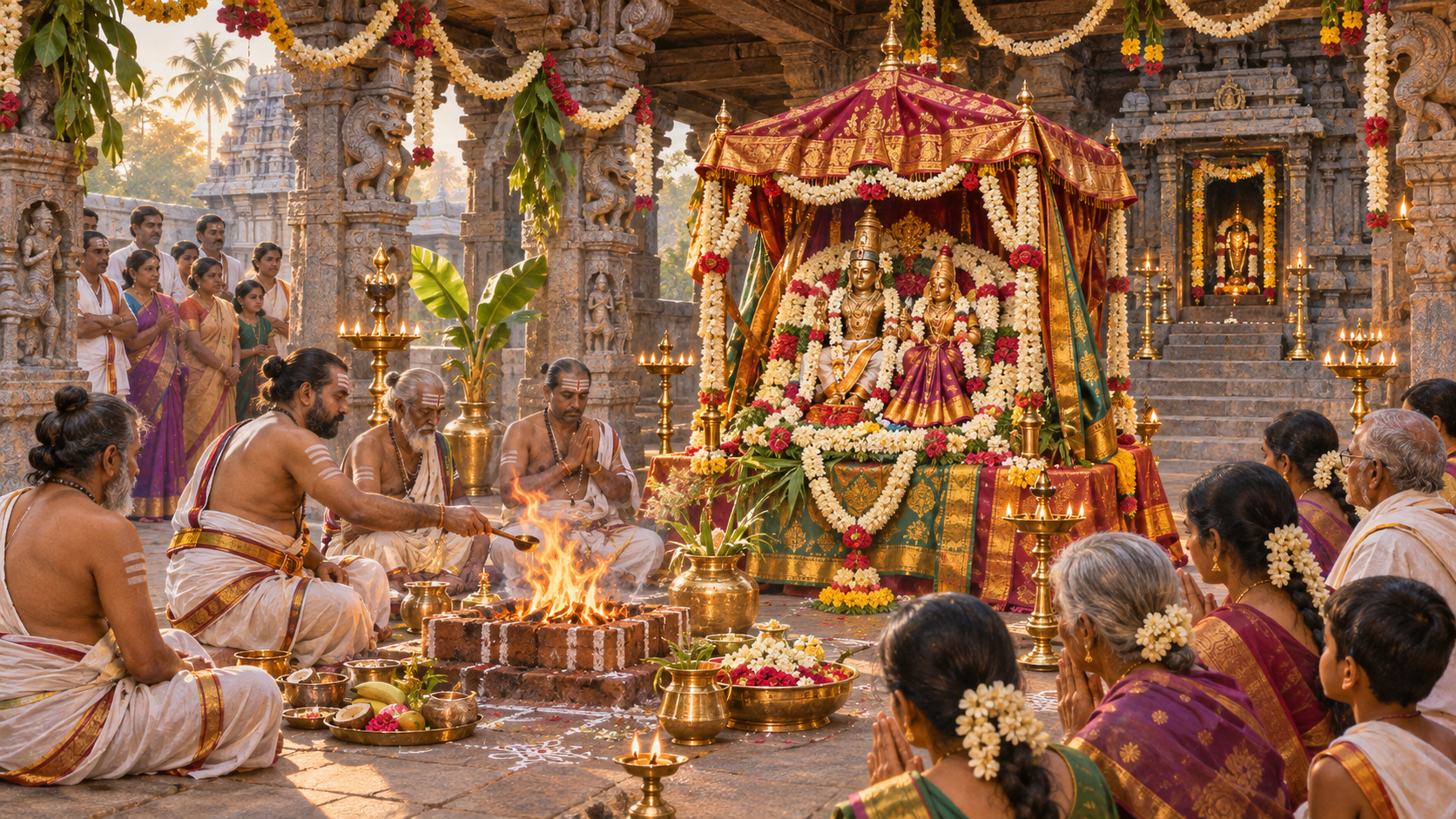
If you have been invited to a divine wedding celebration, or have encountered Sita-Rama, Valli-Devasena and Subrahmanya in a temple, you may wonder what the marriage is meant to teach. The first mistake is to search for one standard Hindu marriage story and force every tradition into it.
You will understand more if you identify the particular relationship, the place and lunar occasion associated with it, and the way the local community honours it. Divine marriages belong to a shared Dharmic world, but each one carries its own names, sequence and devotional emphasis.
Read a divine marriage on three distinct levels
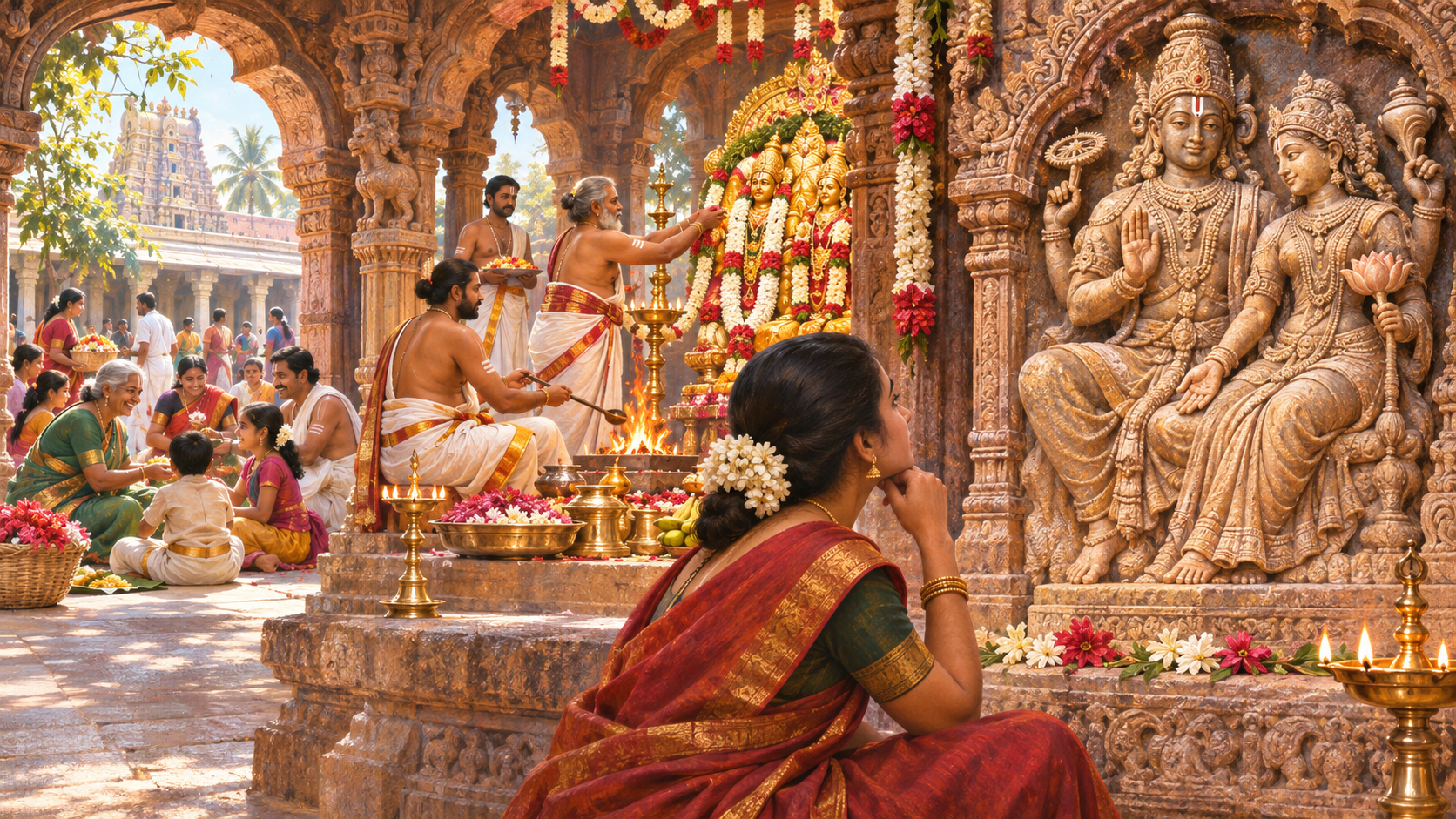
A divine marriage is not celestial gossip dressed up as religion. It is sacred narrative expressed through worship. Marriage provides a language for relationship, commitment, kinship and the meeting of different worlds. A festival then makes that relationship present within a community’s calendar.
When you encounter one of these traditions, read it on three levels:
- The named relationship: Identify the deities being joined and the relatives or companions who take part. The names are not interchangeable decorations.
- The sacred setting: Notice the lunar date, region and pilgrimage geography attached to the observance. These details tell you which community has preserved a particular emphasis.
- The devotional act: Find out what worshippers actually commemorate. A remembered marriage, a temple ceremony and a human wedding are related categories, but they are not automatically the same event or governed by the same rules.
This three-level reading protects you from two opposite errors. One is to dismiss the account as a fanciful romance. The other is to extract a human social rule from every divine action. Sacred narrative can illuminate human life without functioning as a literal legal manual for it.
Notice what differs between the Sita-Rama and Valli traditions
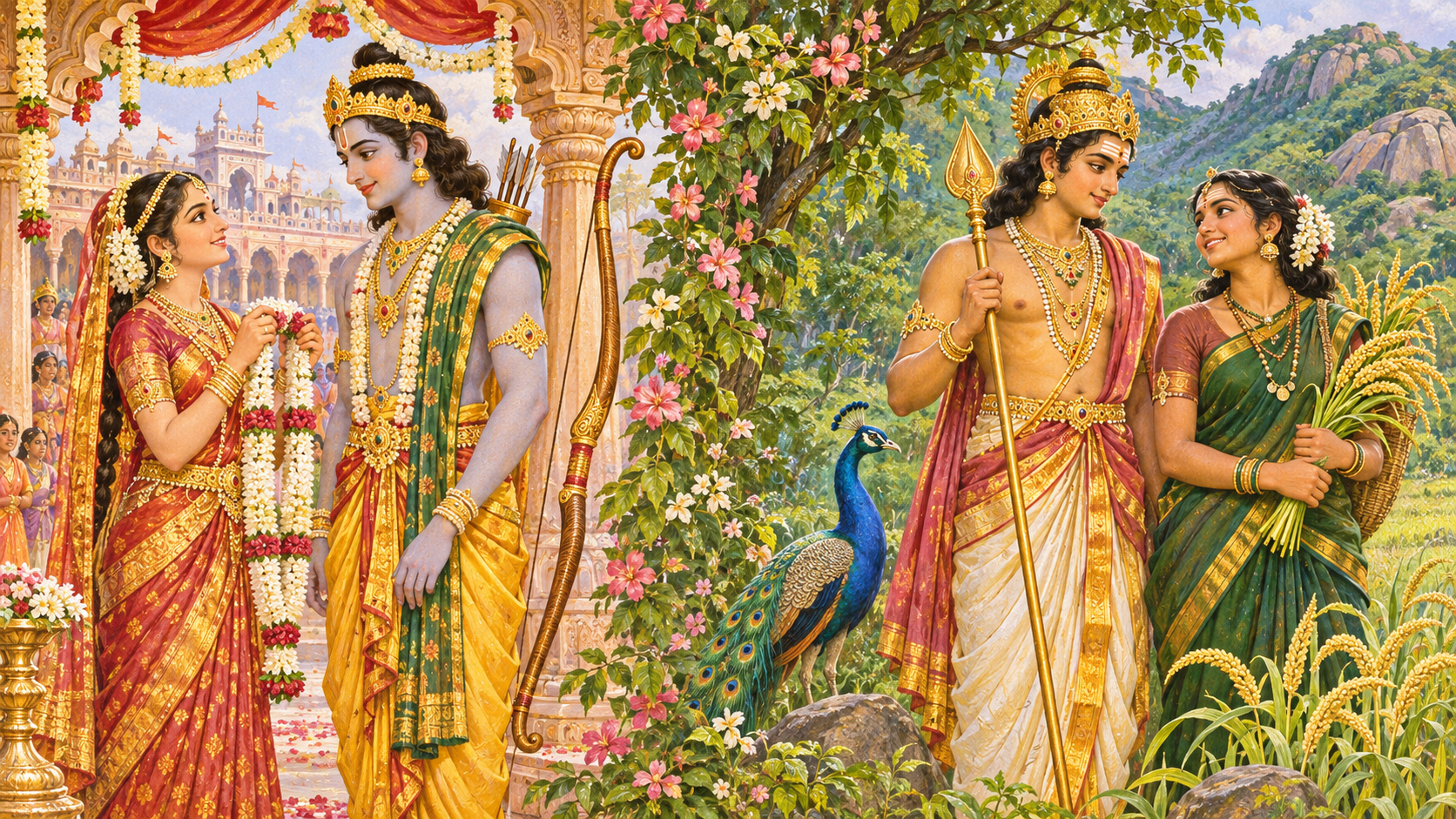
Two well-known traditions show why the details matter. One places a divine wedding on the annual lunar calendar. The other places marriage within a sequence involving different families, social settings and the assistance of a divine brother.
Sita-Rama Vivaha: a marriage remembered through sacred time
Vivah Panchami commemorates the marriage of Sita and Rama. Its name identifies its calendrical position: Panchami, the fifth lunar day, during the bright fortnight of Margashirsha. In 2026, the observance falls on December 14.
If you are planning to attend in 2026, use December 14 as your starting date, then confirm the actual programme with the temple or community organising it. The festival date tells you when the sacred marriage is remembered; it does not tell you the hour, sequence or form of every local celebration.
Geography also matters. Vivah Panchami is especially associated with Mithilanchal, parts of North India and Janakpur in Nepal. That regional grounding should change how you approach the occasion. Do not treat Mithila or Janakpur as decorative backgrounds to a generic wedding. Ask how the local community understands Sita-Rama Vivaha and which customs it regards as central.
Nor should you assume that a festival commemorating a divine marriage is automatically a recommendation for scheduling a human wedding on the same day. If that is your practical question, consult the calendar and custom followed by your own family, sampradaya or temple. Commemoration and human marriage planning are distinct decisions.
Valli, Devasena and Subrahmanya: distinct relationships within one tradition
The sequence surrounding Subrahmanya must be preserved if you want to understand it. He first marries Devasena, the daughter of Indra. During later travels in the south, he falls in love with Valli, who is identified as a tribal princess. Ganesha then plays an assisting role in the marriage of Valli and his brother.
Do not flatten Valli and Devasena into two unnamed consorts. Their different identities are part of the narrative structure: Devasena is connected to Indra, while Valli enters from a different social and geographical setting. Before assigning a grand symbolism to that contrast, first retain what the tradition actually gives you: two named women, two backgrounds and a definite sequence.
Valli’s identity deserves particular care. Calling her a tribal princess should not reduce her to colourful folklore or make her merely an accessory to Subrahmanya’s story. When Valli is named, keep her name and standing visible. If you are visiting a temple, ask whether the local form of worship honours Valli, Devasena and Subrahmanya together or foregrounds a particular episode.
Ganesha’s participation also changes what you should notice. The union is not presented only as a private romance; divine kinship enters the action through a brother’s help. That does not authorize you to invent missing details or impose one universal interpretation. It gives you a precise question to ask: what role does Ganesha play in the version remembered by this temple or household?
Participate without turning worship into spectacle
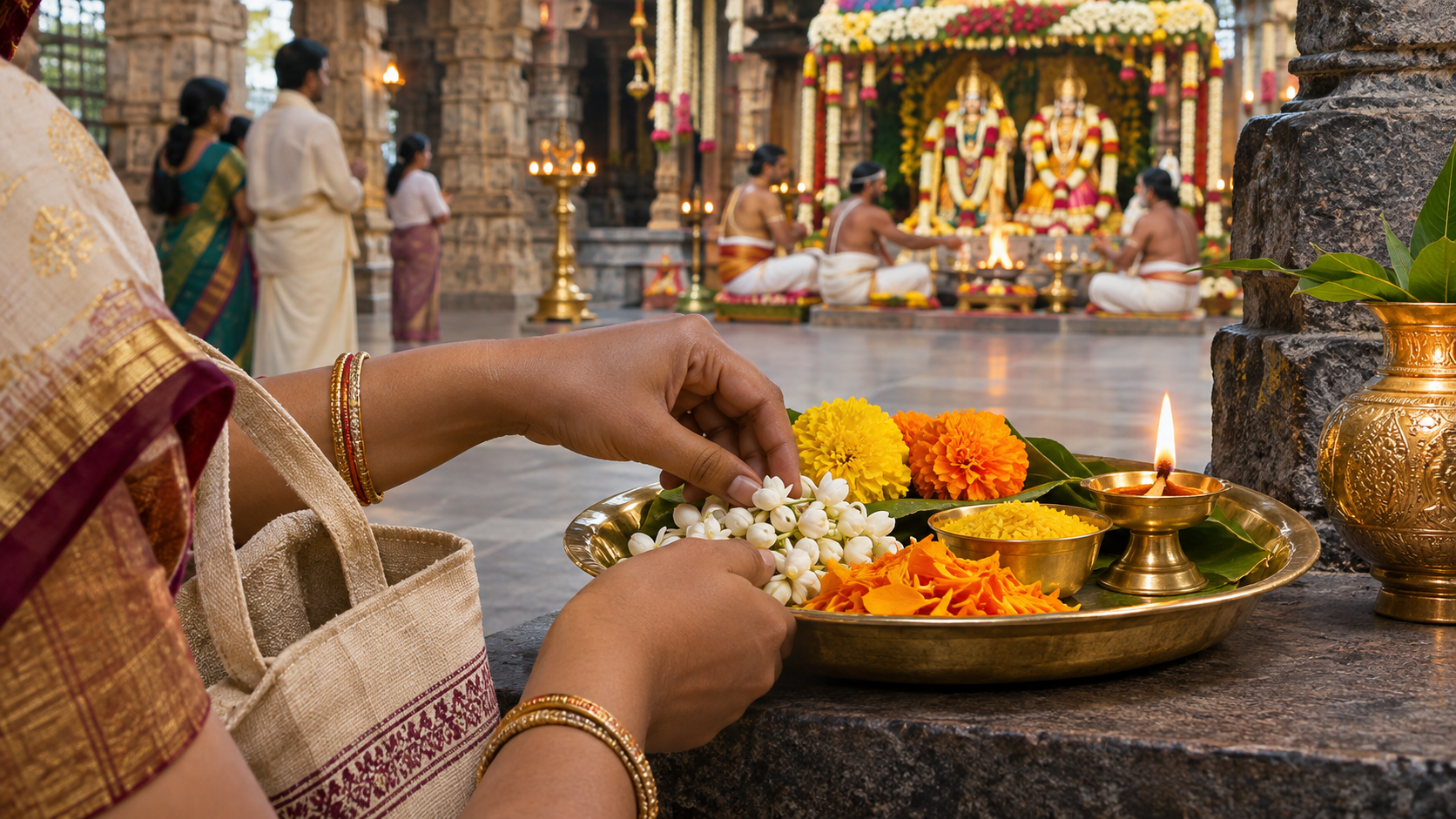
You do not need specialist knowledge to attend respectfully. You do need enough attention to let the community’s own practice lead. A simple preparation sequence works well:
- Name the occasion correctly. Find out whether you are attending Vivah Panchami, Sita-Rama Vivaha, a celebration involving Valli and Subrahmanya, or another divine marriage observance. Do not substitute a broad label when the hosts use a specific name.
- Confirm both the date and programme. A lunar observance identifies the sacred day, while the organiser determines the local timetable. Check both before travelling.
- Learn the central relationships. Write down the divine couple, their family connections and any figure who assists in the narrative. This prevents avoidable confusion during worship or conversation.
- Follow the ritual lead of the hosts. Watch when participants stand, sit, offer respect or remain silent. If you are unsure, ask an organiser quietly rather than copying a gesture without understanding it.
- Ask before taking photographs. A divine wedding may have visual elements, but it remains worship rather than a staged cultural performance. The absence of a posted prohibition is not the same as permission.
- Keep human and divine categories distinct. Do not use a sacred marriage episode as a shortcut for settling contemporary questions about consent, family duties or marriage law. Those questions require their own Dharmic, ethical and legal reasoning.
If you are explaining the occasion to a child or a first-time visitor, begin with four facts: who is being honoured, which marriage is remembered, when the community observes it, and why the location matters. Add symbolism only after those facts are clear. This approach produces a shorter explanation, but a more faithful one.
The same discipline helps when you encounter different tellings. Variation does not automatically mean that one community has corrupted the tradition. First determine whether the difference concerns the deity’s name, the narrative episode, the festival calendar or a local ritual. Only then can you decide whether you are hearing a contradiction or simply a different devotional emphasis.
Key takeaways
- There is no need to force every divine marriage into one social or theological formula.
- Read each tradition through its named relationships, sacred time and regional setting.
- Vivah Panchami commemorates Sita-Rama Vivaha on Margashirsha Shukla Panchami; in 2026, it falls on December 14.
- In the Valli tradition, preserve the sequence involving Subrahmanya, Devasena, Valli and Ganesha rather than reducing everyone to generic roles.
- A divine marriage celebration is an act of worship. Follow the host community’s practice and ask before photographing or interpreting unfamiliar elements.
- Do not treat divine narrative as a ready-made legal rule for human marriage.
Before your next temple visit or festival, write down four things: the divine names, the remembered event, the lunar occasion and the place most closely associated with it. Those four anchors will help you participate with attention while leaving room for the tradition to disclose meanings deeper than a single moral.
References

Leave a Reply
You must be logged in to post a comment.