
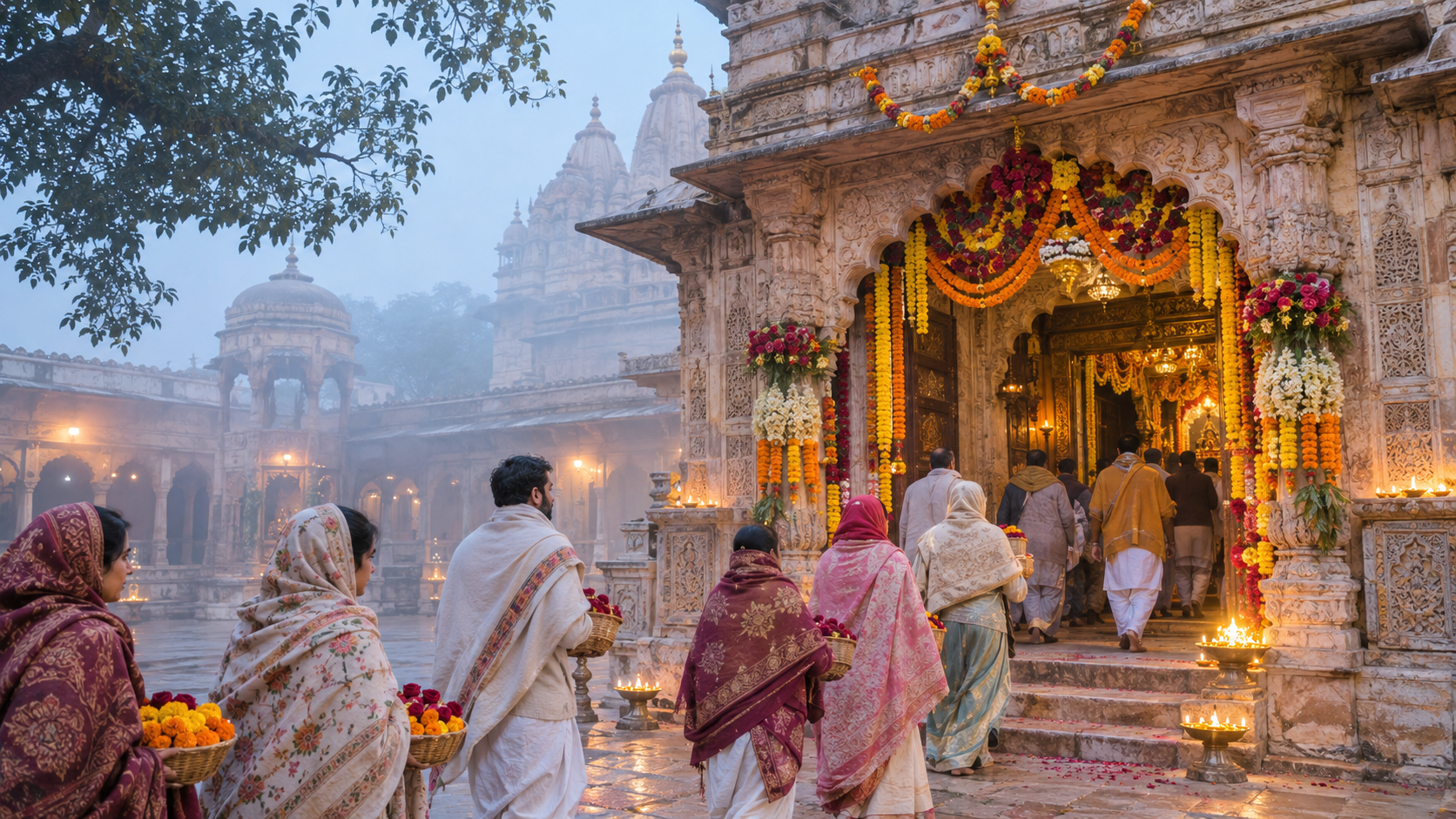
If you are trying to plan Banke Bihari Prakatotsav in 2026, begin with the firm practical detail: the observance falls on December 14. Put that date in your calendar, then decide whether you will observe it in Vrindavan or create a focused devotional period at home.
The choice is not between a meaningful pilgrimage and an inferior home observance. The festival places dedication, humility, and love at its centre. Your preparation should therefore help those qualities become more present, whether you stand in a temple or sit before your regular place of worship.
What Banke Bihari Prakatotsav commemorates
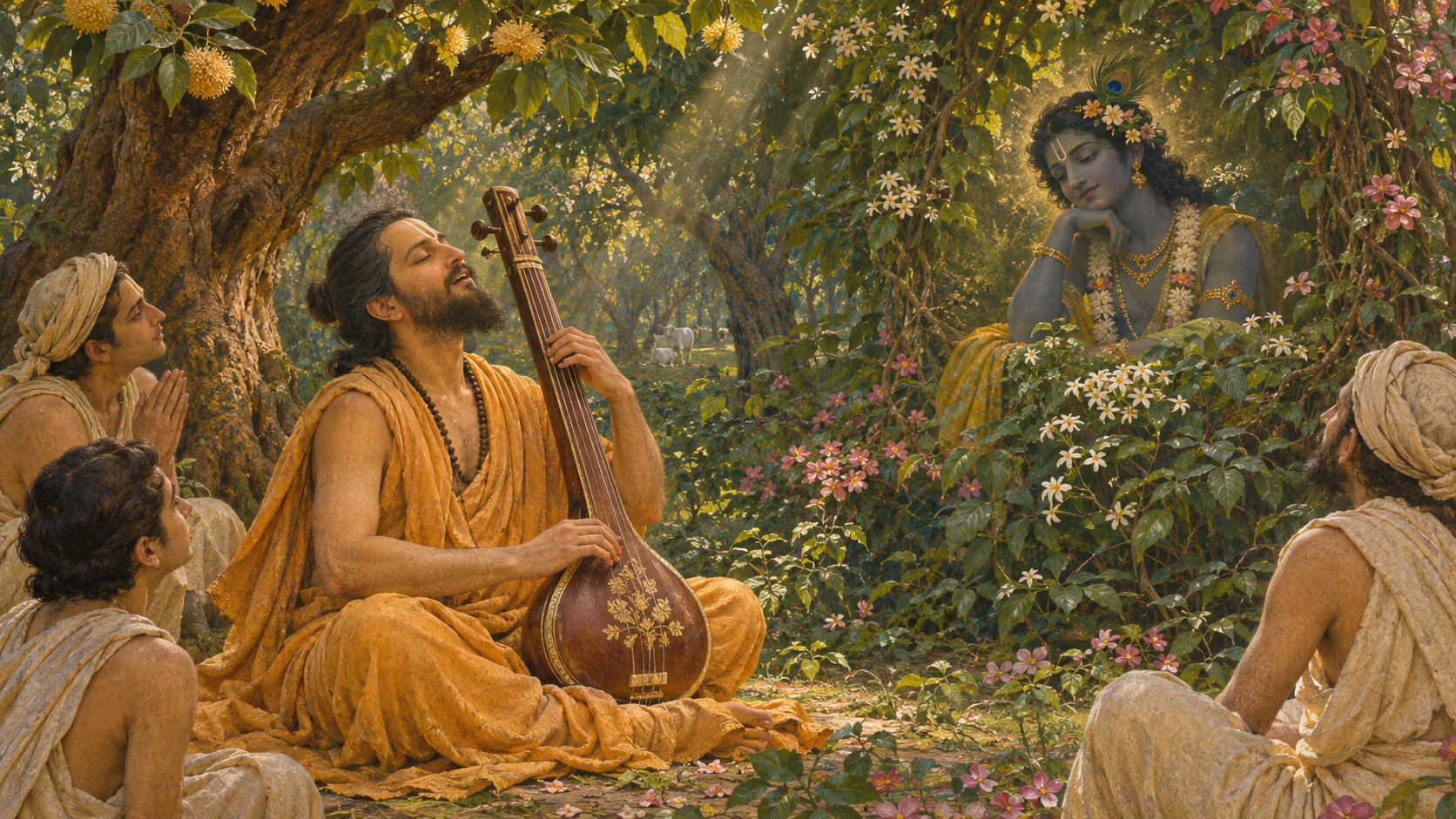
Banke Bihari Prakatotsav is the appearance festival of Lord Banke Bihari. It is also called Bihar Panchami or Vihar Panchami and is observed at the Banke Bihari Temple in Vrindavan. Do not mistake the word “Bihar” here for a direction to the Indian state; the sacred setting associated with this observance is Vrindavan.
“Appearance” is the important word. Prakatotsav is not merely a conventional birthday label. It celebrates divine manifestation: the Supreme Lord, beyond the reach of human mastery, appeared personally to devotees in response to dedication, humility, and love.
That teaching does not ask you to despise knowledge or abandon disciplined practice. It corrects a subtler error: knowing facts about the Divine is not the same as entering a devotional relationship. Learning can orient you, but pride in learning can also become a barrier. The festival asks whether knowledge has made you humbler, more attentive, and more capable of love.
Key takeaways
- Banke Bihari Prakatotsav falls on December 14 in 2026.
- It is observed on Bihar Panchami, also written as Vihar Panchami.
- The governing lunar date is Shukla Paksha Panchami, the fifth tithi of the waxing fortnight.
- The observance concerns divine appearance before devotees, not merely the passage of another calendar year.
- Dedication, humility, and love provide the clearest standard for deciding how you should observe the day.
Put the tithi before the civil calendar date

Bihar Panchami follows Shukla Paksha Panchami. A tithi is a lunar day, so it does not have to begin or end at civil midnight. This matters because “December 14” tells you which date to reserve in 2026, but it does not by itself supply the precise worship or temple timetable.
Make three separate notes rather than relying on a bare date:
- Save December 14 as “Banke Bihari Prakatotsav – Bihar/Vihar Panchami.” Using both names will help you recognise announcements that choose one spelling or the other.
- Add a reminder to verify the applicable panchang if you live outside Vrindavan or follow a different regional calendar. Do not assume that a Vrindavan civil date automatically settles every local tithi question.
- If you intend to visit the temple, create a separate reminder to confirm the current darshan schedule, access arrangements, and local instructions close to the festival.
This distinction prevents two common problems. You will not miss the observance because you searched under only one name, and you will not confuse the festival date with a guaranteed entry time. A calendar listing answers “which day?” Temple arrangements answer “when and how can I enter?”
Choose a home observance or a Vrindavan visit deliberately
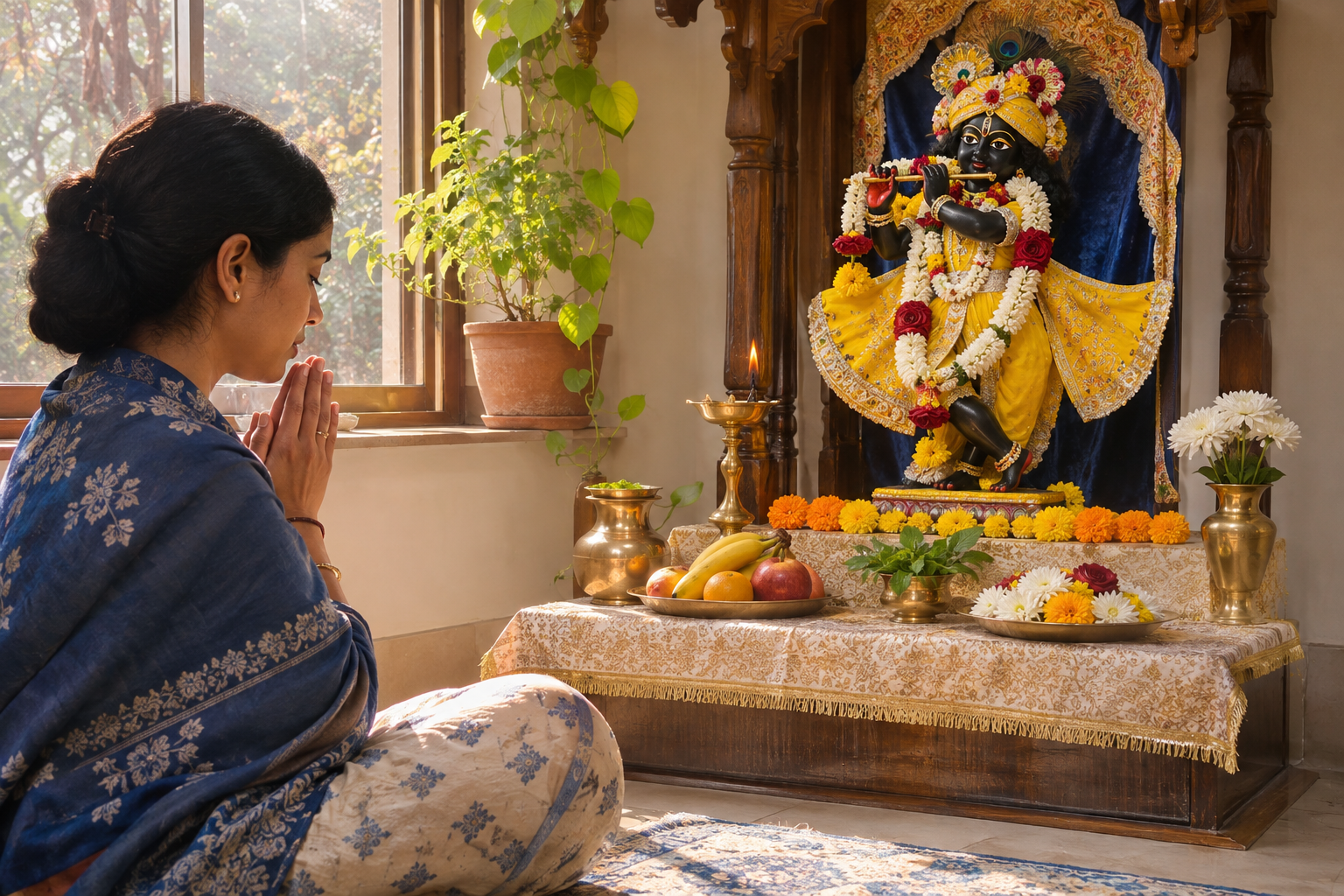
If you will observe at home
You do not need to invent an elaborate ritual to make the day serious. Use the form of worship already established in your family or sampradaya. If you do not have a prescribed observance, the following is a restrained devotional framework, not a claim about an official temple ritual:
- Reserve an uninterrupted period and silence the devices that usually fragment your attention.
- Prepare your existing worship space with care. The point is attention, not buying new objects for a single day.
- Begin by naming your intention plainly: to remember Banke Bihari’s appearance and to approach with less pride and more receptivity.
- Continue with a devotional practice you already understand, such as prayer, repetition of the Lord’s name, devotional singing, reading, or silent contemplation.
- Close with one act that gives devotion a practical form: service, generosity, reconciliation, or the fulfilment of a neglected duty.
The final step matters. Humility is difficult to measure during an emotional observance, but it becomes visible in conduct. If your prayer leaves you more willing to listen, serve, apologise, or keep a promise, the festival has entered ordinary life rather than remaining a mood.
If you are planning to go to Vrindavan
Treat December 14 as the anchor for planning, not as a complete visitor notice. Confirm current information through an official temple channel before committing to transport or accommodation. Forwarded posters and old festival schedules can preserve the right festival name while carrying arrangements from another year.
- Check the published darshan schedule and any festival-specific entry instructions.
- Plan your arrival and return rather than assuming ordinary movement around the temple will remain unchanged.
- Carry only what you need and follow the temple’s current rules for personal belongings and photography.
- Agree on a fallback plan with your companions in case access changes or the conditions are unsuitable for someone in your group.
- Keep the purpose of the visit clear: darshan and devotion, not securing a photograph, privileged position, or story to display afterward.
If you cannot travel, do not convert that limitation into spiritual failure. The festival’s own theological centre is dedication, humility, and love. Geography can shape an observance, but it should not become a test of who is entitled to devotion.
Keep devotion from turning into performance
The easiest way to thin out this festival is to make visibility the measure of sincerity. A more crowded location, longer journey, more elaborate arrangement, or more impressive social-media post does not establish greater devotion. Those things may accompany a sincere observance, but they cannot prove one.
A second mistake is to treat the limits of human knowledge as an argument against learning. The point is not that thought, scripture, or study is worthless. It is that the Supreme Lord cannot be reduced to an object controlled by intellectual effort. Study should support reverence; it should not produce the assumption that the Divine owes us an appearance because we have accumulated information.
A third mistake is forwarding precise fasting rules, dress requirements, or temple procedures without checking whether they belong to this observance and this year. When your household or sampradaya has an established discipline, follow it faithfully. When it does not, resist filling the gap with confident instructions copied from an unrelated festival. Simplicity is better than invented authority.
Finally, do not approach the day as a technique for compelling a divine result. The meaning runs in the other direction. Divine appearance is grace, while the devotee’s work is to become less obstructed by pride, distraction, and entitlement. You can prepare your attention; you cannot turn love into a transaction.
A simple plan for December 14, 2026
You can turn the date into a workable commitment now:
- Add December 14 to your calendar under both names: Banke Bihari Prakatotsav and Bihar/Vihar Panchami.
- Decide whether you are planning a Vrindavan visit or a home observance. Do not leave that decision until travel pressure or fear of missing out makes it for you.
- If travelling, verify the temple’s current practical instructions before making non-refundable commitments. If staying home, protect a definite period from work and routine distractions.
- Choose one familiar devotional practice rather than collecting many unfamiliar ones for the occasion.
- Choose one concrete expression of humility or service and complete it as part of the observance.
Put December 14 in your calendar now. Beside the date, write the quality you most need to bring before Banke Bihari: dedication, humility, or love. Let that choice guide both your preparation and the way you treat people after the worship has ended.
References

Leave a Reply
You must be logged in to post a comment.