
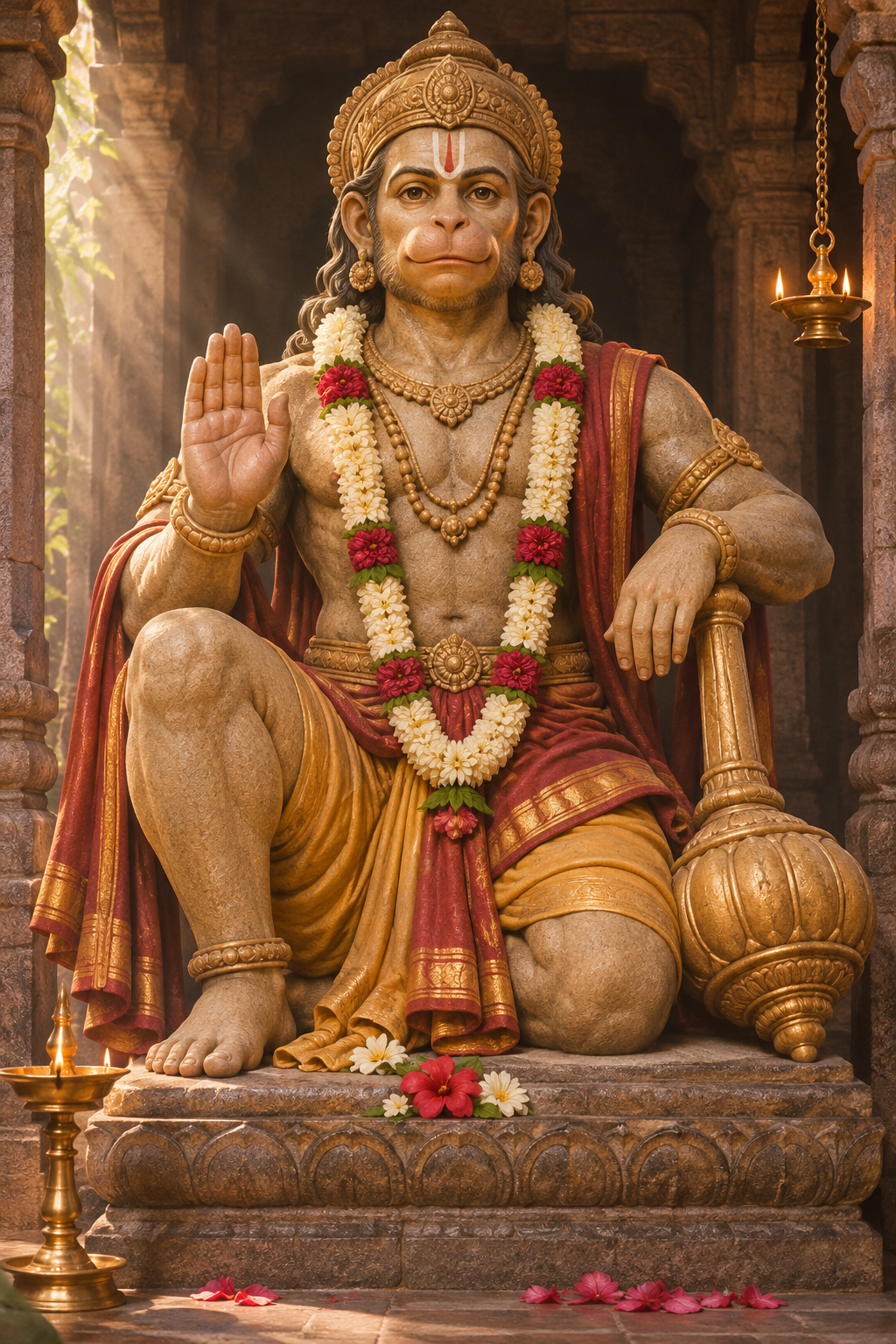
You may recognize Hanuman immediately and still be unsure what makes a murti specifically Prasanna Hanuman. Is it the expression, the posture, an object in the hand, or simply the name used by a temple?
The safest answer begins with the mood of the complete form. Prasanna Hanuman presents Hanuman as composed, gracious, and available to the devotee. To identify that presence well, you must read the whole murti rather than hunt for one supposedly decisive feature.
Prasanna names the quality of the encounter
Prasanna carries a cluster of related meanings: serene, gracious, pleased, and approachable. No single English word conveys the entire devotional register. “Serene” may sound merely quiet, while “pleased” can sound like a passing emotion. In the murti, these meanings work together. You meet a Hanuman whose power is present without being displayed through violent action.
This distinction matters because Hanuman’s iconography can emphasize different aspects of the same revered being. A dynamic form may direct your attention to speed, combat, heroic exertion, or the defeat of hostile forces. Prasanna Hanuman directs it toward calm accessibility. The contrast concerns what the form foregrounds; it does not divide Hanuman into a strong version and a gentle version.
Do not therefore translate prasanna as “smiling” and stop there. A smile is one possible visual cue, but the devotional meaning is larger. Look for an integrated impression of composure: a face that does not communicate rage, a body not dominated by urgent movement, and a composition that allows your attention to settle rather than follow an unfolding battle.
Read a Prasanna Hanuman murti in four passes
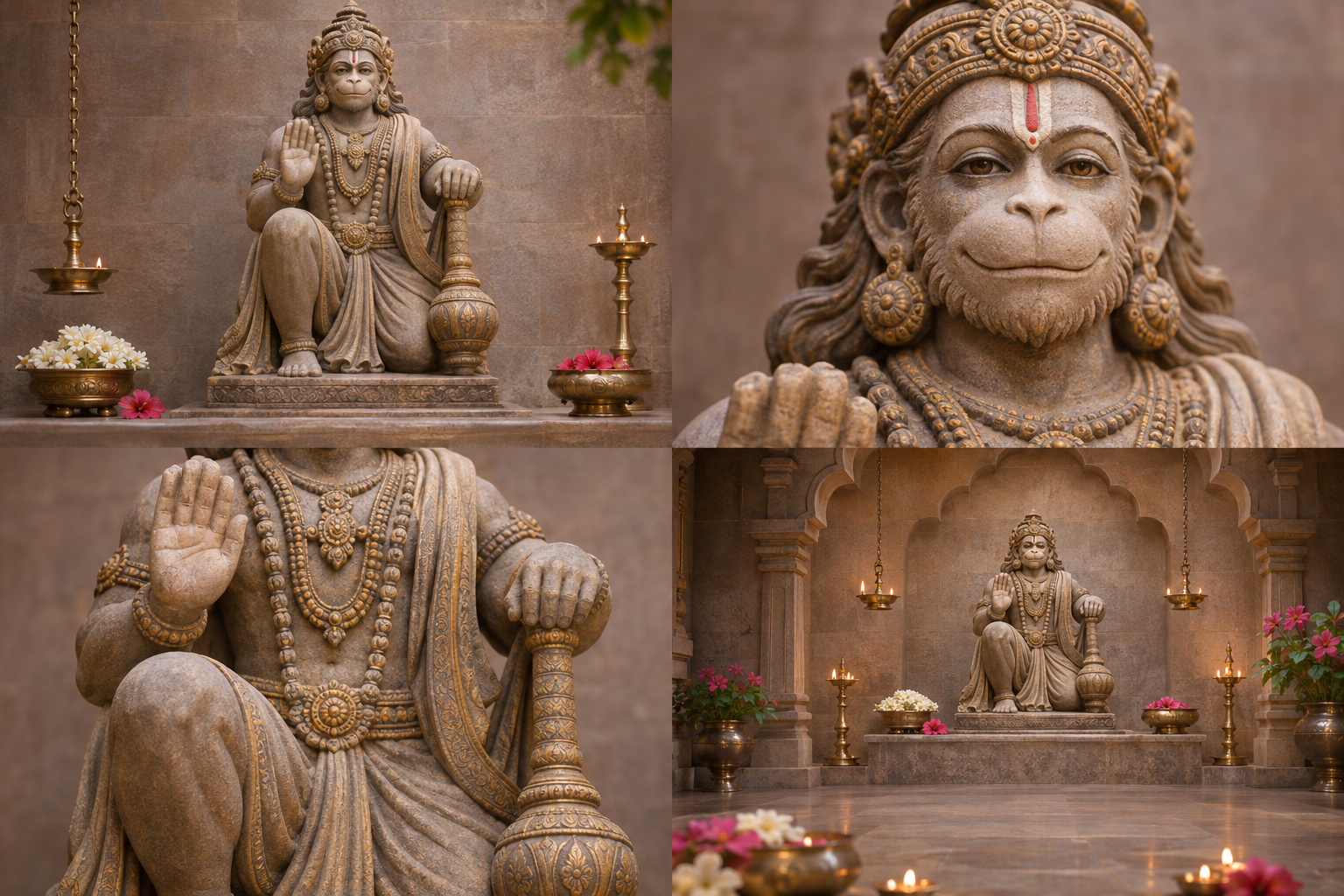
Temple ornamentation, garlands, lighting, and distance can conceal important details. A four-pass reading keeps you from making an identification from the first visible feature.
- Begin with the shrine’s own identification. Read the displayed name, listen to the name used in worship, and consult the temple’s official description or an informed temple representative. If the temple calls the deity Prasanna Hanuman, that living identification carries more weight than an image-matching rule found elsewhere.
- Notice the movement of the whole figure. Ask whether the composition is organized around flight, attack, impact, or victory over an adversary. Prasanna Hanuman is understood through a quieter register, so forceful action should not be the dominant message of the form.
- Study the face in relation to the posture. Do not isolate the mouth and decide that any upward curve proves the identity. Look at the eyes, head, torso, and stance together. The relevant question is whether the complete presence appears settled and approachable.
- Examine attributes only after grasping the whole. Hands, ornaments, and other details matter, but a single object should not overrule the shrine’s name or the overall composition. Record what is actually visible, especially if garlands cover part of the murti, instead of filling in hidden details from memory.
This sequence also helps when you are looking at a photograph. First determine whether the caption preserves the temple’s name. Then inspect the full figure before enlarging individual details. A tightly cropped face can communicate serenity while hiding a strongly dynamic composition below it.
A serene form is not a diminished Hanuman
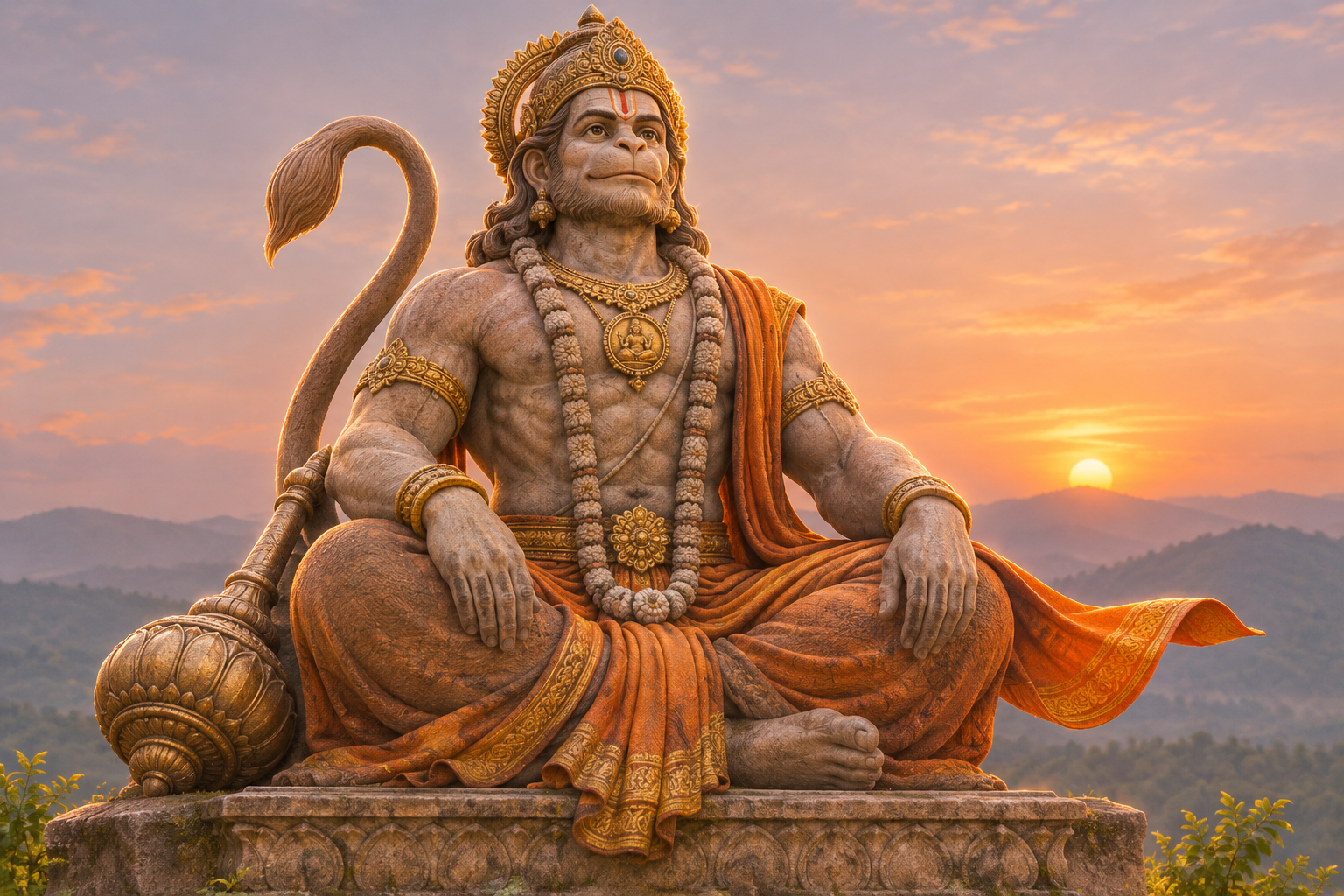
The most common interpretive mistake is to treat serenity as the absence of strength. Hanuman does not become passive when represented as prasanna. The iconographic emphasis changes from power in outward action to power held in composure.
That difference is spiritually useful. A fierce or kinetic image may make you notice the scale of Hanuman’s capacity. A gracious image may make you notice that such capacity can remain disciplined and available. The lesson is not that strength has disappeared, but that strength need not constantly announce itself.
You should also resist the reverse error: calling every calm-looking Hanuman image Prasanna Hanuman. A devotional name belongs within a tradition of identification, not merely within a viewer’s private impression. The form is especially associated with South Indian temple tradition, but regional prominence does not create a universal checklist that overrides the name and practice of a particular shrine.
When documentation and appearance seem to conflict, preserve the distinction in your own notes. You can write, for example, “The shrine identifies the deity as Prasanna Hanuman; the current ornamentation obscures the posture.” That is more accurate than renaming the murti because one expected feature is not visible.
How to choose or commission this form
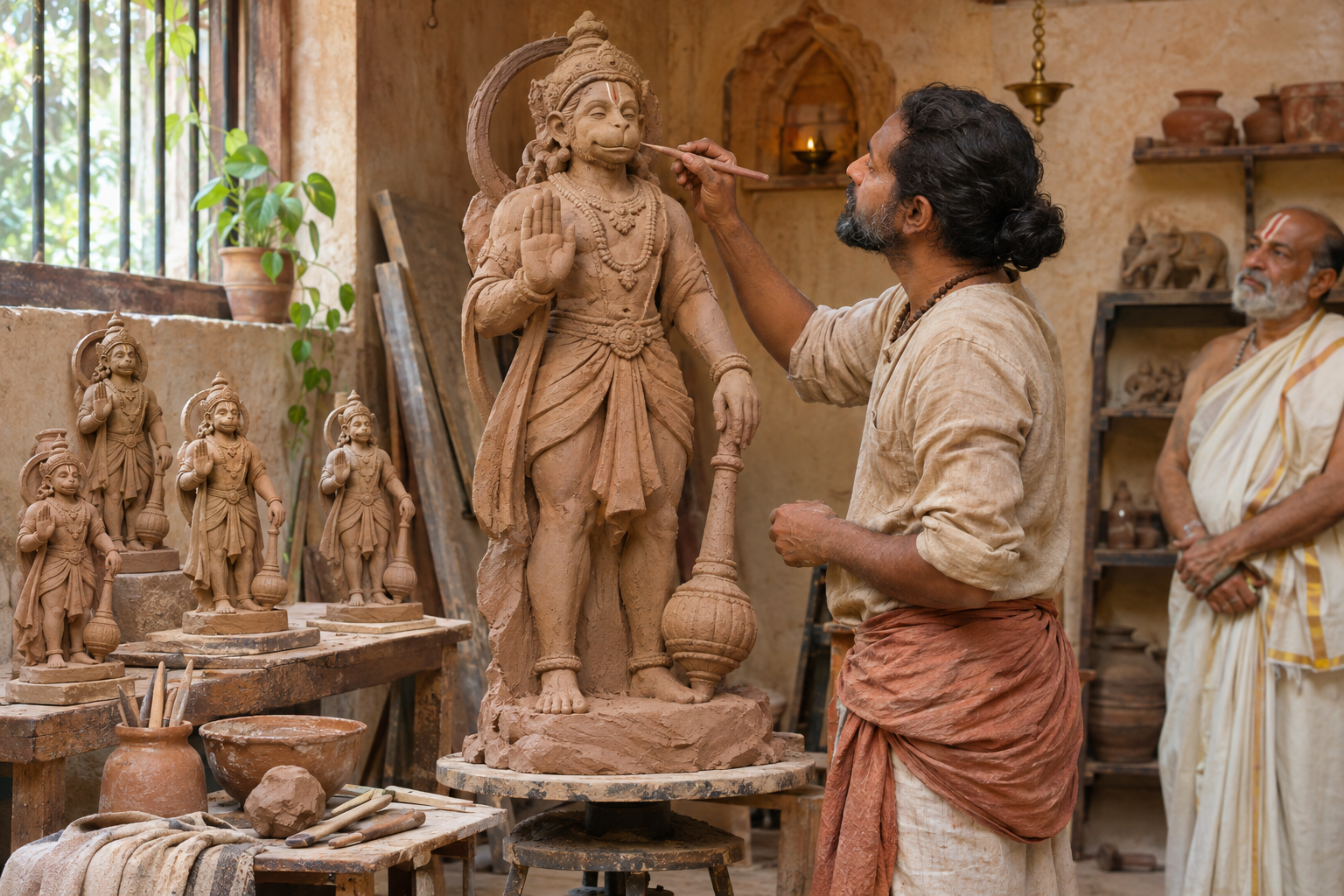
If you are selecting an image for a home shrine, teaching space, publication, or commissioned artwork, decide first what you want the form to communicate. Choose Prasanna Hanuman when the intended devotional center is steady darshan, gracious presence, and accessible strength rather than the drama of combat or motion.
For an existing murti or print, use these practical checks:
- Verify the stated identity. Look for a reliable caption, temple name, catalogue description, or information from the maker. A seller’s vague use of “peaceful Hanuman” is not automatically a traditional identification.
- Judge the complete composition. The face, stance, directional energy, and surrounding scene should support the same serene reading.
- Check what dominates. If flight, combat, or the crushing of an adversary governs the image, the work is emphasizing a different aspect even if the face appears pleasant.
- Separate removable decoration from the underlying form. Garlands, textiles, and festival adornment may change what you can see without changing the identity of the murti.
- Let devotional use guide aesthetic preference. The most elaborate work is not necessarily the most suitable one. Choose the image before which you can sustain the intended mode of worship and attention.
If you are briefing an artist, “make Hanuman smile” is too narrow. Ask for a composed and approachable presence, a stable rather than mid-flight presentation, and no demon-crushing action as the visual center. Request sketches of the entire figure, not only facial studies. That lets you correct a dynamic silhouette before details and ornamentation make revision difficult.
For ritual installation or a commissioned temple murti, visual preference alone is not enough. Follow the relevant temple, family, guru, or sampradaya practice. The label attached to an online image cannot substitute for guidance within the tradition that will receive and worship the form.
Key takeaways
- Prasanna describes Hanuman as serene, gracious, pleased, and approachable; it means more than a visible smile.
- The form foregrounds composed accessibility rather than flight, combat, or the crushing of demons.
- Serenity does not remove Hanuman’s strength. It presents strength as disciplined and available.
- Identify the murti from its shrine name, complete composition, expression, and attributes together, not from one isolated feature.
- When choosing or commissioning the form, specify the intended devotional register and review the whole figure before approving details.
The next time you encounter Prasanna Hanuman, pause before cataloguing hands and ornaments. Confirm how the shrine names the form, step back far enough to see the complete composition, and notice what kind of meeting it creates. If the dominant experience is powerful serenity made approachable, you have understood the heart of the iconography.
References

Leave a Reply
You must be logged in to post a comment.