
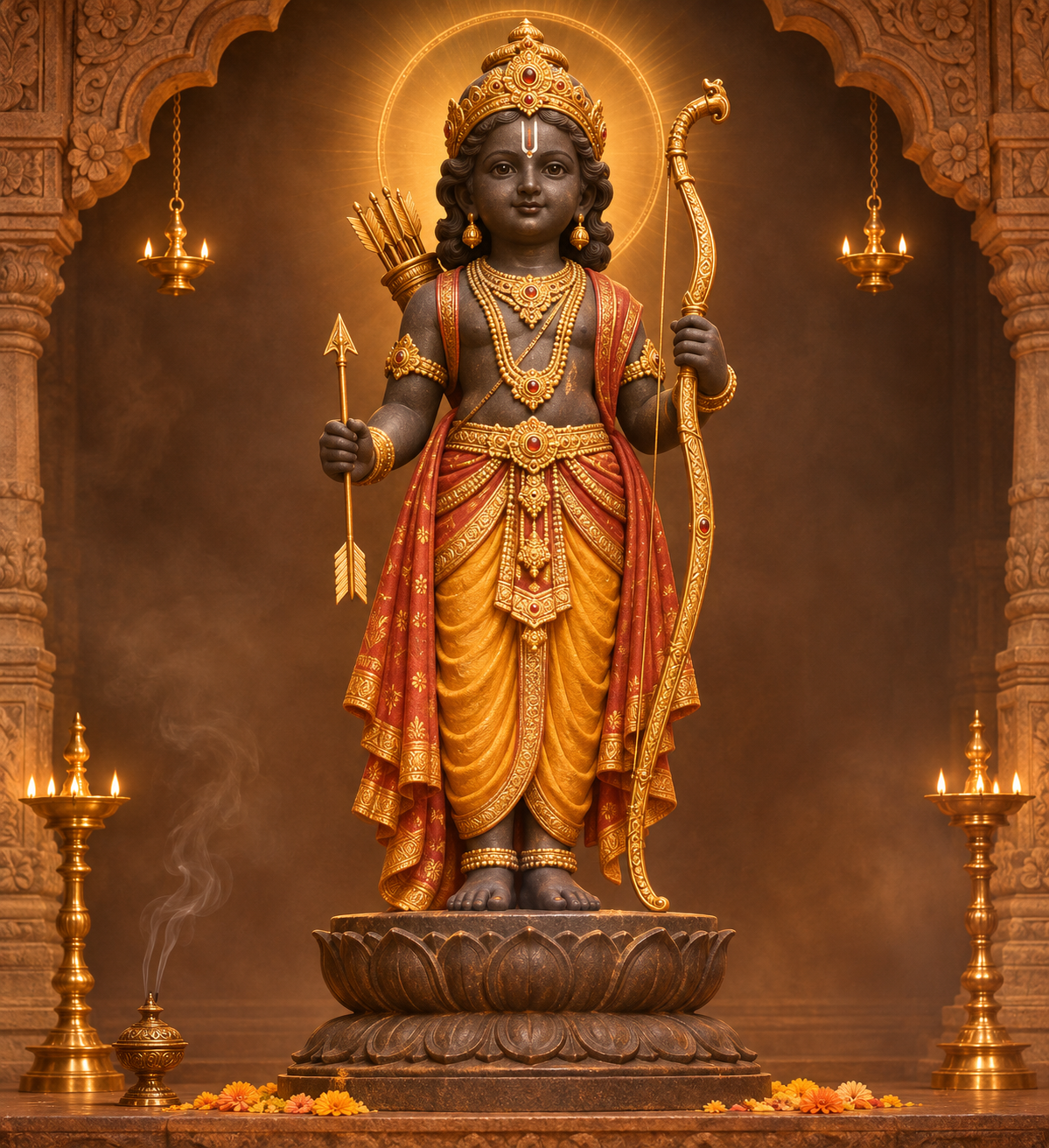
You look at the Ram Lalla murti and know that its details matter, but where should you begin? If you start by assigning a secret meaning to every ornament or gesture, you can easily mistake speculation for iconography.
Begin with the identity of the whole form. Ram Lalla presents Shri Rama in his childhood form while remaining Maryada Purushottam, the ideal being. Hold those two truths together – the child and the ideal – and the rest of the image becomes easier to read with both reverence and discipline.
Begin with the apparent tension: the child who is already complete
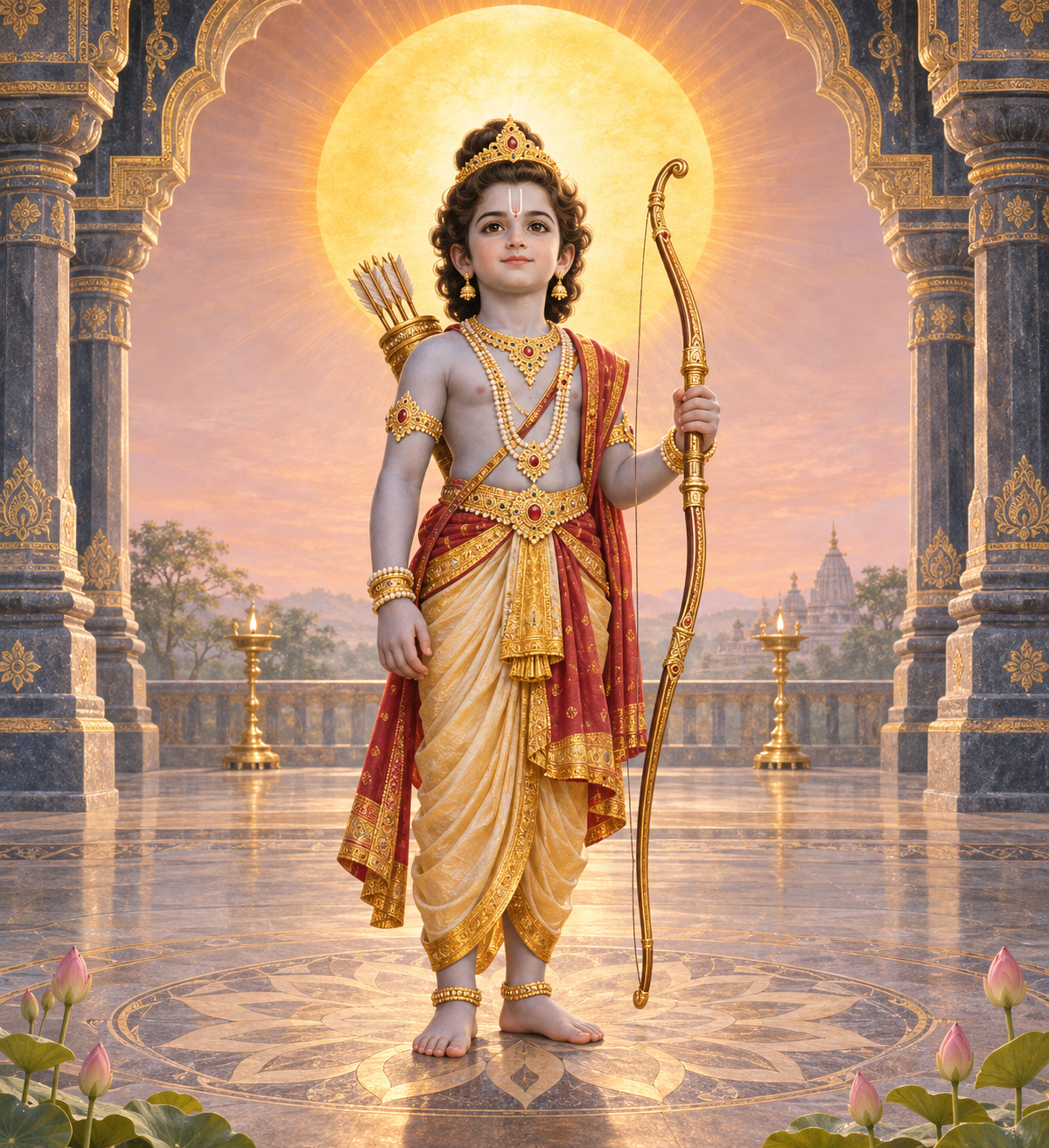
The childhood form establishes the emotional register of the murti. You are not looking only at a reduced version of an adult figure. You are being invited to encounter Shri Rama through childhood: approachable, tender and worthy of loving attention.
Yet Ram Lalla is not an incomplete divinity waiting to grow into sacred importance. The same form represents Maryada Purushottam. Childhood and ideal being are present together. That combination is the central interpretive key.
This corrects two opposite mistakes. The first is to see only an endearing child and miss the form’s ethical and divine gravity. The second is to emphasize Rama’s ideal character so heavily that the tenderness of the child disappears. A sound interpretation must leave room for both.
Use a simple test when you encounter an explanation of a feature: does it help you recognize both the childhood form and the ideal being? If it turns Ram Lalla into mere sentiment, it is too narrow. If it makes the child form irrelevant, it is also too narrow.
Iconography is a visual grammar, not a hunt for hidden codes
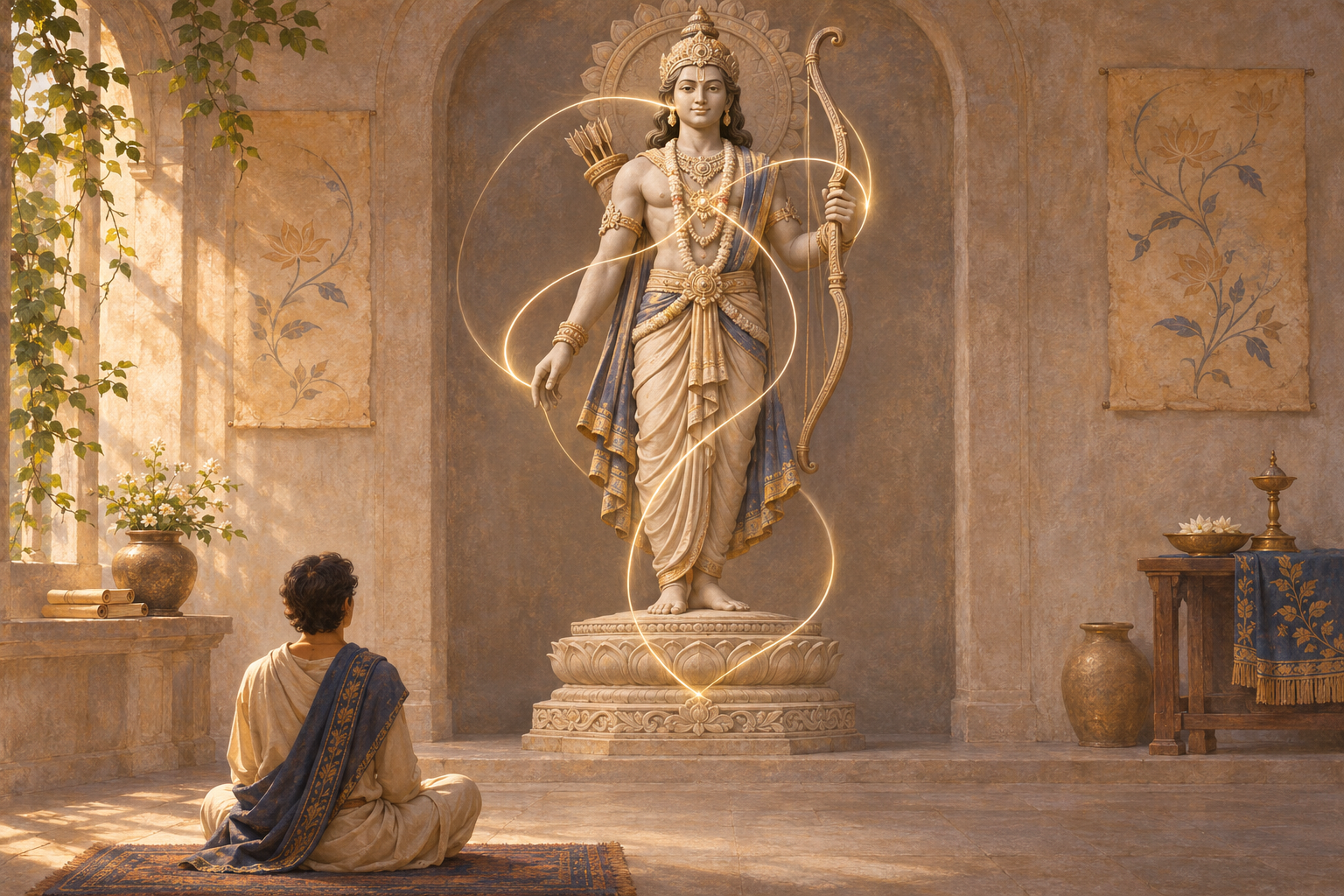
The murti is rooted in shilpa shastra as a codified sacred expression. This means form is purposeful. Proportion, posture, gesture, attributes and adornment can participate in identifying the divine form and communicating its character. The murti is therefore more than decorative sculpture.
Codified does not mean that every visible line carries one fixed, universal message. A visual language must still be read in context. Artistic execution, sacred convention, temple setting and devotional interpretation can meet in one image without becoming identical.
Keep four levels separate as you read the murti:
- Observation: What can you actually see? Record the posture, expression, hand positions, attributes, clothing and surrounding elements without interpreting them yet.
- Identification: Which visible features help establish who is represented and in what form?
- Symbolic interpretation: What quality or principle could the identified feature communicate within the relevant tradition?
- Devotional response: How does the complete form shape your relationship with Shri Rama – through affection, reverence, trust, contemplation or service?
The order matters. If you skip observation and identification, almost any symbolic claim can sound plausible. Write one sentence at each level. When you cannot support the identification, stop before presenting the interpretation as established iconography.
This discipline does not weaken devotion. It protects sacred interpretation from being overwhelmed by imaginative claims. Iconography should help you see the murti more attentively; it should not turn darshan into a puzzle that only an online decoder can solve.
Use this six-pass method when viewing the murti
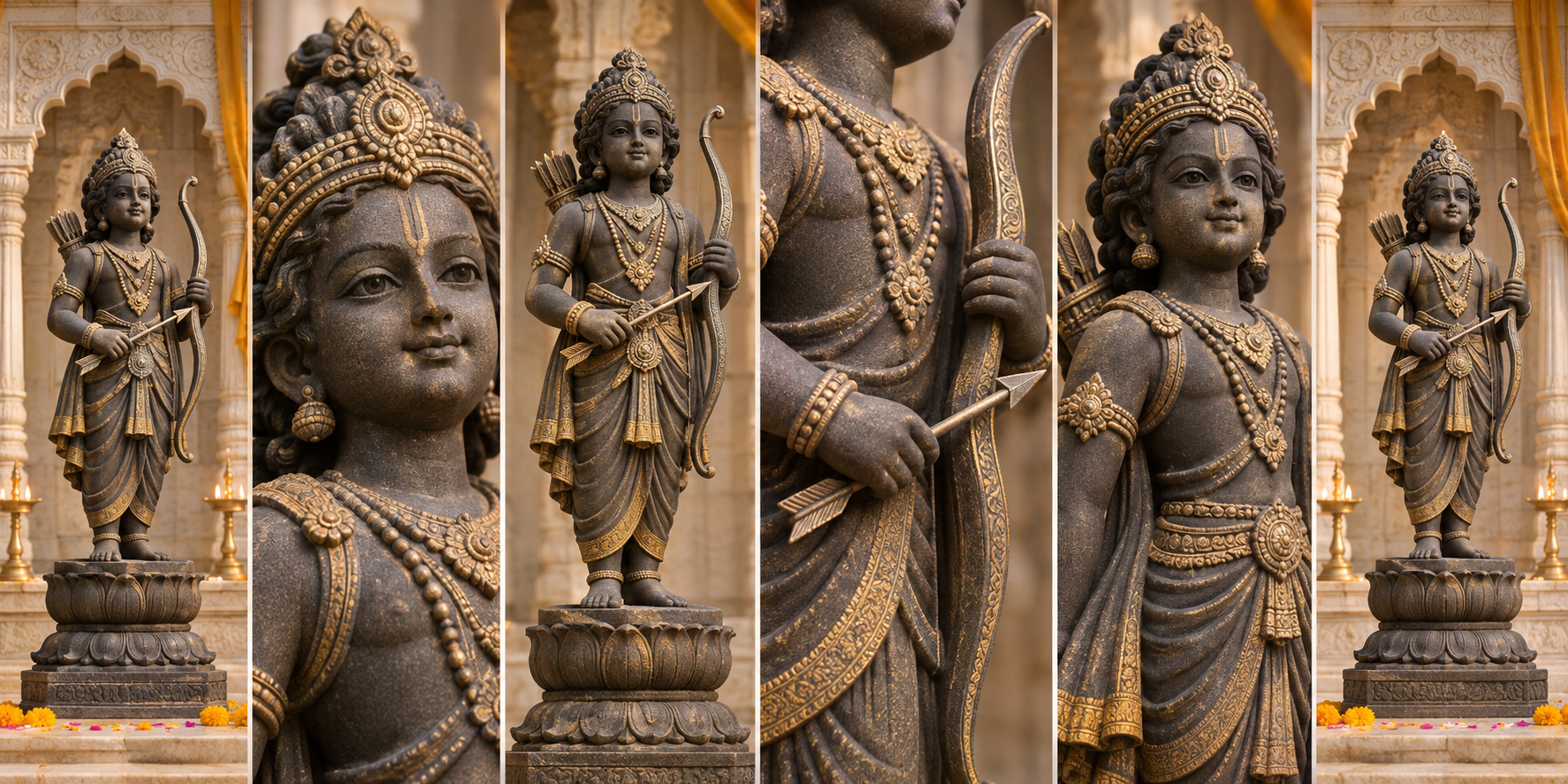
Whether you are standing before the murti or examining a photograph, move from the whole form toward individual details. This prevents a striking ornament or isolated gesture from controlling your interpretation too early.
- Name the represented form. Begin with Ram Lalla: Shri Rama encountered in childhood form. This identity governs the interpretation of everything that follows.
- Take in the complete composition. Notice the overall bearing, balance and visual emphasis before separating the murti into parts. Ask what impression the complete form produces.
- Study posture, face and hands. Describe only what is visible. Distinguish a direct observation from an inference about serenity, assurance, welcome or authority.
- Examine attributes and adornment. First name the object or decorative element accurately. Then ask whether it identifies the form, expresses a quality, contributes to sacred beauty or performs more than one of these functions.
- Separate the murti from its setting. Pedestal details, background motifs, garments, flowers and temporary ritual decoration may all affect what you see. Do not automatically treat every surrounding element as a permanent part of the murti’s iconography.
- Rank the certainty of your conclusion. Mark a reading as visible fact, established convention, plausible interpretation or personal devotional reflection. Do not present the fourth category as though it were the second.
A photograph requires extra caution. Lighting can conceal carving, perspective can distort proportion and ceremonial adornment can cover permanent details. Phrase your observation as something visible in that image unless you have confirmed the murti from a clearer view or an authoritative description.
When you share an explanation, build a visible chain: feature, identification, meaning. For example, do not begin with a large theological conclusion and then search the image for something that appears to support it. Begin with what the murti actually presents.
Four common misreadings to avoid
- Reducing the child form to cuteness: Affection belongs in the encounter, but Ram Lalla also embodies the ideal being. Tenderness does not cancel sacred seriousness.
- Treating childhood as lesser divinity: The form represents Shri Rama, not a spiritually unfinished figure. Childhood changes how the divine is approached; it does not diminish who is present.
- Calling every detail a universal symbol: Shilpa shastra provides a codified foundation, but a responsible reading still requires accurate identification and context. Similar-looking details need not always carry an identical explanation.
- Separating beauty from sacred meaning: Aesthetic beauty is not necessarily an ornamental layer added after theology. In sacred sculpture, beauty, recognizable form and devotional presence can work together.
There is another useful distinction behind all four corrections: iconography and symbolism overlap, but they are not interchangeable. Iconography asks how a sacred figure is made recognizable through visual conventions. Symbolism asks what those forms and features communicate. Begin with recognition; then interpret meaning.
When two explanations conflict, ask which one identifies a visible feature, connects it to a known convention and preserves the central identity of Ram Lalla. An interpretation supported only by emotional appeal may still be meaningful as personal bhava, but it should be described that way.
Key takeaways
- Start with the whole identity: Ram Lalla is Shri Rama in childhood form and Maryada Purushottam, the ideal being.
- Read tenderness and divine completeness together; neither should erase the other.
- Move in order from observation to identification, symbolic meaning and devotional response.
- Treat shilpa shastra as a disciplined visual foundation, not permission to invent a fixed meaning for every detail.
- Label your certainty: visible fact, established convention, plausible interpretation or personal reflection.
At your next viewing, do not begin by asking what every detail secretly means. Ask first, “What form of Shri Rama am I seeing?” Then choose one visible feature and follow it carefully from observation to interpretation. That small discipline lets reverence become more attentive without allowing certainty to outrun evidence.
Before repeating an explanation, make sure you can point to the feature it concerns, state what identifies it and distinguish inherited convention from your own devotional response. If you cannot do all three, present the thought as reflection rather than settled iconography.
References

Leave a Reply
You must be logged in to post a comment.