
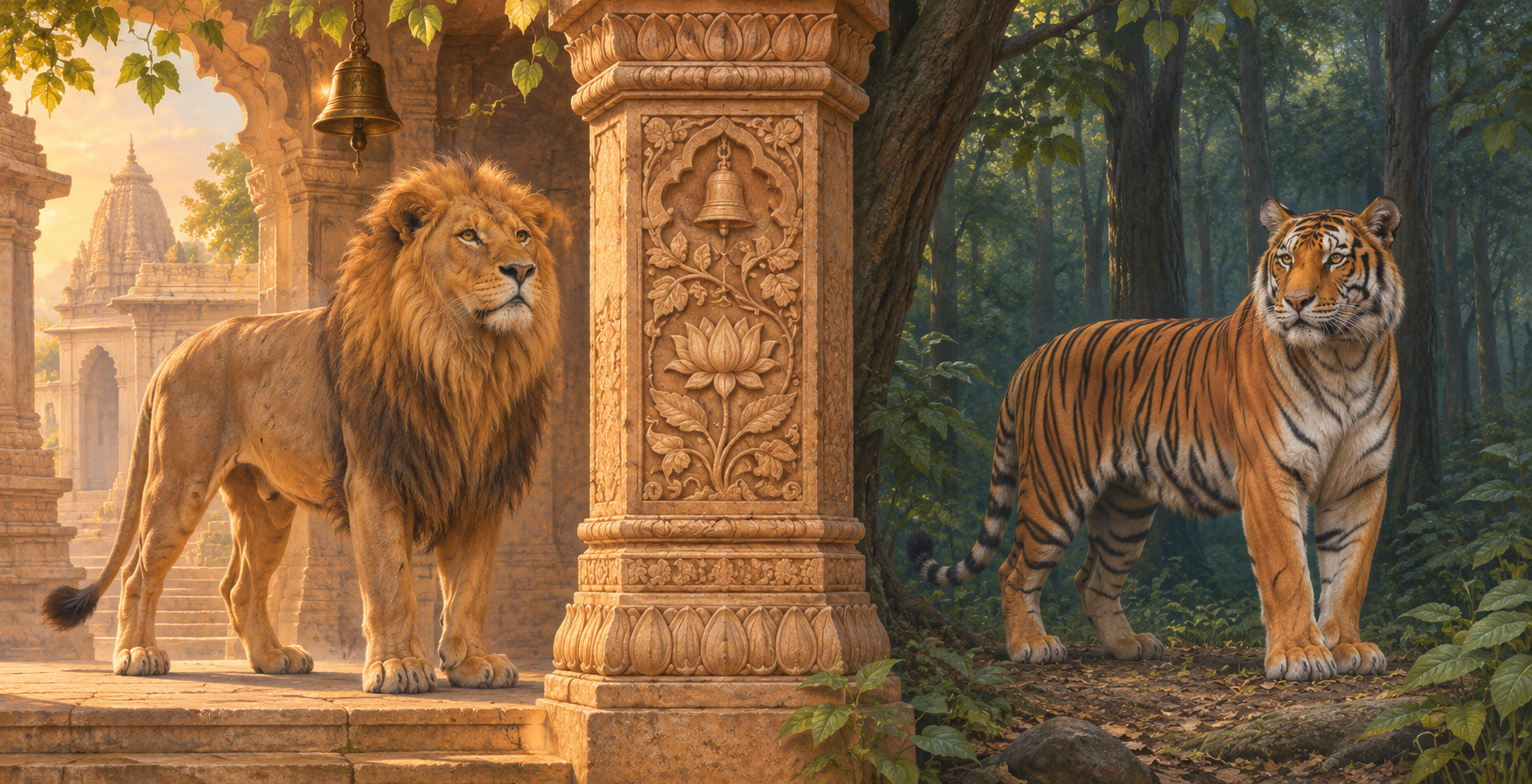
You may be looking at a murti, temple carving, calendar image, or painting and wondering whether the great cat beside a deity is a lion or a tiger—and what that animal is supposed to mean. The safest answer does not begin with a fixed formula such as “lion equals courage” or “tiger equals power.” It begins with the animal’s relationship to the deity.
Ask whether the animal forms part of the deity’s body, serves as a vehicle, or belongs to the surrounding scene. That distinction will tell you more than the species alone. It also prevents a common mistake: treating Hindu iconography as if every animal were a logo with one universal definition.
Start with the animal’s job in the sacred image
Before interpreting a lion or tiger, identify its iconographic function. The animal may express divine identity, carry divine power, or help establish the character of a scene. These are different symbolic relationships.
- Look first at the deity’s body. If human and animal features are joined in one form, the animal nature belongs to the deity’s manifested identity. It is not merely an attendant or decorative emblem.
- Look beneath or beside the deity. An animal that carries or accompanies a deity may be a vahana, a vehicle through which divine agency is made visible. In that setting, wild strength has not disappeared; it has been placed in a sacred relationship.
- Look at posture and action. A composed animal supporting a deity communicates something different from an animal attacking, roaring, resting, or standing at the edge of a scene.
- Confirm the identification through the other attributes. Weapons, hand gestures, ornaments, accompanying figures, and temple labels are more reliable together than the animal by itself.
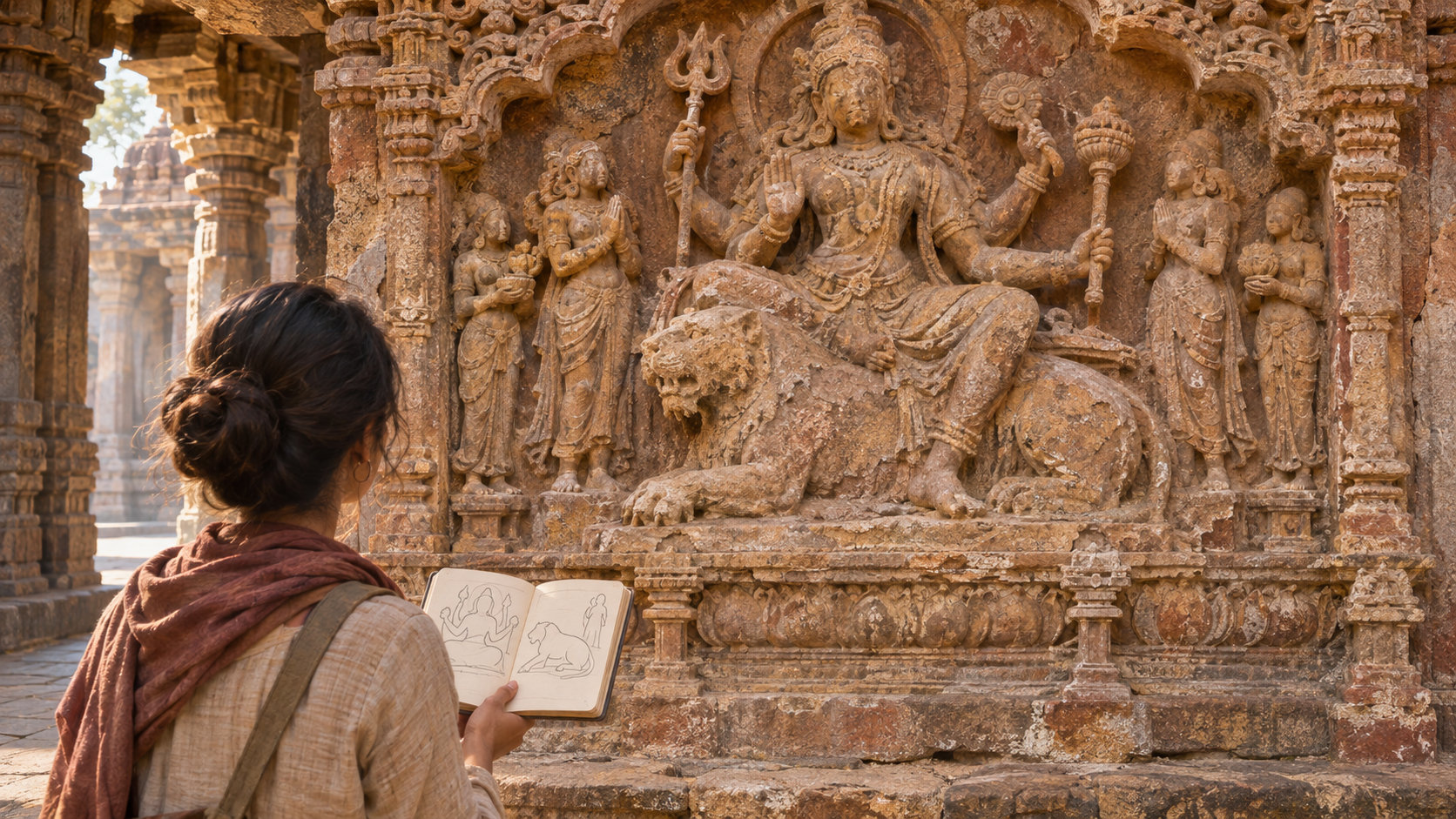
This method matters because the same species can perform more than one symbolic task. It also helps when an old carving is weathered or when a regional artistic style makes a lion and tiger difficult to distinguish.
The lion can embody power or carry it
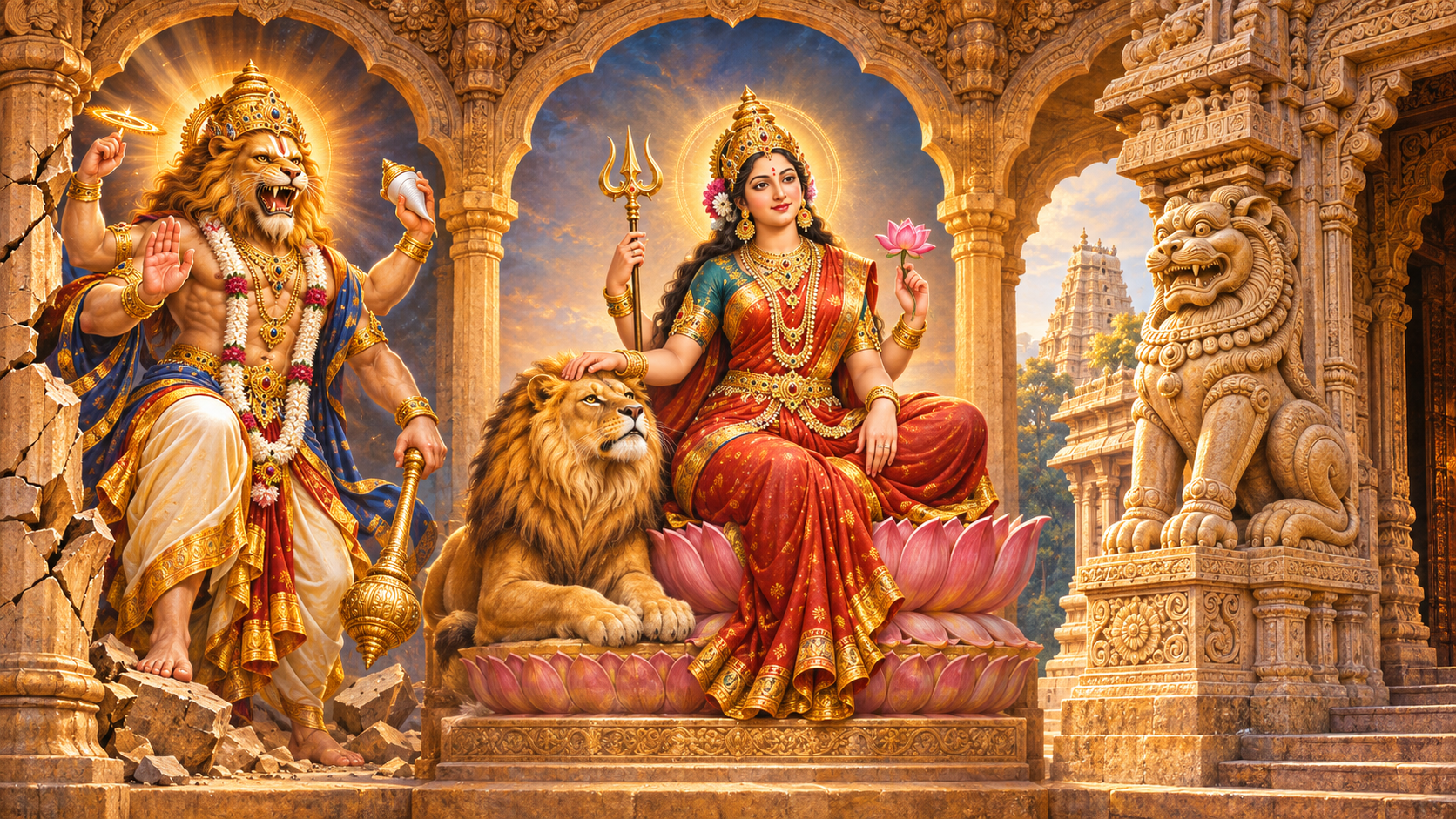
Two familiar Hindu uses of the lion reveal why context comes first. Vishnu manifests as Narasimha with a lion’s head, while Parvati is associated with the lion as her vehicle. In the first case, leonine nature is incorporated into the divine form. In the second, the lion stands in relation to the Goddess.
Narasimha therefore should not be read as “Vishnu with a lion symbol attached.” The lion-headed form makes formidable force part of the manifestation itself. The imagery presents divine protection in a form capable of confronting extreme danger. Fierceness here is not uncontrolled anger; it is power answering a particular need.
Parvati’s lion works differently. As a vahana, the animal retains the associations of wild strength, courage, and command, but that strength operates under divine direction. The visual relationship matters: the Goddess is not overcome by the creature’s ferocity. She governs it.
The lion’s traditional standing as king among animals adds a royal dimension. Lions and tigers are also understood as formidable wild creatures capable of attacking even an elephant. That background makes sovereignty, fearlessness, protection, and mastery reasonable interpretive themes. None of those themes, however, identifies a deity on its own.
When you encounter a lion-headed figure, begin with Narasimha and the Vishnu tradition. When you see a lion carrying or accompanying a Goddess, begin with the vahana relationship and then use the remaining attributes to identify the particular form. Do not name a specific manifestation solely because a lion is present.
Read the tiger through role, action, and setting
The tiger occupies much of the same symbolic field of untamed strength and danger, but similarity does not make lion and tiger interchangeable. Both can communicate a power that ordinary human beings do not casually control. The religious question is what happens to that power in the image.
Use four checks when you believe the animal is a tiger:
- Species: Look for a mane, stripes, body shape, and any identifying label, but allow for stylisation and damage. If the species remains uncertain, do not build the whole interpretation on it.
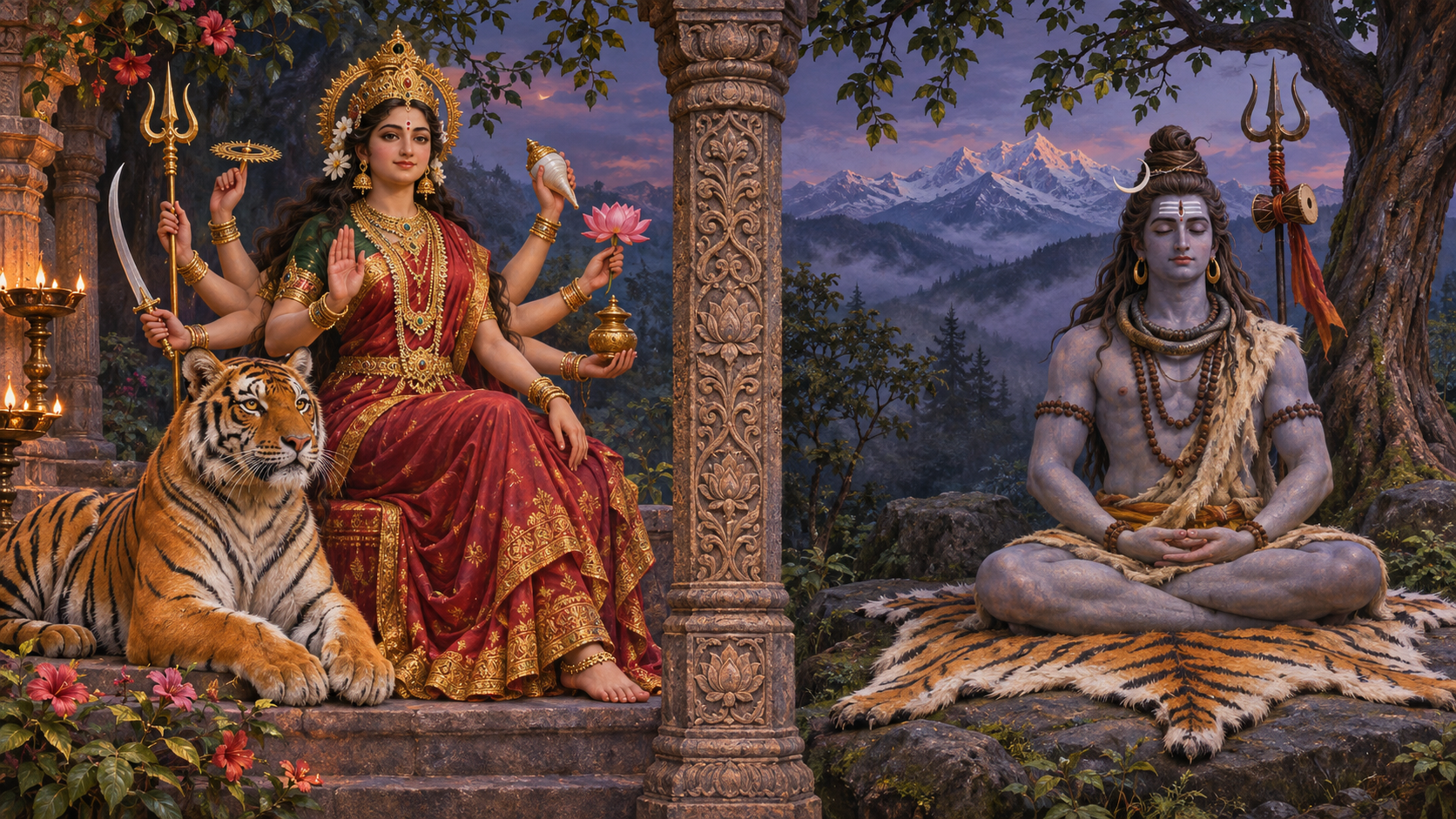
- Position: Distinguish an animal that carries the deity from one that accompanies the deity, lies beneath a figure, appears as a skin, or occupies the wider landscape. Position changes the symbolic grammar.
- Action: A calm or obedient great cat can suggest immense power held in readiness. An attacking animal can place danger, protection, conflict, or victory at the centre of the scene.
- Company: Read the animal with the deity’s other features. A great cat narrows the possibilities, but the full cluster of attributes establishes identity.
Avoid the claim that a tiger always has one meaning everywhere in Hindu tradition. A great cat can signify wild potency in one image and power brought under sacred command in another. It may help identify a deity, but it may also describe the deity’s authority over the dangerous and untamed.
This is also why replacing every tiger with “lion” in an explanation—or every lion with “tiger”—loses information. The two animals share a broad vocabulary of ferocity, courage, and dominance, yet the artist’s species choice and the tradition surrounding the image can still matter. Preserve the distinction when it is clear; preserve uncertainty when it is not.
Key takeaways
- Do not assign a meaning until you know whether the animal is part of the deity, a vahana, an attendant, or an element of the scene.
- Narasimha embodies leonine power within Vishnu’s manifested form; Parvati’s lion expresses wild strength operating as a divine vehicle.
- The lion’s royal status supports readings of sovereignty, courage, and command, but those ideas do not replace identification through the full image.
- Lion and tiger symbolism overlaps around formidable wild power, yet the animals are not automatically interchangeable.
- If the species is unclear, rely on the deity’s complete set of attributes and any local identification rather than guessing from the great cat alone.
The next time you meet a lion or tiger in Hindu sacred art, pause before translating the animal into a single abstract virtue. Identify its role, observe its relationship with the deity, and then read the whole composition. That small change turns a vague symbol into a meaningful theological statement.
References

Leave a Reply
You must be logged in to post a comment.