
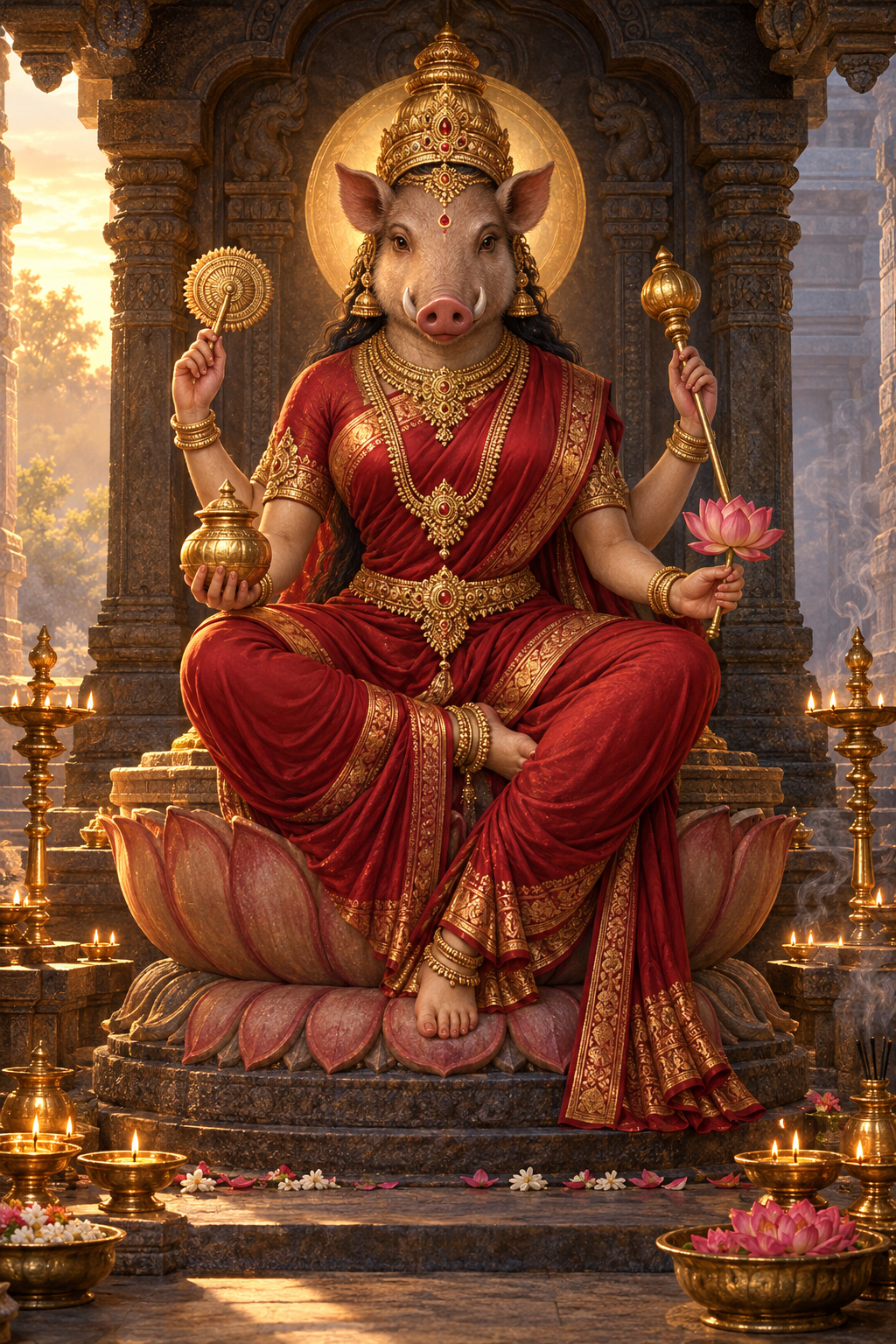
You have found an image labelled Shuddha Varahi, but the familiar boar face does not tell you what the word Shuddha changes. Is this a distinct sacred form, another name for Varahi, or simply a loose caption copied across the internet?
The reliable way to answer is to separate three questions: what identifies Varahi, what establishes the particular Shuddha form, and what the image may mean in contemplation. Keeping those questions separate lets you appreciate the Devi without turning a plausible interpretation into a false identification.
Shuddha Varahi is a form within a larger sacred identity
Varahi belongs among the Sapta Matrikas, the seven divine mothers who embody the shaktis of the principal devas. This places her within a collective theology of divine power. A Matrika is not merely a female counterpart added to a male deity. She is active shakti: power that creates, protects, confronts disorder, and restores balance.
Her porcine countenance strongly identifies the broader Varahi form and connects her symbolic world with Varaha, the boar manifestation of Vishnu. Shuddha Varahi, however, is a distinct and rarely documented manifestation. That distinction matters. Varahi is the wider divine identity; Shuddha Varahi is a more particular designation within it.
You should therefore resist two shortcuts. Do not assume that every image of Varahi depicts Shuddha Varahi, and do not treat Shuddha as a decorative adjective that anyone may attach to a pleasing or peaceful image. A specific form requires specific evidence.
Rarity does not automatically mean greater antiquity, secrecy, or spiritual superiority. It means that identification from appearance alone deserves more caution. When the visual evidence establishes only Varahi, the honest label is Varahi. The narrower name should remain an attribution until a temple tradition, inscription, liturgical description, or qualified lineage explains what makes the form specifically Shuddha Varahi.
Read the icon in a fixed order: identity before interpretation
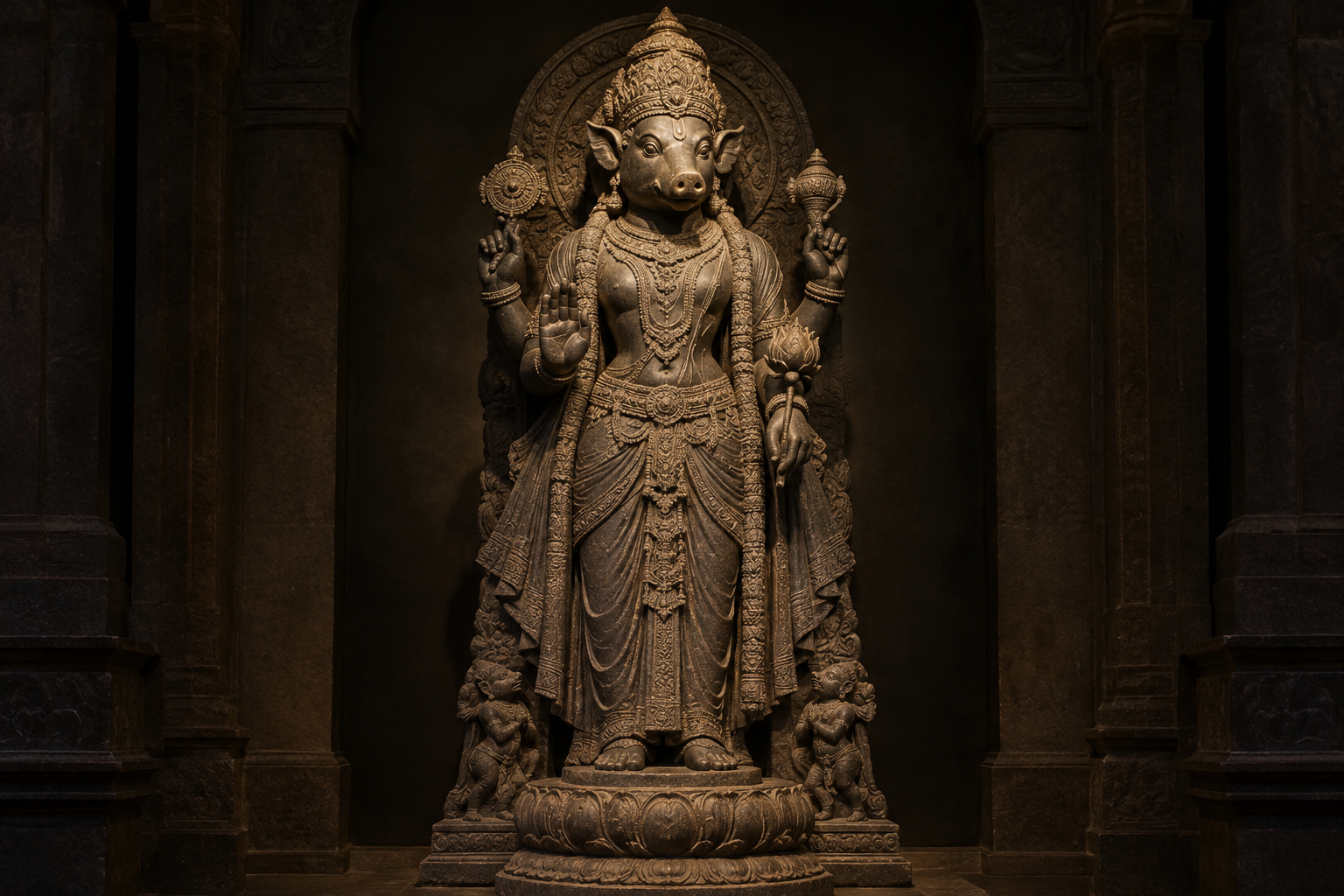
Sacred iconography works like a visual grammar. No single feature carries the whole identity. You read the figure, the hands, the seat, the surrounding figures, and the ritual setting together. Use the following sequence when examining a temple murti, sculpture, painting, or digital image.
- Record the provenance. Note the temple, collection, region, lineage, inscription, catalogue entry, or person who supplied the name. A caption with no traceable origin is a lead, not proof.
- Describe before naming. Record the face, number and arrangement of arms, gestures, held objects, posture, seat or mount, crown, ornaments, body colour, pedestal, and halo. If the work is damaged or repainted, mark those uncertainties rather than filling them from expectation.
- Inspect the relationships. Ask whether the Devi appears alone or in an ensemble. If other mothers surround her, document their order and attributes. Membership in a Matrika group can establish context that an isolated crop removes.
- Look for form-specific confirmation. The name Shuddha Varahi becomes stronger when the same designation appears in a temple record, an inscription, an established liturgical description, or the teaching of the tradition responsible for the image.
- State your confidence honestly. Use confirmed when a named tradition and the image agree, attributed when the name is traditional but the evidence is incomplete, and unidentified Varahi when only the broader identity is secure.
If you are documenting a murti in person, photograph the complete figure before taking close-ups. Then capture every hand and object, the crown and face, the pedestal or mount, adjacent figures, inscriptions, and any temple label. A tightly cropped face may be devotional, but it often removes the very evidence needed for iconographic identification.
Colour deserves special caution. Paint can be renewed, photographs can shift hues, and metal or stone may never have preserved an original surface. Do not let a modern colour treatment outweigh the figure’s structural features or its documented ritual identity.
What Varahi’s sacred form allows you to notice
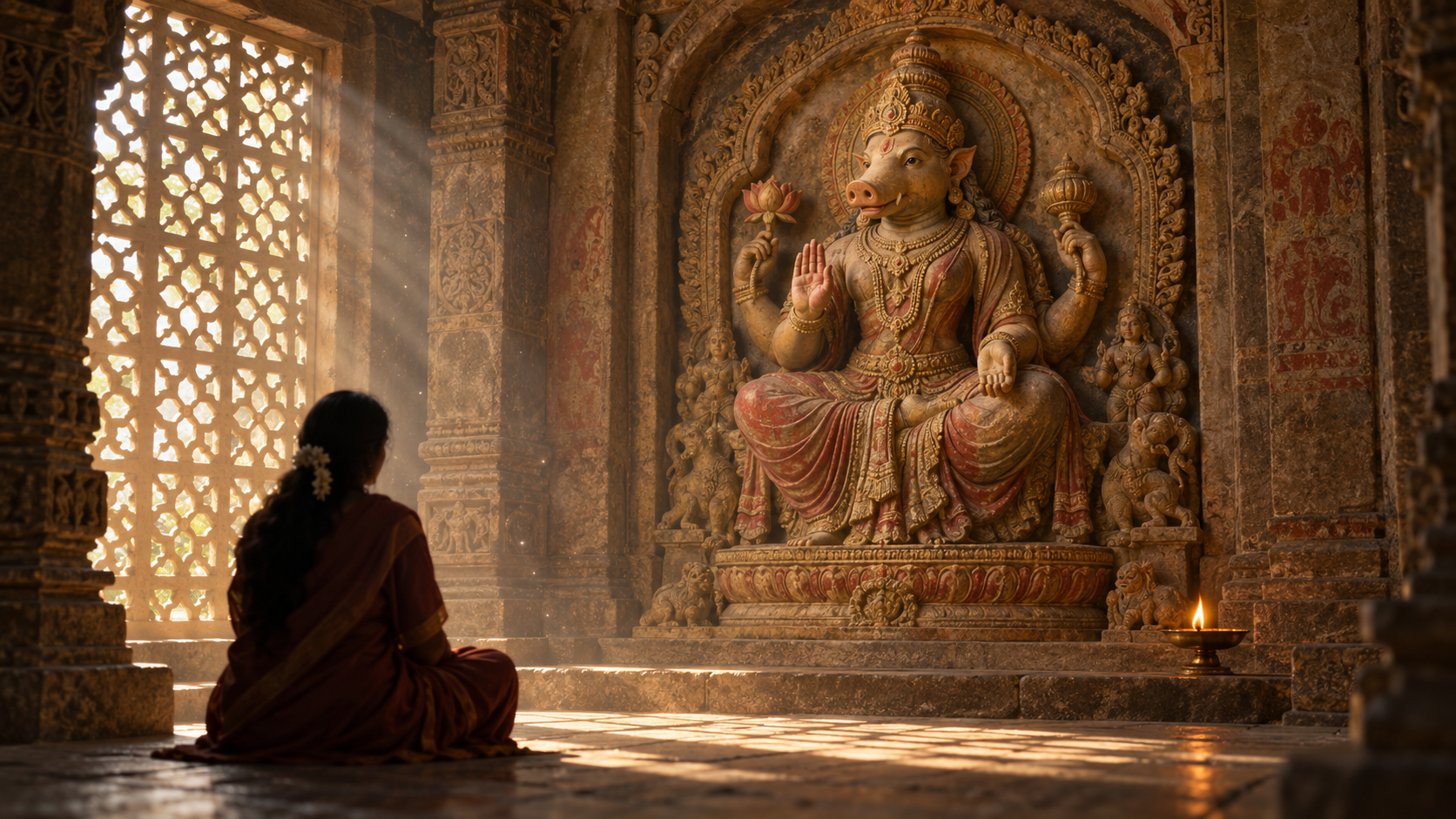
The boar face points beneath the surface
The boar-faced form of Varahi should not be reduced to strangeness, aggression, or a remnant of supposedly primitive worship. Read through the Varaha connection instead. The boar enters difficult ground, reaches what is buried, and raises what has been submerged. In contemplation, this can point to a power that confronts obscurity at its roots rather than merely improving appearances.
That is a symbolic reading, not an identification test. It may help you meditate on the form, but it cannot prove that a particular image is Shuddha Varahi. This boundary is essential: meaning can deepen recognition, but it cannot replace evidence.
The mother and the protector are not opposites
Varahi’s place among the Matrikas corrects a common modern assumption that motherhood must look soft to be maternal. Dharmic iconography can hold nourishment and formidable protection in the same form. A mother preserves life, but preservation may require the removal of a threat. Fierceness is therefore not the cancellation of maternal power; it can be one of its protective expressions.
When you encounter an imposing Varahi image, ask what is being protected, restored, or brought back into order. That question is more faithful to Matrika symbolism than asking whether the figure looks benevolent by modern aesthetic standards.
Shuddha should narrow the form, not divide the Devi
Shuddha is commonly translated as pure, clear, or unalloyed. In a sacred name, however, you should not turn that translation into a moral ranking in which one form is pure and every other Varahi is impure. The epithet first tells you to attend to a particular manifestation and the tradition that defines it.
Without a lineage-specific explanation, stop at that modest conclusion. Do not invent a personality, colour, set of weapons, or ritual purpose merely because the English word pure seems to imply one. Precision is itself a form of respect.
Avoid the four mistakes that produce false certainty
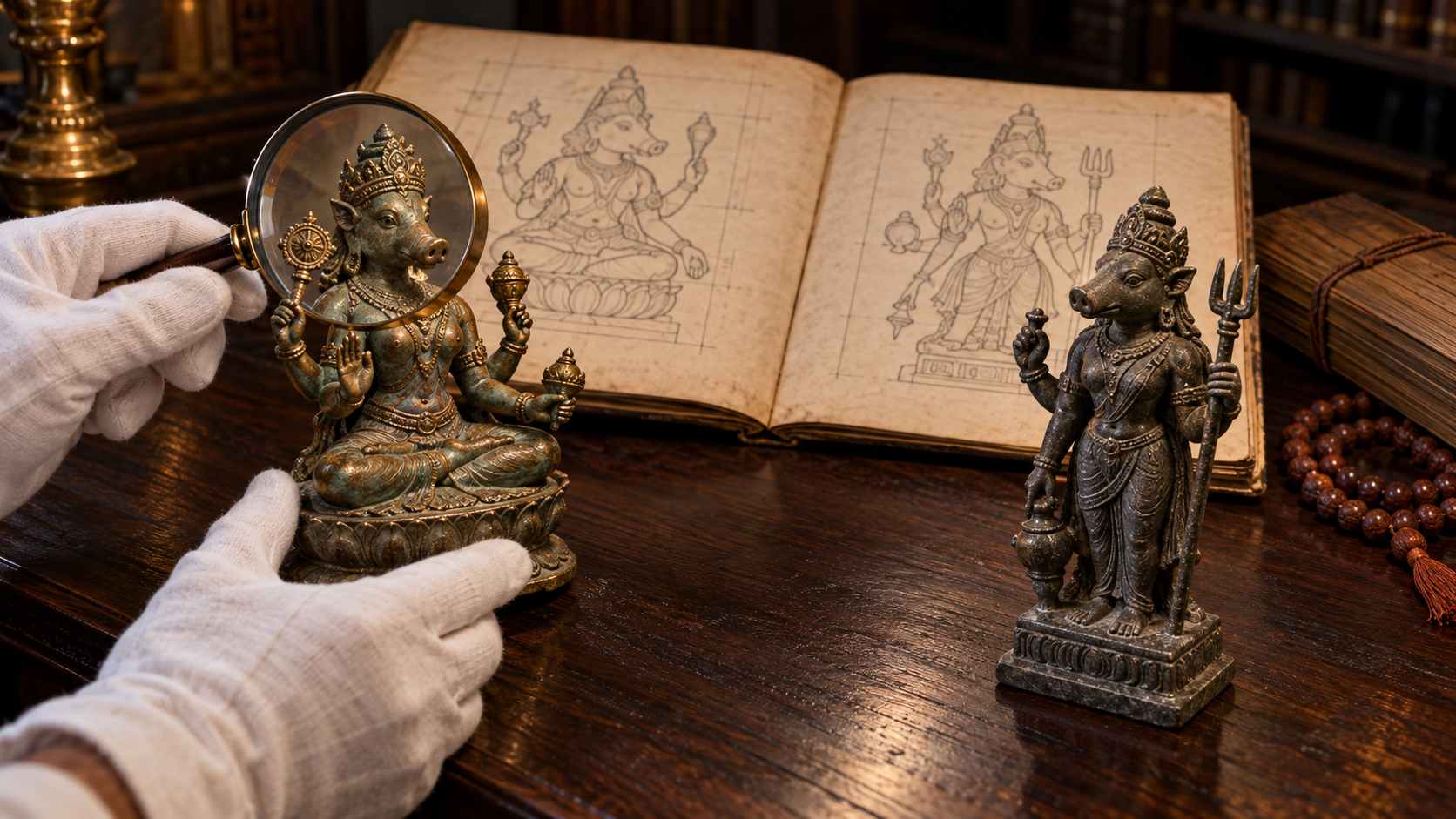
- Treating repeated captions as independent confirmation. Ten websites may reproduce one unsupported label. Trace the name back to a temple, collection, text, lineage, or identifiable custodian.
- Collapsing Varahi and Shuddha Varahi into one category. The boar face may support the broader identity while leaving the specific manifestation unresolved.
- Turning meditation into historical evidence. A symbol may carry profound personal meaning without proving when, where, or under what ritual name an image was made.
- Reconstructing worship from visual details alone. An image can invite darshan, reverence, and study, but it does not disclose every mantra, ritual sequence, or initiatory requirement associated with a Tantric form.
The last mistake has practical consequences. If you are approaching Shuddha Varahi devotionally, simple reverence does not require you to pretend to possess instructions you have not received. Lineage-bound practices involving specialized mantra, nyasa, yantra, or ritual procedure should be learned from a qualified teacher within the relevant tradition. An internet image is not an initiation manual.
You can also apply a simple test to any confident explanation: does it tell you which visible or documented feature distinguishes Shuddha Varahi from Varahi in general? If it offers only broad Varahi symbolism, it may still be spiritually valuable, but it has not established the narrower identification.
Key takeaways
- Varahi is one of the Sapta Matrikas; Shuddha Varahi is a particular and rarely documented manifestation within that wider identity.
- The boar face can support identification as Varahi, but it cannot by itself establish the Shuddha form.
- Read provenance, bodily features, hands, objects, posture, seat or mount, companions, and inscriptions as one iconographic system.
- Keep description, identification, and symbolic interpretation separate. Each answers a different question.
- Use cautious labels such as attributed or unidentified Varahi when form-specific evidence is missing.
- Let qualified tradition guide specialized Tantric practice rather than reconstructing it from pictures or captions.
The next time you encounter an image named Shuddha Varahi, begin with one practical act: preserve its context. Record where the name came from, document the whole image, and distinguish what you can see from what you have been told. That disciplined attention protects both the historical integrity of the icon and the sacred particularity of the Devi.
References

Leave a Reply
You must be logged in to post a comment.