

If you are worried about demographic change in Uttarakhand, you do not have to choose between dismissing the concern and endorsing an eviction on the strength of a slogan. You can demand secure borders, lawful land management and protection of local communities while also insisting that every family receive an individual, evidence-based determination.
That distinction matters in Jaunsar-Bawar, where eight Muslim Van Gujjar families were reportedly evicted by Hindutva organisations amid allegations described as "land jihad," "love jihad" and demographic change. The episode is serious enough to investigate. The information presently available is not enough to establish the land status of each household, prove criminal conduct or demonstrate a coordinated demographic project.
Separate the reported event from the conclusions
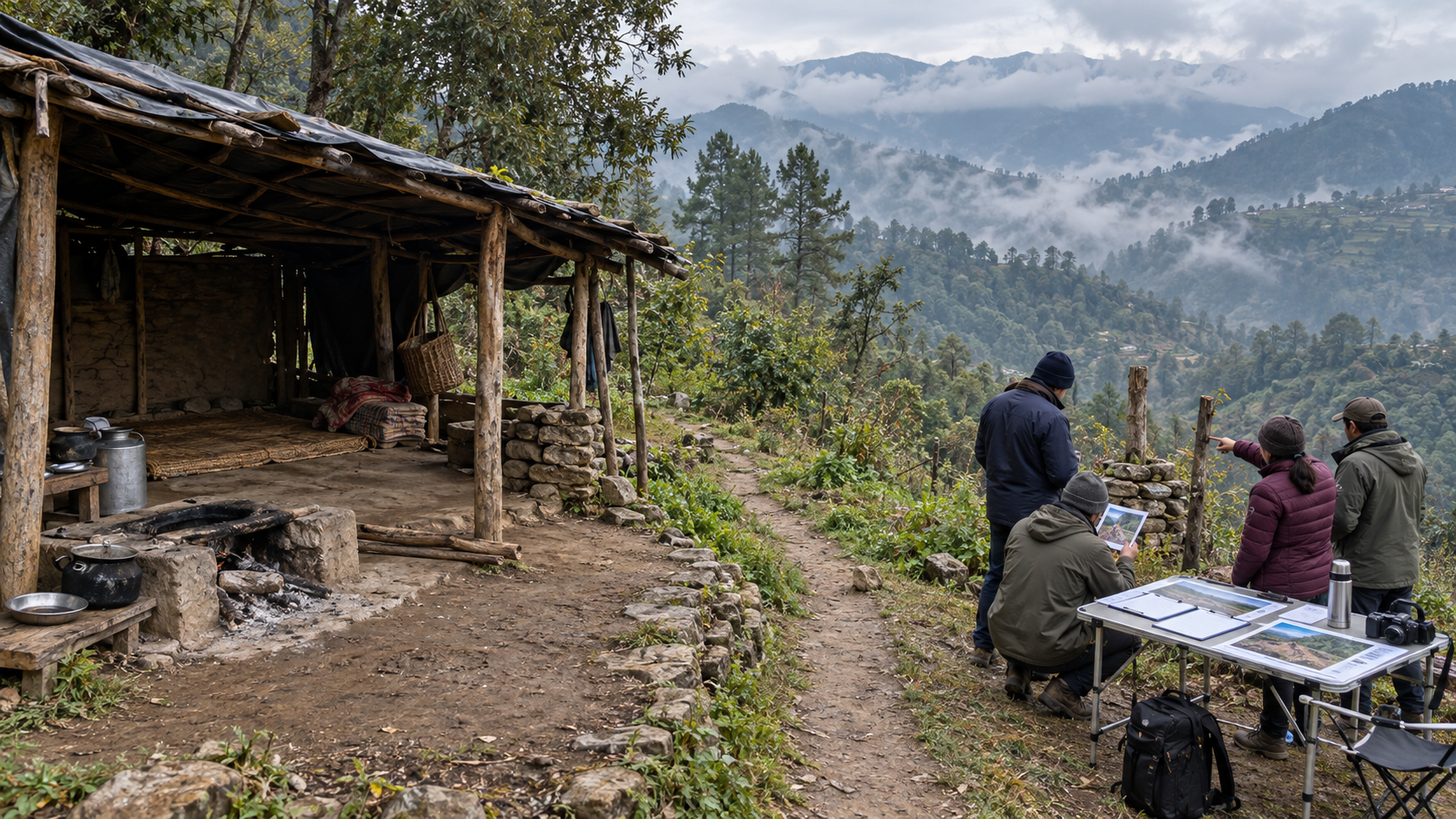
Start with the narrowest defensible statement: eight families were reportedly removed, organisations associated with Hindutva were reportedly involved, and serious accusations were made. Do not silently upgrade "reportedly removed" into "lawfully evicted." Do not turn an allegation of encroachment into a proven land violation. Do not treat a political label as proof of a crime.
The reverse discipline also applies. An unproven allegation is not automatically a false allegation. If residents believe that land is being occupied unlawfully or that local population patterns are changing rapidly, public authorities should examine those concerns through records and publish a reasoned response. Calling every concern communal avoids the factual question just as surely as declaring every accused family guilty.
When you read or share a claim about this case, sort it into one of three categories: reported occurrence, allegation or verified finding. A photograph of a removal may help establish that people were moved; it does not establish who owned the land. A crowd’s accusation may establish that suspicion exists; it does not establish that the suspicion is true. An official order may establish that a decision was issued; you still need its stated basis and the procedure available to the affected people.
This method is slower than outrage, but it prevents a dangerous substitution: identity standing in for evidence. The fact that the families are Muslim does not prove illegality. The fact that the protesting organisations identify with Hindutva does not prove that the underlying concern is fabricated. Each proposition must stand on its own evidence.
Three different disputes are hiding inside the slogans

"Land jihad," "love jihad" and demographic change do not describe the same alleged conduct. Combining them may create a powerful narrative, but it weakens factual scrutiny. Test each claim separately.
The land question requires parcel-level evidence
For every affected household, ask which land is disputed, how its boundary was identified, what record governs it, what right or permission is claimed, and which competent authority ordered removal. The answer may differ from one family to the next. A group label cannot settle title, occupancy, permission or encroachment.
- Identify the exact parcel or area in dispute.
- Ask which land, forest or revenue record is being relied upon.
- Request the order, notice or other authority said to justify removal.
- Check whether each household’s claim was considered individually.
- Separate a final finding from a pending allegation or administrative dispute.
If those items cannot be produced, the correct conclusion is not that occupation was lawful or unlawful. It is that the public has not yet been shown enough to decide. Press the administration for the missing record instead of filling the gap with communal inference.
A demographic claim needs a baseline, boundary and period
Eight households cannot, by themselves, prove a wider demographic transformation. To assess such a claim, you need to know the geographical unit being discussed, the starting and ending dates, the population categories used, and the origin of the figures. Village-level movement, seasonal presence, permanent settlement and district-wide population change are different measurements. Treating them as interchangeable produces heat rather than knowledge.
Even a verified population trend would not establish wrongdoing by a particular family. Demographic data can justify policy questions about services, land pressure, security or representation. It cannot replace an individual determination about someone’s conduct or status.
An allegation about relationships requires individual evidence
The phrase "love jihad" is an accusation, not evidence of what happened between identifiable people. Ask what specific conduct is alleged, who made the complaint and whether a competent authority examined it. Do not infer coercion from the religious identities of two people, and do not infer innocence or guilt from a land dispute involving other members of a community.
Keep the files separate in your mind: a land irregularity does not prove coercion in a relationship, and an allegation concerning a relationship does not prove unlawful occupation. Collective guilt is especially unreliable here because it converts an untested claim about one act into punishment of whole families.
A Dharmic response joins firmness with restraint
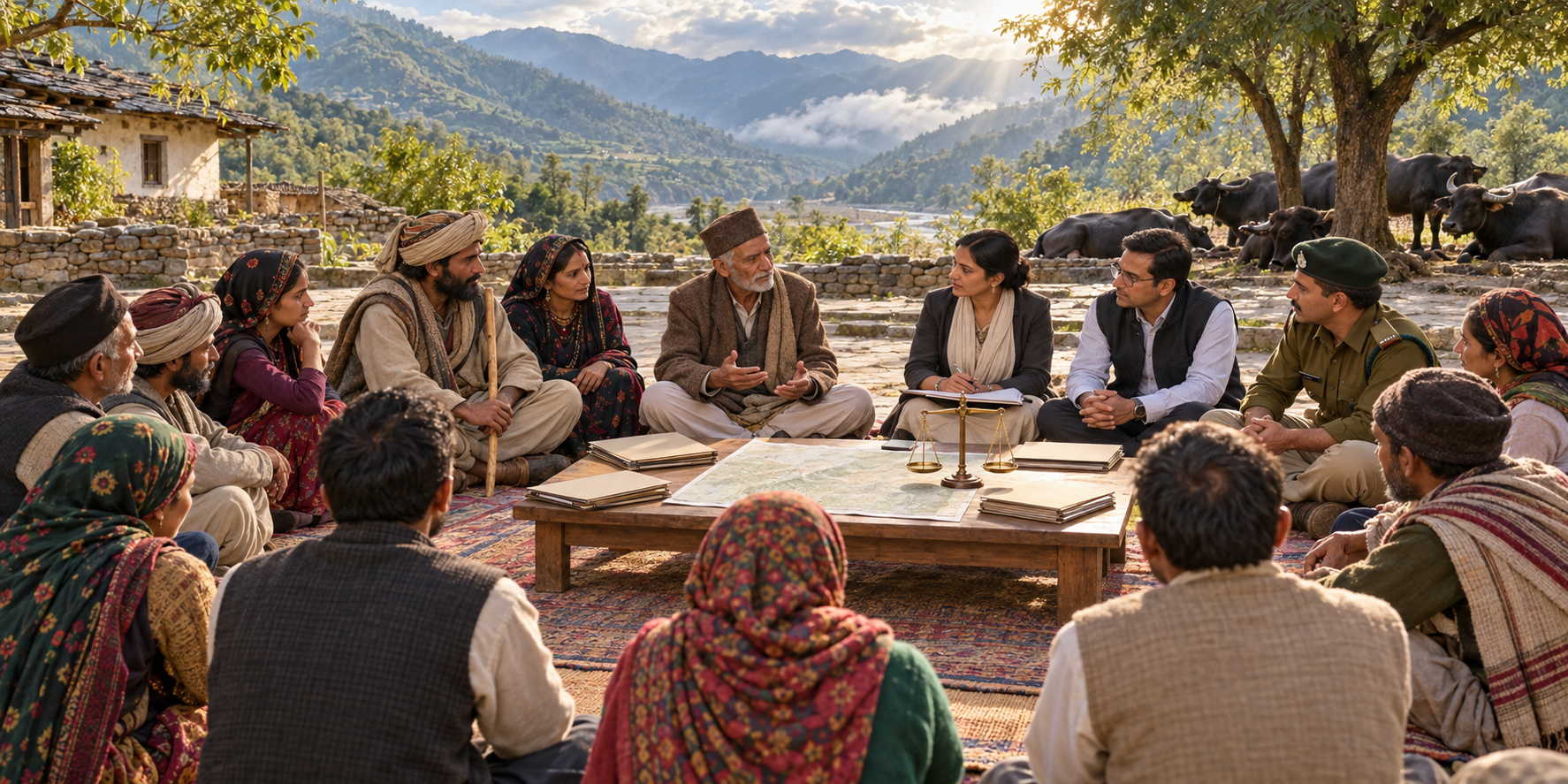
A Dharmic public ethic begins with satya: do not state more than you know. It also requires disciplined power. Concern for Uttarakhand’s land, culture and demographic future is legitimate, but the means used to protect them matter. Dharma is not served when an allegation becomes a verdict merely because a crowd repeats it.
This is not an argument for administrative passivity. If competent authorities establish unlawful occupation, enforcement should follow a stated rule applied consistently. If a household has a valid claim, unresolved status or an available process of review, its members should not be uprooted merely because of religious identity or public pressure. Strong government can distinguish those cases and explain the distinction.
A confident pro-Hindu position should be able to insist on both civilisational continuity and individual justice. It should reject intimidation because uncontrolled force eventually weakens the very idea of ordered duty. It should also reject the habit of suppressing uncomfortable demographic questions. The answer to weak evidence is better evidence; the answer to administrative opacity is transparent administration.
Private organisations can document suspected violations, preserve non-sensitive evidence and petition the competent authorities. They should not treat political or religious affiliation as self-conferred authority to remove households. Physical eviction can cause immediate loss and safety risks, while exposing participants to serious legal consequences. If you are involved locally, do not participate in removal or confrontation; submit the material to the relevant administration and seek qualified legal advice about the specific case.
Key takeaways: what you should demand next

- Demand household-by-household findings. Community identity cannot determine whether a particular occupation is lawful.
- Ask who authorised the eviction. Obtain the order, issuing authority, stated basis and any review process rather than relying on a slogan or crowd assertion.
- Require measurable demographic evidence. A credible claim needs a defined place, time period, baseline and data source.
- Keep unrelated allegations separate. A land dispute, demographic trend and allegation of coercive conduct each require different evidence.
- Do not circulate private identifiers. Publishing addresses, family details or inflammatory accusations can invite harassment without clarifying the facts.
- Press the Uttarakhand administration for a public account. It should explain the status of the affected land, the authority for any removal and how each family’s case was assessed, while withholding information that could endanger individuals.
Until verifiable records are available, use careful language: eight Muslim Van Gujjar families were reportedly evicted in Jaunsar-Bawar, and allegations about land, relationships and demographic change require separate examination. Then direct your energy toward obtaining the records. That is how concern becomes accountable public action rather than communal escalation.
References

Leave a Reply
You must be logged in to post a comment.