
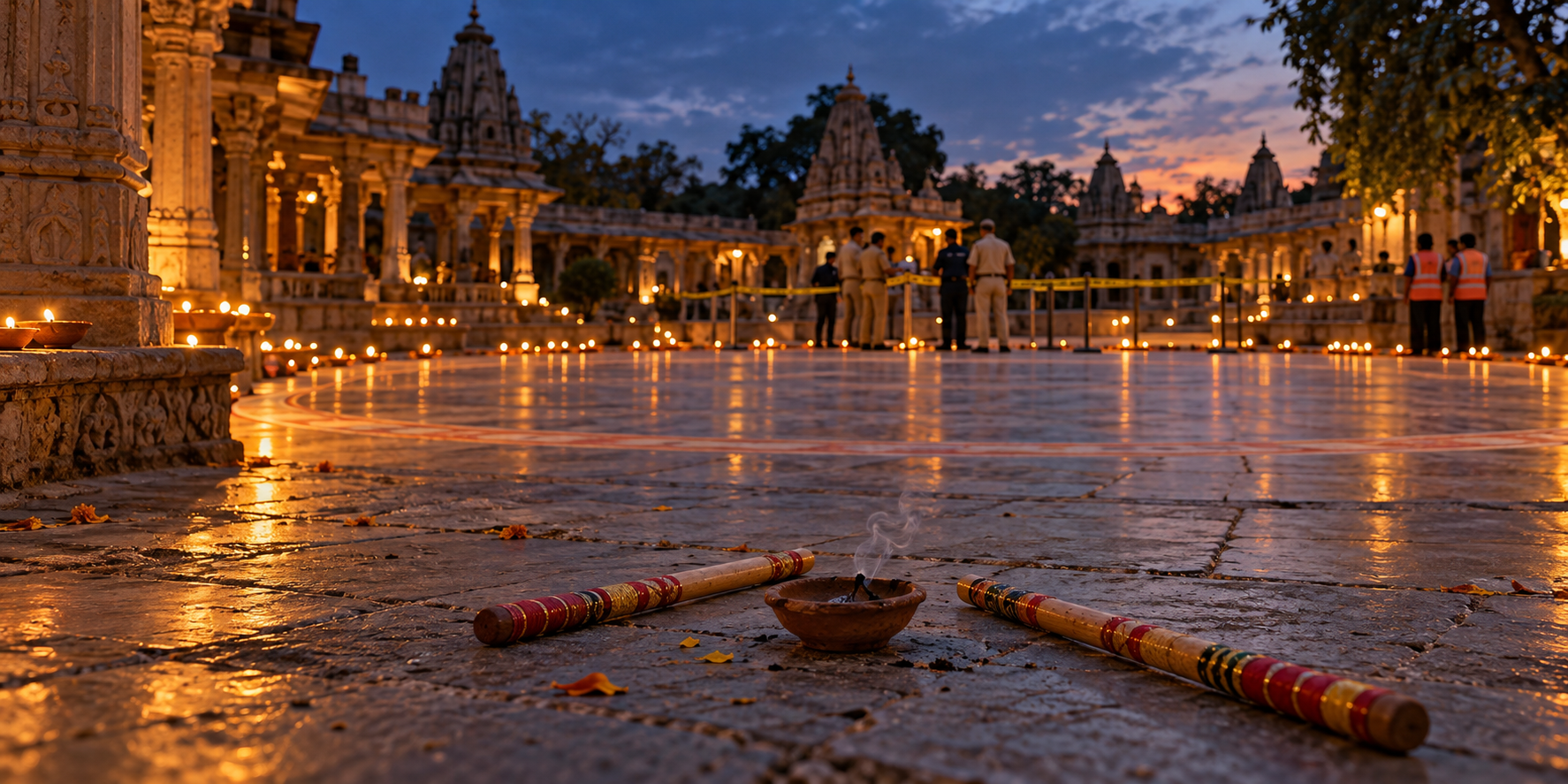
If you came here asking whether the Dakor incident was a communal attack, a dispute over festival rules, or a case already settled by the police, the honest answer is that the known facts do not support a final conclusion. A student is dead. That demands seriousness, evidence and restraint – not a faster slogan.
You can defend the dignity and security of a Hindu religious celebration while insisting that anyone responsible for unlawful violence be held accountable. Those duties do not compete. A community confident in Dharma should be able to demand both.
The reported facts are narrower than the circulating narratives

The narrow factual frame available on 19 October 2026 is this: a Muslim student died after a violent clash with Hindu men in Dakor, in Gujarat’s Kheda district. The confrontation was linked to an alleged Navratri dandiya entry dispute, with 16 people facing police action.
Every word in that description matters. “After” establishes a sequence, but it does not by itself establish the medical and legal cause of death. “Alleged” means the claimed violation and the surrounding account have not been finally proved. “Police action” does not tell you what action was taken against each person, what evidence supports it, or whether any individual will ultimately be found guilty.
Several questions therefore remain open on the information presently available:
- What entry or conduct rule was allegedly violated, and was that rule clearly communicated?
- What was the precise sequence from the initial disagreement to the physical confrontation?
- Who used force, against whom, and at what stage?
- What medical evidence establishes the cause of the student’s death?
- What does the reported police action involve, and what allegation applies to each of the 16 people?
- What do official police, medical and eventual court records establish?
Until those questions are answered, keep your language narrow. You can say that a death followed a clash connected to an alleged dandiya-entry dispute. You cannot responsibly turn that limited account into a proven murder theory, a conspiracy, a planned infiltration, or a verdict against an entire religious community.
A Dharmic response begins with one standard of truth
Satya is not whatever protects your side from embarrassment. Ahimsa is not indifference when someone has died. Justice is not collective retaliation. Applied to Dakor, these principles require us to resist filling factual gaps with assumptions that happen to suit our politics.
A pro-Hindu position does not require defending every Hindu accused of wrongdoing. It requires defending Hindu civilizational values, including disciplined conduct, responsibility and justice based on evidence. If individuals assaulted someone, their religious identity cannot shield them. If allegations against any individual are false or exaggerated, communal anger cannot replace proof.
The same consistency must protect the festival itself. A Navratri gathering is entitled to order, reverence and clearly defined participation norms, subject to applicable law. A disagreement over admission does not make the sacred character of the event illegitimate. At the same time, no breach of an event rule creates a licence for a crowd to beat, punish or endanger a person. Removal from an event must be controlled and lawful.
Use a simple test when evaluating any claim: would you describe the same evidence in the same words if the religious identities were reversed? Then ask whether you are demanding as much proof from people you favour as from people you distrust. If the answer changes with identity, you are no longer applying a Dharmic or evidentiary standard.
Religious identity may eventually prove relevant to motive, organization or context. It should not be erased when evidence makes it material. But the presence of Hindu and Muslim participants does not, by itself, prove that a confrontation was planned or communally motivated. Motive must be established through conduct, statements and reliable evidence.
Key takeaways before you share a claim
- A death is established; culpability is not. Treat the loss of life as grave without assigning criminal responsibility prematurely.
- The dispute is described as alleged. Do not invent the entry rule, the claimed violation or the reason for the confrontation.
- Police action involving 16 people is not a verdict. Responsibility must be determined person by person and evidence by evidence.
- Festival security and legal accountability belong together. Protecting a sacred space never requires tolerating uncontrolled violence.
- Religious labels are not proof of collective guilt. Describe identified actions and substantiated motives, not what you assume a whole community wanted.
- Update your position when stronger evidence appears. An official record, medical finding or court determination should outweigh an early social-media caption.
Before forwarding a clip or message, check whether it identifies Dakor and Kheda district, gives a date, distinguishes allegation from established fact, and links to the full context rather than a cropped image. Look for an official police statement, the relevant complaint or case record, medical findings and later court orders when they become publicly available. Remember that a complaint records an allegation; it is not proof that the allegation is true.
Do not circulate a person’s name, photograph, address, telephone number or college details merely because a message calls that person an accused, witness or victim. Unverified identification can expose uninvolved people to threats and contaminate the public discussion before investigators establish who did what.
Festival organizers can reduce risk without diluting sanctity
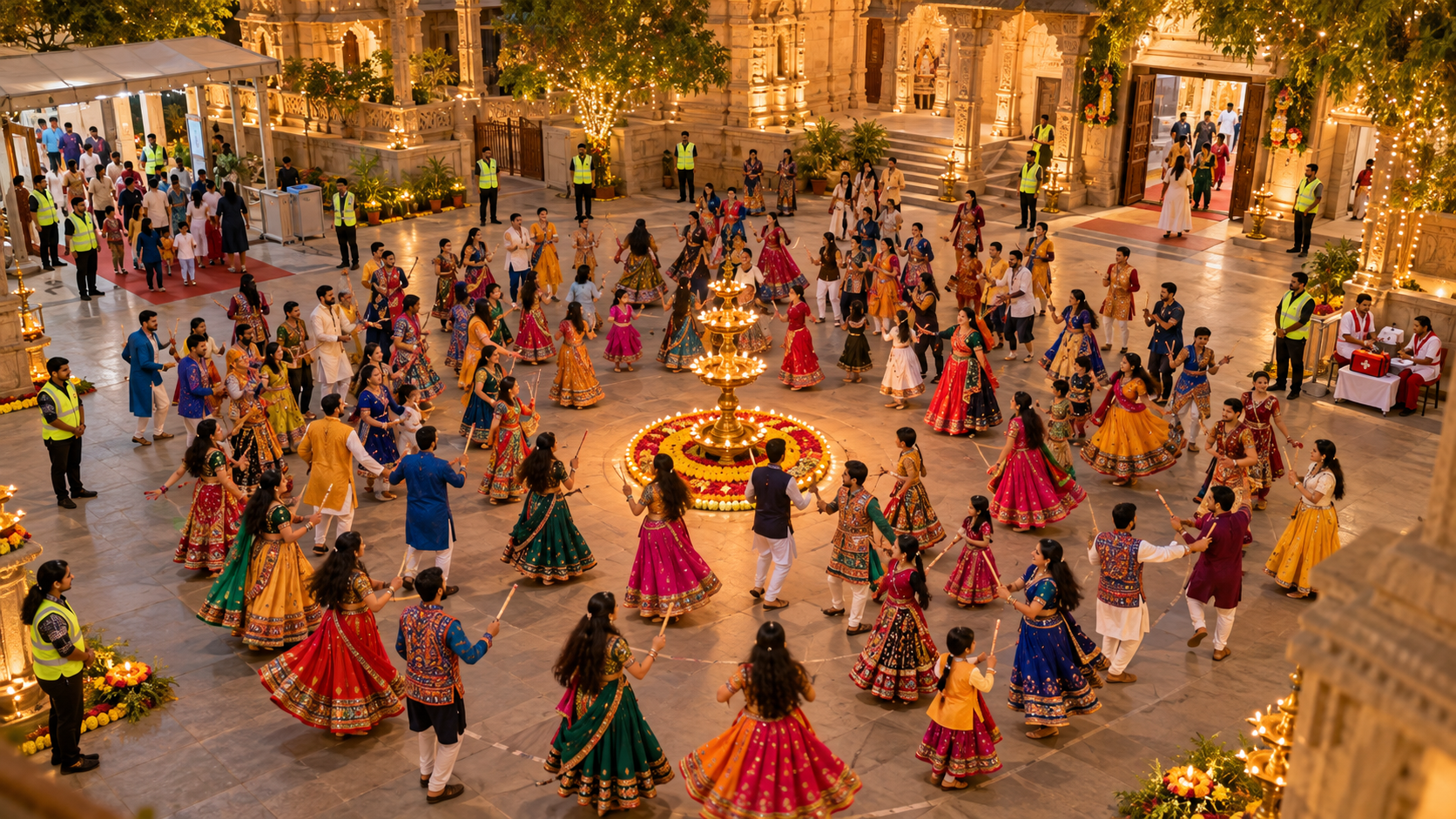
The Dakor case should prompt every Navratri organizer to examine how an admission dispute could move from a gate or dance area into a crowd confrontation. The answer is not to abandon participation rules. It is to make those rules clear and prevent self-appointed enforcers from taking control.
- Publish admission and conduct rules before entry. Put the same wording on invitations, ticket pages and entrance signage. Do not improvise a new condition after a disagreement begins.
- Give enforcement to a named team. Volunteers should know who may deny entry, who may ask someone to leave and who contacts professional security or police. Ordinary participants should never become an ad hoc punishment squad.
- Move disputes away from the crowd. Separate the parties, create physical space and place a trained organizer between them. If there is an immediate threat, contact emergency services rather than inviting more participants into the confrontation.
- Treat injuries before debating blame. Call for medical help promptly, note the time and keep access clear for responders. A later argument about who started the incident must not delay care.
- Preserve evidence in its original form. Retain unedited CCTV files, entry records, staff assignments and written incident notes. Record who handled each file. Do not replace originals with social-media clips or delete material that appears inconvenient.
- Use one careful public statement. Confirm only what organizers directly know, label disputed claims and avoid naming a suspect before the authorities do so lawfully. Promise cooperation, not a predetermined verdict.
- Review the response after the event. Identify the point at which control was lost, revise roles and provide de-escalation training before the next gathering.
These measures preserve the religious character of a celebration because they place responsibility in disciplined hands. Sacred order is not strengthened when the loudest or angriest person at the venue decides who deserves punishment.
Speak for justice without converting one clash into communal guilt
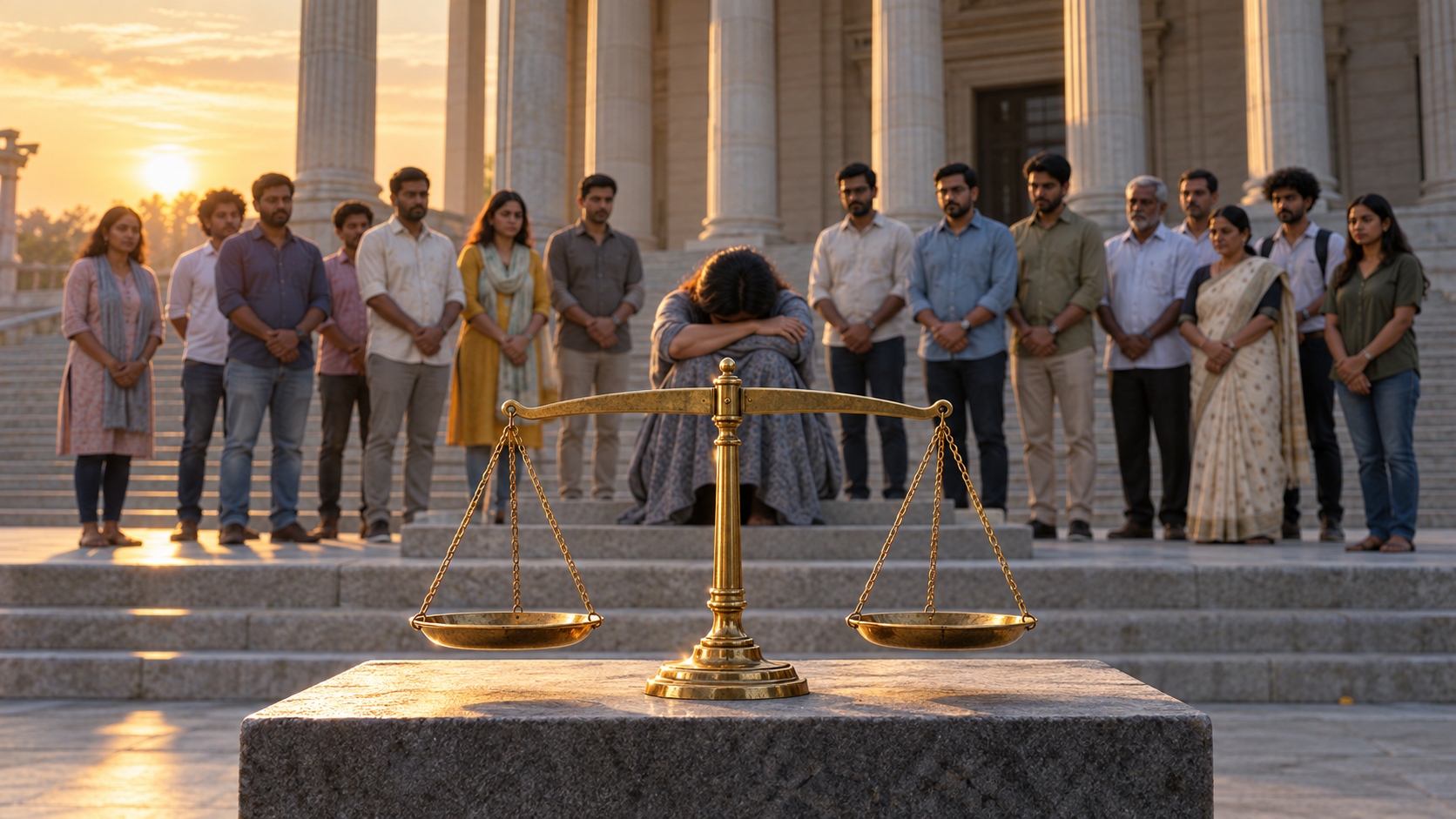
Community leaders do not need to choose between silence and inflammatory certainty. A responsible public position can state the limited facts: a student died following a clash at a Navratri event in Dakor; 16 people reportedly face police action; a transparent investigation and evidence-based accountability are required. It can also affirm the right of Hindu festivals to operate safely and according to clearly disclosed, lawful rules.
Avoid language such as “the Hindus did this” or “the Muslims planned that.” Collective nouns conceal individual actions and turn neighbours who had no connection to the incident into targets of suspicion. Name conduct only when it has been established, and attribute disputed claims to the person or authority making them.
The student’s family deserves dignity rather than the transformation of a death into online ammunition. Witnesses need space to give accurate accounts without intimidation. People facing allegations are entitled to due process. Devotees are entitled to attend Navratri celebrations without fear. None of those commitments requires abandoning any of the others.
Your next useful act is modest but consequential: do not forward a stronger claim than the evidence supports. Ask for the official sequence, the medical findings and the allegation against each person. Correct any earlier message if later facts contradict it. That is how you seek justice for a death while refusing to let uncertainty become fuel for another confrontation.
References

Leave a Reply
You must be logged in to post a comment.