
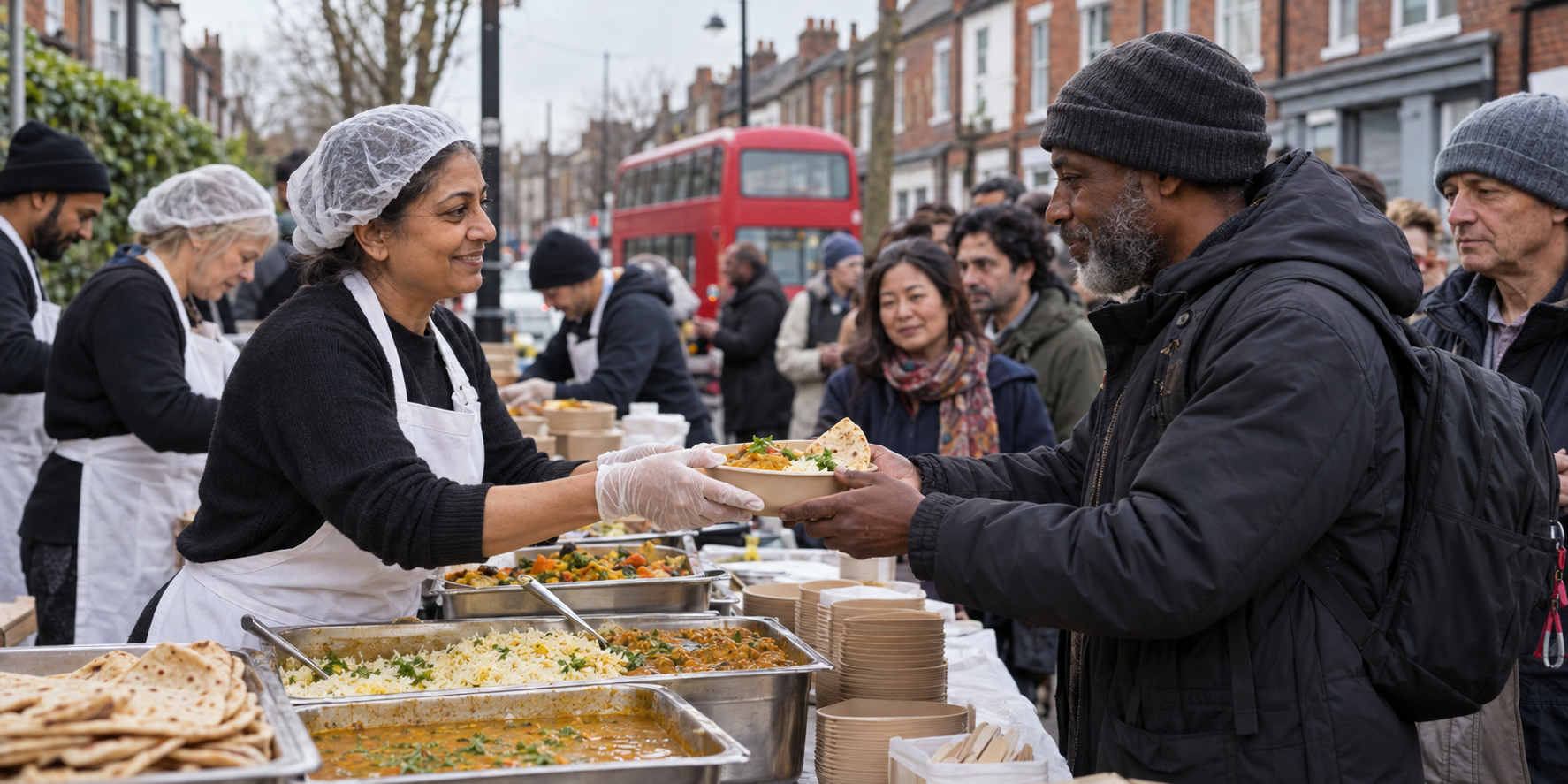
You may have arrived here because you need a meal, want to volunteer, or are wondering whether your mandir can respond usefully to food insecurity in London. In each case, the test is practical: can a person receive suitable food at the promised place and time, without being made to feel small?
Prasadam distribution brings kitchen work, community service and spiritual practice into one act. A London operation has reported preparing 2,000 plates for its regular distribution, following a period during the COVID pandemic when it distributed 5,000 packets each day. Those figures show what organised seva can accomplish. They also raise a harder question: how do you turn a large act of generosity into reliable help for the person who needs food this week?
The need is real, but the numbers must be used honestly
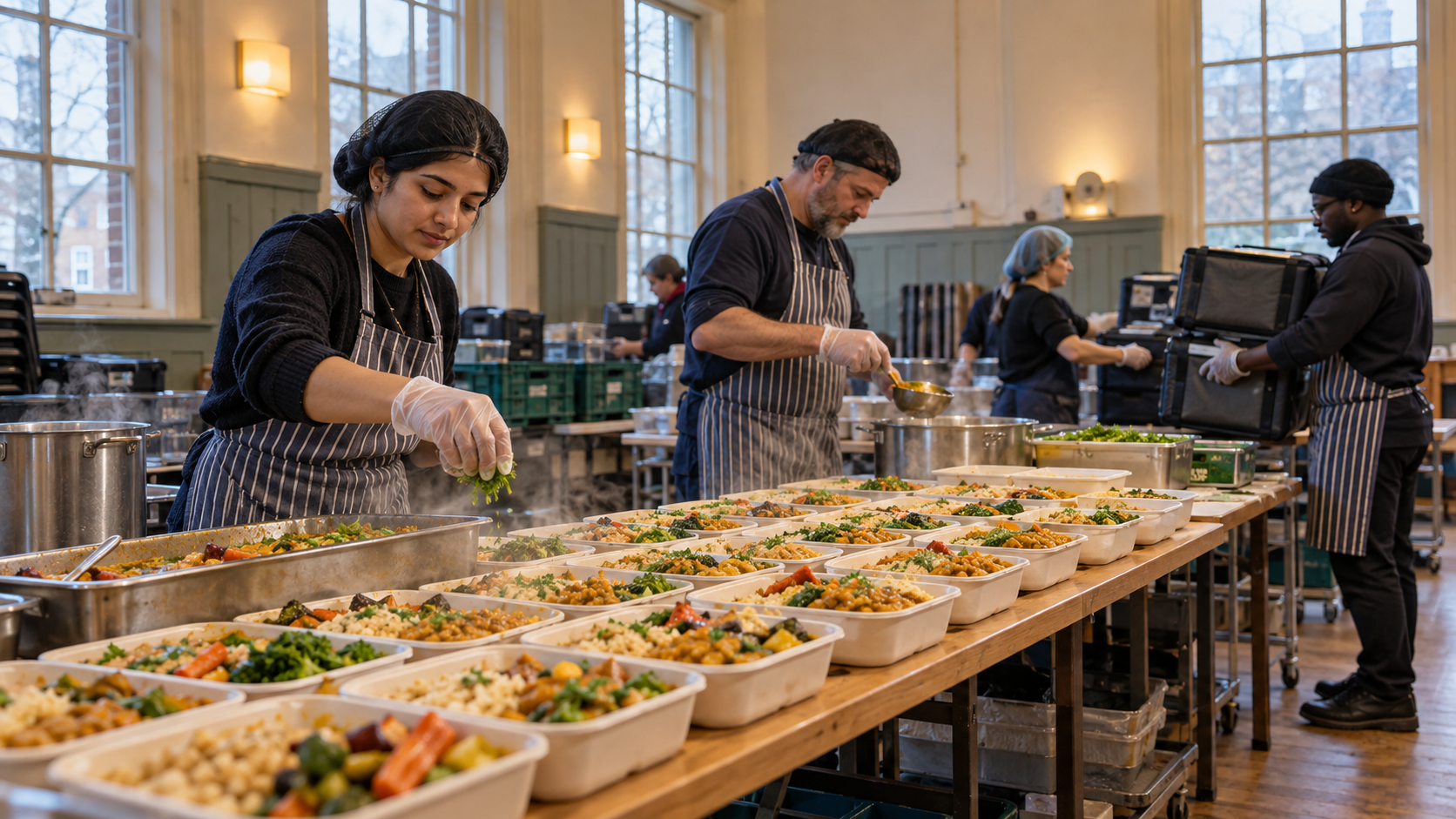
Food insecurity is broader than visible hunger. It means that a household cannot rely on having enough appropriate food because its resources are inadequate or unstable. A family may still eat every day while reducing portions, narrowing what it buys or worrying about whether the next shop can be paid for. That uncertainty is part of the harm.
More than 27% of children in the UK have been reported as living in food-insecure households. Low household income and cost-of-living pressure are central to the wider problem, reflected in the parliamentary briefing on food insecurity.
That figure is national, not a London-specific rate. If you are making the case for a London prasadam programme, do not quietly relabel it as a statistic about London children. Say what it actually establishes: food insecurity affects a substantial share of children across the UK. Then use local distribution records to show what is happening at your own site.
A simple local record can be more useful than an inflated claim. For each service, count meals prepared, meals handed out, food left over and people turned away because supply ran out. Add the reason for any cancellation or delay. You do not need recipients’ names to learn whether demand is exceeding capacity, and unnecessary data collection can deter people who already feel exposed.
If you need food yourself, remember that food insecurity does not have to look like starvation before you ask for help. The practical threshold is much earlier: you cannot obtain enough suitable food reliably. That is reason enough to check what support is available.
What prasadam changes – and what it does not excuse
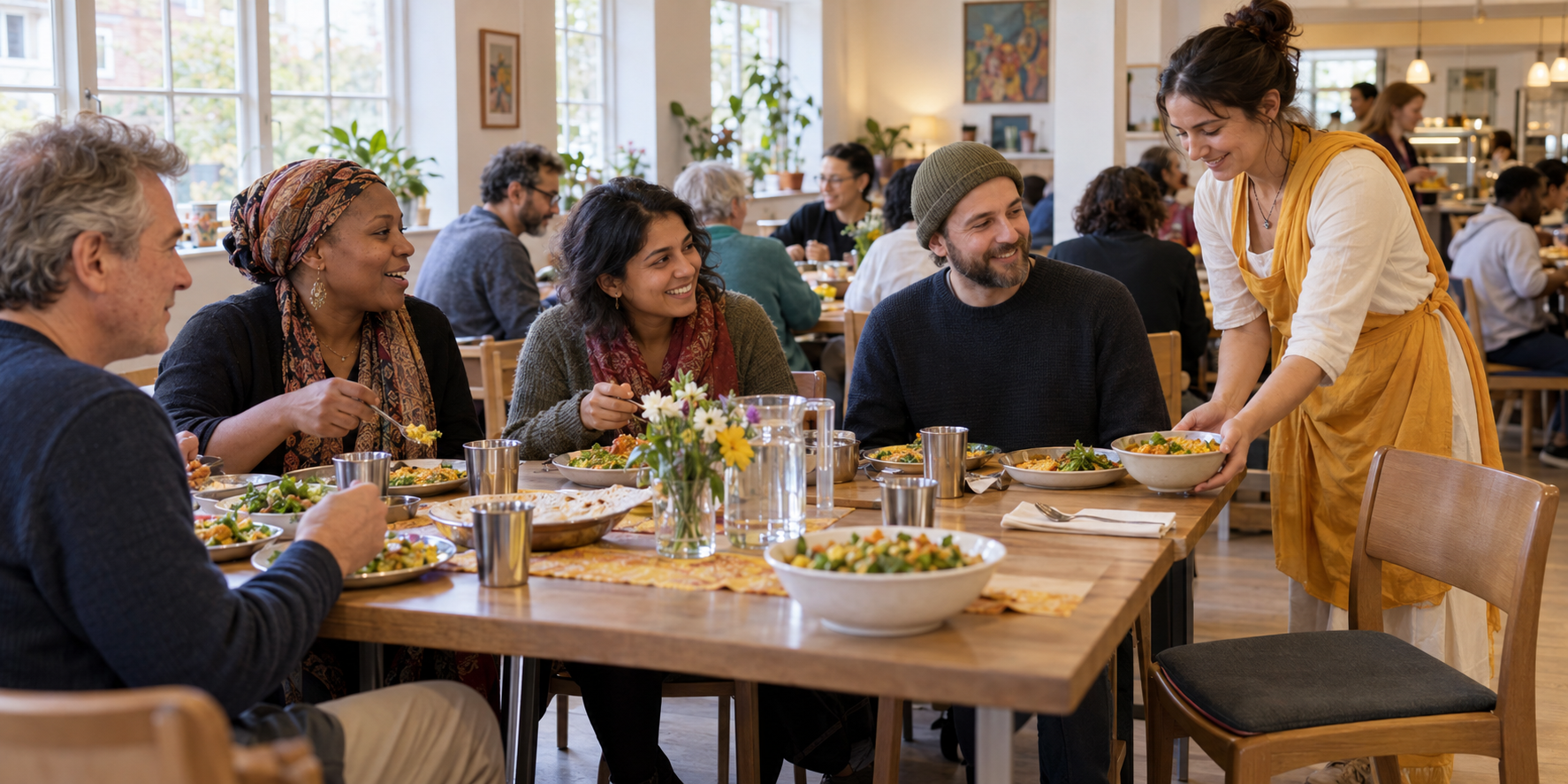
In the Vaishnava understanding, prasadam is food first prepared and offered to Krishna, then received and shared as grace. This changes the moral relationship around the meal. The food is not merely private property handed down by a benefactor. The cook, volunteer, donor and recipient all stand within a relationship of stewardship.
These grains belongs to Krishna. There are so many living entities. Let me distribute.
A.C. Bhaktivedanta Swami Prabhupada, Bombay lecture, 3 January 1973
The important movement in that teaching is from possession to responsibility. If food belongs ultimately to Bhagavan, wasting it while another person is hungry is not neutral. Distribution becomes part of spiritual consciousness rather than an optional gesture performed after one’s own needs have been satisfied.
That sacred meaning should deepen ordinary duties, not replace them. A religious offering is not automatically safe for every person. If you distribute prasadam, provide accurate ingredient and allergen information for the batch being served. Do not assume that the words vegetarian or prasadam answer a medical-allergy question. If you have a serious food allergy and the ingredients cannot be confirmed, do not eat the meal; seek a verified alternative.
Dignity matters in the same way. Explain that the food is prasadam, but do not require a hungry person to profess a belief, join a ritual or listen to a religious appeal before eating. Seva becomes coercive when access to food is used as leverage. A person should be able to receive the meal politely, ask what it contains and leave without interrogation.
This is a specifically Vaishnava form of a wider Dharmic discipline: dana should loosen possessiveness, and seva should be shaped by the real needs of the person served. The holiness of the act is visible in careful cooking, truthful communication, dependable distribution and respect at the serving table.
What London’s large-scale distribution does and does not prove
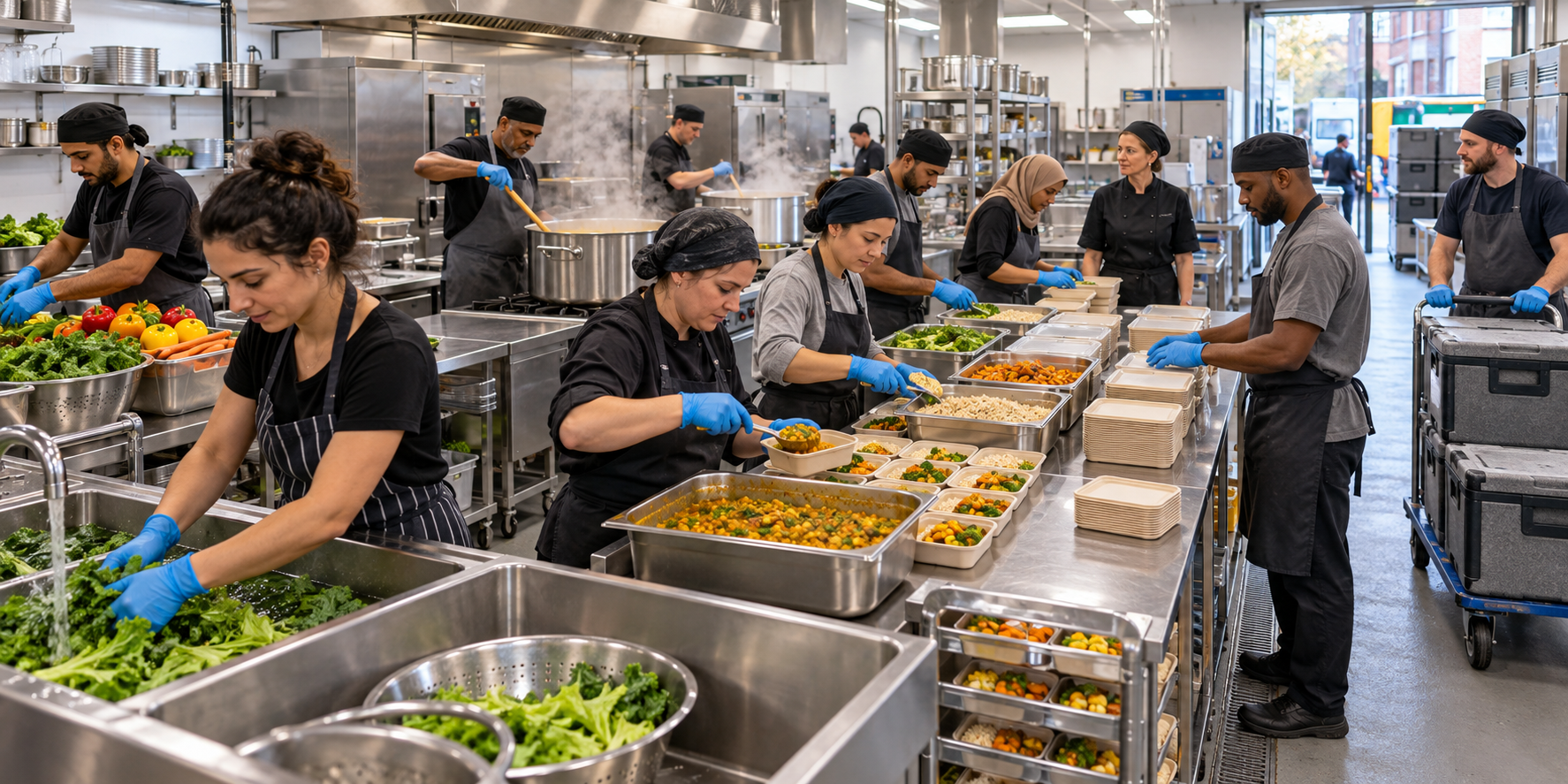
London’s prasadam work offers evidence of substantial operating capacity. During the COVID pandemic, the team behind the initiative reported distributing 5,000 packets daily. Its regular work has been described in terms of 2,000 plates being cooked and distributed. The same effort opened an East London distribution centre called Big Heart and attracted attention and support from local government officials.
These are meaningful achievements, but a production total is not a complete measure of access. It does not tell you how many distinct households were reached, whether opening times matched people’s availability, how many people arrived after the food was gone or whether someone with a dietary restriction could receive a suitable meal. Nor can one organisation’s distribution total be used to calculate the prevalence of food insecurity across London.
If you are evaluating a prasadam programme, ask five concrete questions:
- Reliability: Is the service held at a published time and place, and how are changes announced?
- Access: Can people walk in, or do they need identification, registration or a referral?
- Suitability: Is the offering a hot meal, takeaway packet or grocery parcel, and can recipients check ingredients before accepting it?
- Reach: How many meals were handed out, how often did supply run out and was any prepared food left unused?
- Continuity: Can a person find the next distribution date or a referral to another service before leaving?
Local-government interest can help an initiative build relationships and coordinate support, but it should not be treated as proof that every operational question has been solved. The more useful sign is whether the partnership removes a specific barrier: a dependable venue, a referral route, transport, storage or communication with people who need the service.
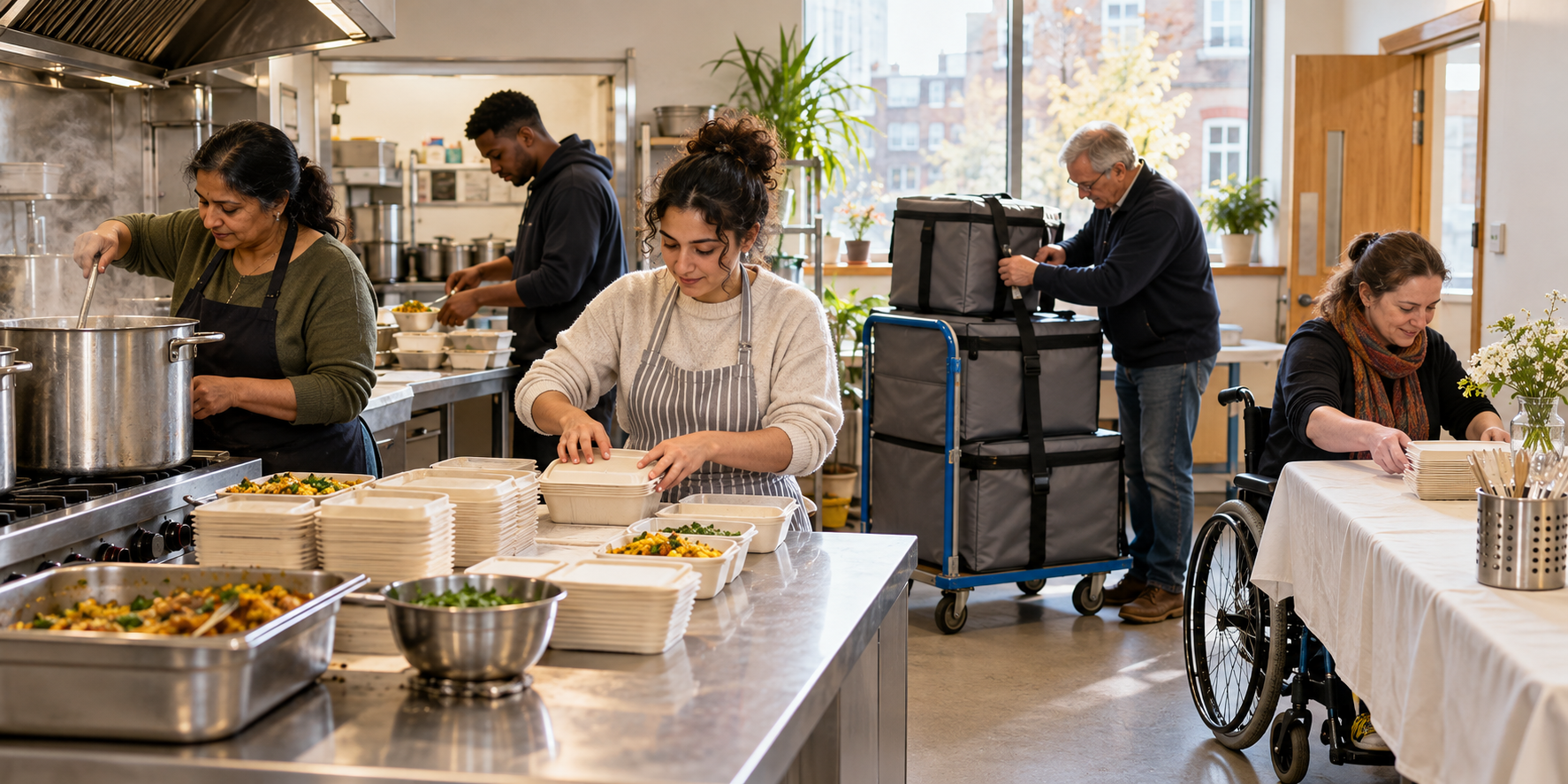
Choose the role you can perform reliably
If you need a meal
Use the initiative’s published details to identify the London team, then confirm the current arrangements before travelling. An account of an East London centre opening is not a permanent timetable.
- Confirm the date, opening time and exact collection point.
- Ask whether the service is walk-in or requires a referral, registration or identification.
- Check whether you will receive a ready-to-eat meal, a takeaway packet or food to prepare at home.
- If you have a medical, religious or other dietary restriction, ask about the actual ingredients before travelling where possible.
- Ask when the next service will run and what alternative is available if supplies have finished.
If your need is urgent and you cannot confirm the prasadam service, contact your borough council or another established local food-support provider rather than making an uncertain journey. Prasadam distribution can be one part of your support network; it should not prevent you from using other available help.
If you want to volunteer or donate
Ask what the operation is short of before arriving with food or offering a few unplanned hours. A kitchen may need packing, driving or cleanup more than another cook. Donated ingredients can also create work when they do not match the menu, storage space or quantity required.
- Ask for the largest current bottleneck: money, specified ingredients, preparation, packing, transport, service or cleanup.
- Choose a shift you can keep. One dependable commitment is more useful than a large promise followed by a late cancellation.
- Before donating ingredients, confirm the exact item, quantity, acceptable packaging and delivery time.
- If donating money, use the organisation’s official route and retain the transaction record.
- Ask how schedule changes are communicated so your time and the kitchen’s planning are not wasted.
The best first message is short: state your location, availability, transport capacity if relevant and the kind of task you can perform. Let the coordinator match that offer to the service rather than making them extract the useful details through several exchanges.
If your Dharmic centre wants to begin distributing food
Start with a service promise small enough to keep. A weekly distribution that happens as announced is more useful than an ambitious launch followed by irregular openings. Write the promise in one sentence before buying supplies.
Service promise template: Every [day] from [time] at [place], [organisation] offers [type of meal] while supplies last; contact [method] for access and ingredient information.
Then build the minimum system needed to honour it:
- Assign one coordinator who can confirm whether each service will proceed and publish changes promptly.
- Set a realistic meal capacity based on the kitchen, volunteers, transport and serving window.
- Keep the recipe and ingredient information for each batch available at the point of distribution.
- Follow the food-safety and allergen requirements that apply to your operation; devotion does not substitute for competent kitchen practice.
- Record meals prepared, meals served, leftovers and unmet demand without collecting unnecessary personal information.
- Tell every recipient when the next service is expected and where else they can seek help if you cannot meet the need.
- Review the first services before expanding. Increase capacity only when the existing promise is being kept consistently.
Separate routine capacity from emergency capacity. The reported distribution of 5,000 packets a day during the pandemic shows that a surge can be possible, but it does not mean that the same staffing, funding or logistics will exist indefinitely. Build a standing service around resources you can sustain, with a separate plan for exceptional demand.
Key takeaways
- More than 27% is a UK child food-insecurity figure; do not present it as a London-specific rate.
- Prasadam turns food sharing into spiritual stewardship, but sacred intent never removes duties of safety, clarity and dignity.
- London’s reported totals show major production capacity, not complete coverage of need or proof that every meal is accessible.
- If you need food, confirm the current time, place, access conditions and ingredients before travelling.
- If you want to help, offer one precise and reliable contribution instead of an uncoordinated donation.
- If you organise a service, publish a promise you can keep and measure prepared food, distribution, leftovers and unmet demand separately.
Your next action can be modest and still matter. If you need food, make the confirmation call. If you want to serve, take one dependable shift or supply one requested item. If you run a Dharmic centre, publish one clear service window and keep it. Prasadam answers food insecurity most faithfully when grace becomes food that a person can actually reach, safely receive and eat with dignity.
References
- Dandavats – Increasing Prasad Distribution in London amid a ‘Food Crisis’
- BBC News – UK child food insecurity coverage
- House of Commons Library – Research briefing CBP-9209

Leave a Reply
You must be logged in to post a comment.