
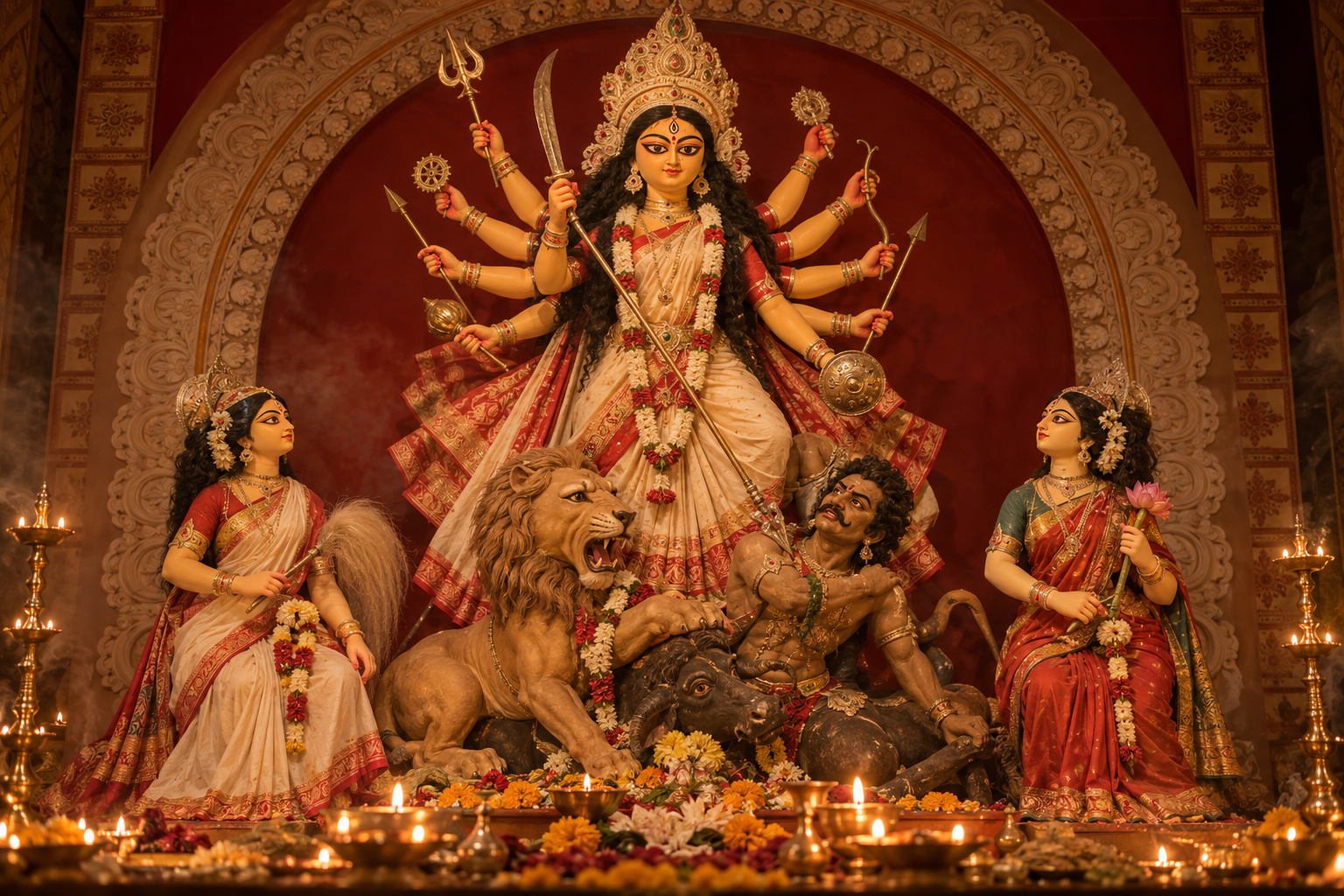
If you have stood before a Bengali Durga tableau and wondered about two female figures beside the Mother, do not identify them by size or ornament alone. In an established Bengal convention, they are Jaya and Vijaya. Their position, weapons and service to Durga tell you more than their decoration does.
Once you know what to notice, they stop looking like minor additions. They reveal how the tableau presents divine protection: power is centred in Durga, yet it also extends outward through vigilant attendants.
Key takeaways
- Jaya and Vijaya are female attendants who may appear on either side of Durga in Bengali Durga Puja imagery.
- Where they carry Durga’s weapons or assist her martial action, those functions are stronger identifying clues than clothing or ornament.
- The pair expresses protection through balance and complementary service, not necessarily through an opposition between two fixed qualities.
- They are often included, not universally required. Confirm the identity locally before labelling an unfamiliar tableau.
How to identify Jaya and Vijaya in a Durga tableau
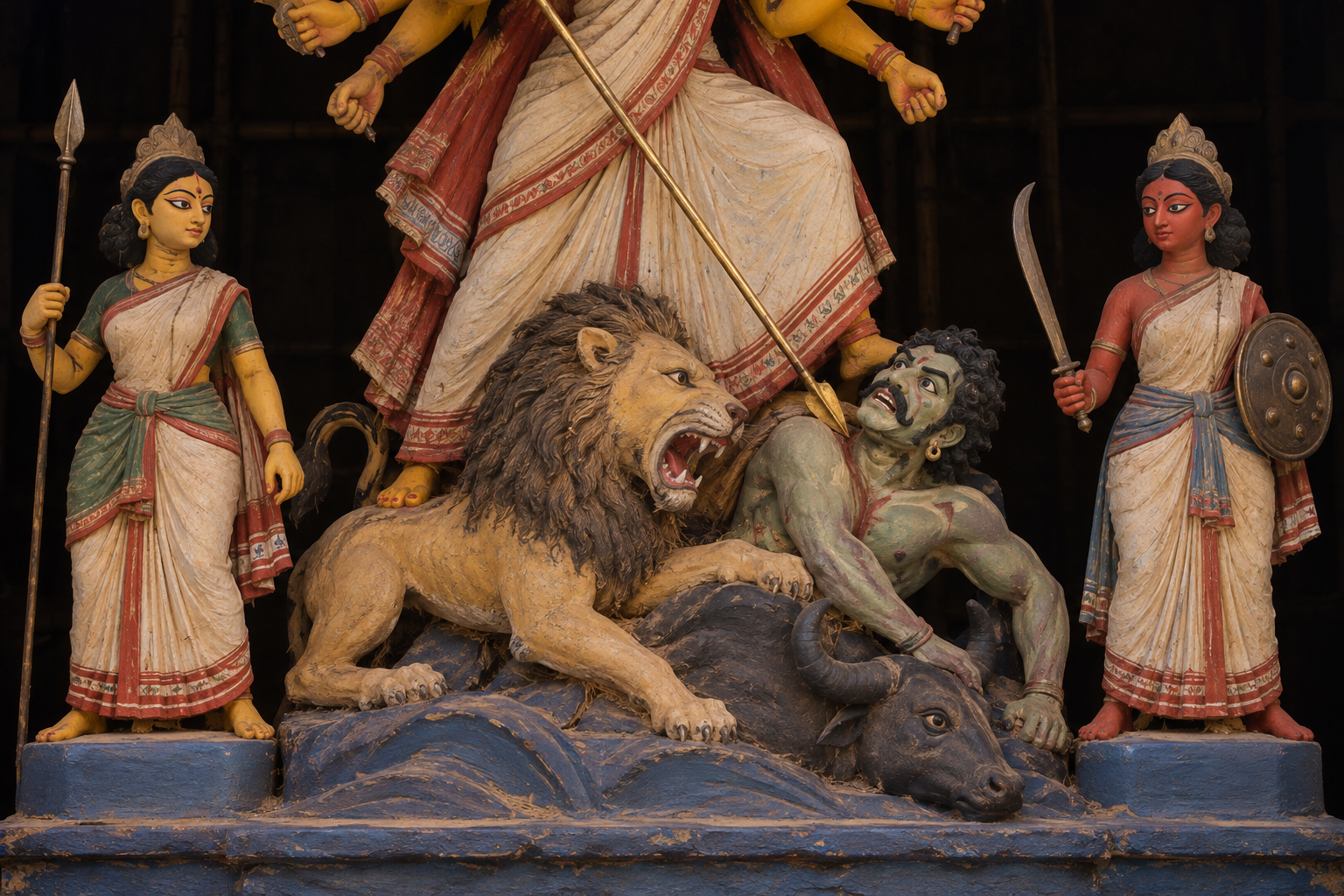
Begin with the composition rather than a single face. In this Bengali iconographic convention, the ten-armed Mother is flanked by Jaya and Vijaya as female attendants who hold her weapons and assist her in battle. Their identity therefore rests on a combination of placement and function.
- Locate Durga as the centre of the tableau. Read every surrounding figure in relation to her rather than as an isolated image.
- Look immediately to the two sides of the Mother for a female pair. A balanced position around Durga is the first clue.
- Check what the figures are doing. Weapons, readiness and participation in Durga’s action are more significant than jewellery, colour or relative size.
- Read the two figures together. Jaya and Vijaya form a paired protective presence; identifying only one figure without accounting for its counterpart is less reliable.
- If a label, artisan or puja organiser identifies the figures differently, follow that local explanation. Bengali tableaux can vary, and not every female figure beside Durga must be Jaya or Vijaya.
The word “often” matters here. Their absence does not make a Durga image incomplete, and their presence should not be assumed in every arrangement. If you are writing a caption, teaching children or documenting a neighbourhood puja, ask the organisers before attaching names to the figures.
What the two attendants add to the image of Durga
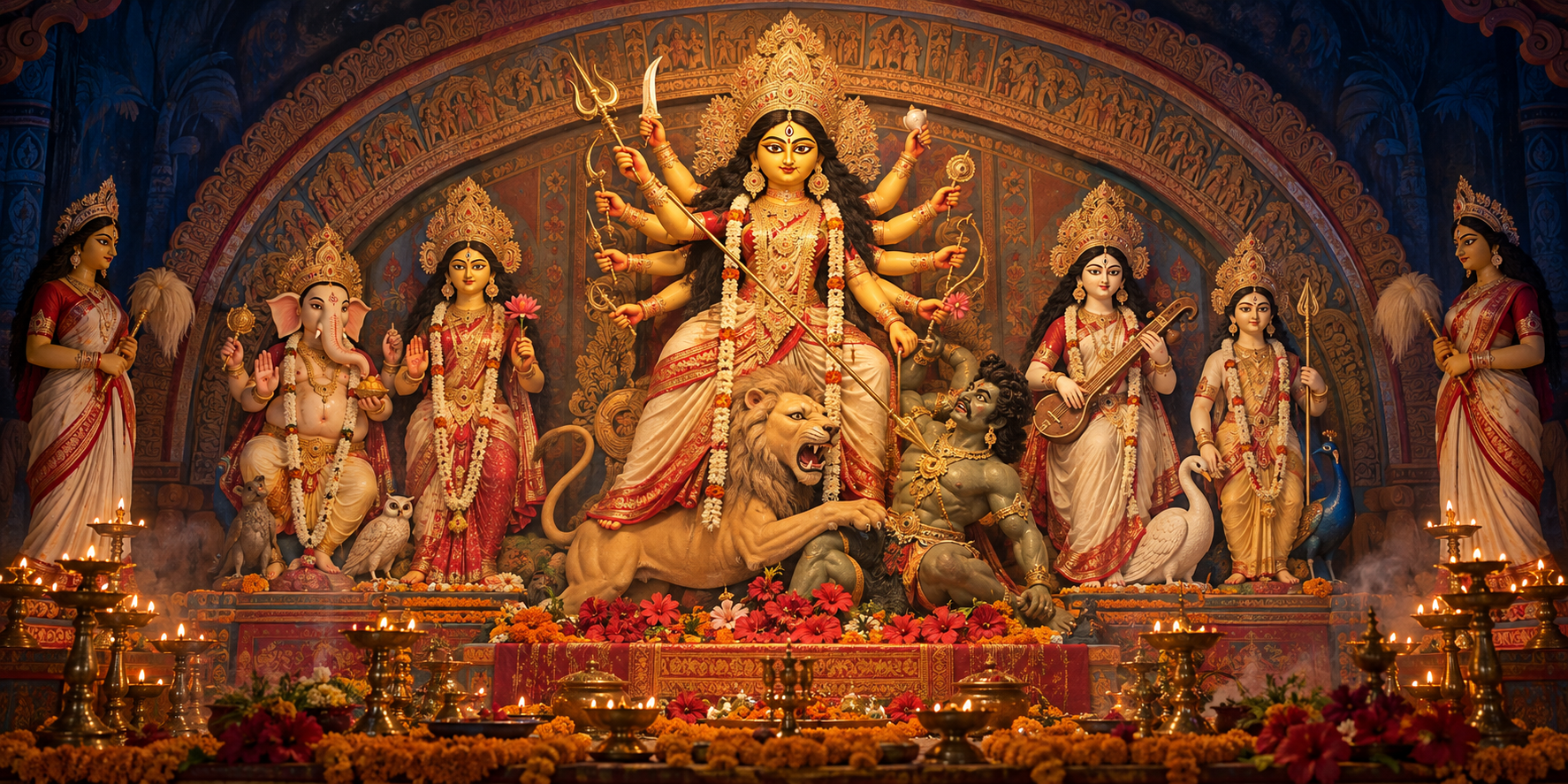
Jaya and Vijaya matter because of their relationship to the Mother. They do not compete with Durga for the centre. As attendants and sentinels, they make the reach of her protection visible at the edges of the composition.
The weapons sharpen that meaning. A weapon-bearing attendant is not merely standing nearby; she is participating in the ordered defence surrounding Durga. The tableau can therefore be read as coordinated divine action: the Mother directs the struggle, while her companions carry and support its instruments.
The pair also gives protection a twofold form. One figure on each side produces balance, vigilance and a sense that the sacred centre is guarded in more than one direction. That is a sound visual reading. It is not necessary, however, to assign one attendant an invented quality and the other its opposite. The duality lies first in their complementary presence.
Their names belong to the Sanskrit vocabulary of victory, which fits their place beside the victorious Goddess. Yet the names alone do not supply two separate biographies or a fixed catalogue of attributes. In the Bengali Puja setting, what you can see clearly is their shared service to Durga.
How to interpret the pair without overclaiming
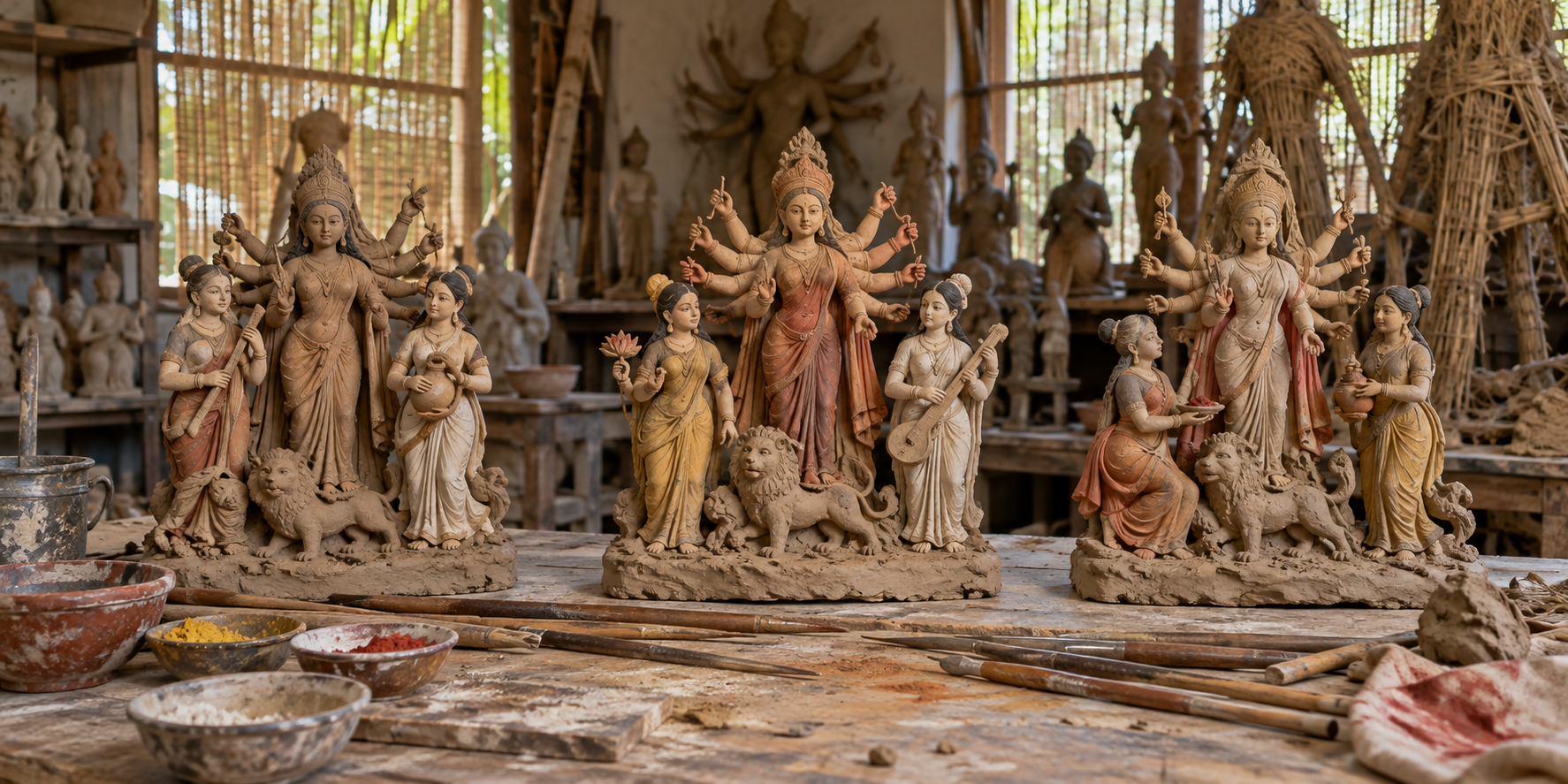
Sacred art invites interpretation, but a useful explanation should distinguish what the tableau shows from what a viewer adds to it. Use this sequence when you examine or describe Jaya and Vijaya:
- State the visible facts first: two female figures flank Durga, and they may hold weapons or take part in her martial action.
- Explain the relationship next: their placement makes them attendants and protective sentinels rather than independent focal figures.
- Draw only the interpretation that the arrangement can carry: the pair suggests balanced vigilance, complementary service and the outward extension of Durga’s protection.
- Separate a local explanation from a universal claim. If one puja committee gives the figures particular colours, attributes or meanings, describe those as features of that tableau unless you have evidence that the convention is broader.
This method protects two things at once. It respects the devotional meaning of the image, and it prevents a striking local choice from being turned into an unsupported rule for every Durga Puja.
See the tableau from the centre to its edges
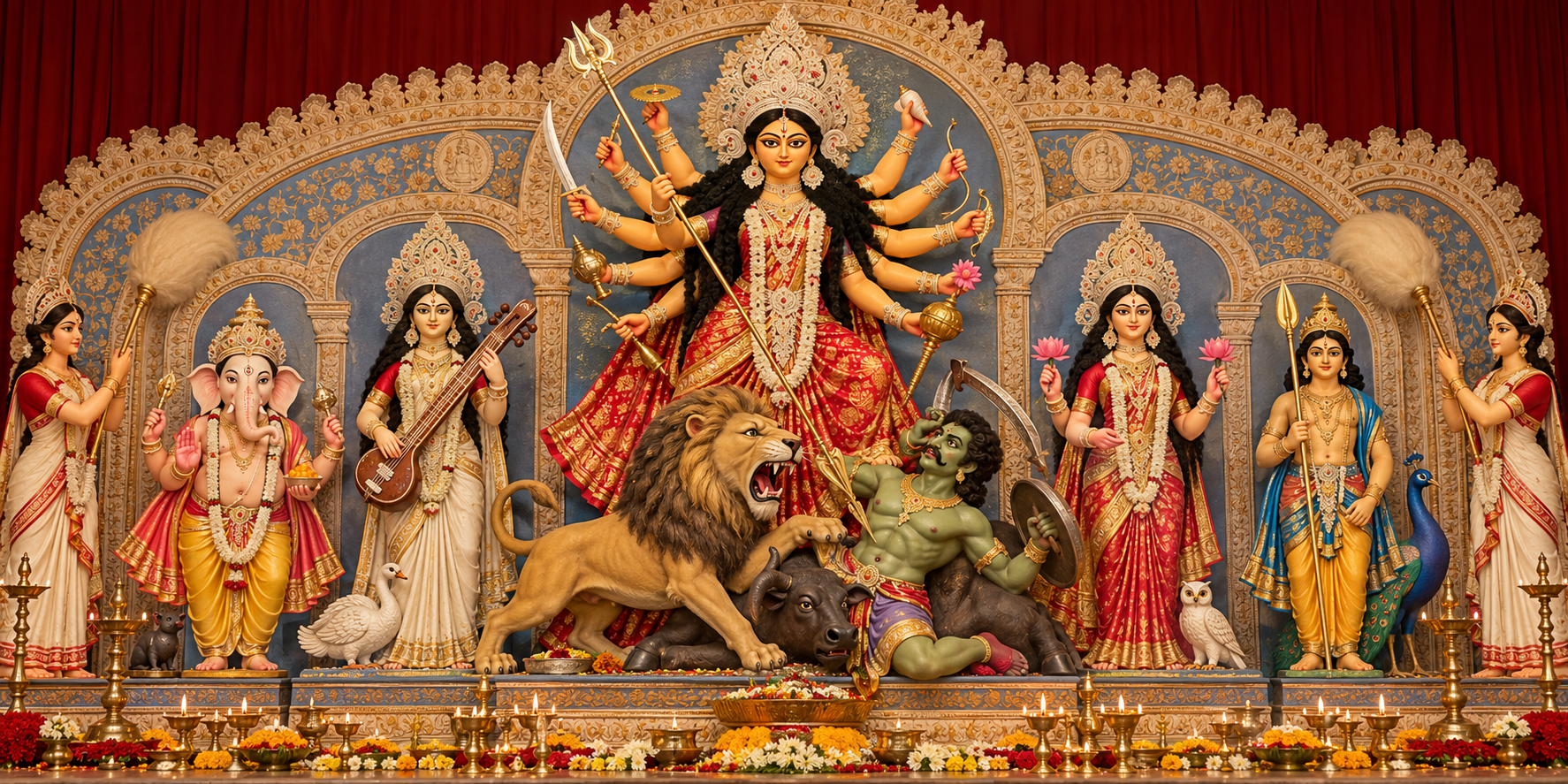
When you next visit a Durga Puja, give the outer figures a full minute before moving on. Find the paired attendants, notice whether their weapons and positions serve Durga’s central action, and ask their names if the display is unfamiliar. You will begin to see the tableau not as a collection of decorative figures, but as an ordered field of Shakti in which guardianship, service and victory surround the Mother.
References

Leave a Reply
You must be logged in to post a comment.