
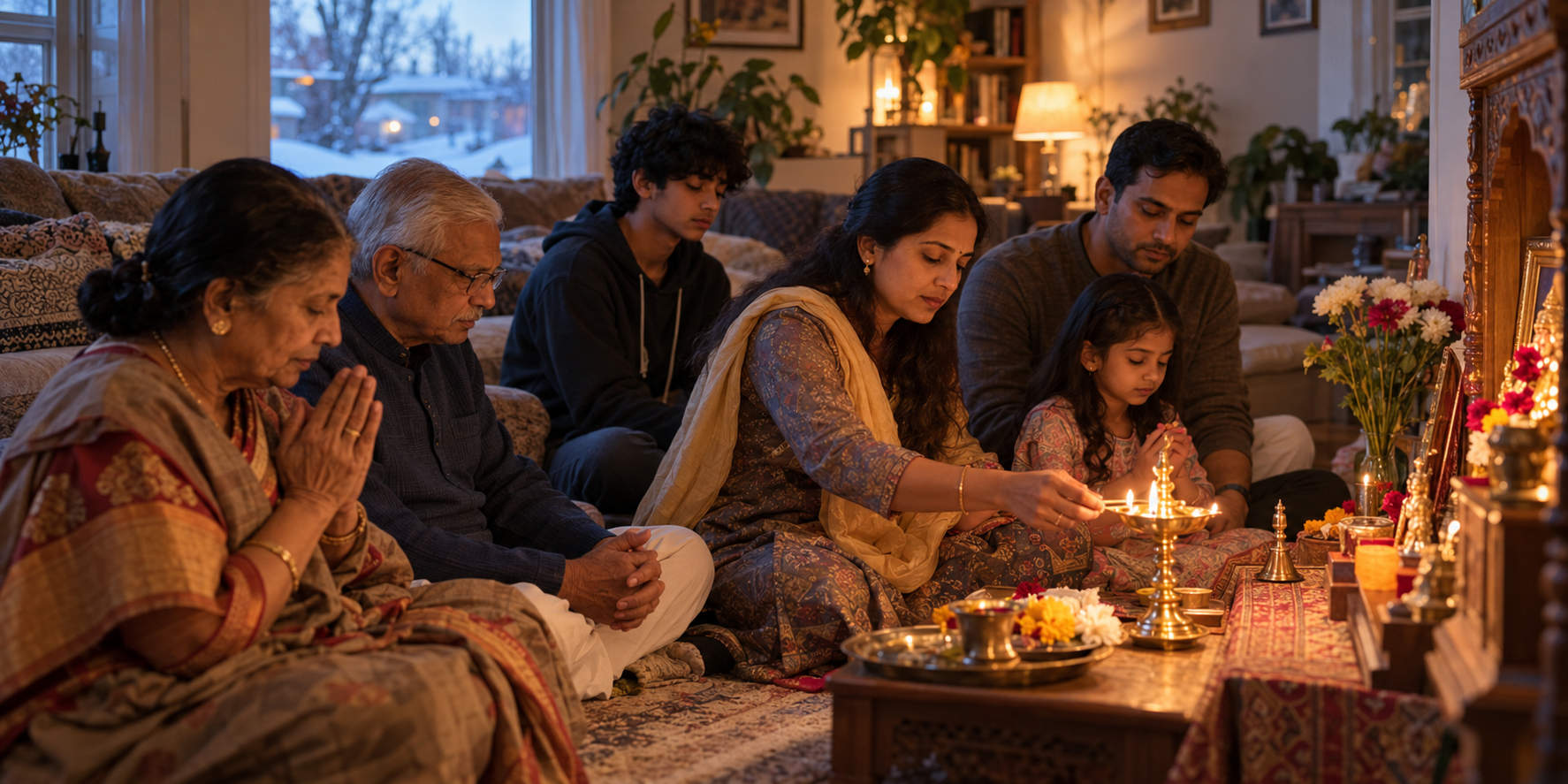
Your children may recognize a festival, repeat a greeting, and enjoy the food, yet still be unable to say what your family actually practises on an ordinary day. That is the diaspora parent’s difficult question: are you passing on a spiritual path, or only affectionate memories of one?
Migration rarely erases inherited identity in one dramatic moment. The quieter danger is that spiritual life becomes a private background identity: respected and occasionally displayed, but no longer allowed to organize time, conduct, service, or family decisions. You do not have to recreate India abroad to prevent that. You need a spiritual centre clear enough to guide what your household does with the life available to it.
Name the spiritual centre before defending the culture
Families often try to preserve everything at once: language, cuisine, clothing, music, social manners, festivals, family hierarchy, ritual, and faith. When that becomes exhausting, spiritual practice is easily reduced to special occasions. The problem is not that culture is unimportant. Cultural forms carry memory and make practice feel at home. But not every inherited habit has the same spiritual weight.
Sort what you inherited into three working categories:
- Spiritual commitments: the prayers, disciplines, ethical restraints, teachings, forms of worship, and paths of service that connect your family to its tradition.
- Cultural carriers: language, music, food, dress, architecture, and festival customs that help those commitments become tangible.
- Household preferences: practices your particular family follows, but which you should not automatically present as universal religious requirements.
This distinction prevents two common mistakes. The first is treating every regional or family custom as sacred and then making children feel irreligious when they cannot reproduce it abroad. The second is keeping the attractive cultural shell while allowing prayer, discipline, and moral formation to disappear.
Complete this sentence together: In this house, our tradition changes how we use our time, how we treat people, and what we serve. Then make the answer concrete. Ask:
- Which practice should remain visible even during a busy week?
- Which teaching should guide conduct when nobody from the community is watching?
- Which observances genuinely belong to our lineage?
- Which customs are meaningful family inheritances rather than obligations for everyone?
- Where do we go when we do not know the meaning of a practice?
Do not settle disagreements by asking who remembers India most fondly. Ask which choices can be explained, practised, and sustained. A tradition survives through disciplined continuity, not through the loudest nostalgia.
If your household contains more than one Dharmic lineage, clarity is kinder than forced sameness. Keep distinct prayers, texts, teachers, and observances named correctly. Then identify household commitments you can share, such as truthfulness, restraint, generosity, reverence, and service. Shared ethical life can unite a family without pretending that Hindu, Buddhist, Jain, and Sikh doctrines or rituals are interchangeable.
Make practice visible, sustainable, and teachable
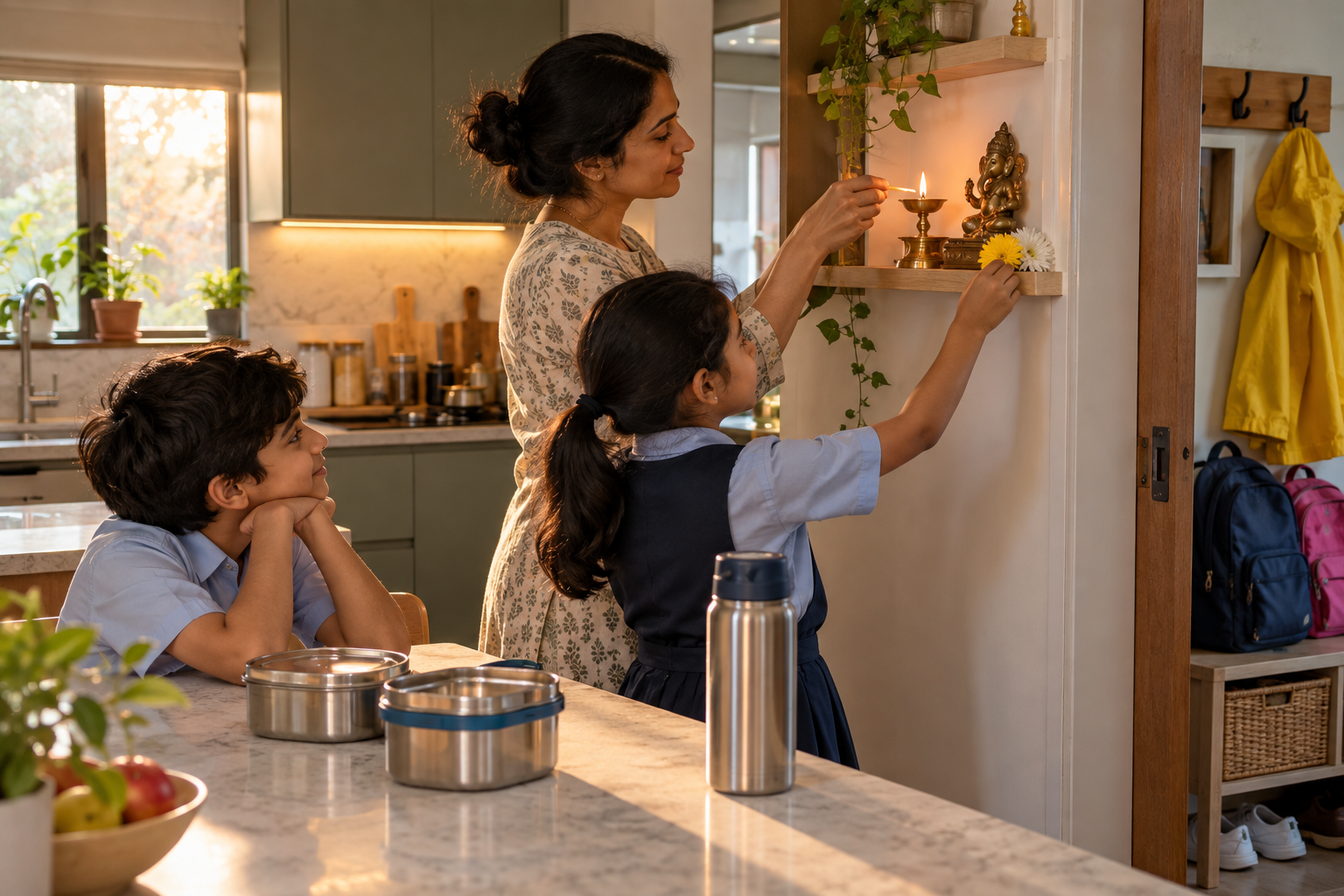
Set a household rule that survives ordinary life
A spiritual routine designed only for quiet weekends will fail during school deadlines, travel, illness, and demanding work. Establish a minimum household discipline: the smallest repeatable pattern that still unmistakably belongs to your tradition.
Build that rhythm from the following elements, choosing the forms appropriate to your lineage:
- A daily anchor: puja, japa, paath, simran, meditation, svadhyaya, recitation, or silent reflection at a dependable point in the day.
- A recurring period of depth: shared worship, scriptural learning, satsang, sangha, or a family discussion that goes beyond hurried recitation.
- A form of service: work for a congregation, care for someone in need, hospitality, dana, or another discipline that turns values outward.
- An observance calendar: decide in advance which festivals, fasts, commemorations, and holy days your household will actually keep.
- A relationship of learning: maintain contact with a trustworthy teacher, elder, or established community that can correct misunderstandings.
Do not launch every element at once. Begin with a daily anchor and a recurring communal commitment. Once those have become normal, add the calendar and service obligations. Ambitious routines that repeatedly collapse teach the family that dharma is an occasional project. A modest discipline that continues through busy periods teaches that it belongs to life itself.
Give the practice a physical cue. Keep the required text, mala, lamp, prayer book, or meditation seat ready rather than scattered through cupboards. The space need not be expensive or elaborate. Its purpose is to remove the small friction that turns an intended practice into a postponed one.
Teach meaning without turning home into an examination hall
Children need more than instructions to bow, repeat, or attend. During a practice, explain four things in plain language:
- What are we doing?
- Whom or what are we remembering?
- How should this affect our conduct after the ritual ends?
- Which part comes from our lineage, and which part is our family’s way of expressing it?
If you do not know an answer, say so. Write down the question and take it to a qualified teacher or a trusted edition of the relevant text. Honest inquiry strengthens transmission. Improvised certainty passes confusion to the next generation.
Do not make fluency in a heritage language the admission ticket to spiritual life. Preserve the exact words and pronunciation of core prayers as carefully as you can, while also giving the meaning in the language your children understand best. Language can then become a bridge into practice rather than a test they must pass before being allowed to belong.
Give every family member genuine responsibility. A child can prepare the worship space, lead a familiar refrain, read a translation, remember an observance, help with a community meal, or take part in seva. Correct mistakes without ridicule. When adults perform everything while children merely watch, the unspoken lesson is that dharma belongs to the older generation.
The adult example matters just as much. If children are required to pray while their parents remain absorbed in their phones, they learn that the rule is about obedience rather than devotion. Let them see that the practice also claims your attention.
Use the new country’s strengths in the service of dharma
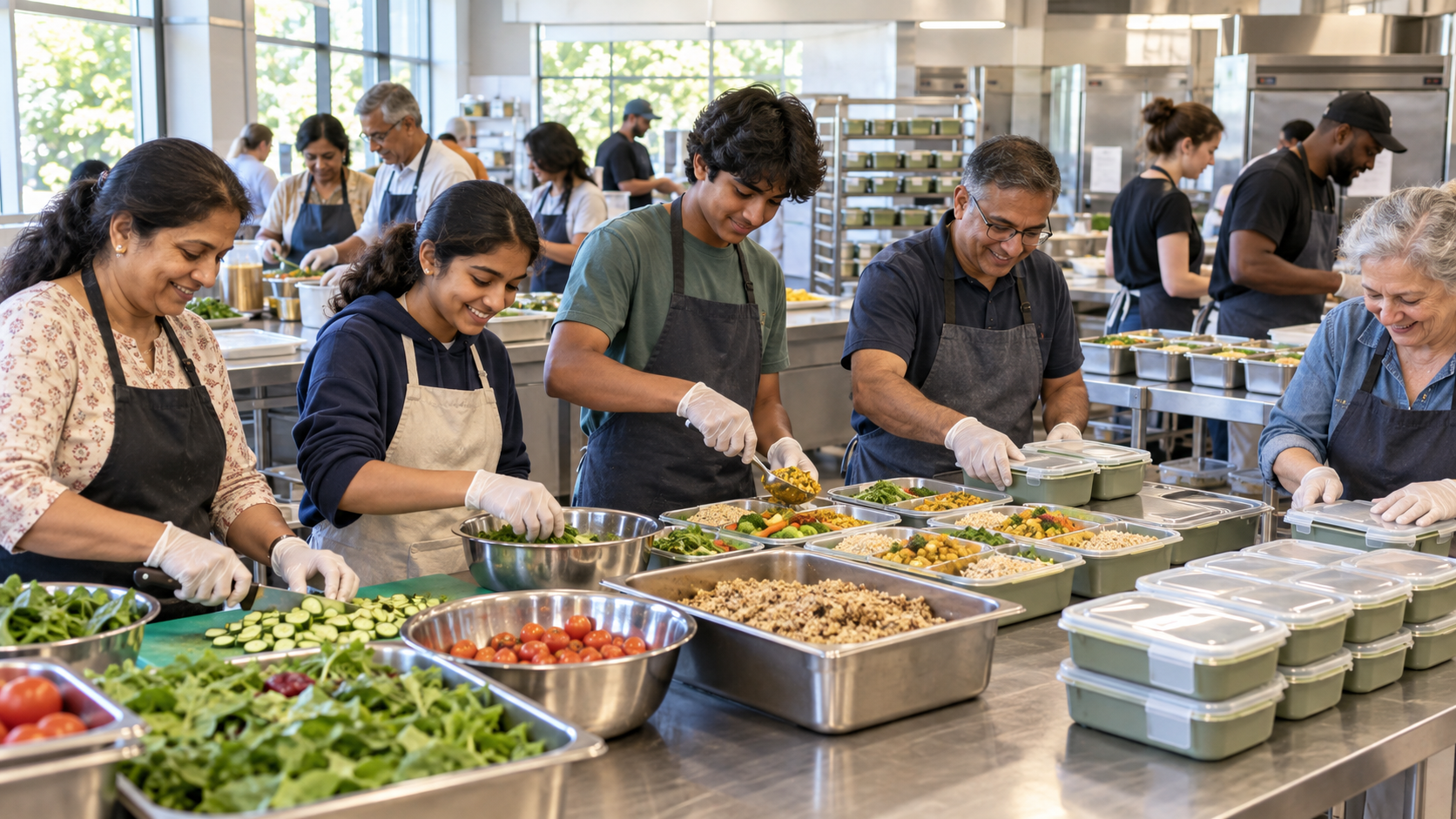
Preserving roots does not require suspicion of everything modern or foreign. One Gaudiya Vaishnava formulation offers a useful distinction: yukta-vairagya means engaging available facilities in divine service without surrendering the spiritual purpose to those facilities.
A.C. Bhaktivedanta Swami Prabhupada travelled to America at the age of 69, kept the disciplines of his Gaudiya Vaishnava tradition central, and employed the materially developed setting in service of its spiritual mission. His example is specific to a lineage, but the practical question travels well: will the new environment serve your commitments, or will convenience quietly redefine them?
Apply that test before adopting a tool, platform, or programme:
- Does it lead your family into practice, or only into more spiritual content consumption?
- Does it create accountability, or merely send reminders that everyone dismisses?
- Does it strengthen a relationship with a teacher or community, or replace that relationship with an algorithm?
- Does it preserve the discipline accurately, or alter it until it asks nothing of you?
- Will it still be useful after its novelty has faded?
Use a shared digital calendar to protect observances before work and school fill the dates. Arrange a video call when distance prevents regular learning from a trusted elder or teacher. Keep a family message group focused on practice, questions, service duties, and logistics rather than endless forwarded claims. Use recordings to learn pronunciation, then put the device down and recite. Technology should remove friction around practice, not become a substitute for practice.
Your professional skills can also become part of spiritual continuity. A community may need reliable accounting, safeguarding procedures, translation, transport, teaching support, communications, maintenance, or event organization. Offering competence is not secondary to preservation. It builds the institutions in which prayer, learning, service, and relationships can continue.
Material success abroad should neither be treated as spiritual failure nor mistaken for spiritual success. Ask what your education, income, networks, and freedom make possible for others. When some portion of those advantages is deliberately directed toward dana, seva, learning, hospitality, or institution-building, the outer life begins to support the inner one.
Build a community where your family is needed
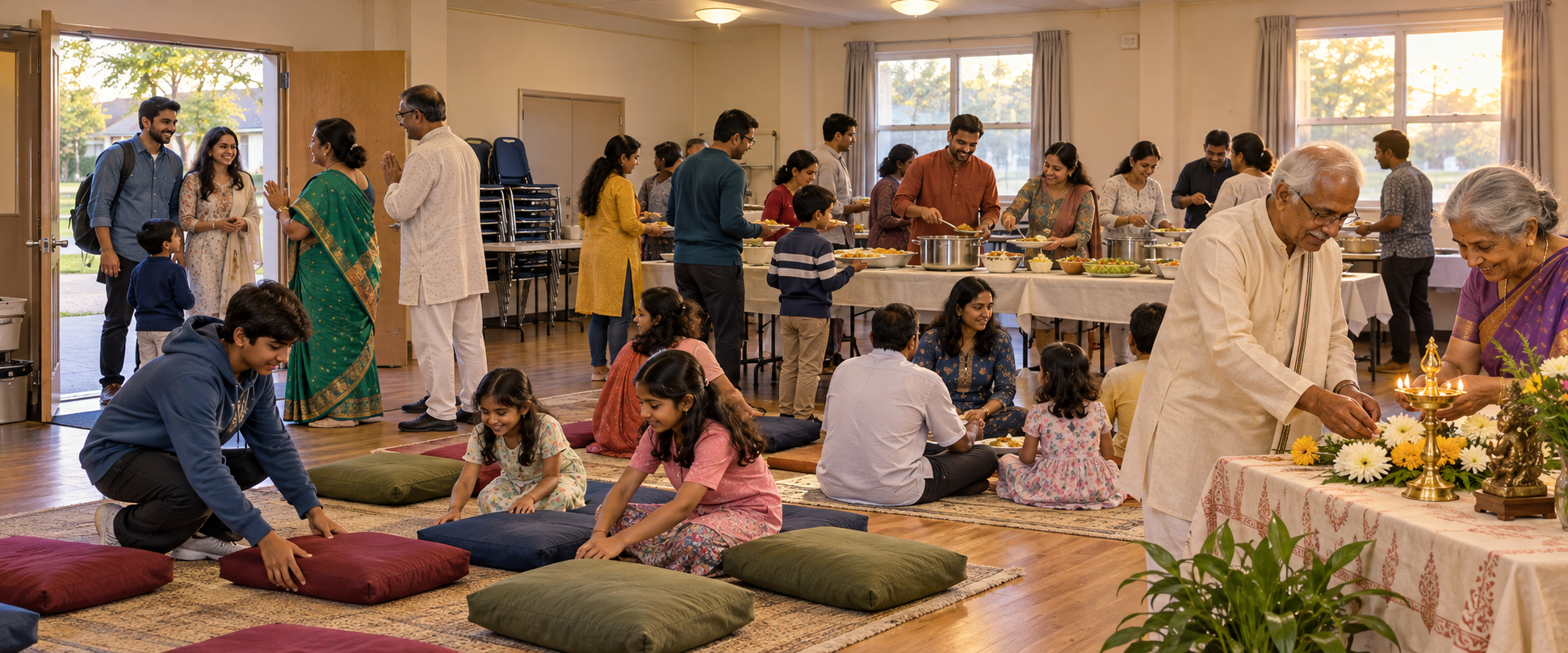
Festival attendance can preserve recognition without producing belonging. A stronger bond forms when the community expects your presence because you have accepted responsibility. Choose a mandir, gurdwara, vihara, Jain centre, satsang, sangha, or other appropriate institution as a regular home base. Visiting other places can broaden relationships, but constant movement makes it difficult to become accountable anywhere.
Before committing, ask concrete questions:
- Can its teachers explain where their instruction comes from?
- Is there a path from attending events to learning and serving?
- Are young people given useful work rather than decorative appearances?
- Can sincere questions be asked without humiliation?
- Do the institution’s conduct, safeguarding, and financial practices justify trust?
Then accept a recurring duty. Help prepare the space, teach what you are qualified to teach, assist elders, welcome newcomers, organize transport, support a meal, maintain records, or join an established service effort. Ask the institution what is actually needed instead of inventing a project that depends on everyone accommodating you.
For children, aim for relationships rather than a dense calendar. Help them know an adult outside the immediate family who lives the tradition with integrity and can answer questions without replacing the parents. Help them form friendships through learning and service, not only through entertainment added to religious events.
Grandparents and relatives can contribute even from a distance. Ask an elder to teach a prayer with its meaning, explain how a particular observance was kept, or tell a family story that reveals a spiritual choice. With permission, preserve useful recordings for younger relatives. Let children respond in the language they can use honestly; the goal is living transmission, not a staged demonstration of cultural fluency.
If no suitable institution is nearby, do not wait indefinitely for a perfect one. Gather a small local circle around an accurately defined practice and seek instruction remotely from a trustworthy community. Keep some element embodied and shared: worship, meditation, study, hospitality, or service. An online connection becomes more substantial when it produces disciplined action where you live.
Key takeaways for a family reset
- Preserve spiritual commitments first; let cultural forms carry them without confusing every family custom with doctrine.
- Name your lineage accurately instead of blending distinct Dharmic traditions into a generic Indian spirituality.
- Choose a daily anchor that survives busy days and a recurring community commitment that creates accountability.
- Explain what a practice means, how it shapes conduct, and which questions still need a trustworthy answer.
- Use technology, professional skill, and material opportunity as servants of practice rather than substitutes for it.
- Give children and adults real responsibility so that belonging is expressed through contribution.
- Judge preservation by what the household repeatedly does, not by how strongly it speaks about identity.
Put this into practice before the next weekend:
- Write your household sentence about how the tradition changes time, conduct, and service.
- Select the daily anchor you can keep even when the week becomes difficult.
- Assign each family member a meaningful part in that practice.
- Contact a suitable community and ask for a recurring way to learn or serve.
- Place the next important observance on the calendar and decide what your family will practise, learn, and give.
Do not wait for your children to feel rooted before giving them roots. Begin on an ordinary day, when nobody is watching and there is no festival photograph to take. That is where an inherited identity becomes a lived spiritual path, capable of growing wherever your family has made its home.
References

Leave a Reply
You must be logged in to post a comment.