
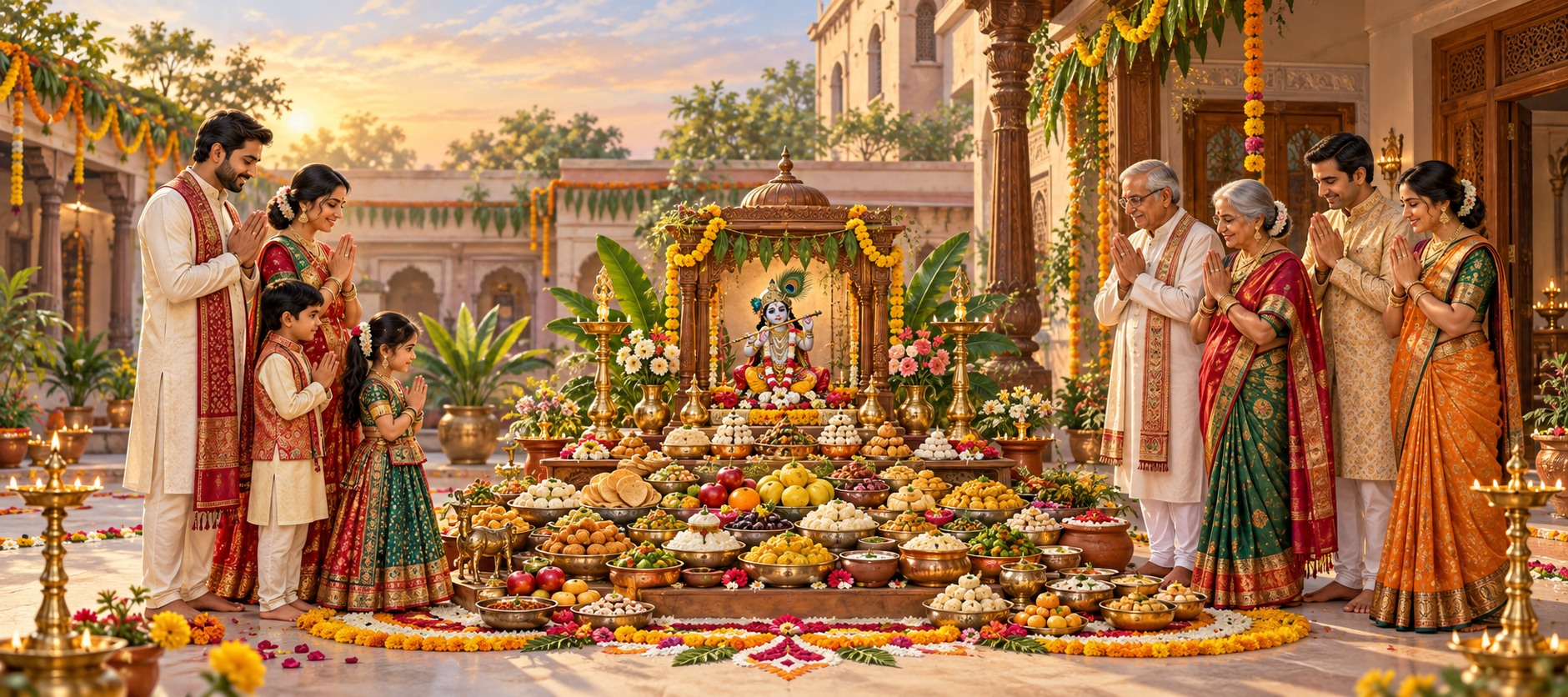
If you are planning the day after Diwali in 2026, three names may appear on your calendar: Gujarati New Year, Annakut, and Govardhan Puja. They fall on the same date, but they describe different dimensions of the day rather than three interchangeable festivals.
For your family, the practical answer is simple: welcome the new year, offer food to Bhagavan, and honour Sri Krishna’s protection of the land, cows, and community. You can give each observance its proper place without turning the day into three separate sets of rituals.
One date carries three distinct observances
In 2026, all three observances fall on Tuesday, November 10. In the Gujarati calendar, this is Kartik Sud 1, the first day of the bright half of Kartik and the beginning of Vikram Samvat 2083. It is also the day after Diwali and the fourth day in the five-day Diwali cycle.
| Observance | Primary focus | What it means for your day |
|---|---|---|
| Gujarati New Year | The beginning of a new Gujarati calendar year | Offer good wishes, renew relationships, and begin the year with auspicious conduct. |
| Annakut | A substantial offering of prepared food to the deity | Prepare and present food as seva, then receive and share it as prasad. |
| Govardhan Puja | Sri Krishna, Govardhan, and cows | Remember divine protection and honour the living world that sustains the community. |
Regional emphasis explains why calendars use different labels. In Gujarat, Annakut is closely joined to Nutan Varsh, with food offerings presented in temples across the state. Govardhan Puja is especially prominent in several North Indian states, including Uttar Pradesh, Bihar, Haryana, Jharkhand, and Chhattisgarh. A Gujarati home may nevertheless observe the Govardhan meaning, while a North Indian temple may present an Annakut offering.
Annakut turns abundance into an offering
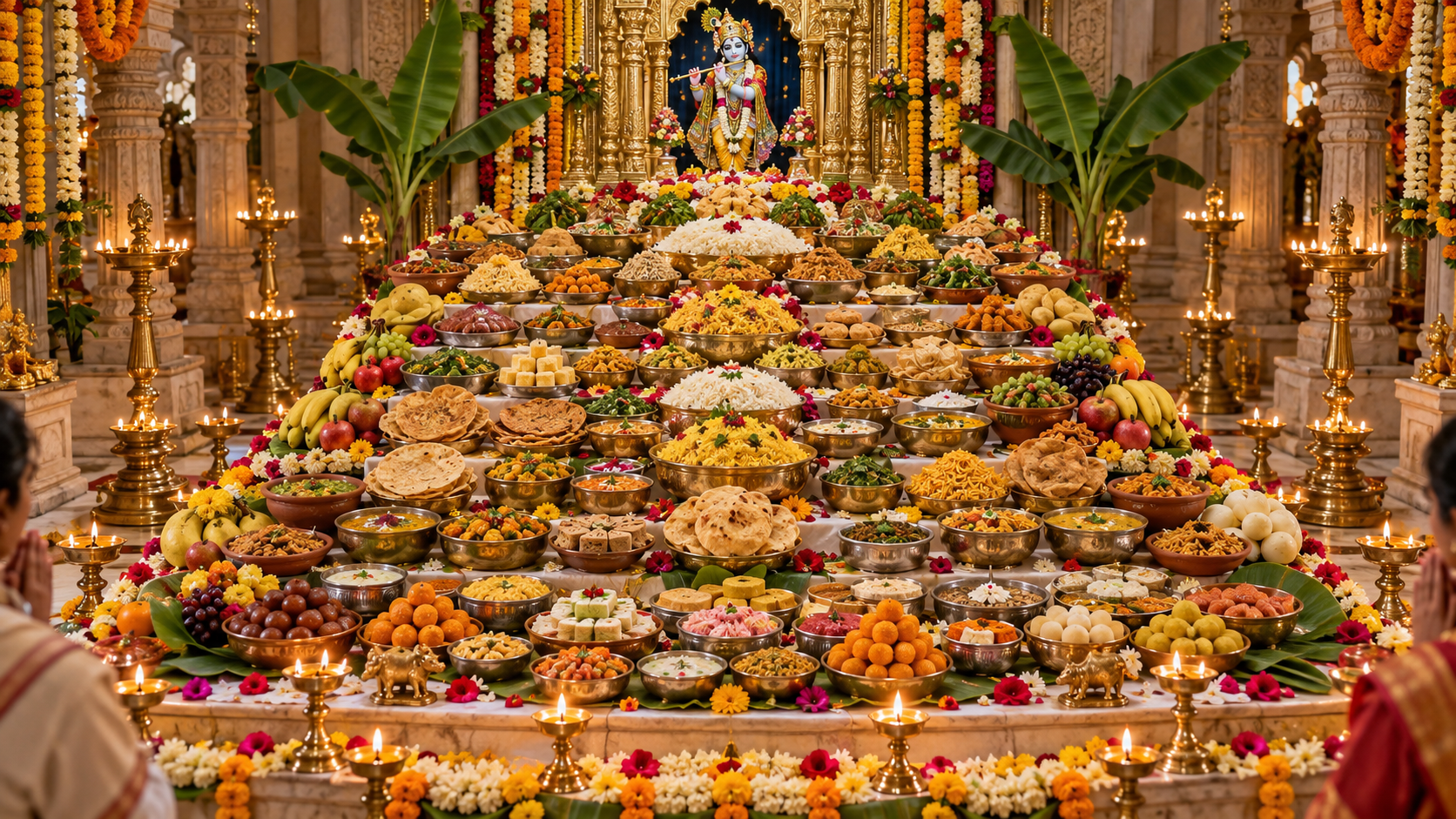
Annakut literally evokes a heap or mountain of food. The form matters because it shifts the meaning of abundance. Food is not displayed merely to show what a household or temple possesses; it is first offered to the deity and then shared as grace.
You do not need to imitate the scale of a major temple. A household offering made attentively and within its means is more coherent than an oversized spread that produces exhaustion or waste. The quantity can change with your circumstances; the movement from preparation to offering to prasad should remain clear.
This distinction is especially useful when children help. Do not give them only the decorative task. Let them see the whole sequence: food is prepared carefully, placed before Bhagavan, offered before anyone eats it, and later shared respectfully. That sequence teaches seva more effectively than a large display by itself.
Govardhan Puja gives the food mountain its deeper setting
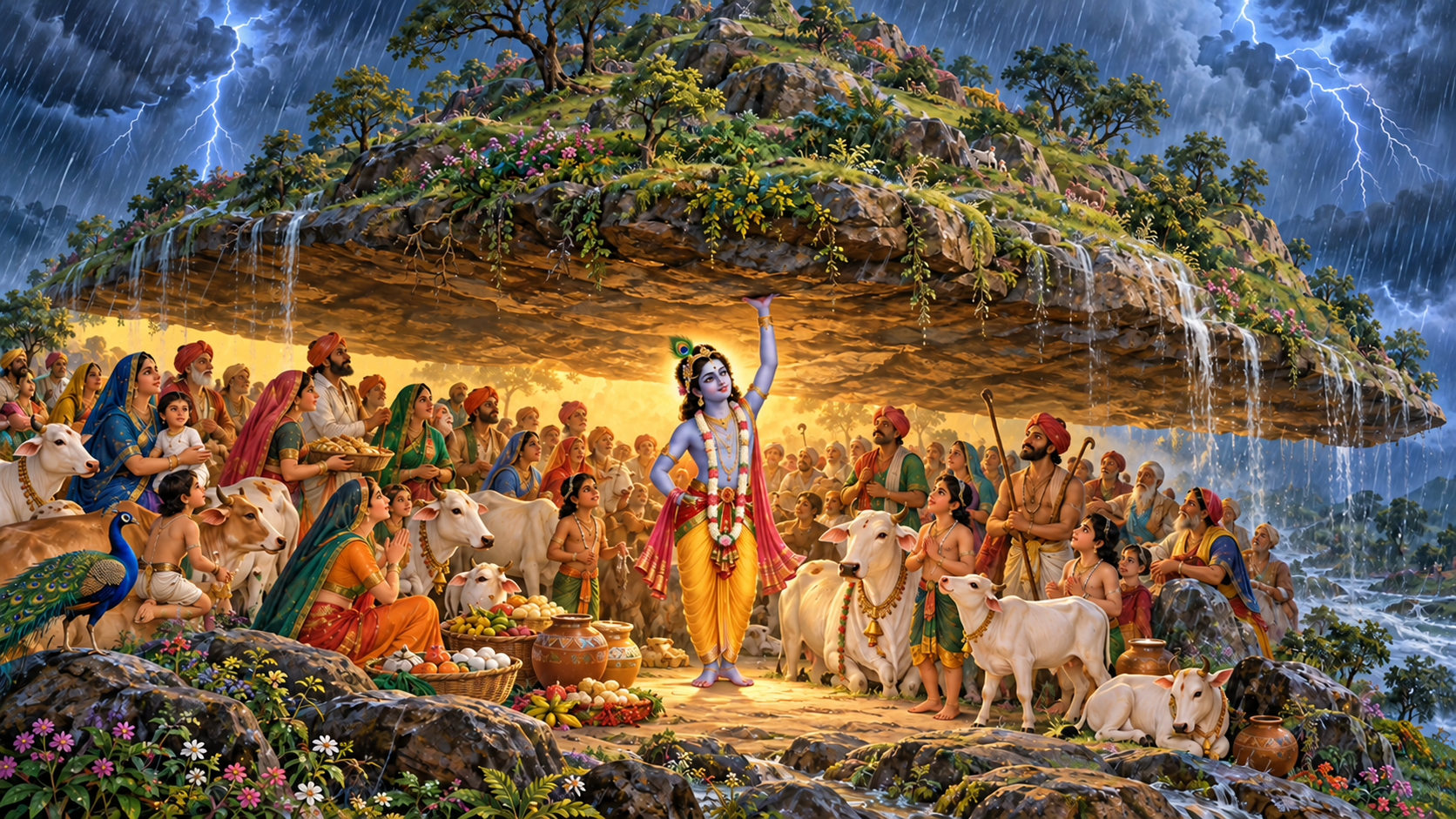
In the familiar Krishna tradition, Sri Krishna protects the people and cattle of Vraja beneath Govardhan when destructive rain threatens them. Govardhan Puja remembers that protection, and worship on the day places Sri Krishna and cows at the centre.
The Annakut mound therefore does more than resemble Govardhan. It connects nourishment with its conditions: land, rain, cattle, cultivation, human labour, and divine grace. You can make that connection visible by treating ingredients carefully, preventing avoidable waste, and ensuring that the offering becomes prasad that people can actually receive.
Govardhan Puja also corrects a narrow understanding of worship. Gratitude to Krishna is not detached from care for the world Krishna protects. Reverence for cows should lead to responsible treatment, not remain a decorative reference in the puja. Reverence for food should affect how you buy, cook, serve, and share it.
A practical home observance for November 10
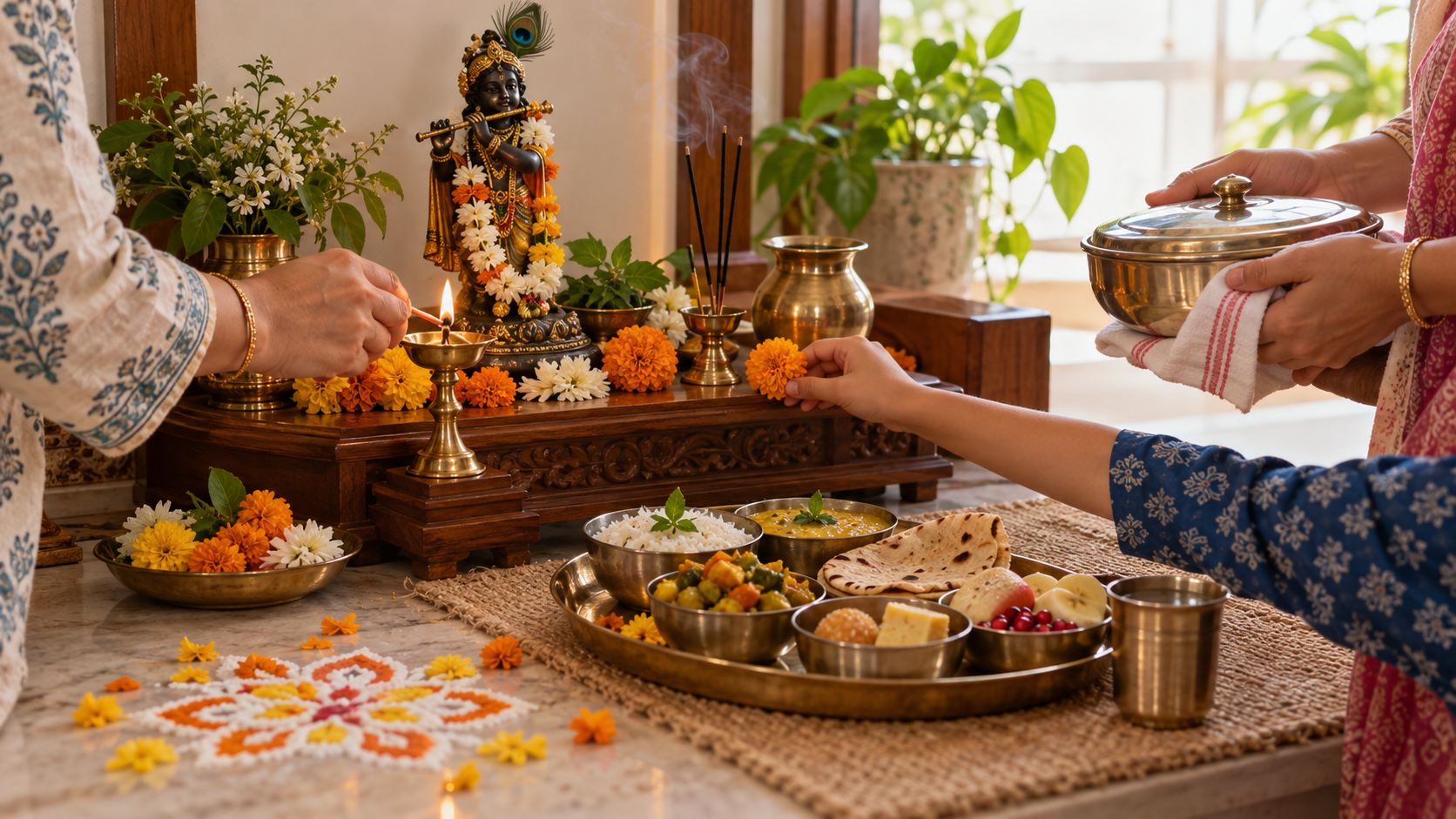
Your family tradition or sampradaya should determine the precise mantras, sequence, and form of worship. If you do not have an inherited procedure, keep the observance modest and internally consistent rather than combining unrelated rituals from several traditions.
- Confirm your temple’s schedule in advance. Annakut darshan, aarti, and prasad distribution may follow a local timetable even though the 2026 observance falls on November 10.
- Choose a realistic menu. Prepare foods that your household normally regards as suitable for offering. Scale the number of dishes to the people, time, and resources available.
- Set apart the offering before the meal. Arrange it cleanly before your household deity. A raised or mound-like presentation can express the Annakut theme without requiring a temple-sized display.
- Invoke Sri Krishna and remember Govardhan. Use the prayer, nama-japa, bhajan, or aarti customary in your tradition. Keep Krishna’s protection of people, cows, and the sustaining land in view.
- Receive and distribute the food as prasad. Serve it respectfully after the offering. Plan portions so that abundance leads to sharing rather than disposal.
- Mark the Gujarati New Year deliberately. Offer greetings, seek the goodwill of elders, repair any relationship that should not be carried forward in bitterness, and choose one dharmic discipline you can actually maintain.
If you are attending a temple Annakut, let the temple carry the ceremonial scale. Your household can concentrate on prayer, a small offering, new-year greetings, and the careful sharing of prasad. There is no need to reproduce every temple arrangement at home.
Key takeaways for families planning the day
- Gujarati New Year, Annakut, and Govardhan Puja coincide on November 10 in 2026, but each name identifies a different focus.
- Kartik Sud 1 begins Vikram Samvat 2083 in the Gujarati calendar.
- Gujarati New Year marks renewal; Annakut centres on a food offering; Govardhan Puja centres on Sri Krishna, Govardhan, and cows.
- A home Annakut does not need the scale of a temple display. Prepare what you can offer reverently and distribute responsibly.
- Ask your family priest, sampradaya, or local temple for the exact ritual sequence and event times rather than assuming every community follows one format.
Before November 10, make two decisions: where your family will take Annakut darshan and what you can prepare without waste. Once those are settled, the day can unfold as one integrated observance: a new beginning grounded in seva, gratitude, and shared prasad.
References
- Hindu Pad — Annakut 2026 | Annakut Puja in Gujarat on Kartik Sud 1
- Hindu Pad — Gujarati New Year 2026 | Nutan Varsh | Bestu Varsh 2026-2027 in Gujarat
- Hindu Pad — Govardhan Puja 2026 | Diwali Govardhana Pooja

Leave a Reply
You must be logged in to post a comment.