
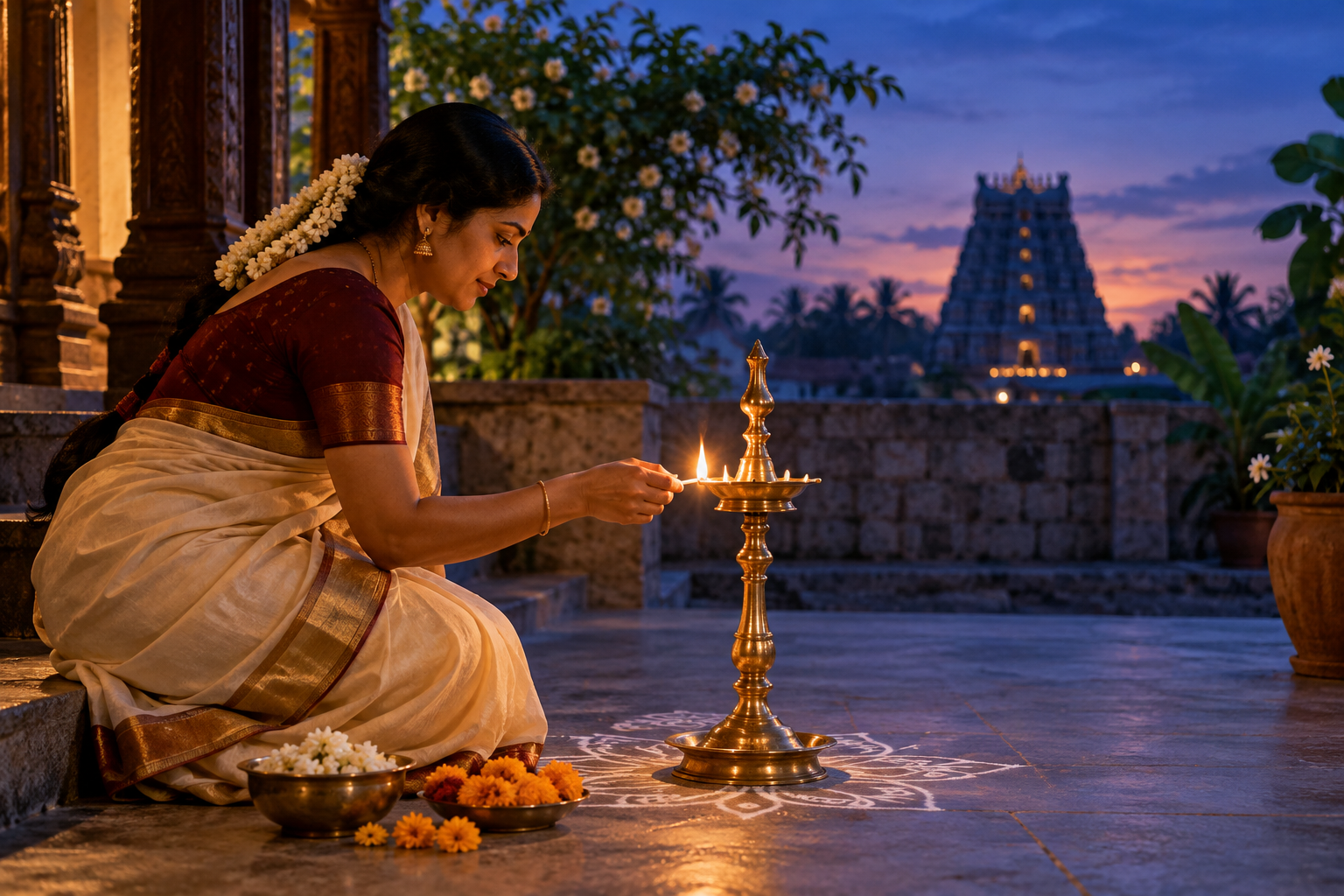
You want to observe the sacred season faithfully, but the calendar can become confusing before the worship even begins. One announcement names Kartika, another names Aippasi, and a Tamil temple may emphasize different deities and festivals from a Vaishnava household.
You do not need to combine every custom into one crowded programme. You need to know which calendar you are following, which devotional relationship will anchor the month, and what practice you can sustain after the enthusiasm of the opening days has passed.
First decide whether you are following Kartika or Aippasi
Kartika and Aippasi occupy much of the same seasonal space, but they are not interchangeable names for one precisely bounded month. Kartika is a sacred lunar month generally occurring during October and November. Aippasi is the seventh month of the Tamil calendar followed in Tamil Nadu, Pondicherry, and Tamil-influenced communities in Sri Lanka.
In 2026, Aippasi runs from 18 October through 16 November. That range tells you when the Tamil month begins and ends; it does not establish the Kartika boundaries used by every regional panchanga. Do not assume that the first day of Aippasi must also be the first day of your Kartika vrata.
| Sacred-month frame | Devotional emphasis highlighted here | Date or calendar to follow |
|---|---|---|
| Kartika, also observed as Damodara month in Vaishnava practice | Daily prayer to Krishna in his childhood Damodara form | The Kartika dates in the panchanga followed by your family, guru, or temple |
| Aippasi, the seventh Tamil calendar month | Shiva and Murugan, with Skanda Sashti and Deepavali as major observances | 18 October to 16 November in 2026, while checking local timings for individual festivals |
Before making a vow, write down the name of the panchanga or temple calendar you will use. This small step prevents a common problem: beginning with one calendar, encountering a different date online, and changing the observance halfway through. If your family has an inherited practice, its calendar convention should ordinarily take precedence over a generic internet calendar.
Give the month one clear devotional centre
A sacred month becomes coherent when its practices point toward a relationship with the Divine. It becomes exhausting when it is treated as a collection of religious tasks. Choose the centre first; then decide which practices serve it.
If you are observing Kartika as Damodara month
The Padma Purana gives Kartika a ritual character, while the Vrindavana discipline highlighted for this month is daily prayer to Krishna in his childhood Damodara form. The important word is daily. A modest act of prayer repeated through the month expresses the vrata more clearly than an elaborate opening followed by long gaps.
Place an image of Krishna in the Damodara form at the centre of your worship if that accords with your tradition. Use the prayer, names, song, or recitation taught in your family or sampradaya. The name Damodara month identifies a strong Vaishnava current within Kartika; it should not be turned into a claim that every Hindu community observes Kartika in an identical way.
If you are observing Aippasi
Aippasi carries a devotional dedication to Shiva and Murugan. If your household is Shaiva, let your established Shiva worship give the month its rhythm. If Murugan is central to your family or temple, let that relationship shape your preparation for Skanda Sashti. You do not need to dilute either path by importing unrelated practices merely because they are circulating online during the same weeks.
A household with more than one inherited stream need not choose winners and losers. Keep one short daily discipline as the backbone of the month, then give each festival its appropriate deity, prayer, and family custom. Unity does not require making Krishna, Shiva, and Murugan observances look the same; it means honouring each without rivalry.
When several possible instructions compete, use this order of precedence:
- Keep any vrata or discipline formally received from your guru or sampradaya.
- Preserve the living custom of your household when it does not conflict with that instruction.
- Follow the calendar and practical guidance of the temple where you will participate.
- Add personal practices only after the inherited commitments are clear.
Build a daily observance that survives ordinary life
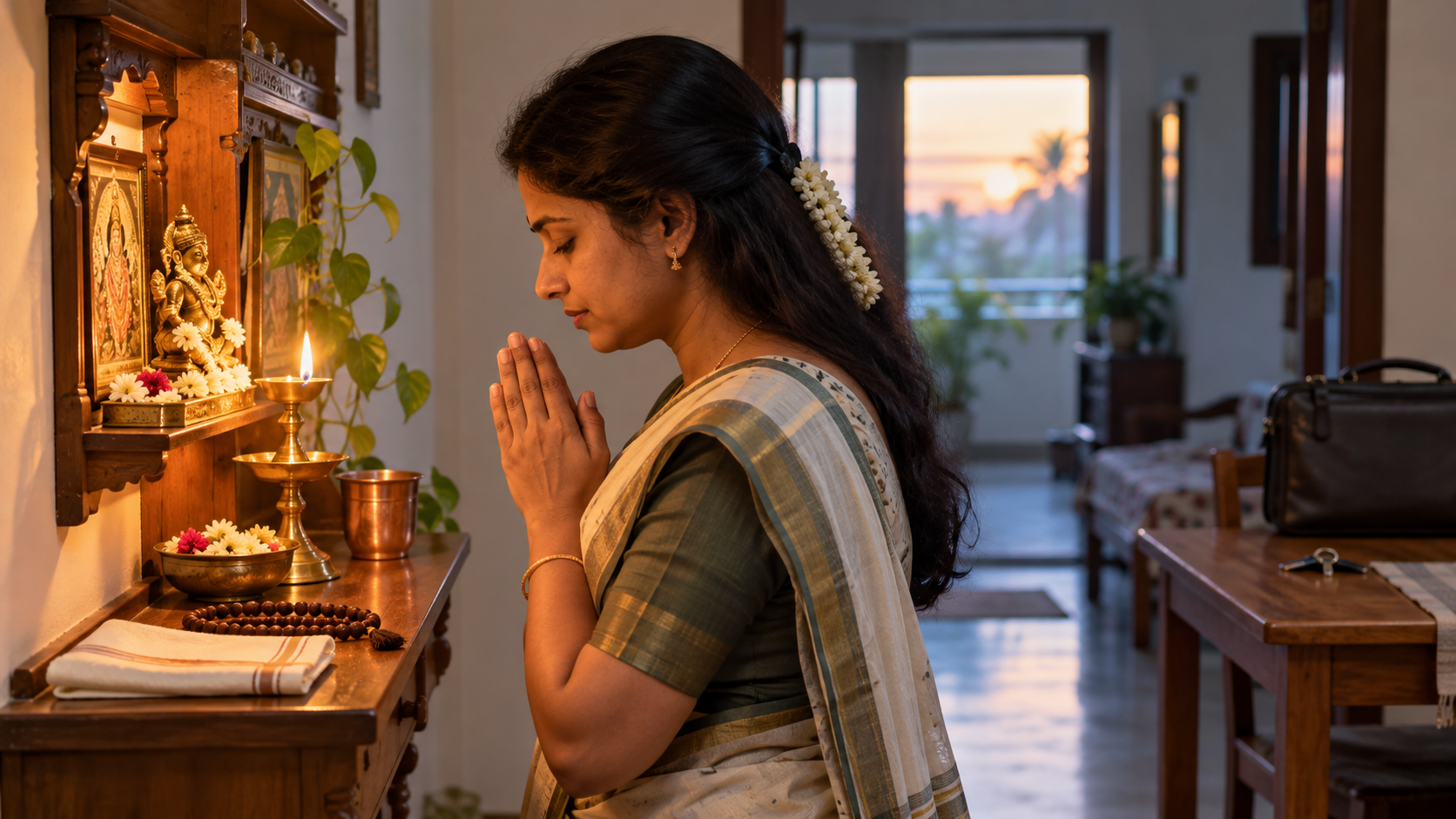
The most useful question is not, “What is the maximum I could do on the first day?” Ask, “What can I still do on a demanding weekday?” That answer should become your daily minimum. Extra worship can be added on festival days, but the minimum protects continuity.
A simple home framework can look like this:
- Prepare the place. Clean the immediate worship area and set out only what you will actually use.
- State the intention. Name the sacred month and the deity at the centre of your observance. Keep the intention plain enough that you understand what you are promising.
- Offer your established prayer. Use a family or lineage practice you already know rather than collecting unfamiliar material during the vrata.
- Remain attentive. Include a brief period of name-recitation, scriptural reflection, or silent remembrance appropriate to your tradition.
- Close deliberately. Offer pranama, carry one dharmic intention into the day, and mark the observance as completed on a calendar.
If lighting a lamp belongs to your custom, place it on a stable, heat-resistant surface and never leave it unattended. If flame is unsafe in your home, prayer does not become insincere because you omit it. The purpose of a daily rule is disciplined remembrance, not a domestic hazard.
Decide in advance what counts as completing the day. Ambiguity encourages either carelessness or unnecessary guilt. A clear rule might be the prayer received in your tradition followed by quiet remembrance and pranama. Keep additional temple visits, longer recitations, decorations, and offerings in a separate “when possible” category.
Do not make dietary austerity, sleep restriction, or a demanding ritual schedule part of the vow merely because somebody else follows it. Such disciplines belong within the guidance of your tradition and the realities of your health and responsibilities. A vrata should train steadiness and truthfulness; making a promise you already know you cannot keep works against both.
If you miss a day, consult any rule supplied by your guru or family tradition. Where no formal rule has been given, resume the practice promptly instead of abandoning the rest of the month. One lapse need not become a reason for many more.
Let Skanda Sashti and Deepavali anchor Aippasi
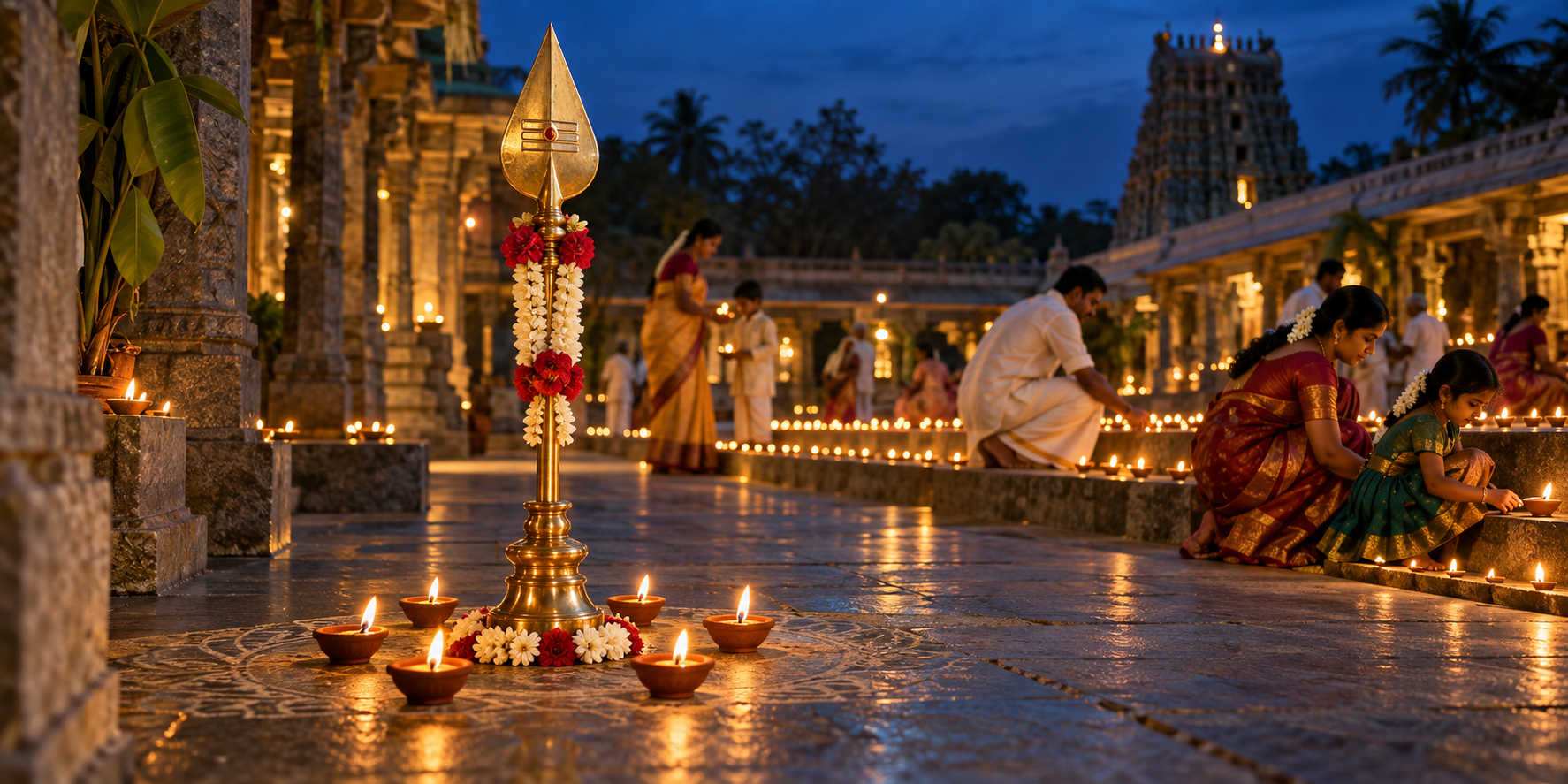
Skanda Sashti and Deepavali are major festivals within Aippasi. Treat them as anchors within the month, not as substitutes for the daily discipline you have chosen.
For each festival, make four decisions before the day arrives:
- Which calendar controls the timing? Use the local temple or family panchanga rather than deriving a festival time from the overall Aippasi date range.
- Where will you worship? Decide whether the central observance belongs at home, at a temple, or in both places.
- Which custom is actually yours? Prepare the prayers and offerings transmitted in your household or community instead of assembling an improvised ritual from unrelated traditions.
- How will you return to the monthly rhythm? Resume the ordinary daily practice immediately after the festival so that preparation, travel, or celebration does not quietly end the vrata.
Skanda Sashti naturally brings Murugan worship into sharper focus. Deepavali customs vary considerably across regions and families, so preserve the form you have actually received. Sharing the sacred month does not erase those differences, and respecting them is part of respecting Bharat’s civilizational breadth.
This approach also keeps celebration and sadhana in their proper relationship. Cleaning, cooking, decorating, travelling, and gathering with family can support a festival, but they should not consume the small period reserved for worship. Put that period on the household schedule before filling the rest of the day.
Key takeaways
- Kartika and Aippasi overlap seasonally, but they belong to different calendar frameworks and should not be treated as exact synonyms.
- Aippasi 2026 begins on 18 October and ends on 16 November.
- Daily prayer to Krishna as Damodara is a defining Kartika discipline in the Vrindavana Vaishnava practice described by the Padma Purana.
- Aippasi is dedicated to Shiva and Murugan, with Skanda Sashti and Deepavali serving as major festival anchors.
- Your guru’s instruction, family custom, and local temple calendar should guide the details that a general calendar cannot settle.
- A small daily rule that you keep is more useful than a crowded programme that disappears after the opening days.
Before the month begins, write four things on one card: the calendar you will follow, the deity at the centre, your daily minimum, and the festivals requiring advance preparation. Keep that card near the altar. It turns a list of sacred dates into a deliberate month of remembrance.
References
- Hindu Pad — Damodara Month: Why Kartika Month Is Called Damodar Month
- Hindu Pad — Aippasi Masam 2026: Aippasi Month in the Tamil Calendar

Leave a Reply
You must be logged in to post a comment.