
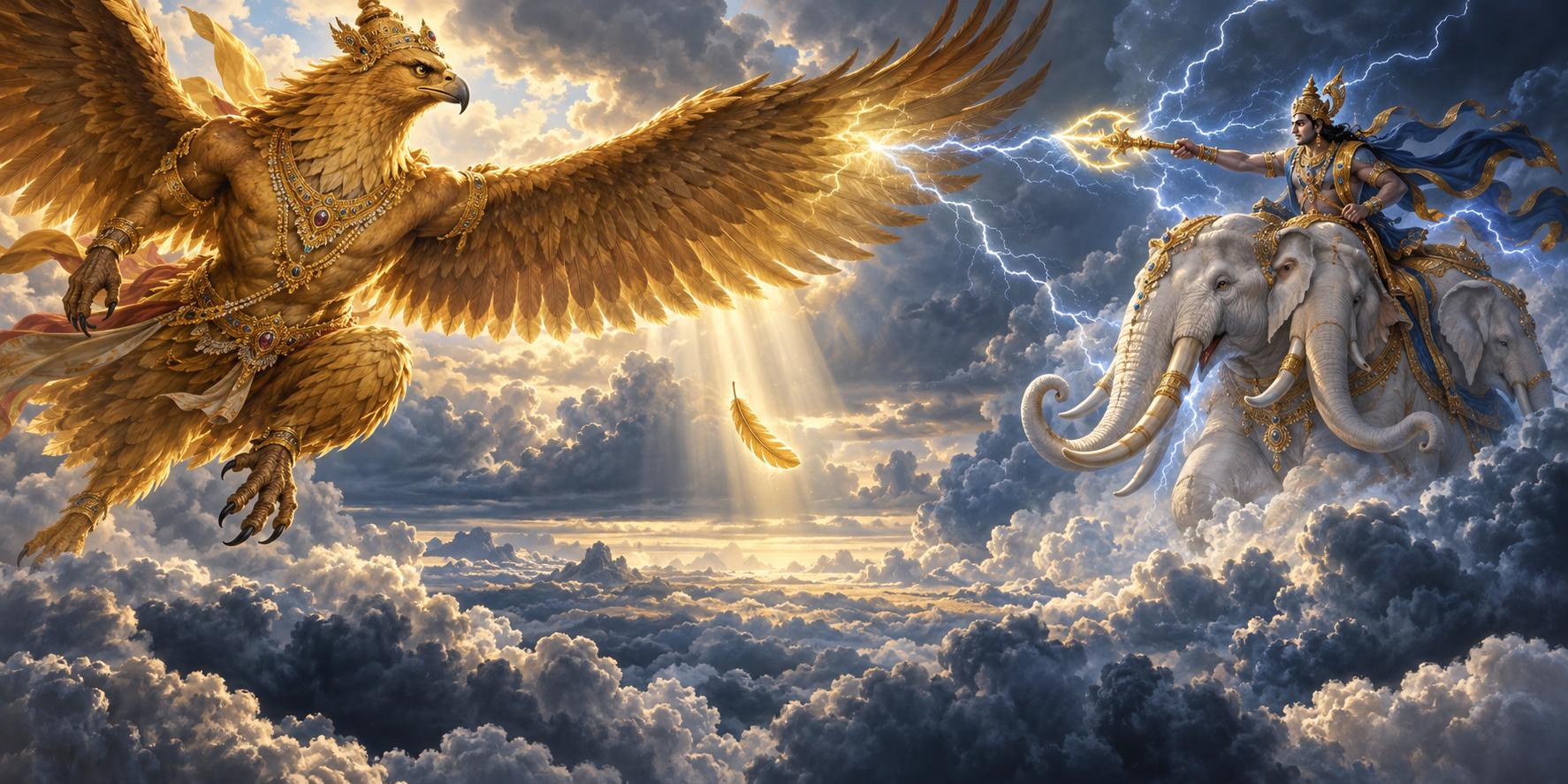
If you have ever wondered whether humility requires you to hide your strength, Garuda’s encounter with Indra gives a clear answer. You do not become humble by pretending to be smaller than you are. You become humble by refusing to use your real strength for vanity, humiliation, or excess.
The most revealing moment comes after Garuda has proved that he cannot easily be stopped. His single feather shows you what disciplined power looks like: acknowledge what deserves respect, surrender nothing essential, and continue toward the purpose that brought you into the struggle.
The feather matters because the Vajra has already failed

The order of events is essential. In the Astika Parva of the Adi Parva, Garuda goes to take the Amrita. The Devas oppose him and are defeated. Indra then attacks with the Vajra, but even Indra’s formidable weapon does not defeat Garuda.
Only after the attack has failed does the feather acquire its meaning. Garuda is not surrendering because the Vajra has torn away his power. He can afford to offer a limited acknowledgement precisely because his strength remains intact. The feather is therefore not a confession of inferiority. It is a voluntary act of regard from someone who has no need to manufacture a victory.
This distinction prevents a common misreading of humility. If Garuda had been forced to yield, the scene would teach endurance in defeat. Instead, it teaches restraint after success. He does not need to deny the outcome, flatter Indra, or behave as though the contest were equal. He simply refuses to turn superior power into contempt.
When you evaluate a concession – your own or someone else’s – ask what produced it. Was it extracted by pressure, or freely chosen by a person who could have continued? The outward gesture may look similar, but its moral quality is different. Compelled loss reveals the limits of power. Voluntary restraint reveals command over power.
Humility is accurate self-knowledge, not self-erasure
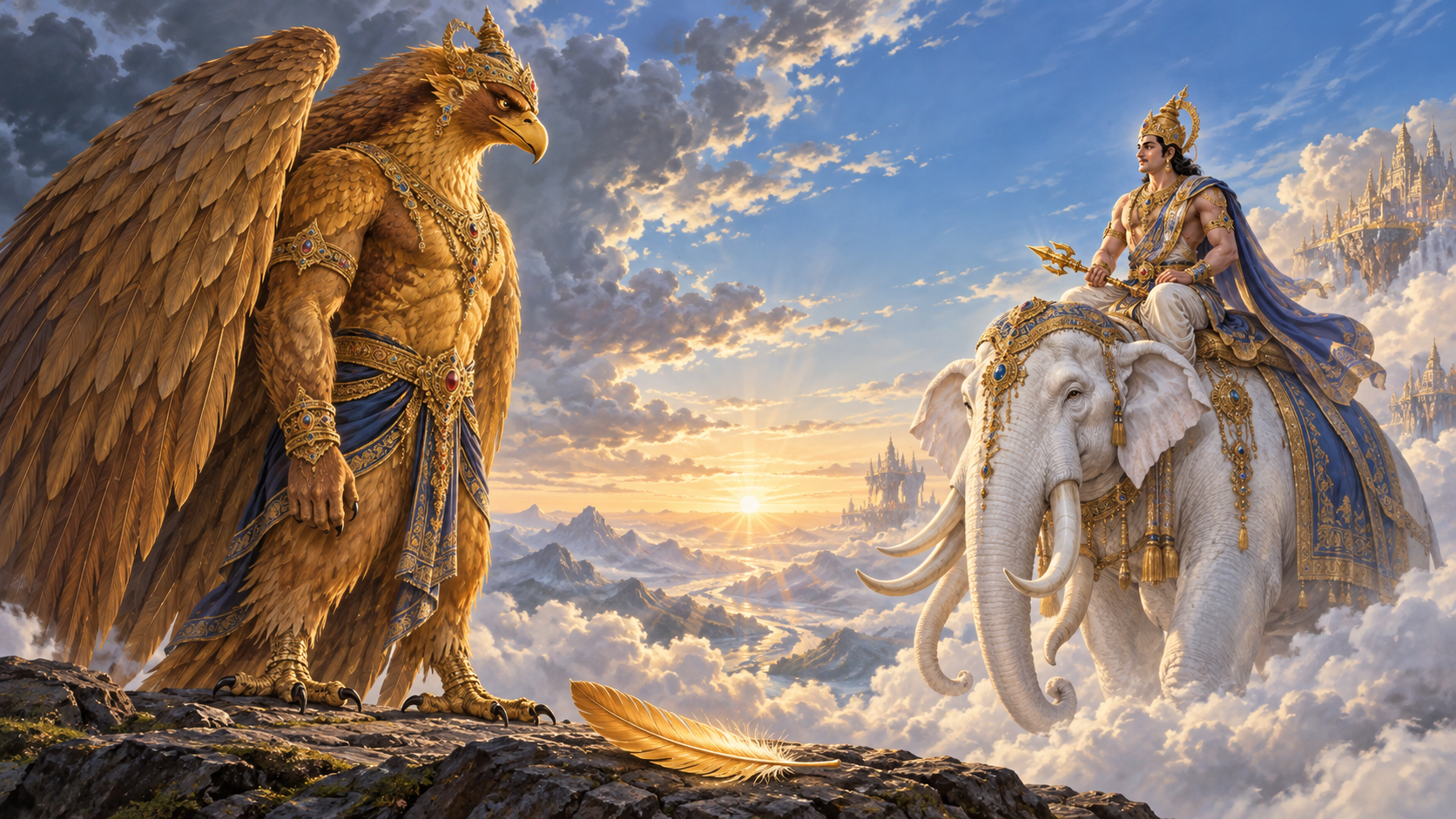
Garuda does not have to call himself weak in order to be humble. Such a claim would be false, and false modesty is still a form of self-occupation. It keeps attention fixed on the self, only now through exaggerated denial rather than exaggerated praise.
Dharmic humility begins with accuracy. Know the capacity you possess. Know what you accomplished. Know what you did not accomplish alone. Then speak and act without inflating any of those facts. Garuda’s gesture is powerful because it is proportionate: one feather, not his mission; acknowledgement, not submission; respect, not self-negation.
You can apply that measure whenever you hold the stronger position. If your proposal has prevailed, you can recognize the sound concern raised by the other side without pretending the decision remains unresolved. If you have corrected someone, you can preserve that person’s dignity without withdrawing the correction. If you possess greater knowledge, you can explain the matter plainly without using your knowledge to make another person feel foolish.
Notice the two opposite errors. Arrogance says, “Because I prevailed, nothing on the other side deserves respect.” False modesty says, “To appear good, I must deny that I prevailed.” Humility avoids both. It lets the truth stand while removing the needless performance of superiority.
This is why the feather is a better symbol than a dramatic surrender. A small, genuine acknowledgement can carry more moral weight than a theatrical declaration of modesty. Its limit makes it credible. Garuda gives something meaningful, but he does not give away the purpose for which he accepted the conflict.
Dharmic strength does not let victory replace the purpose
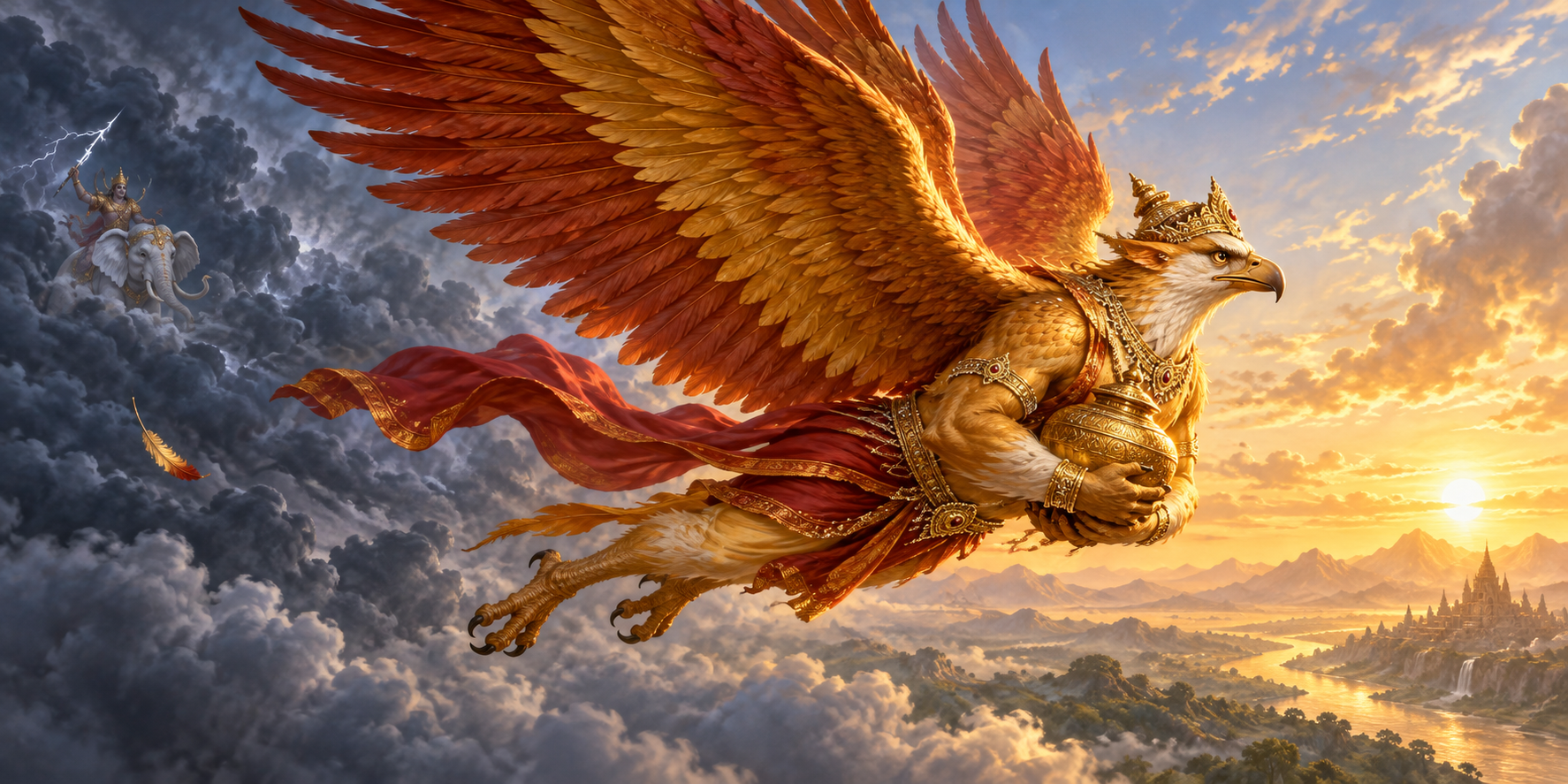
Power often drifts away from its original task. A person begins by trying to protect a duty, establish a fact, or complete necessary work. Once resistance appears, the task quietly changes. Success is no longer enough; the opponent must also be embarrassed, silenced, or made to admit total defeat.
Garuda’s conduct exposes that drift. His objective concerns the Amrita, not the endless humiliation of everyone who stands in his way. Once his ability to continue has been established, he does not make another being’s loss the centre of his identity. The feather acknowledges the encounter while leaving the real purpose intact.
Use the same discipline when authority, knowledge, seniority, wealth, physical power, or public support gives you an advantage. Before acting, pass the decision through four questions:
- What duty brought me here? State the actual purpose without mentioning pride, reputation, or the desire to defeat a person.
- What amount of force is necessary? Use enough authority to fulfil the duty, but do not confuse what is available with what is required.
- What deserves acknowledgement? Identify a real sacrifice, valid concern, worthy effort, office, principle, or dignity that can be honored without falsifying the outcome.
- What would become a victory display? Remove the extra remark, public rebuke, taunt, or demand for submission that serves no purpose beyond advertising your advantage.
This filter is especially useful when you are technically right. Being right answers the question under dispute; it does not automatically justify every way of treating the person who was wrong. A leader may need to reject a proposal, but need not ridicule its author. An elder may need to correct conduct, but need not turn correction into public shame. A debater may expose a weak claim, but need not distort it further to secure applause.
The feather does not mean that every disagreement has two equally sound sides. Nor does humility require compromise with adharma. A gesture ceases to be dharmic when it conceals truth, abandons duty, enables harm, or trades away the very purpose that had to be protected. Garuda can offer the feather because the gesture does not prevent him from continuing. That is the practical boundary: preserve dignity where you can, but do not sacrifice responsibility merely to appear gentle.
Key takeaways
- Garuda’s humility appears after his strength has been demonstrated, so it is chosen restraint rather than forced submission.
- The single feather acknowledges what deserves respect without denying the actual outcome of the encounter.
- Humility requires accurate self-knowledge. It is neither boasting about capacity nor pretending that capacity does not exist.
- Dharmic power remains proportionate: it uses what the purpose requires and refuses the excess demanded by pride.
- A worthy concession protects dignity without surrendering truth, duty, or the objective that made action necessary.
Choose your feather before you take the final step
The next time you have the upper hand, pause before the final message, ruling, correction, or public response. Identify what you have actually established. Then identify the smallest genuine acknowledgement you can offer without weakening the truth or neglecting your duty. It might be credit for another person’s effort, acceptance of one valid concern, a private rather than public correction, or a respectful end to an argument that no longer needs to continue.
Keep the gesture precise. If it is so large that it abandons the purpose, it is not humility. If it is so empty that it costs no attention or regard, it is merely etiquette. Garuda’s feather stands between those errors: meaningful enough to honor, limited enough to preserve the mission.
You do not need to become smaller to keep power from corrupting your conduct. You need to keep power answerable to purpose. Give the feather that dignity requires, complete the duty that dharma requires, and resist the temptation to turn another person’s defeat into your destination.
References

Leave a Reply
You must be logged in to post a comment.