
If you have encountered the claim that Pakistan’s Bhutto family descends from the Hindu Chalukyas, you probably want to know whether it is history, family tradition, or political storytelling. The most responsible answer is narrower than either a confident endorsement or a dismissive denial.
The Bhuttos do have a recorded tradition of Rajput origin in Jaisalmer. A stronger reconstruction connects their name to a Chalukya figure called Bhurṭṭaka. That reconstruction is historically conceivable, but the facts available here do not establish an unbroken genealogy between Bhurṭṭaka and the modern Bhutto family.
The ancestry claim contains three separate propositions
Before deciding whether the Chalukya claim is credible, separate its three propositions. They require different evidence, and proving one would not automatically prove the others.
- The Bhutto family has a Rajput-origin tradition. The family’s own account, recorded by Salmaan Taseer in his 1979 political biography of Zulfikar Ali Bhutto, says that Rajput migrants came from Jaisalmer to Sindh about four centuries earlier. This is evidence that the tradition existed. It is not, on its own, independent verification of the migration.
- The name Bhutto derives from Bhurṭṭaka. This is an etymological proposition. It must be demonstrated through dated spellings, languages, sound changes, and geographical continuity. Similarity between two names can begin an inquiry, but it cannot finish one.
- Bhurṭṭaka belonged to a Chalukya lineage ancestral to the Bhuttos. This is a genealogical proposition. It requires a traceable chain linking the early figure, later descendants, the Jaisalmer Rajputs, the movement into Sindh, and the historically identifiable Bhutto clan.
This distinction prevents the most common error in arguments about ancestry: treating an attractive convergence of name, place, and dynastic background as if it were already a continuous family tree.
Chalukya expansion makes the connection possible, not proven
The Chalukyas were not confined to one small locality. Pulakeshin I founded the Vatapi kingdom in 543 CE in the upper Krishna and Bhima region. Under Pulakeshin II, Chalukya power expanded across much of the Deccan and reached the Narmada. Later lines included the Chalukyas of Vatapi, the Eastern Chalukyas of Vengi, and the Western Chalukyas of Kalyani.
The dynasty also produced regional branches beyond its original Karnata heartland. One western branch was established in southern Gujarat, where the Chalukya governor Avanijashraya Pulakeshiraja defeated an Arab force near Navasarika, present-day Navsari, in 739 CE. By the ninth and tenth centuries, Chalukya-related lines were present across parts of northwestern and central India, sometimes as independent chiefs and sometimes under larger powers such as the Rashtrakutas or Gurjara-Pratiharas.
That geographical spread matters. It means that a Chalukya-connected lineage in northwestern Bharat is not inherently anachronistic. The evolution of the dynastic designation from Chalukya to forms such as Śaulkika and eventually Solanki also shows why medieval lineages cannot always be tracked by expecting one spelling to remain unchanged for centuries.
The stronger Bhutto ancestry claim identifies Bhurṭṭaka as a Sūryavaṃśa Chalukya who attained prominence in northwestern India before the tenth century. Yet almost nothing else is stated about him. Chalukya expansion can therefore supply a plausible historical setting for the proposed ancestor, but it cannot identify his descendants several centuries later.
Think of the difference as one between a route and a journey. The presence of Chalukya branches in western and northwestern Bharat shows that a route existed. A genealogy must still show that this particular family travelled along it.
What would turn the hypothesis into a documented genealogy
If you want to evaluate the claim rather than merely repeat it, ask for evidence at each transition. A serious reconstruction should make the following chain visible:
- Identify Bhurṭṭaka in a dated record. The record should establish when and where he lived, the form of his name, and the basis for calling him a Chalukya.
- Trace his descendants or clan. A title, dynastic label, or shared name does not prove descent. The intermediate generations, or records close enough to bridge them, are the core of the argument.
- Connect that line to Jaisalmer. Because the Bhutto family tradition places its Rajput forebears there, the proposed Chalukya line must reach Jaisalmer through evidence rather than assumption.
- Document the migration into Sindh. Useful evidence could include genealogies, land grants, administrative records, inscriptions, community histories, or dated references to the clan on both sides of the migration.
- Show the development of the name. The transition from Bhurṭṭaka to Bhutto needs intermediate forms or a defensible linguistic explanation appropriate to the languages and periods involved.
- Connect the early Sindhi clan to the historical Bhutto household. Even proof that an older clan used a related name would not establish that every later bearer descended from its proposed founder.
The most important evidence would not necessarily be a single dramatic inscription. Genealogies are often established cumulatively: one record fixes a person to a place, another identifies a relative, and a later record preserves continuity of land, title, clan, or descent. What matters is whether those records overlap closely enough to prevent centuries of conjecture from occupying the gaps.
Etymology and genealogy must also remain separate. Even a convincing derivation of Bhutto from Bhurṭṭaka would primarily explain a name. Names can be inherited, adapted, adopted, shared by unrelated families, or attached to communities larger than one biological line. Conversely, a family relationship could be real even if the proposed linguistic derivation proved mistaken.
The same discipline applies to the family’s Rajput tradition. Oral and household traditions are valuable historical evidence because they preserve how a community understood its past. They are starting points for corroboration, however, not substitutes for it. The careful formulation is that the Bhuttos preserved a tradition of Rajput migration from Jaisalmer; whether that Rajput line descended specifically from Bhurṭṭaka remains the question to be demonstrated.
Junagadh cannot settle a medieval ancestry question
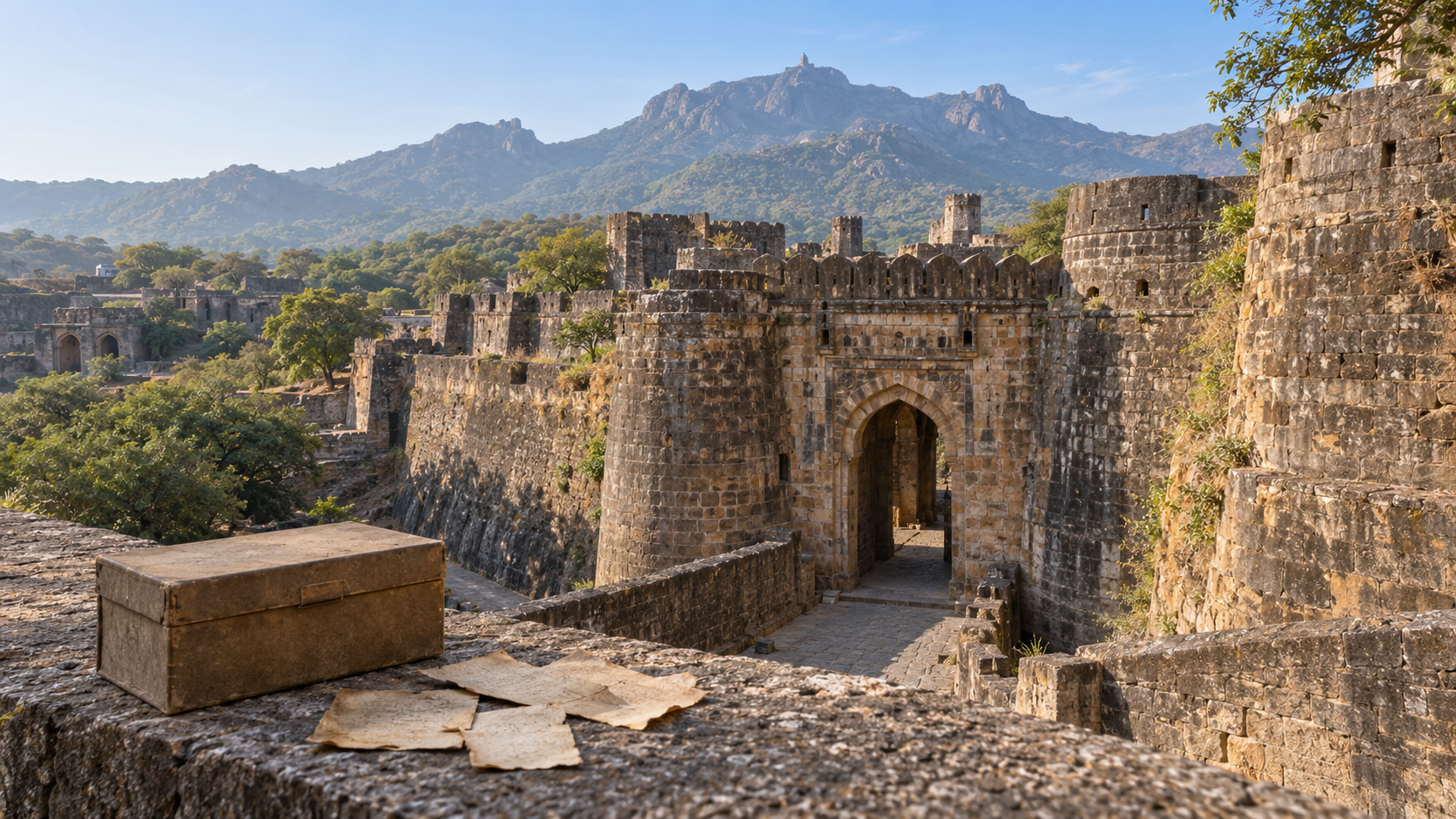
The claim often arrives wrapped in the twentieth-century politics of Partition. Shahnawaz Bhutto, father of Zulfikar Ali Bhutto, served as Dewan of Junagadh. After the Nawab left for Pakistan in 1947, Shahnawaz formally asked the Indian Union to assist with the administration and preservation of law and order. His signed communication placed him at a consequential moment in the integration of Junagadh.
That episode explains why the family appears in narratives about Sardar Patel, Junagadh, Pakistan, and the restoration of Indian authority. It does not provide evidence for or against descent from a person who supposedly lived before the tenth century. Shahnawaz’s political choices and the origin of his remote ancestors are different historical questions.
You should therefore be cautious when modern political approval or hostility is used to validate ancient genealogy. Dislike of the Bhutto family’s role in Pakistan cannot disprove a Hindu ancestry. Sympathy for a narrative of civilizational continuity cannot prove it. Ancestry is established by records, not by the moral reputation later attached to descendants.
If the Chalukya connection were eventually demonstrated, it would illuminate the layered history of Sindh and the endurance of Bharatiya lineages through migration, linguistic change, and religious conversion. It would not make a modern Muslim family secretly Hindu, nor would it erase the family’s subsequent history. Biological descent, inherited social identity, religious commitment, and political allegiance are related in human history, but they are not interchangeable categories.
Key takeaways
- The Bhutto family has a recorded tradition that its ancestors were Rajput migrants from Jaisalmer who entered Sindh roughly four centuries before 1979.
- A more specific reconstruction proposes that Bhutto developed from the Sanskrit name Bhurṭṭaka and that Bhurṭṭaka belonged to a Sūryavaṃśa Chalukya line.
- The wide historical distribution of Chalukya branches makes a northwestern connection possible, but geographical plausibility is not proof of descent.
- A sound case needs dated records linking Bhurṭṭaka, a later Rajput line in Jaisalmer, migration into Sindh, development of the family name, and the historically known Bhuttos.
- The responsible verdict is neither that the claim has been disproved nor that it has been established. It remains a hypothesis built around a genuine family tradition and a proposed dynastic connection.
When you next see the claim stated as a certainty, ask for the intermediate names, dates, places, and records. Until that chain is produced, the most accurate sentence to share is this: the Bhuttos preserve a Rajput-origin tradition connected to Jaisalmer, while their proposed descent from the Chalukyas through Bhurṭṭaka remains to be demonstrated.
References

Leave a Reply
You must be logged in to post a comment.