
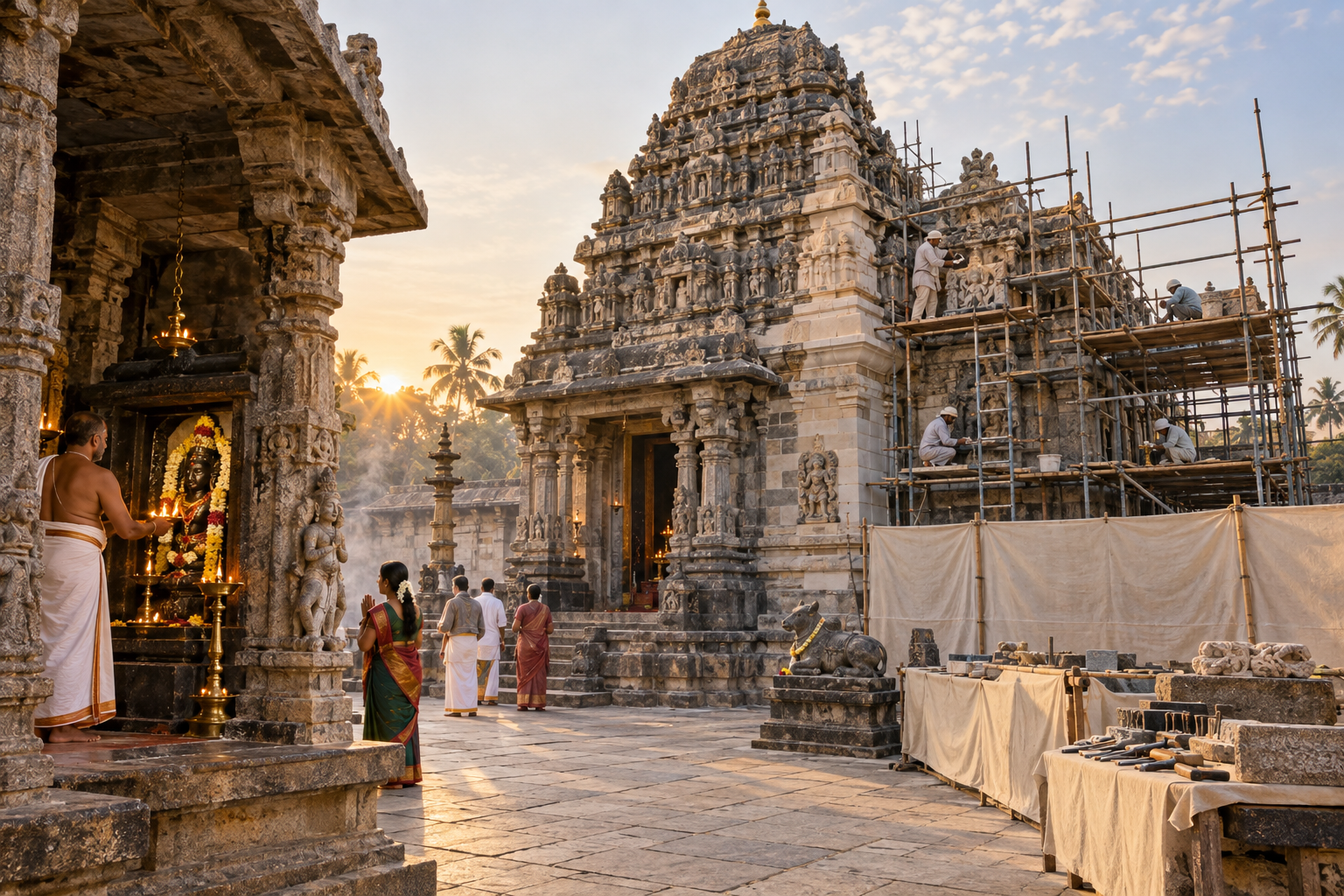
If your temple has a leaking roof, spreading cracks, damaged stonework or neglected ritual spaces, the first impulse may be to collect donations and call a contractor. Pause before anyone paints, demolishes, replaces or moves anything. The first question is not how quickly the temple can be made to look new. It is what must remain safe, sacred and continuous while the damage is repaired.
Jeernodhara gives that work a Dharmic frame. It asks you to recover a temple as a living place of worship, inherited knowledge and community responsibility. The practical task is to turn devotion into a disciplined restoration plan without confusing renovation, reconstruction and conservation.
Jeernodhara restores a temple, not merely a building
The term combines jeerna, meaning old or decayed, with uddhara, meaning upliftment or restoration. That definition matters because upliftment is broader than cosmetic improvement. A temple can acquire fresh paint and polished floors while losing historic workmanship, ritual coherence and the trust of its devotees.
A responsible Jeernodhara brief should address four connected layers:
- Physical safety: unstable masonry, failing roofs, water ingress, unsafe wiring and other hazards must be identified before decorative work begins.
- Sacred continuity: the sanctum, murti, established ritual arrangements and daily worship cannot be treated as ordinary construction-site contents.
- Material and craft continuity: old stone, timber, mortar, carvings, inscriptions and architectural fragments carry knowledge that replacement may erase.
- Institutional continuity: trustees, priests, artisans, devotees and donors need a clear record of what was decided, by whom and for what reason.
Write a short purpose statement before approving a design. It should identify what is being safeguarded, what is being repaired and which proposed changes are additions rather than restoration. If the committee cannot agree on those boundaries, it is not ready to authorize irreversible work.
Settle authority and document the temple before work begins
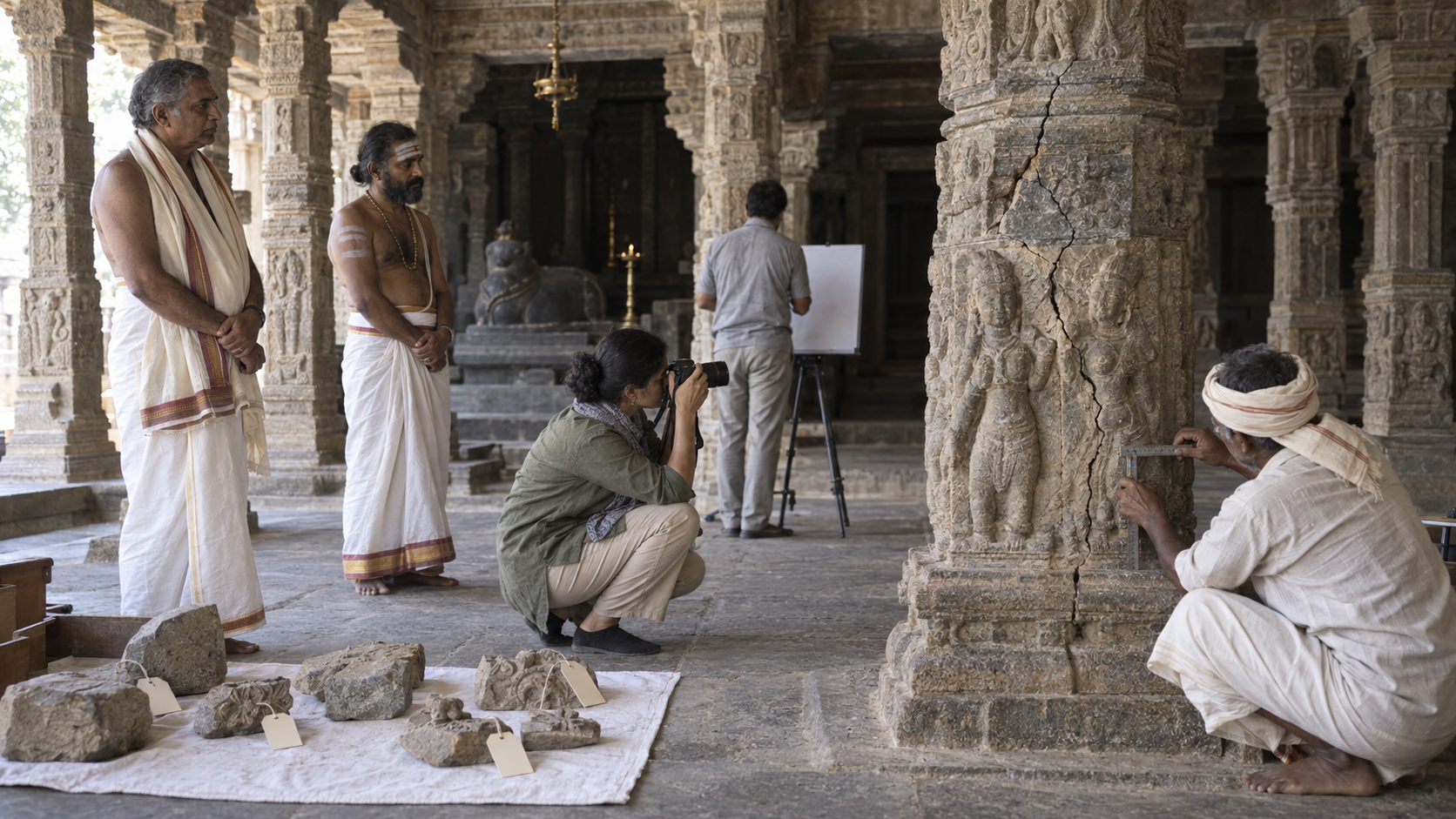
Many restoration disputes begin when permission is mistaken for expertise. A trustee may have administrative authority without being qualified to diagnose a structural crack. An engineer may understand loads and drainage without having authority to decide how a murti or ritual installation should be handled. A priest may guide sacred procedure without being expected to specify a roof repair.
Create an authority map that assigns each decision to the right lane:
- The lawful custodian or governing body approves expenditure, access, contracts and compliance.
- The temple’s recognized ritual authority decides how worship will continue and what procedures apply when sacred spaces or objects may be affected.
- Qualified structural and conservation professionals assess hazards, causes of deterioration and proposed interventions.
- Artisans experienced with the temple’s materials and craft traditions advise on repair methods and execution.
- Community representatives establish how plans, donations, disruptions and changes will be communicated.
No single lane should silently absorb the others. Record disagreements and resolve them before a contractor is asked to proceed.
Next, prepare a condition record. Give every elevation, room and significant feature a consistent name or number. Take dated photographs from wide, medium and close views. Mark visible cracks, damp areas, vegetation, surface loss, displaced stones, roof failures and previous repairs on a plan. Inventory loose fragments, inscriptions, carvings, architectural elements and ritual objects before anything is moved. Record where each item was found and where it is stored.
The record should also cover use. Note the routes taken during ordinary worship, the spaces required for important observances, areas that must remain accessible and activities that could expose devotees to construction hazards. This turns ritual continuity into a planning requirement rather than an afterthought.
If a roof, wall, ceiling or electrical installation appears dangerous, restrict access and obtain a qualified assessment. Do not send volunteers onto an unstable structure to investigate it. If an object must be moved to protect life or prevent immediate loss, photograph it in place, label it and secure it until the appropriate authorities decide its treatment.
Use a restoration sequence that prevents irreversible mistakes
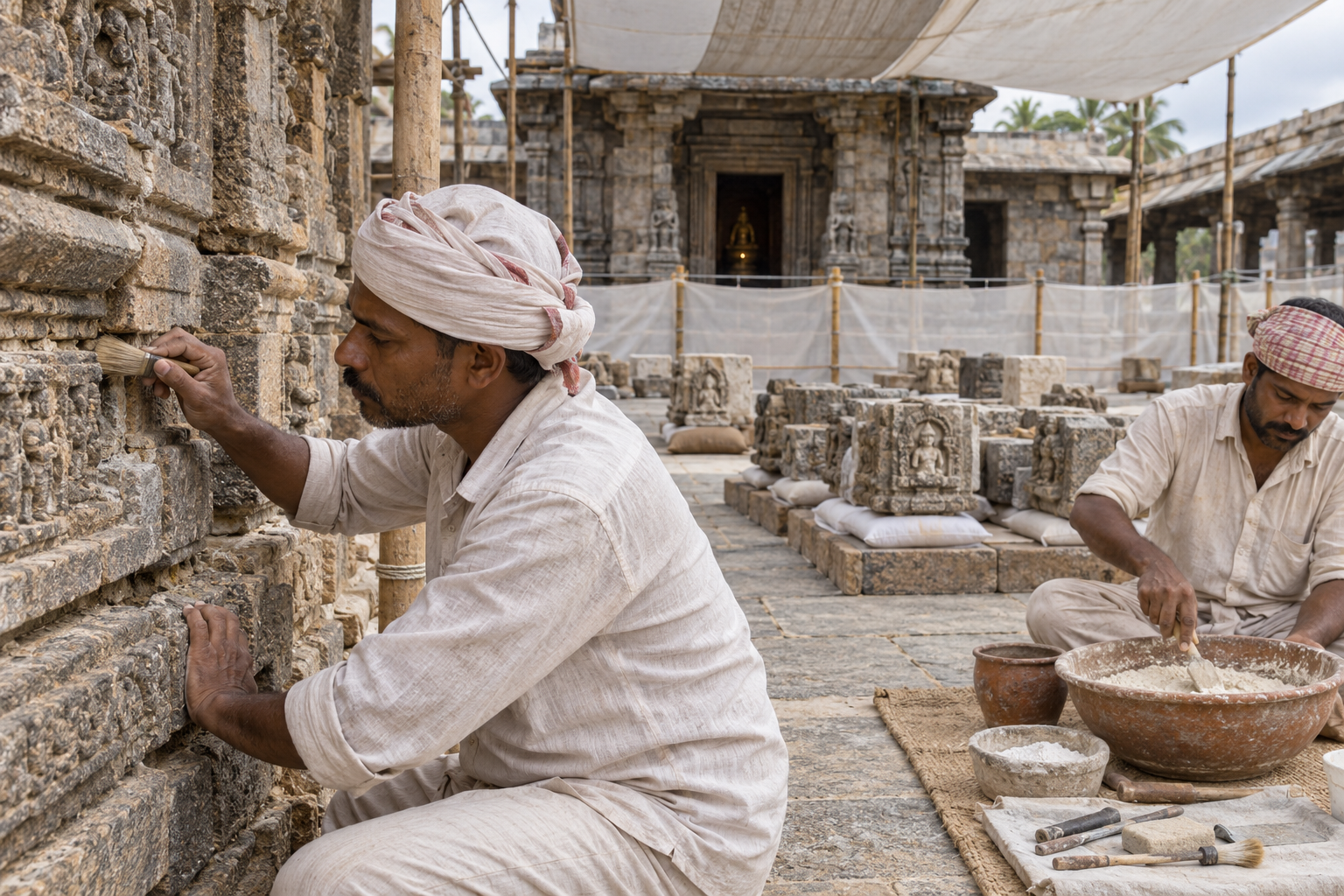
A disciplined sequence makes it harder for enthusiasm, deadlines or fundraising pressure to overtake judgment. Use these stages as decision gates, not merely as items to check after work has already started.
- Separate the scope. List emergency stabilization, essential repair, conservation of significant fabric, ritual requirements and optional improvements as different work streams. New toilets, offices, paving or visitor facilities may be worthwhile, but they should not be disguised as restoration.
- Diagnose the cause. A stain, crack or detached surface is evidence of a problem, not necessarily the problem itself. Trace water paths, movement, drainage failures and earlier repairs before covering the symptom. Replastering a damp wall without addressing the moisture source only conceals the next failure.
- Choose the least destructive effective intervention. Retain sound material where it can continue to serve. Replace only what cannot perform its function safely or cannot reasonably be conserved. The minimum intervention is not automatically the cheapest one; it is the option that solves the verified problem while sacrificing the least inherited fabric.
- Test material compatibility. Ask how a proposed mortar, coating, sealant, fixing or cleaning method will interact with the existing stone, brick, timber or plaster. Use samples or a small test area before applying a treatment widely. A hard, impermeable or chemically incompatible material can shift moisture and stress into older fabric.
- Approve the ritual-continuity plan. Decide how worship will proceed, which areas will close, who may enter restricted spaces, whether sacred objects must be protected or temporarily relocated, and what rites govern interruption and reopening. Follow the established tradition of the temple rather than improvising a generic ceremony.
- Procure competence, not just labour. Ask bidders for examples of comparable work, the names of the people who will actually supervise it, a written method, an itemized estimate and a process for reporting unexpected discoveries. A low total price reveals little if demolition, replacement and waste disposal are undefined.
- Create hold points. Require approval after concealed conditions are exposed, before sound historic material is removed, before replacements are fabricated, before finishes are applied and before sacred areas are returned to use. These pauses allow new evidence to change the plan without turning every change into a dispute.
- Close with a permanent record. Keep the final photographs, material specifications, drawings, invoices, changes, names of craftspeople and a list of elements repaired or replaced. Add a maintenance schedule that assigns responsibility for inspections, cleaning, drainage and small repairs.
Unexpected conditions are normal in an old structure. The contract and budget should therefore include a written way to stop, document, price and approve changed work. Otherwise, discoveries made during opening-up become hurried verbal decisions that nobody can later reconstruct.
Recognize the shortcuts that put heritage and trust at risk
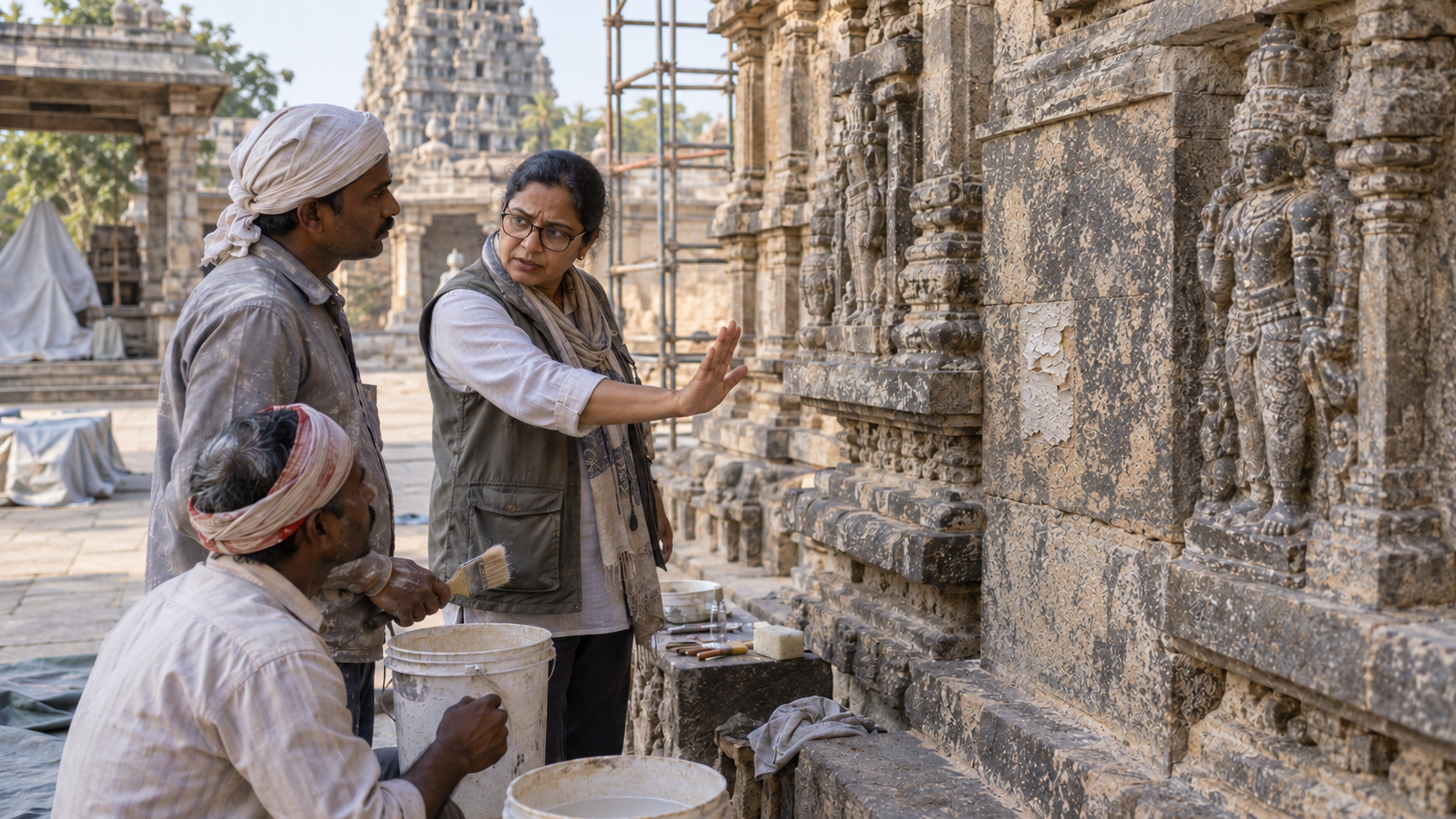
A restoration proposal deserves closer scrutiny when appearance dominates the conversation but condition, evidence and ritual practice are barely mentioned. Watch for these warning signs:
- Repainting, cladding or polishing is proposed before cracks, moisture and structural movement have been diagnosed.
- Demolition is described as easier than careful repair, but no condition record explains why existing material cannot be retained.
- Old fragments are being discarded as rubble instead of inventoried and reviewed.
- Missing ornament is being recreated from guesswork and then presented as though it were original.
- A reopening or consecration date is announced before investigation has established the scope.
- Design changes are approved through informal conversations without drawings, minutes or named responsibility.
- Donation appeals promise broad restoration while estimates combine sacred conservation, ordinary repairs and new construction into one unexplained figure.
- Work in or near the sanctum is treated as an ordinary site operation without a tradition-specific ritual plan.
If you are being asked to donate or serve on the committee, request the scope, condition record, approvals, itemized estimate, decision structure and reporting plan. Transparency is not a lack of shraddha. It protects the temple, the donor and the people carrying responsibility for the work.
Legal requirements may also apply to ownership, heritage status, construction, archaeology, fire safety, electricity, public access and the handling of funds. These requirements differ by jurisdiction. Establish which permissions are needed before work begins, and obtain local professional or legal advice where the status of the temple or property is unclear. Do not assume that religious purpose automatically removes ordinary safety and legal duties.
Key takeaways for trustees, devotees and donors
- Treat Jeernodhara as the recovery of a living sacred institution, not a beautification project.
- Document every significant space, condition and movable element before intervention.
- Keep administrative, ritual, technical, craft and community decisions in clearly assigned hands.
- Repair verified causes before covering visible symptoms.
- Distinguish conservation and essential repair from optional new construction in both the scope and the budget.
- Use test areas, written methods and approval hold points before committing the entire temple to a treatment.
- Preserve a complete record so that future caretakers know what changed and how to maintain it.
At your next temple meeting, resist starting with the question, “How soon can construction begin?” Ask first for four things: an authority map, a condition record, an immediate safety plan and a written boundary between restoration and new development. Once those exist, the committee can seek prices, permissions and a timetable from a position of clarity. That is how devotion becomes durable stewardship.
References

Leave a Reply
You must be logged in to post a comment.