

If you are trying to decide whether Gorakshpeeth is primarily a religious seat, a Hindutva institution, a political network, or the foundation of a chief minister’s public authority, an either-or answer will mislead you. Each description captures a different layer, and each layer must be judged by different evidence.
The practical task is to separate religious succession, ideological commitment, organizational relationships, electoral politics, and constitutional government. Once you do that, Gorakshpeeth’s legacy becomes easier to understand without either minimizing its Hindu character or treating every political action as sacred.
Start with the peeth, not the party
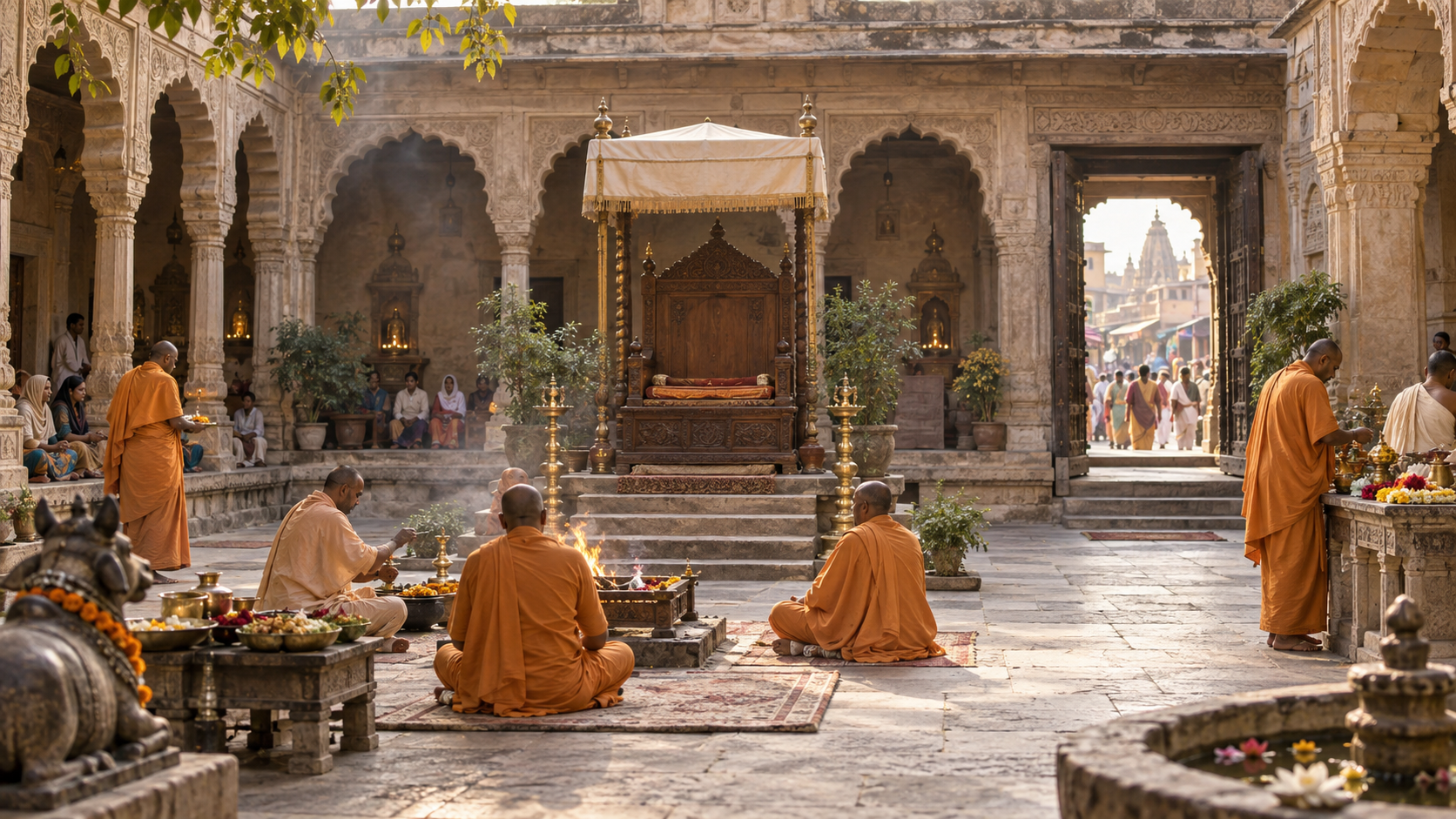
A peeth is an enduring seat of religious authority. A party office is organized around elections, candidates, coalitions, and changes in leadership. A peeth works on a longer horizon: it preserves a lineage, maintains disciplines and institutions, carries inherited obligations, and gives continuity to a community’s public memory.
That distinction matters because political influence does not begin only when a religious leader contests an election. A peeth can shape public life through moral authority, social trust, cultural advocacy, and the priorities it teaches its followers to regard as legitimate. None of those things automatically translates into electoral control, but they can create a durable public constituency that survives individual campaigns.
When you encounter a statement or action associated with Gorakshpeeth, first identify the role being exercised. Is Yogi Adityanath acting as Uttar Pradesh’s Chief Minister, speaking from an inherited religious lineage, addressing a Hindu civilizational concern, or functioning within party politics? The same person can occupy several roles, but those roles are not interchangeable. A devotional tribute is not automatically a government programme, and a government decision is not validated merely by its association with a revered institution.
This role test prevents the most common analytical mistake: collapsing a centuries-facing religious institution into the political needs of a single election cycle.
The three-name succession carries the central claim

The modern political lineage is commonly framed as running from Mahant Digvijaynath through Mahant Avaidyanath to Yogi Adityanath. The significance of those three names lies in succession: leadership changes, while an institution continues to present Hindu religious authority as relevant to public life.
Continuity, however, does not mean that three leaders faced identical circumstances or employed identical methods. A legacy can preserve its governing conviction while changing its language, alliances, organizational tools, and relationship with state power. You should therefore ask two separate questions. What obligation is claimed as permanent? What political method belongs only to a particular leader and moment?
Yogi Adityanath’s public identification with the continuation of the same legacy is best read as a claim of inherited responsibility. It does not, by itself, establish that every policy, alliance, or political tactic is inherited unchanged.
This gives you a useful rule: invoke continuity when explaining durable commitments, but demand contemporary evidence when judging a specific decision. The lineage can explain why Hindu concerns remain central. It cannot substitute for examining what a government actually did, how an organization actually behaved, or why a particular political choice was made.
Hindutva is not the same question as RSS control
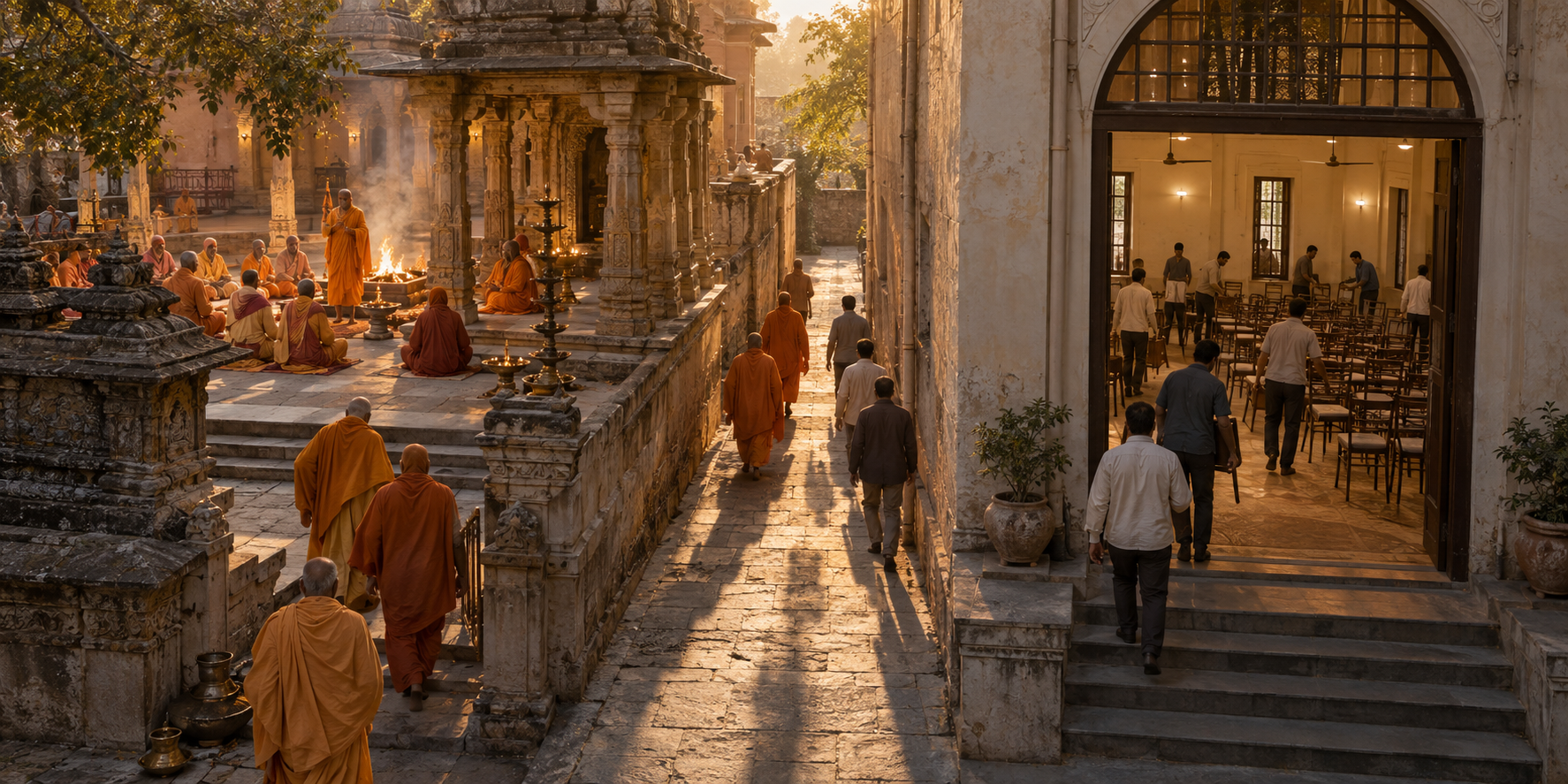
The description of Gorakshpeeth’s legacy as "unloved by the RSS" should be treated as an interpretation until a specific episode, decision, statement, or organizational record establishes the nature of the disagreement. "Unloved" is vivid language, but it does not tell you whether the underlying relationship involved rivalry, tactical friction, institutional autonomy, a dispute over personnel, or merely different centers of influence.
This distinction is especially important because Hindutva and the RSS are not synonyms. Hindutva is a disputed but wider vocabulary of Hindu civilizational and political assertion. The RSS is a particular organization. No conclusion about Gorakshpeeth’s Hindutva commitment follows automatically from the warmth or friction of its relationship with that organization.
An institution can share broad civilizational aims with a larger movement while preserving its own leadership, priorities, constituency, and methods. Coordination on one issue can coexist with negotiation or disagreement on another. Conversely, common rhetoric does not prove that one institution commands the other.
When someone claims either complete harmony or deep hostility, look for the mechanism. Who set the priority? Was there an explicit public disagreement? Did either institution take a formal action? Was the difference ideological, electoral, personal, or administrative? Did it persist, or was it confined to one issue? Without answers to those questions, a claim about the RSS-Gorakshpeeth relationship remains a label rather than an explanation.
This is not a demand to ignore conflict. It is a demand to identify conflict precisely. Institutional independence can be a source of strength within a broad Hindu movement, while an unresolved struggle over authority can carry real political consequences. You cannot tell which one you are seeing from emotional vocabulary alone.
Religious authority raises the standard of political judgment
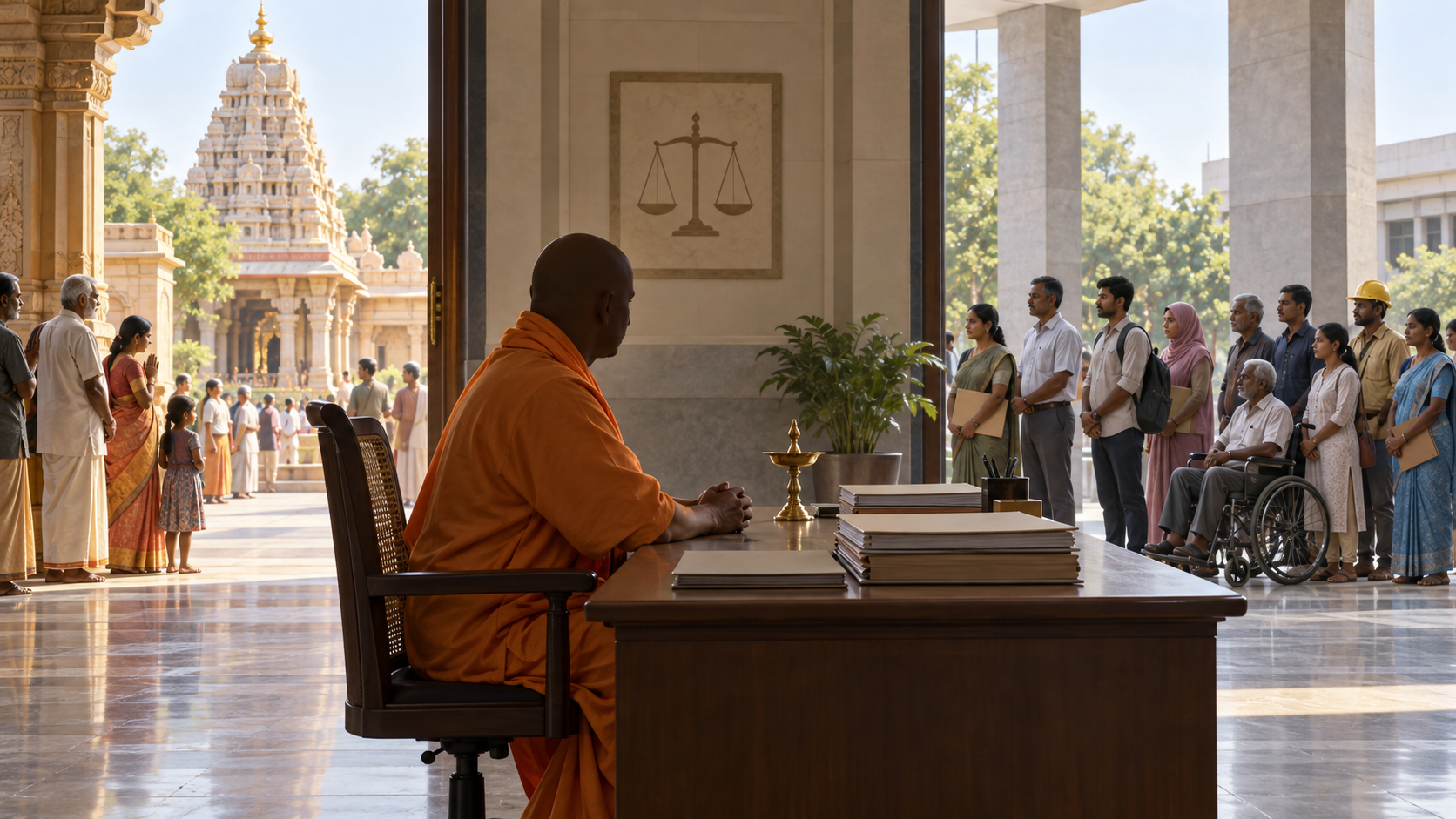
For a pro-Hindu reader, the temptation is to treat a respected lineage as advance certification of every political act associated with it. That would weaken both dharma and political accountability. Religious authority should raise the standard applied to public power, not lower it.
Use a double test. First examine the dharmic purpose: does an action protect legitimate Hindu interests, sustain cultural confidence, tell the truth about civilizational concerns, and resist the expectation that Hindu institutions must remain voiceless? Then examine the exercise of state power: is the action lawful, competent, proportionate, just, and directed toward the welfare of the whole polity?
These tests belong together. Reducing Gorakshpeeth to electoral machinery ignores the religious commitments that give its public role meaning. Granting every policy devotional immunity confuses reverence with constitutional judgment. Rajadharma does not require a Hindu leader to conceal Hindu convictions, but it does require power to be exercised with justice, restraint, and responsibility.
The same discipline should govern criticism. A policy disagreement does not by itself disprove fidelity to a lineage. Nor should the saffron robe or the title of mahant be treated as a political disqualification. Judge the religious claim as a religious claim, the ideological position as an ideological position, and the government record as a government record.
This approach lets you remain firmly pro-dharma without becoming intellectually passive. Respect for a peeth and scrutiny of political power are not rival duties.
Key takeaways: five questions for every new claim
- Which role is active? Distinguish the Chief Minister, the religious successor, the Hindutva advocate, and the party politician before interpreting a statement.
- What exactly continues? Identify the inherited principle or obligation instead of assuming that every tactic and policy has remained unchanged.
- Is the claim about Hindutva or about the RSS? Shared Hindu commitments do not establish organizational control, while organizational friction does not erase ideological commitment.
- What proves the relationship? Look for a named decision, explicit statement, formal action, or repeated pattern before accepting claims of either subordination or hostility.
- Does the action pass both tests? Evaluate its dharmic purpose and its lawful, competent, and just use of public power separately.
The next time a headline invokes Gorakshpeeth, mark the claim as lineage, ideology, organization, election, or governance before deciding what it means. If the argument slides between those categories without evidence, do not inherit its confusion. Gorakshpeeth’s legacy deserves serious respect as a dharmic institution and equally serious judgment wherever that legacy enters state power.
References

Leave a Reply
You must be logged in to post a comment.