
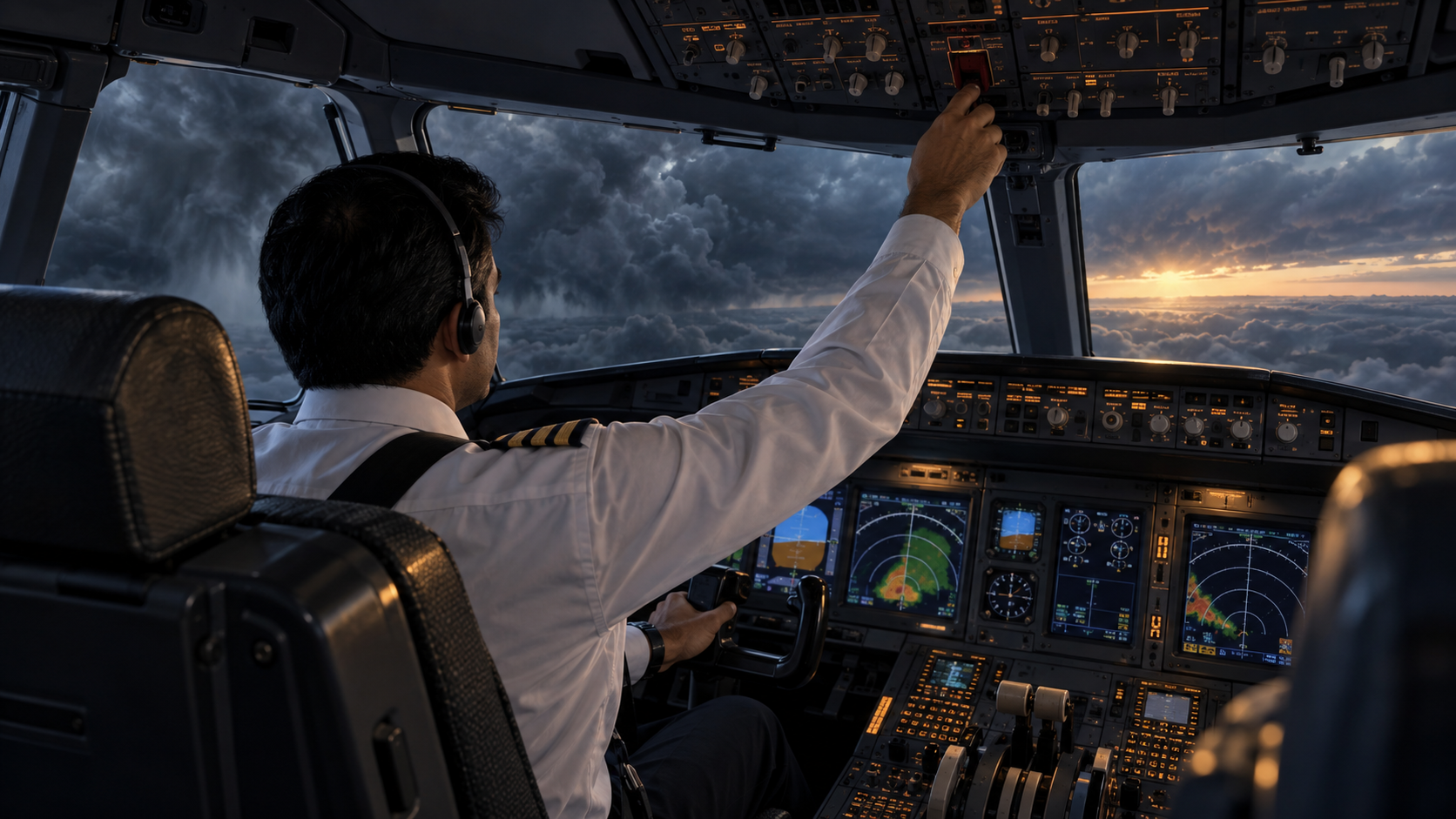
If you came here asking whether an Indian pilot stopped a terrorist attack, the careful answer is this: Captain Smit Machchhar appears to have acted with extraordinary courage during a grave flight-deck emergency, but a terrorist motive has not been established.
That distinction does not diminish him. It protects the truth of what he reportedly did. You can honour courage without turning an allegation into a verdict, and you can take pride in an Indian aviator without using an unfinished investigation to condemn an entire community.
What is established, reported and still unknown

Begin with the narrow factual core. Flydubai flight FZ1073 was travelling from Dubai to Tel Aviv when a flight-deck altercation prompted emergency signals and a diversion to Tabuk, Saudi Arabia, where the aircraft landed safely. Flydubai confirmed that an altercation occurred and said crew members secured the aircraft before landing.
| Question | What you can responsibly say |
|---|---|
| Was there a serious in-flight incident? | Yes. The aircraft transmitted emergency signals, including code 7500, and diverted to Tabuk after a flight-deck altercation. |
| Was Captain Machchhar wounded? | He was reportedly stabbed during the confrontation. Treat that as a reported detail while the sequence is investigated. |
| How did he respond? | He reportedly resisted the assailant and opened the cockpit door, enabling crew members and passengers to intervene. The precise order of events has not been independently established. |
| Who was responsible? | The alleged assailant has been identified in reports as the co-pilot. That identification remains part of the account under investigation. |
| Was a crash axe used? | An axe-related claim has circulated, but the weapon has not been independently established. |
| Was it terrorism? | Passenger accounts include an alleged religious utterance, but the motive and exact circumstances remain under investigation. Terrorism is therefore an allegation, not a settled finding. |
Code 7500 is associated with unlawful interference aboard an aircraft. It alerts aviation authorities to the nature of an emergency; it does not identify an assailant’s ideology or prove a terrorist motive. Treating the code as a completed investigation is the first common error to avoid.
The dramatic flight figures require the same discipline. A peak descent rate of more than 23,000 feet per minute has been estimated from ADS-B flight data, but it is not a flight-recorder measurement. You may describe it as an estimate of an extreme descent, not as a final technical finding about the aircraft’s movement or control inputs.
Key takeaways
- You can describe Captain Machchhar’s reported conduct as heroic without declaring the incident a proven terrorist attack.
- The flight-deck altercation, emergency signals, diversion and safe landing form the firmest factual core.
- Code 7500 indicates possible unlawful interference; it does not establish motive.
- The stabbing, identity of the assailant, cockpit-door sequence and weapon should retain words such as reported or alleged.
- Dharmic pride is strongest when it remains joined to satya, restraint and refusal of collective blame.
The pilot’s courage and the assailant’s motive are separate questions
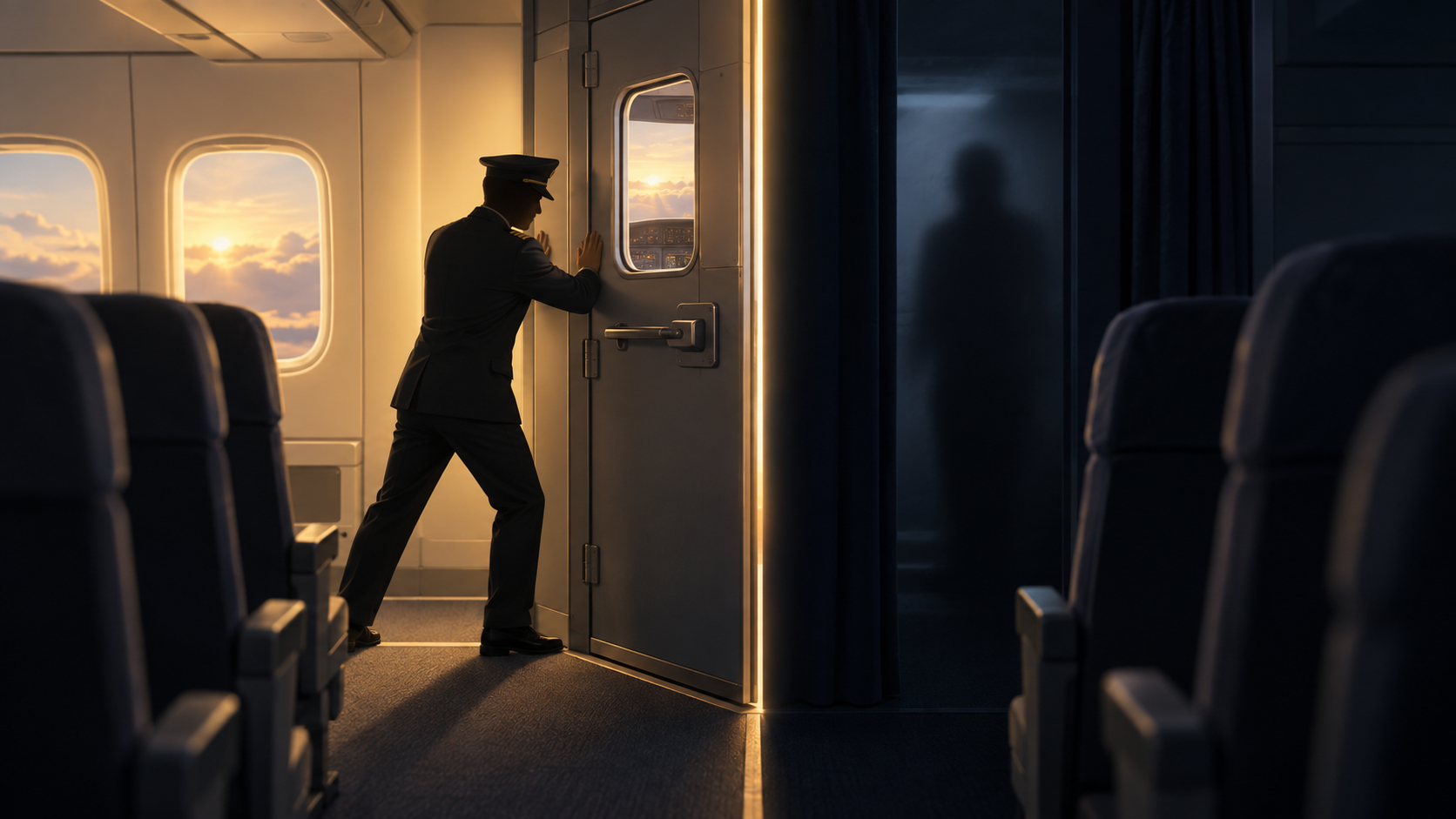
Public discussion often collapses two questions into one: Was the captain brave, and was the assailant a terrorist? They require different evidence.
If the reported sequence is verified, a wounded captain continued resisting danger, created an opening for others to intervene and contributed to the safe conclusion of a catastrophic emergency. That is courage measured through conduct. It does not depend on knowing why the other person acted.
A terrorism label concerns intent. An emergency code, a violent act and even the alleged shouting of Allahu Akbar during the chaos may become pieces of an investigation, but none settles motive by itself. Investigators would still need to establish who acted, what was planned, what evidence supports an ideological purpose and how the cockpit confrontation unfolded.
This is also why praise from political leaders must not be mistaken for an investigative finding. Prime Minister Narendra Modi praised Captain Machchhar’s courage and presence of mind, while Benjamin Netanyahu and Donald Trump were also reported to have commended him. Such recognition can honour a response under danger. It cannot determine the attacker’s motive, weapon or legal culpability.
When you discuss the incident, keep those two tracks separate. Say what the captain reportedly did. Then state, in a separate sentence, what remains unknown about the person he confronted. This small change prevents admiration from carrying claims the evidence cannot yet bear.
A Dharmic reading requires courage and restraint

Public tributes have compared Captain Machchhar’s resolve to Arjuna and Hanuman. Used carefully, those comparisons illuminate two Dharmic qualities: steadiness when duty becomes dangerous, and strength placed in the service of others. Used carelessly, they can turn a human emergency into mythology before its facts are known.
A more demanding Dharmic response applies four disciplines to the way we speak:
- Satya: preserve the difference between what is confirmed and what is alleged. A stirring claim does not become true because it flatters our identity.
- Viveka: distinguish the captain’s observable or reported conduct from speculation about another person’s inner motive.
- Dharma: honour action that protects life, sustains duty and prevents panic under extreme pressure.
- Ahimsa: do not convert the unproven conduct of one person into suspicion or hatred directed at millions of unrelated people.
This is not timid language. Restraint is hardest when a story appears to vindicate your community and when dramatic footage rewards the fastest, strongest claim. That is precisely when truthfulness matters most.
Indian and Hindu readers have every reason to recognise the dignity of disciplined duty. But Captain Machchhar’s reported courage should not be used merely as ammunition in an identity quarrel. His significance lies in the possibility that, while wounded and under pressure, he continued acting for the safety of people entrusted to him. That is a better expression of dharma than any premature slogan about the alleged assailant.
How to share the story without outrunning the facts

A defensible three-sentence account is: Captain Smit Machchhar is being praised for his reported courage during a serious flight-deck incident aboard Flydubai FZ1073. The flight transmitted emergency signals, diverted to Tabuk and landed safely. Allegations that the co-pilot stabbed him, along with claims about the weapon and motive, remain under investigation.
If you plan to post or discuss the incident, use this check before pressing publish:
- Lead with the flight, route, flight-deck altercation, diversion and safe landing. These details tell people what happened without deciding the disputed questions for them.
- Attach uncertainty to the claim that needs it. Write reportedly stabbed, alleged assailant and motive under investigation. One disclaimer at the end does not repair several unqualified claims above it.
- Do not treat a passenger interview as a view inside the cockpit. Passenger testimony may be important, but it cannot by itself establish every action, control input or spoken word behind a closed door.
- Do not present the ADS-B descent estimate as black-box evidence. Flight-recorder data and a formal reconstruction would carry a different evidentiary weight.
- Avoid calling the event a second 9/11 unless an investigation establishes the intended objective. That comparison assumes a planned mass-casualty terror operation that has not yet been proven.
- If a later official finding changes the sequence, edit or remove the older claim. Quietly leaving misinformation in circulation is not made acceptable by having used the word alleged once.
The same standard applies to images and clips. A rapid descent visualization can demonstrate danger, and a passenger’s recollection can convey fear, but neither proves motive. Caption each item for what it actually shows. Do not make the audience infer that a reconstruction, interview and cockpit recording are the same kind of evidence.
When the next dramatic claim appears, pause before repeating its strongest label. Honour the protective act, preserve every necessary qualifier and wait for the investigation before assigning motive. That is not a retreat from Hindu pride. It is satya practised in public.
References

Leave a Reply
You must be logged in to post a comment.