

If you are looking at a temple dispute and wondering whether it is reform, reclamation, or political capture, do not begin with party loyalty. Ask who is claiming which power, what authorizes it, and whether the claim can survive a calm, written process. That test protects a shrine better than slogans do.
The confrontation at Maa Kamakhya Temple shows why this distinction matters. Historical patronage, ritual custody, public administration, and electoral influence can overlap, but they are not interchangeable. Once a political leader uses a mass gathering to press a claim of control, devotees need a disciplined way to separate legitimate grievances from coercion.
A crowd cannot establish sacred authority
On 22 September, West Bengal BJP Rajya Sabha MP Ananta Maharaj reportedly arrived at the Kamakhya shrine in Guwahati with an estimated 7,000 to 10,000 Koch-Rajbongshi followers. The gathering was presented as an attempt to assert authority over temple operations. Clashes with local pandas reportedly left several priests injured, including some said to have suffered head wounds.
The crowd estimate, injury descriptions, and statements attributed to Maharaj are one-sided allegations in the available record and are not independently established here. That limitation matters when you discuss responsibility. It does not weaken the basic principle: neither ancestry, party office, popularity, nor the size of a gathering can adjudicate temple authority at the gates of a shrine.
A genuine historical grievance deserves examination. It does not confer a licence to overwhelm existing custodians. A genuine demand for administrative reform deserves a hearing. It does not justify injury, intimidation, or an immediate transfer of control. Dharma is not defended by making physical force the final pramana.
During such a confrontation, the first administrative duty is narrow: protect people, keep access routes clear, secure the sanctum and records, obtain medical care for anyone injured, and prevent either side from changing appointments, accounts, locks, or possession under pressure. The historical dispute can wait for evidence. Safety cannot.
Keep four different kinds of authority separate
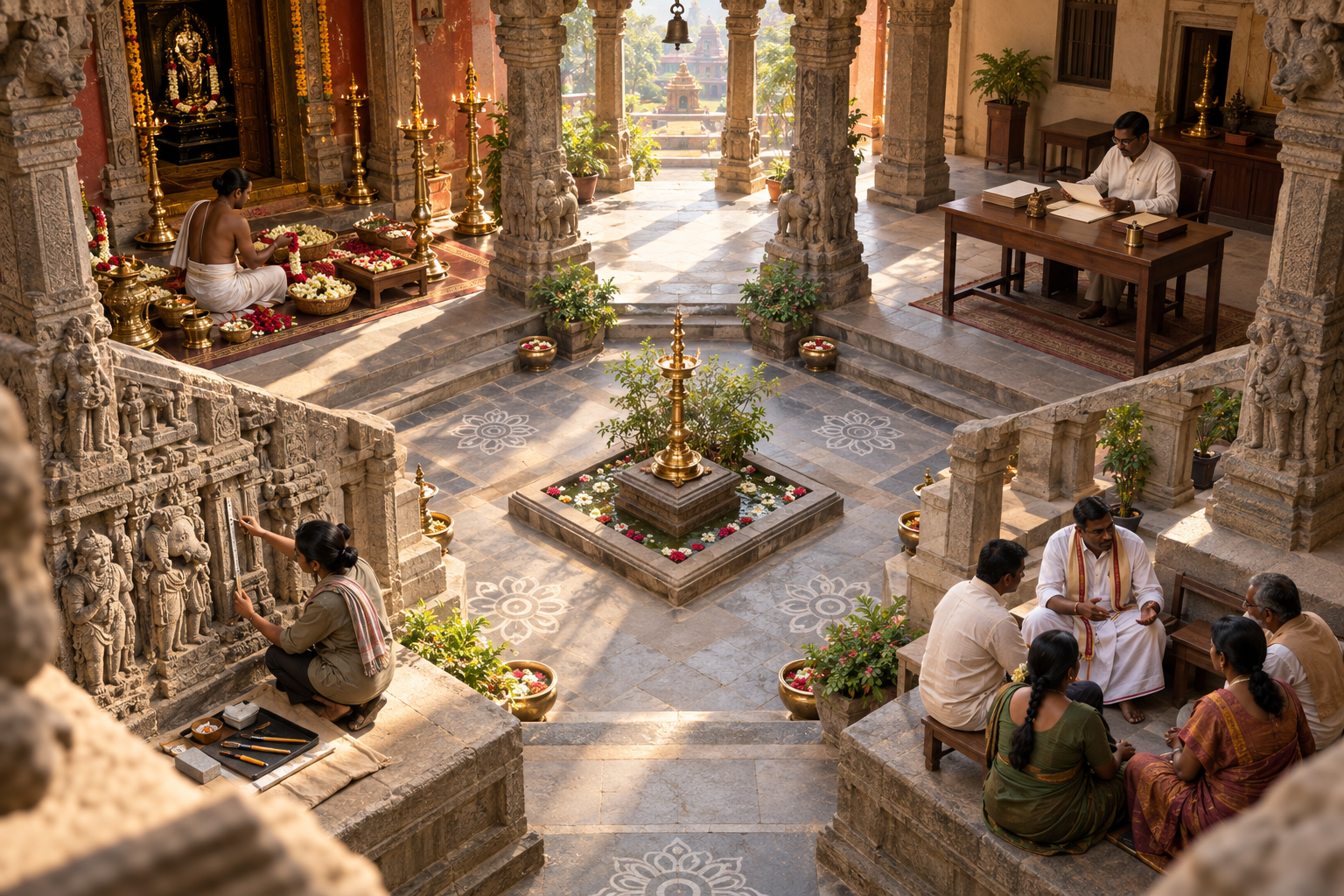
Temple disputes become combustible when four distinct relationships are treated as if they were one. Before supporting any claimant, identify the kind of authority actually being asserted.
- Ritual authority concerns puja, festivals, initiations, sacred protocols, hereditary or initiated service, and the continuity of a recognised tradition. It depends on the temple’s established maryada and competent custodianship.
- Administrative authority concerns property, staff, accounts, maintenance, queues, security, donations, and the body empowered to make institutional decisions.
- Historical patronage concerns who built, rebuilt, endowed, protected, or granted land to a temple. Patronage may create obligations, honours, or historically documented rights, but its present consequences have to be proved rather than assumed.
- Political influence comes from elected office, party organisation, access to officials, and the ability to mobilise supporters. It can help protect a temple, but it is not itself a ritual qualification, deed, succession rule, or governing instrument.
Evidence in one category does not automatically establish authority in another. A ruler who financed reconstruction did not thereby become the presiding priest. A priestly lineage does not automatically own temple property. An elected representative does not acquire institutional control by speaking for a large community. A government-recognised committee does not gain the power to rewrite theology.
This is the point at which political patronage can become political capture. Patronage supports the shrine while respecting its governing limits. Capture uses money, office, appointments, identity, or organised pressure to turn support into command. You can judge the difference by asking whether the patron accepts transparent rules even when those rules deny the patron control.
Test every Kamakhya claim on its own evidence
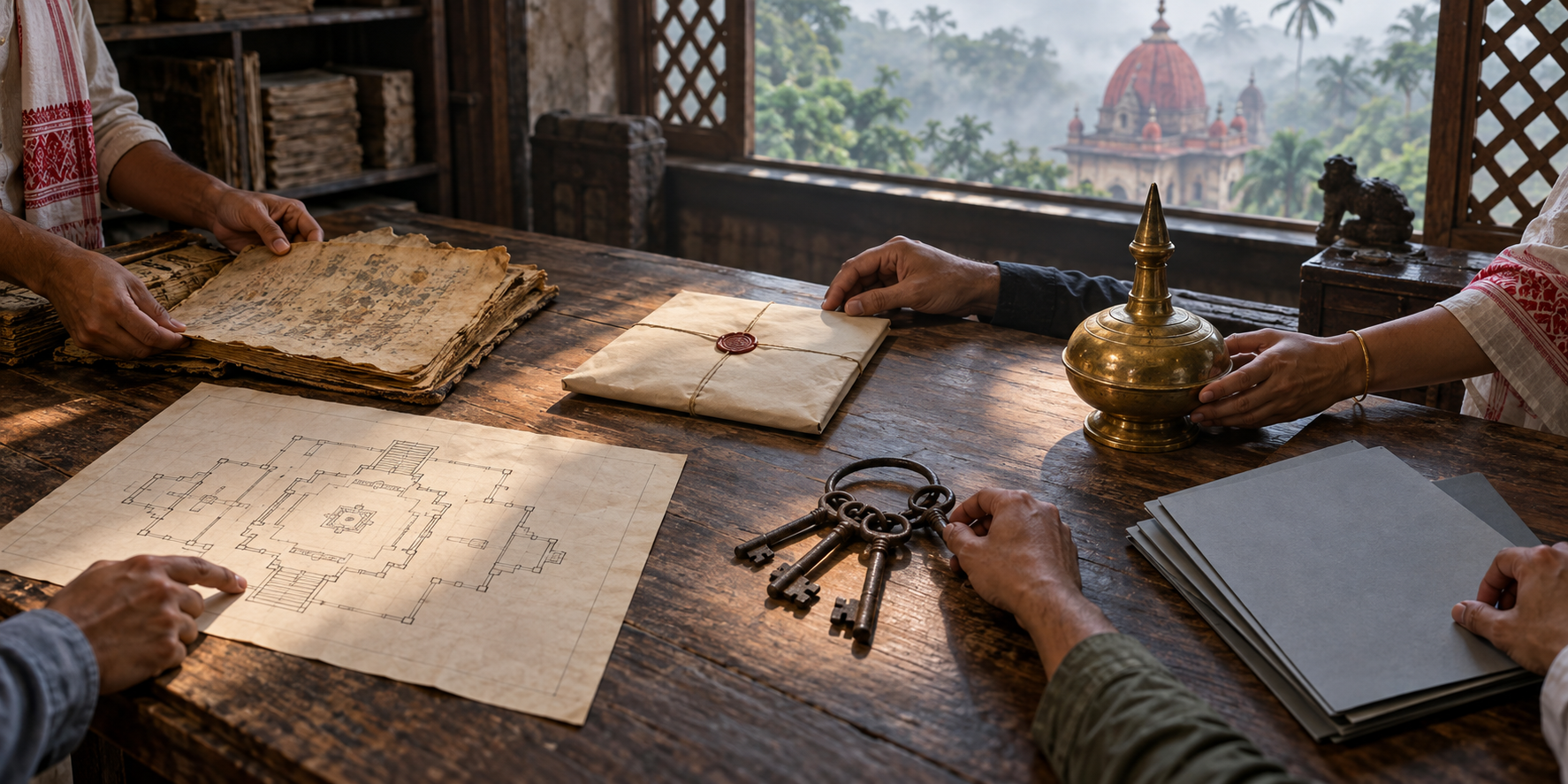
Maharaj was reported to have argued that the Koch-Rajbongshis rebuilt Kamakhya and merely hired priests from Varanasi. That formulation contains two separate propositions: a claim about past reconstruction and an inference about present authority. Even if the first were established, the second would still require its own evidence.
A serious inquiry would look for inscriptions, grants, governing instruments, judicial or administrative records, succession practices, documented privileges, and evidence of continuous custom. It would also hear the existing pandas and Koch-Rajbongshi representatives separately. A compressed political speech cannot substitute for that work.
The theological assertions must be separated again. Maharaj was also reported to have described Narakasura as a god, denied Sri Krishna’s divinity through a story involving a curse by 16,000 Gopinis, and connected human sacrifice at the shrine to a Koch royal punishment for theft of temple funds. Each is a textual or historical claim requiring precise support: which text, which recension, which inscription, which chronicle, which date, and which interpretive tradition?
Even a well-supported theological interpretation would not, by itself, establish the right to control a temple’s staff, property, or treasury. Conversely, an administrative office cannot make a weak theological proposition true. Insist on the correct kind of proof for the specific power being claimed.
You should also resist a false choice between local belonging and wider Hindu devotion. Kamakhya can be central to Assamese cultural life, sacred to its established ritual community, historically connected to royal patrons, and revered by Hindus beyond Assam. Those relationships can coexist. The practical question is not who feels devotion, but who may exercise a defined power and under what accountable rule.
Use this seven-question test before backing a claimant
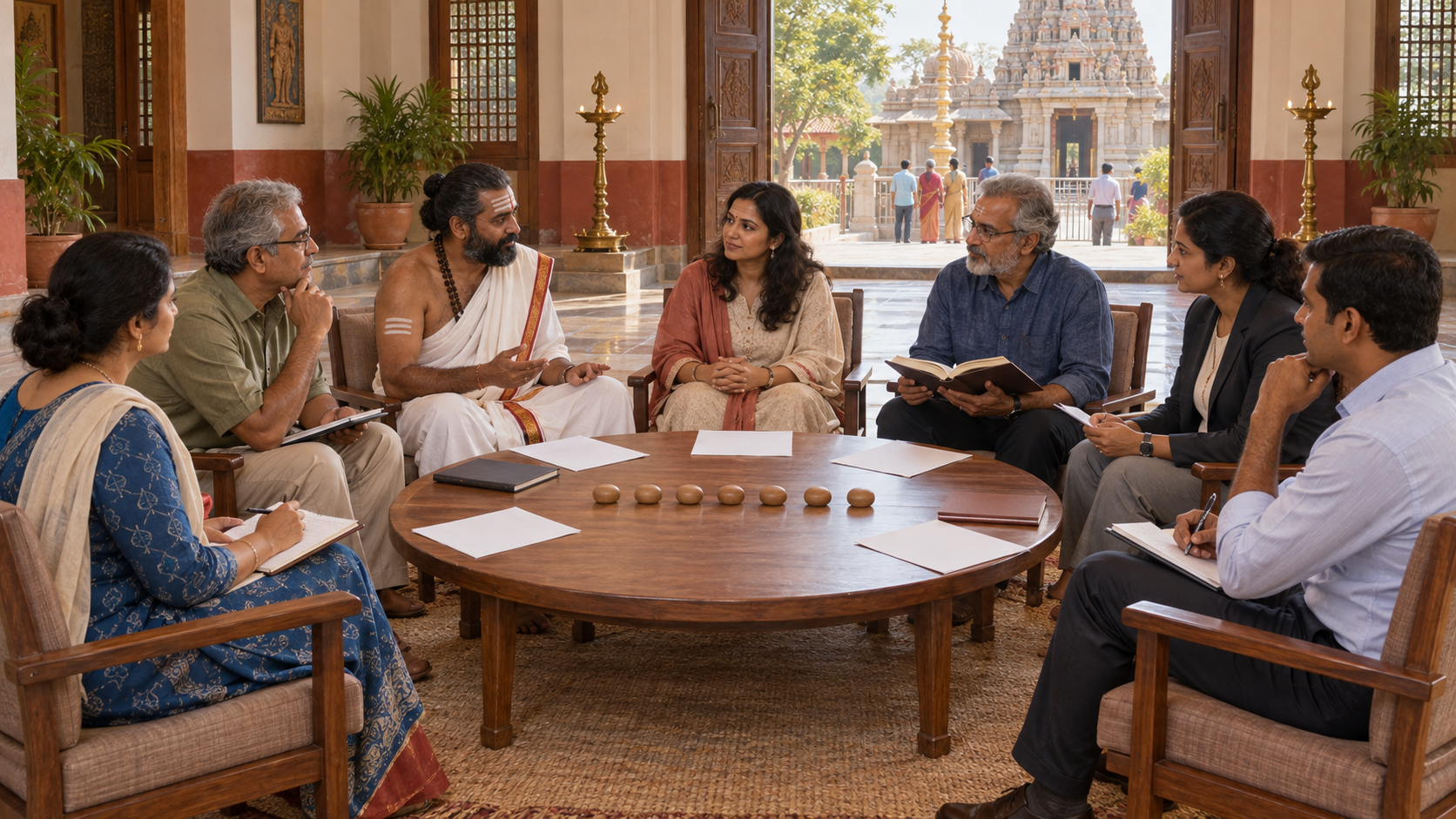
When a leader says a community must reclaim a temple, ask these questions in order. If the answers remain vague, do not lend your name, donation, or presence to the campaign.
- What exact power is being claimed? Control of puja, appointment of priests, a seat on a board, access to accounts, ownership of land, management of donations, festival honours, and recognition of historical status are different demands.
- What presently authorizes that power? Ask for the relevant deed, trust instrument, statute, court order, administrative rule, succession record, or documented custom. A general appeal to history is not enough.
- What connects the historical fact to the present right? Rebuilding or endowing a shrine may be important, but the claimant must show what authority followed, whether it was hereditary or conditional, and whether it continued.
- Has contrary evidence been heard? A credible process lets existing ritual custodians, local devotees, historians, affected communities, and administrators answer the claim before a decision is made.
- Is the evidence being examined without mass pressure? A convoy or crowd changes the balance of physical power. It does not strengthen a document, lineage, custom, or theological argument.
- Who gains control of appointments and money? Demand disclosure of proposed trustees, signatories, beneficiaries, hiring powers, donation controls, and conflicts of interest. Pious language should not conceal a transfer of institutional assets.
- Would the claimant accept the same procedure if an opponent used it? A rule is principled only if it survives a change of party, caste, community, or government.
This test does not presume that existing management is beyond criticism. Hereditary custodians can be unaccountable. State-appointed boards can be politicised. Trustees can mishandle funds. Reform may be necessary. But the remedy for opaque control is documented, reviewable governance, not a new opaque controller with a larger crowd.
Respond without becoming another faction
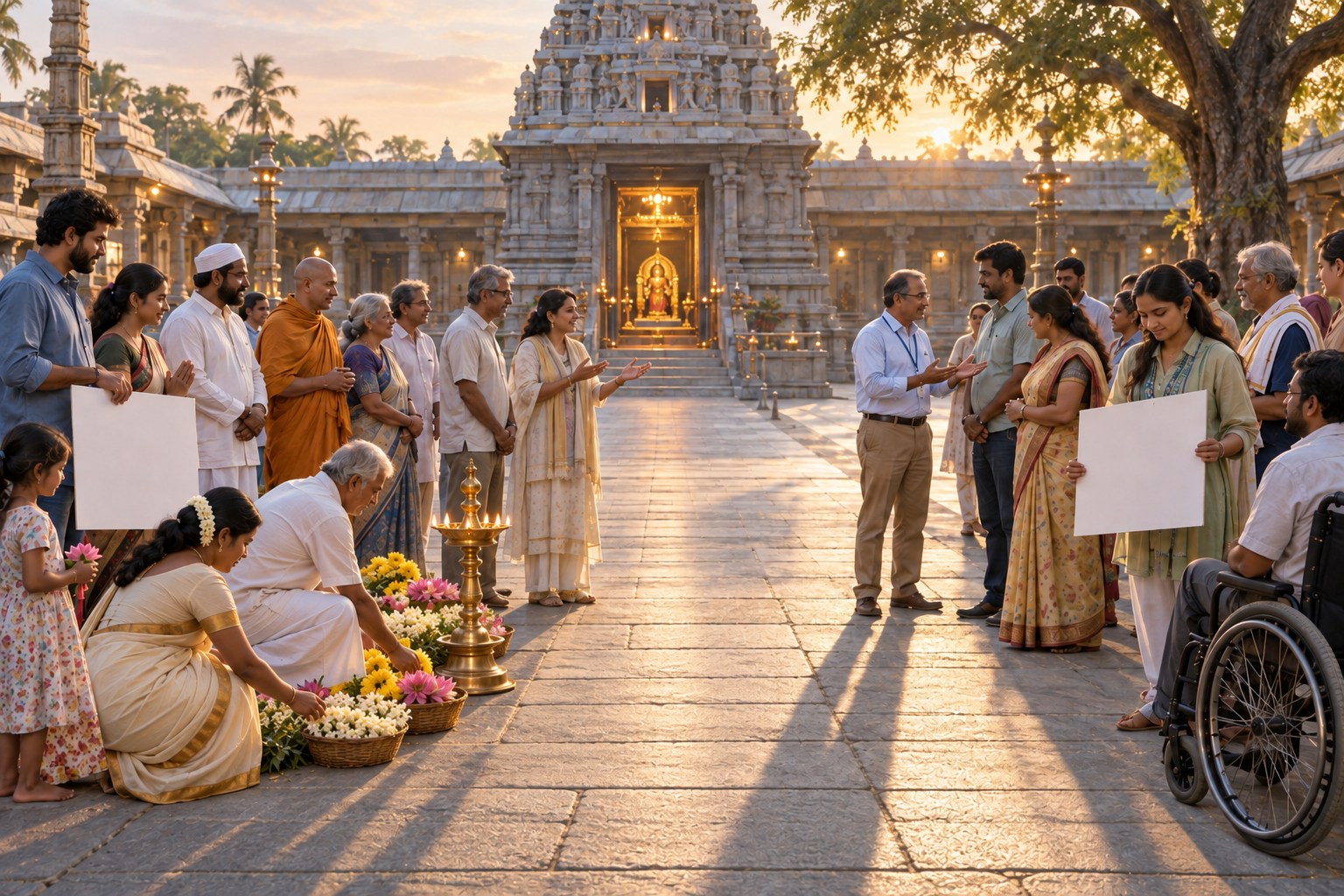
During a confrontation
- Do not organise a counter-crowd. Competing mobilisation raises the risk to priests, pilgrims, staff, police, and the shrine itself.
- Preserve original videos and photographs with their time, location, uploader, and full sequence. Do not circulate clipped footage as proof of what happened before or after the clip.
- Record the exact demand made by each party. A dispute over historical recognition should not quietly become a demand for keys, accounts, appointments, or physical possession.
- Ask the administration to issue a written interim order identifying safety measures and any temporary restrictions. No lasting governance change should be made under duress.
- Use qualified local legal counsel before filing claims, signing settlements, changing a governing instrument, or transferring property or financial authority. Those steps can create lasting legal consequences.
After immediate safety is restored
- Publish the temple’s governing instrument, appointment rules, authorised officeholders, and dispute procedure, subject to legitimate privacy and security limits.
- Create separate tracks for ritual questions, historical claims, financial scrutiny, and public-order responsibility. Each requires different expertise and evidence.
- Include recognised ritual custodians in decisions affecting worship. Include historians when evaluating historical rights, accountants when examining funds, and lawyers when legal control is contested.
- Release a verified incident chronology that distinguishes observed events, medical findings, attributed statements, and unresolved allegations.
- Disclose political affiliations and financial interests of proposed decision-makers. A party worker is not automatically disqualified, but the relationship should not be hidden.
- Set a written route for appeal or review. A decision that cannot be questioned peacefully invites the next mobilisation.
If you are an ordinary devotee, you can make a focused public request without deciding the entire dispute yourself: ask officials to publish the exact authority claimed, the instrument governing the shrine, a verified account of the confrontation, and the process by which all parties will be heard. Those four requests move the matter from identity politics toward evidence.
The larger principle is equally important. Freeing Hindu temples from inappropriate control cannot mean transferring them to party proxies, wealthy patrons, or whichever faction can mobilise fastest. Devotee-centred governance must remain transparent, financially accountable, rooted in the temple’s sampradaya and local continuity, and insulated from day-to-day electoral command.
Key takeaways
- Historical patronage, ritual custody, administrative control, and political influence are four different forms of authority.
- A large gathering cannot prove a title, custom, succession right, or theological claim.
- Test every demand by naming the exact power sought and requiring evidence appropriate to that power.
- Do not let a disputed historical claim become an immediate transfer of keys, accounts, appointments, or possession.
- Support reform only when the proposed replacement is transparent, reviewable, and independent of coercive party mobilisation.
- During conflict, protect people and the shrine first; examine history after order has been restored.
Before you endorse the next campaign conducted in the name of temple liberation, ask for the governing document and the proposed chain of accountability. If the movement cannot answer clearly without a crowd behind it, it is not yet ready to hold sacred power.
References

Leave a Reply
You must be logged in to post a comment.