

If you are planning darshan at Ganpatipule on or after 1 January 2027, make one simple packing decision: every adult in your group should wear clothing that extends below the knee. An above-knee holiday outfit could prevent you from entering the temple.
The rule is straightforward, but some of its practical details remain unstated. You should know both the confirmed requirement and the safest way to handle the unanswered questions before you arrive.
The confirmed rule begins on 1 January 2027
The Shridev Ganpati Temple Trust has announced that a mandatory dress code will come into strict effect on 1 January 2027. Adult devotees wearing clothes that end above the knee will be barred from entering. The stated purpose is to preserve the temple’s sanctity and traditional decorum.
Two parts of that wording matter when you plan your visit. The requirement specifically concerns adults, and the stated threshold is the knee. Above-knee shorts, skirts and dresses therefore fall on the prohibited side of the rule.
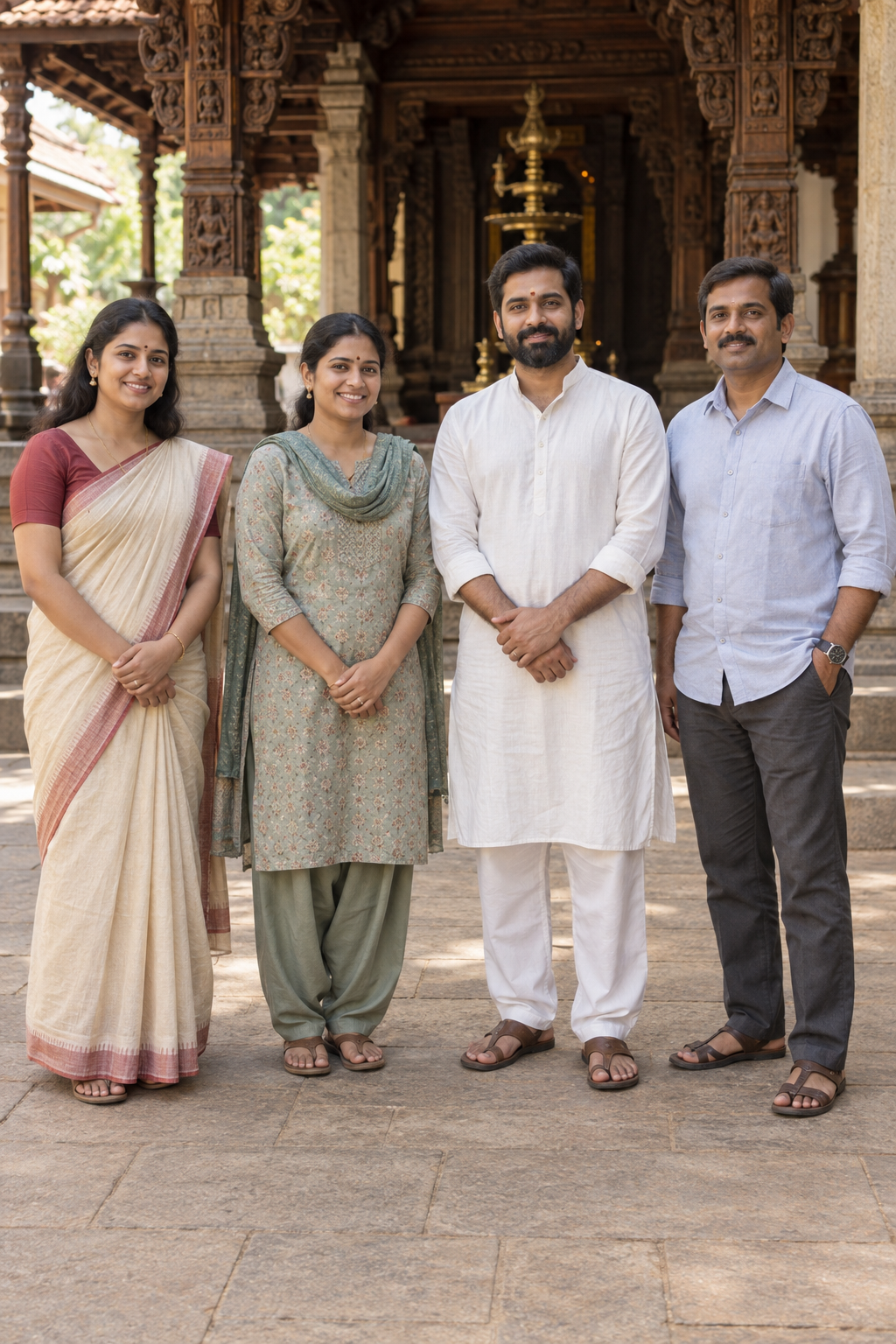
The confirmed information does not prescribe one compulsory uniform such as a sari or dhoti. It establishes a minimum standard of coverage. Traditional attire is entirely appropriate, but a full-length contemporary outfit can also avoid the stated above-knee problem.
Keep the effective date precise. The mandatory policy is scheduled to begin on 1 January 2027; the available information does not establish that strict enforcement begins earlier. Respectful dress remains a sound choice before that date, but the announced start date should not be misrepresented.
What you should wear for an uncomplicated darshan
The safest approach is to choose clothing that remains visibly below the knee while you stand and walk. There is little benefit in testing the exact boundary of a rule that the trust intends to enforce strictly.
- Choose a clearly below-knee lower garment. Full-length trousers, pyjamas, salwars, dhotis and long skirts or dresses avoid ambiguity about the stated threshold.
- Do not depend on a borderline hemline. If a garment only just reaches the knee or rides upward while walking, change into something longer before leaving your lodging.
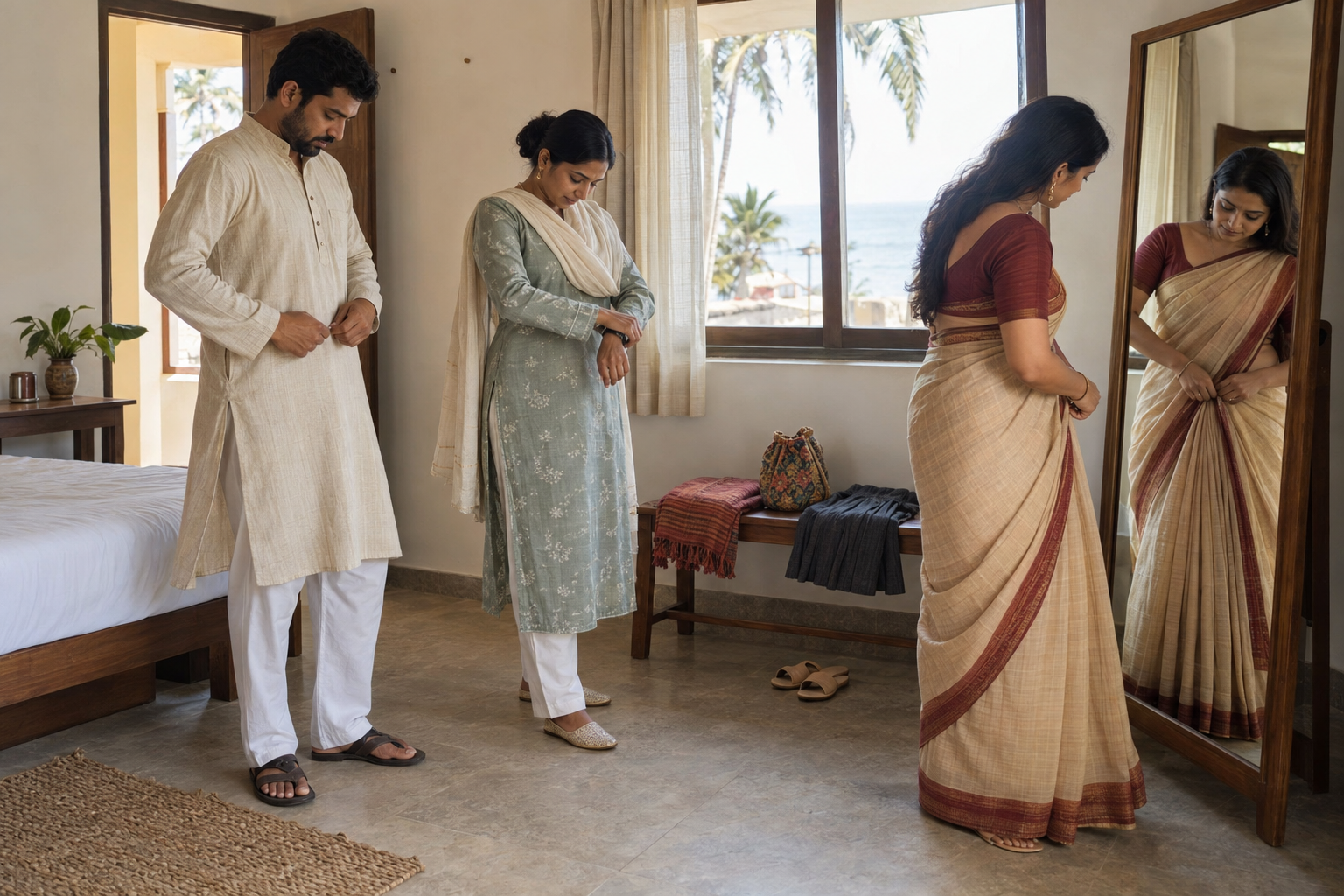
- Plan separately for sightseeing and darshan. If you expect to wear above-knee clothes elsewhere in Ganpatipule, carry a full-length change of clothing in your day bag.
- Check every adult’s clothing. The announced restriction is not described as applying to only one gender, so each adult devotee should prepare for it.
- Prefer certainty over an improvised cover-up. No confirmed provision promises that a temporary wrap or borrowed garment will be available or accepted at the entrance.
A sari, dhoti, salwar-kameez, kurta with full-length pyjamas, long dress or ordinary full-length trousers can all satisfy the stated coverage principle when worn properly. These are practical examples, not a trust-issued list of approved garments.
What the announcement does not yet settle
Only the adult, above-knee restriction is clear from the available details. Specific requirements concerning sleeves, shoulders, head coverings or particular fabrics have not been established here. Nor is there confirmed information about changing rooms, clothing counters or garments available to borrow.
A separate rule for children is also not stated. That does not justify inventing either a child exemption or a child-specific requirement. Families can simply dress children in temple-appropriate clothing and check any current instructions issued by the trust closer to the visit.
If you have a practical concern about mobility, medical needs or a garment that does not fit ordinary categories, seek current guidance directly from the temple administration before travelling. Do not rely on an old visitor photograph or an informal social-media answer when admission may depend on how the rule is being implemented.
The same caution applies if your visit is well after the start date. A dress code can acquire more detailed operating instructions before or after enforcement begins. Check the trust’s latest communication and read the notices displayed at the temple rather than assuming that this initial threshold is the complete policy forever.
Temple dress is part of maryada, not merely gatekeeping
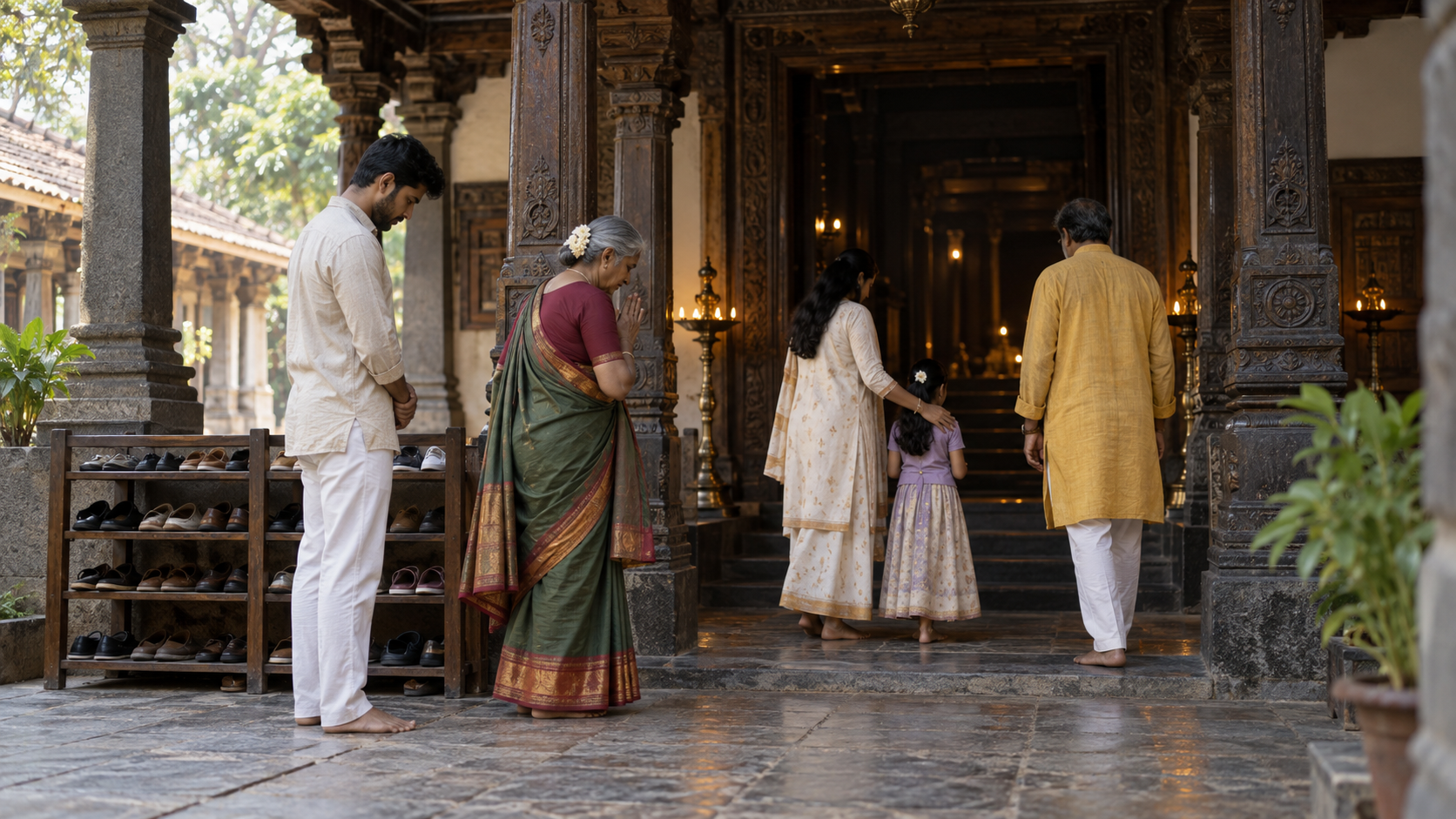
A Hindu temple is a sacred space, not simply another stop on a coastal itinerary. Clothes do not prove the depth of a devotee’s bhakti, but the way we enter a devasthana expresses whether we recognise its maryada. The dress code sets a visible minimum; reverence also appears in orderly conduct, a composed manner and attention directed toward darshan.
This distinction helps families explain the rule without reducing it to fear of being refused entry. Tell children before the journey that changing from leisure clothes into temple clothes marks a change in purpose: you are leaving ordinary recreation for worship. That lesson is more durable than a hurried correction outside the entrance.
Respect for maryada should also shape how adults respond to enforcement. Arriving prepared protects the dignity of the visit and spares temple workers an avoidable dispute. If clarification is needed, ask calmly. A concern about implementation can be raised without treating a sacred-space standard as a personal insult.
Key takeaways for your visit
- The mandatory dress code is scheduled to take strict effect on 1 January 2027.
- Adult devotees wearing clothing that ends above the knee can be denied entry.
- A clearly below-knee or full-length garment is safer than an outfit that sits at the boundary.
- No compulsory sari, dhoti or other single uniform is identified in the confirmed details.
- Requirements for children and additional rules about upper-body clothing are not specified in the available information.
- Check the temple trust’s latest instructions before travelling, especially if you need an accommodation or plan to rely on a cover-up.
Set out your temple clothes the night before your visit and keep a full-length alternative with you if the day includes the beach or other sightseeing. That small act of preparation lets you approach Ganapati without a preventable argument at the threshold.

References

Leave a Reply
You must be logged in to post a comment.