
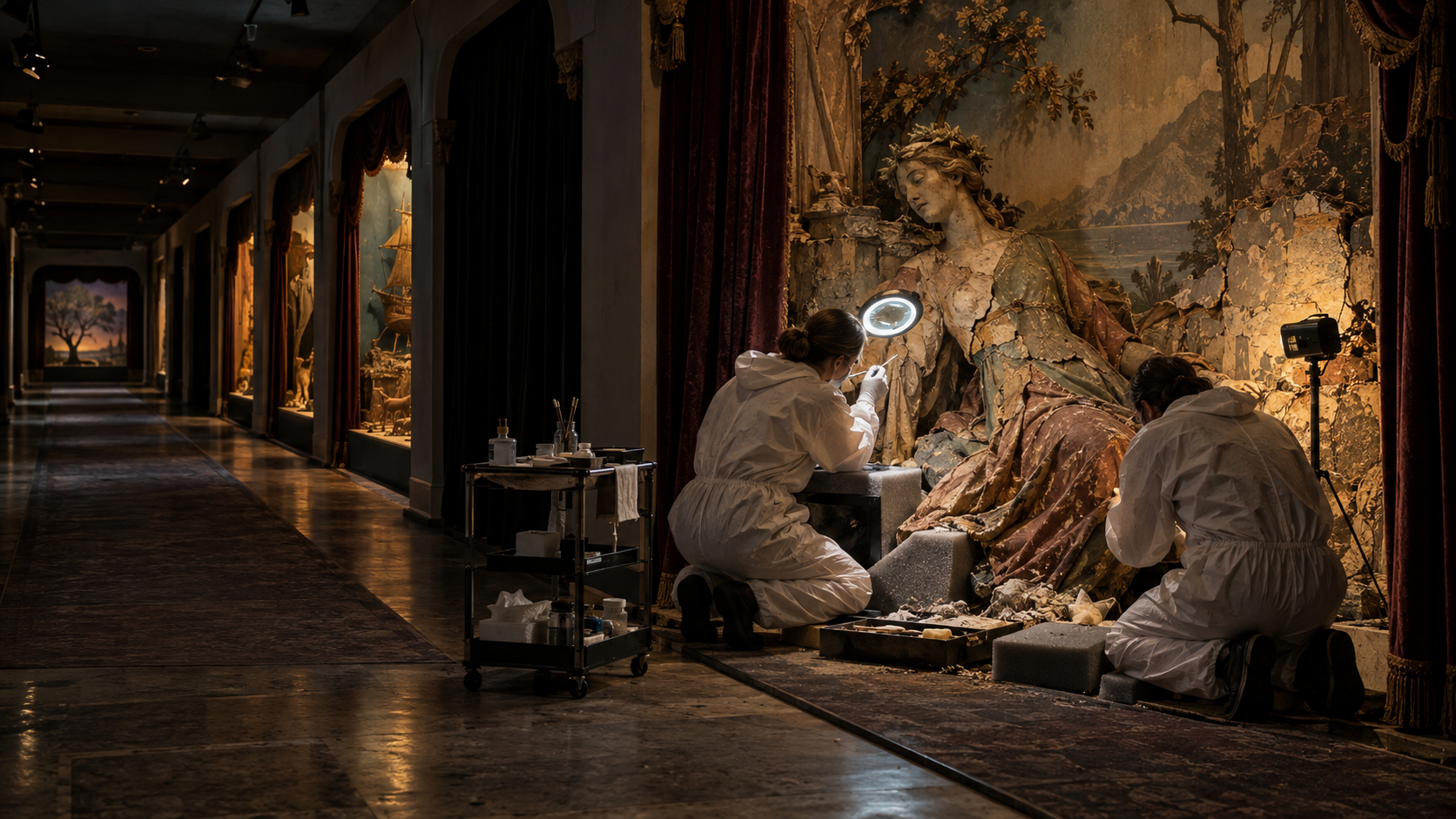
If you have heard that Los Angeles’s Bhagavad-gita dioramas are in danger and want to help, the useful question is not simply whether they matter. It is what must be saved first, what your contribution can realistically support, and which deadlines govern the work.
The museum is currently closed to public tours. Damage to the Changing Bodies exhibit exposed a wider problem: all eleven exhibits have serious repair needs. Phase One is therefore a rescue and stabilization effort, not a cosmetic refurbishment.
Key takeaways
- The original F.A.T.E., or First American Transcendental Exhibition, opened in Los Angeles in 1977 under the guidance of A. C. Bhaktivedanta Swami Prabhupada.
- Its eleven dioramas communicate teachings of the Bhagavad-gita through sculpture, painting, architecture, costume, lighting, sound, and Bengali clay-sculpting techniques.
- Broken figures, failing scenic elements, deteriorating hair and clothing, and electrical, lighting, and audiovisual problems have made urgent stabilization necessary.
- Phase One seeks $100,000 by Gaura Purnima on March 22, 2027, ahead of the museum’s Golden Jubilee in August 2027.
- Donation amounts illustrate possible uses; they are not promises that a particular gift will be assigned to a particular repair.
- You can contribute through the restoration campaign or help circulate an accurate description of the need and deadline.
Why these eleven dioramas are difficult to replace
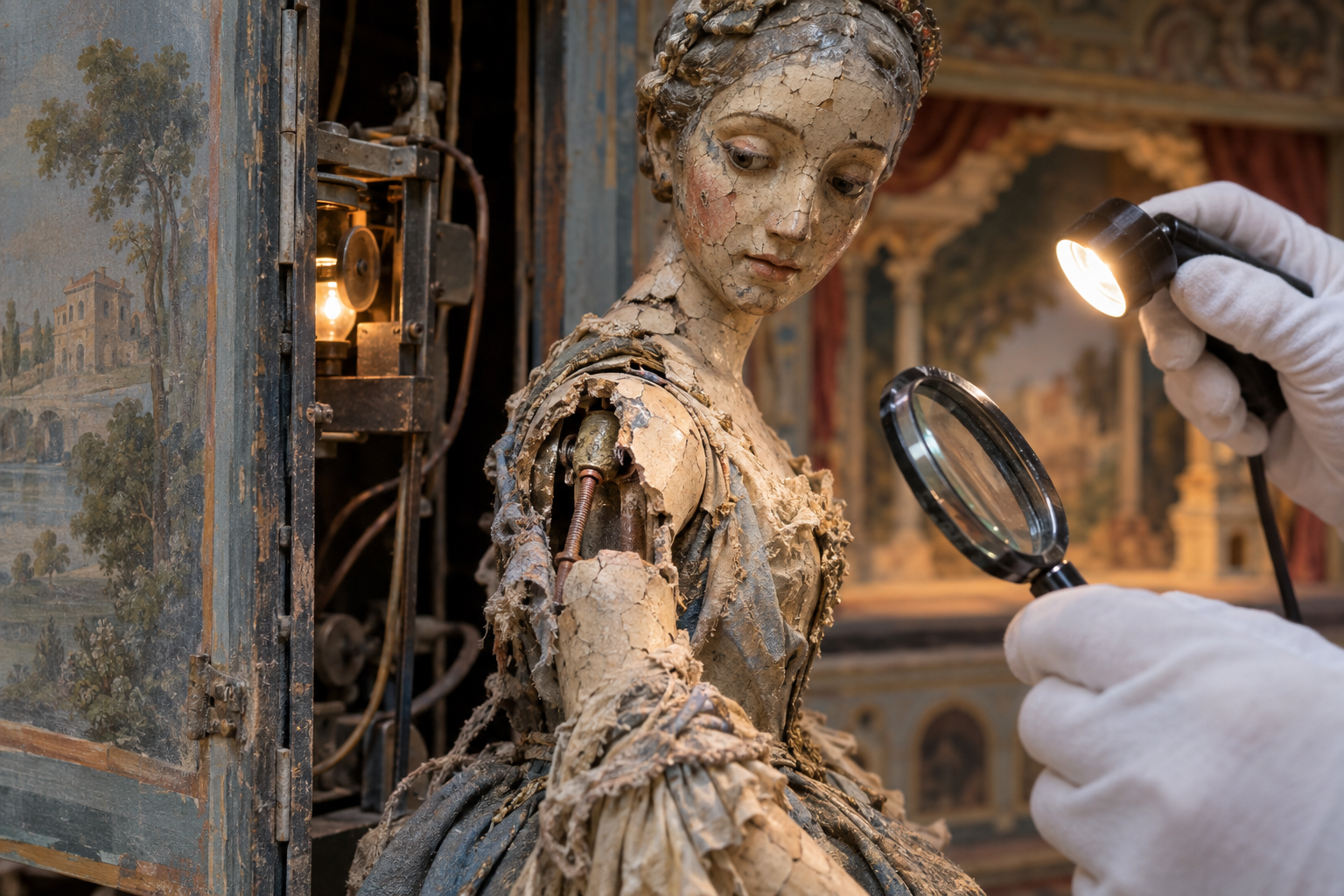
An object does not need to be ancient to carry irreplaceable cultural memory. These dioramas preserve a particular moment when a sacred artistic tradition from Bengal was adapted for a Western museum audience without abandoning its purpose: conveying spiritual knowledge through form, colour, space, and narrative.
That transmission began before the Los Angeles opening. In 1973, Srila Prabhupada arranged for several Western artist disciples to travel to Mayapura in West Bengal and study traditional Bengali sculpture. Their training eventually informed the eleven immersive Bhagavad-gita scenes unveiled in 1977.
The museum’s importance therefore has several layers. It holds sculptural works, preserves a devotional method of visual teaching, and records how a Bengali tradition travelled into the cultural setting of the American West. Losing an original figure, costume, or scenic element would remove part of that history, even if a modern replacement could reproduce its general appearance.
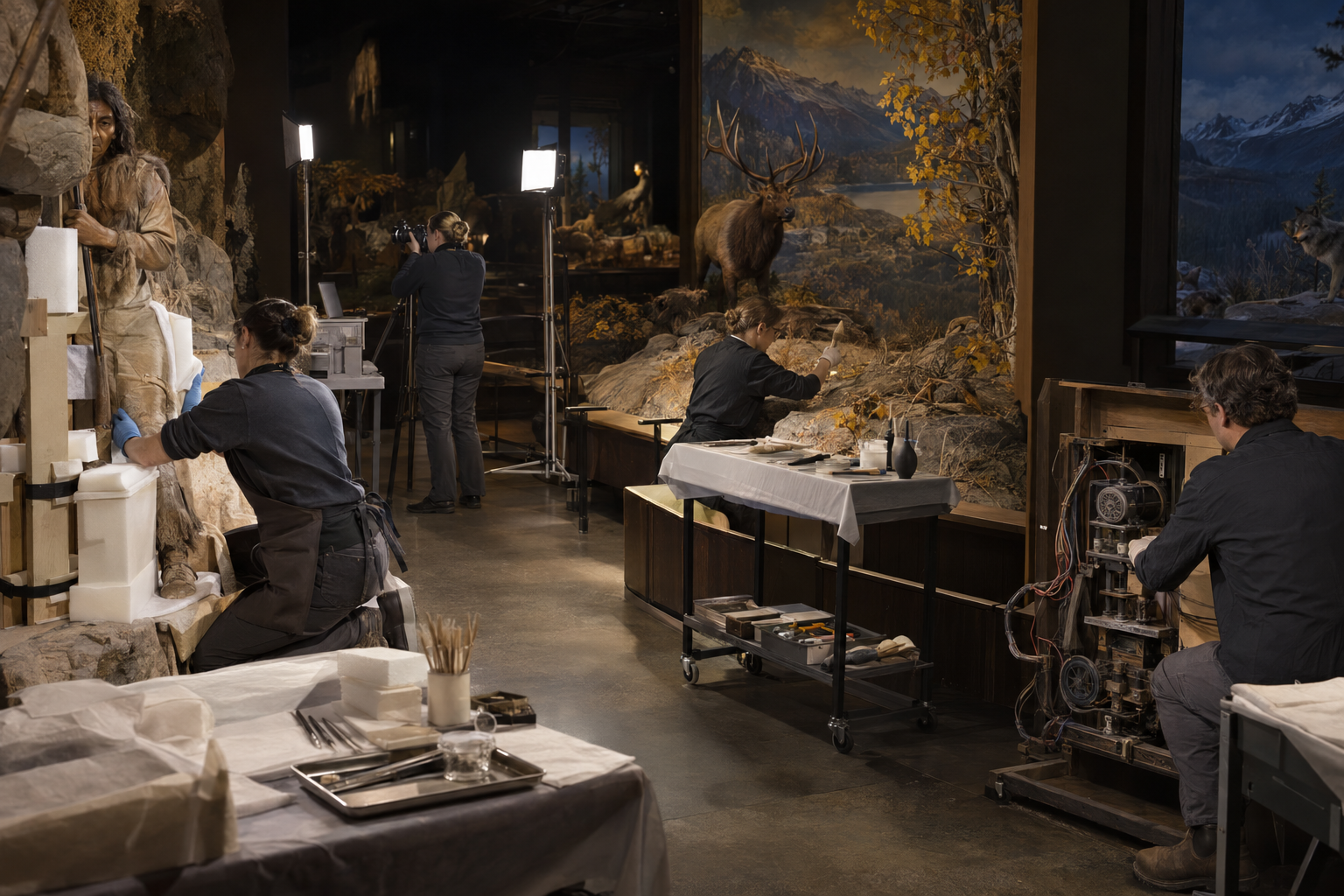
This is also why the involvement of original artists matters. Several have joined the restoration effort, bringing direct knowledge of how the scenes were conceived, built, and presented. They are working alongside an art conservationist, a museum preparator, an electrician, an audiovisual specialist, a project manager, and other professionals. The artists can clarify original intention and construction; the specialists can assess how to stabilize aging materials and systems safely.
Phase One must stabilize the museum before it modernizes it
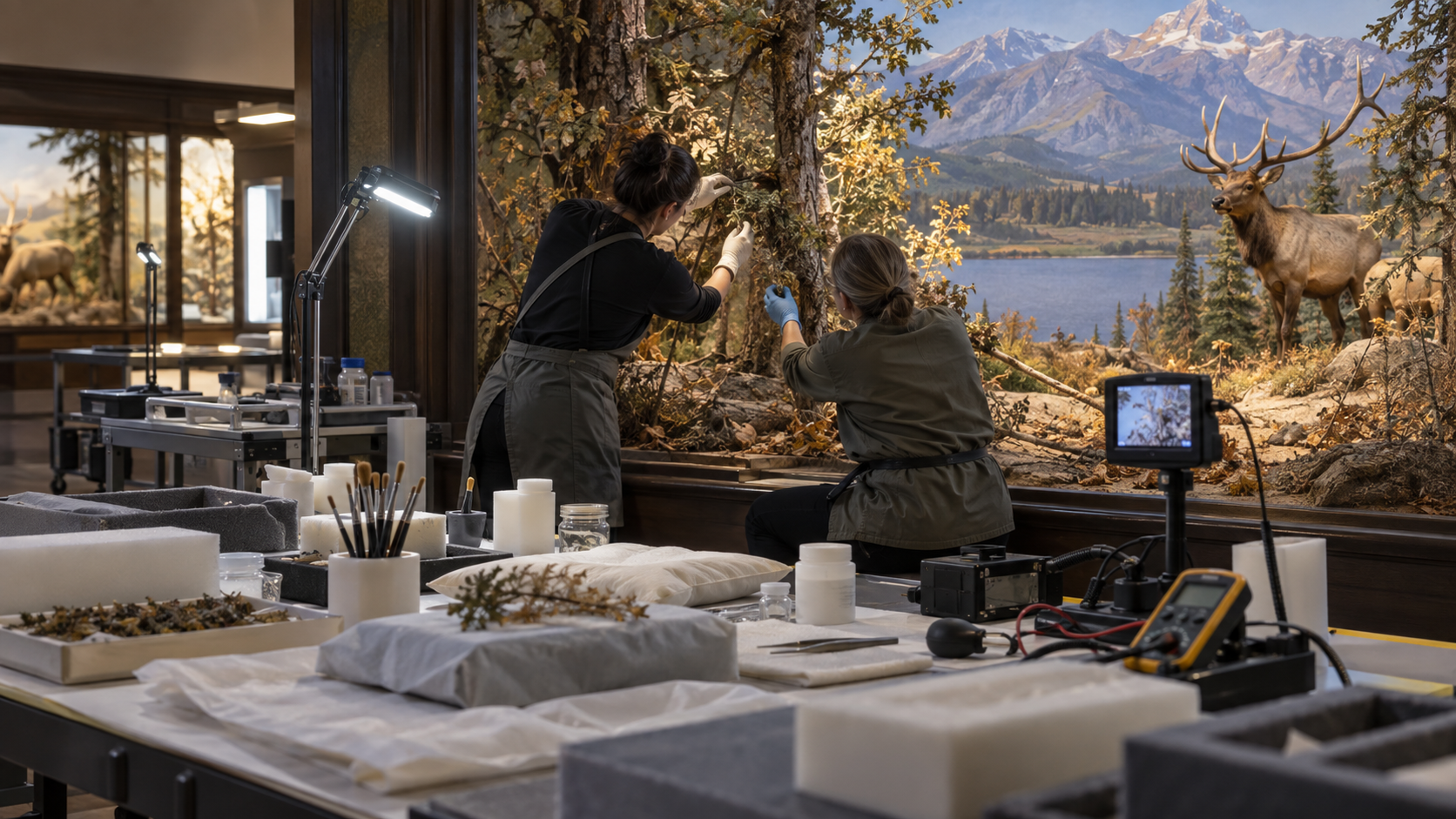
The visible damage ranges from small anatomical details to the systems supporting entire scenes. Figures have broken fingers and cracked ankles. Hair and beards are deteriorating. Costumes and jewellery need repair. Scenic elements are coming apart, while lighting, electrical, sound, and audiovisual equipment also require attention.
Those problems cannot all be treated as one decorating job. A cracked load-bearing area, a loose costume ornament, and an unreliable electrical component present different risks and require different expertise. Even dust removal around fragile painted or sculpted surfaces has to be controlled rather than approached like ordinary household cleaning.
The practical order of work in Phase One is therefore:
- Address emergency structural and safety problems that could lead to further damage or unsafe conditions.
- Clean the displays and reduce dust while protecting unstable surfaces and details.
- Stabilize and repair figures, including vulnerable limbs and other deteriorating elements.
- Undertake paint touch-ups and stabilize costumes, jewellery, hair, and beards where required.
- Troubleshoot essential lighting and electrical systems.
- Use professional consultation and the original artists’ knowledge to guide work that should not be improvised.
This sequence explains what the initial $100,000 is meant to accomplish. It is intended to arrest urgent deterioration and prepare the museum for renewed public access. It is not presented as the complete cost of every future renovation or technical upgrade. More extensive work, including broader upgrades, is expected to build on Phase One.
If you are deciding whether the effort is sufficiently concrete to support, look for this distinction: stabilization protects what survives; later renovation improves what the museum can offer. Funding modernization without first securing weakened figures, scenery, costumes, and electrical components would put the order backwards.
What your contribution can support
The restoration effort has provided a useful donation ladder, but it must be read correctly. Each amount is an illustration of the kind of work a gift may help fund. It is not a price list, an earmarking arrangement, or a guarantee that your money will be spent on the example beside that amount.
| Illustrative gift | Type of Phase One work it may support |
|---|---|
| $50 | Materials for paint touch-ups |
| $100 | Costume and jewellery repairs |
| $250 | Supplies for structural repairs |
| $500 | Restoration-team travel expenses |
| $1,000 | Safety-related repairs |
| $2,500 | Professional consultation fees |
Funds will go first to the museum’s most urgent needs. That flexibility is valuable in conservation because opening one part of an exhibit can reveal damage that was not fully visible beforehand. It also means you should not tell others that a $100 gift will repair a particular costume or that $1,000 will single-handedly complete a specified safety repair.
If you are comfortable supporting the restoration as a whole, choose an amount you can give without strain and let the team allocate it across the urgent work. If you require a legally restricted gift or want support assigned to one object, do not infer that option from the examples; confirm the terms before contributing.
Contributions are received by Transcendence Inc., working with ISKCON Los Angeles/New Dvaraka on the project. Transcendence Inc. is identified as a 501(c)(3) nonprofit with EIN 86-2042614, and contributions are described as tax-deductible to the extent permitted by law. That wording does not guarantee a deduction in every donor’s circumstances. Retain your receipt and seek appropriate tax advice if deductibility affects your decision.
Help the Golden Jubilee mark preservation, not preventable loss
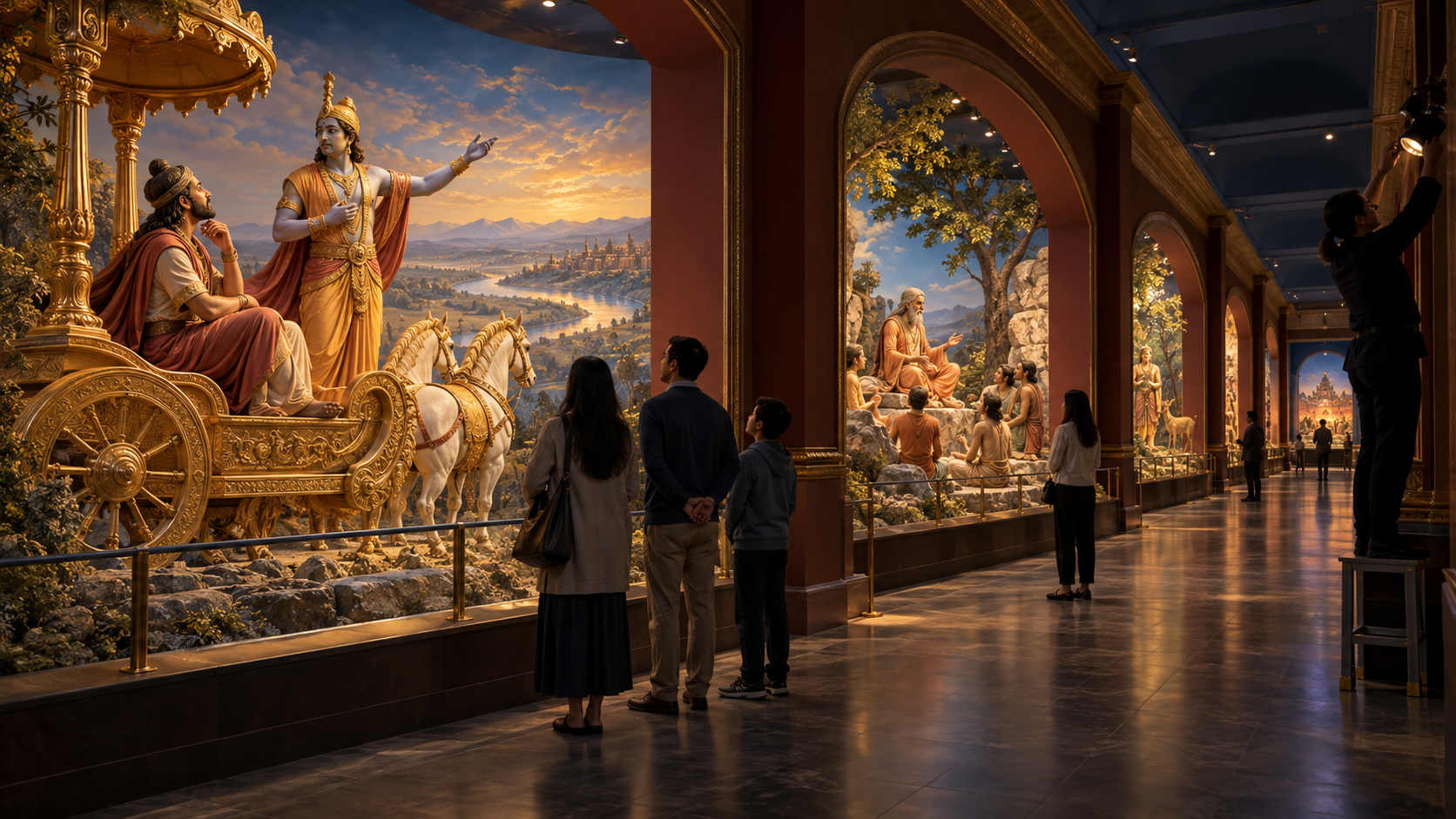
The two dates serve different purposes. March 22, 2027, the date of Gaura Purnima, is the $100,000 fundraising target. August 2027 marks fifty years since the museum first opened. The objective is to complete urgent work in preparation for the Golden Jubilee and help make public tours possible again, but supporters should treat restoration and reopening as work to be achieved rather than a result already guaranteed.
You can judge meaningful Phase One progress in a clear order: immediate structural and safety threats are controlled; figures and vulnerable decorative elements are stabilized; essential lighting and electrical faults are addressed; and the surviving dioramas are in a condition from which later renovation can proceed. A new audiovisual system would be welcome, but it would not compensate for continued physical deterioration of the original art.
If you cannot donate, share the official campaign page with your temple community, Bhagavad-gita study group, cultural organization, or friends interested in sacred art. Use precise language: “The Los Angeles F.A.T.E. museum’s eleven Bhagavad-gita dioramas need urgent stabilization, with a $100,000 Phase One goal by March 22, 2027, ahead of their fiftieth anniversary.” That gives people the need, scope, amount, and deadline without promising that the first phase will solve everything.
The most useful action now is a measured one: make a sustainable contribution, or put the verified campaign in front of someone who values Dharmic art and living heritage. Timely stabilization can give the original artists and conservation professionals something no later reconstruction can provide: the chance to preserve the works that are still here.
References
- Dandavats — Help Restore F.A.T.E. Diorama Museum
- Transcendence Inc. — Bhagavad-gita Diorama Museum restoration campaign

Leave a Reply
You must be logged in to post a comment.