
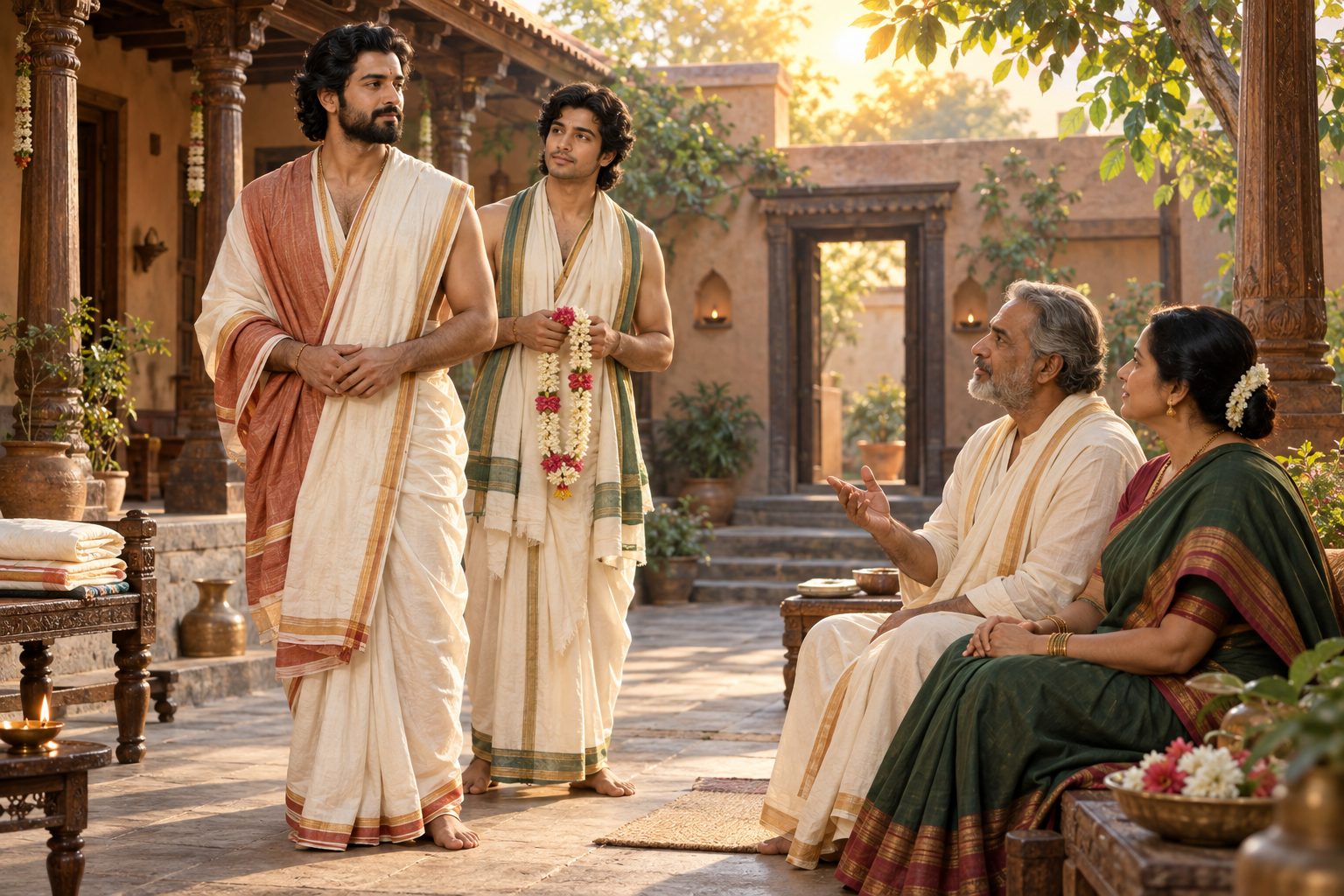
If you are a younger brother ready to marry, or a parent trying to respond while an elder son remains unmarried, Parivedana can sound like a one-word command: wait. That is too blunt to guide a real family.
The ancient norm did give the elder brother precedence. But applying its dharmic concern today requires you to distinguish respect from control, a real elder-brother plan from an indefinite possibility, and family order from fear of social opinion.
What Parivedana means in a marriage decision
In its narrow sense, Parivedana concerns a younger brother marrying while his elder brother remains unmarried. It marks a departure from the expected order in which the elder brother married first.
This was more than wedding etiquette. Marriage affected the standing, duties, relationships, and continuity of the household. A younger brother’s marriage was therefore not viewed as an isolated decision between two individuals. It also changed the position of his elder brother and the visible order of the family.
That relational frame is the first thing you need to understand. The modern question often begins with individual timing: why should one adult’s marriage depend on another adult’s choices? Parivedana begins with a different question: what does one person’s action do to the place and dignity of others within an ordered family?
Neither question should be ignored. Personal consent and circumstances matter, but so do the obligations created by family relationships. A thoughtful decision has to hold both truths at once.
It is also important not to make the term broader than the available definition supports. Parivedana cannot, by itself, tell you how every region, community, lineage, or historical period handled every form of sibling marriage order. Nor does knowing the term automatically settle the ritual or legal status of a present marriage. It identifies the problem of disrupted precedence; it does not eliminate the need for contextual judgment.
Why the elder brother’s precedence mattered

Seniority in a dharmic household was connected with more than age. It carried a recognized place in the family’s sequence of responsibilities and life transitions. Letting the elder brother cross the threshold of marriage first publicly affirmed that place.
A younger-first marriage could therefore reveal an unresolved family question. Perhaps the elder brother wanted to marry but had not been properly supported. Perhaps the family was silently avoiding his circumstances. Perhaps the younger brother’s plans had advanced without a candid conversation. The norm forced the household to stop and account for the person who might otherwise be bypassed.
This is the most useful moral insight in Parivedana: a family transition should not proceed as though the people affected by it were invisible. Giving precedence means that the elder brother is approached first, heard without humiliation, and treated as a participant in the decision rather than an obstacle to it.
Before invoking Parivedana to postpone a younger brother’s wedding, the family should answer several concrete questions:
- Has the elder brother been told privately, before proposals and arrangements become public?
- Does he actually wish to marry, or is the family assuming that he must?
- If he wishes to marry, is there a real process under way or only an undefined future possibility?
- Would a delay protect a concrete opportunity for him, or merely protect the family from gossip?
- Who would bear the practical and emotional cost of postponement?
- Can the elder brother’s dignity be protected without giving anyone an unlimited veto?
These questions expose the difference between order and inertia. When an elder brother has an active marriage process that could reasonably be completed first, a younger brother has a serious reason to consider waiting. When no such process exists, a vague demand to wait until something changes can suspend the younger brother’s life without producing any benefit for the elder.
Respecting seniority does not authorize coercion
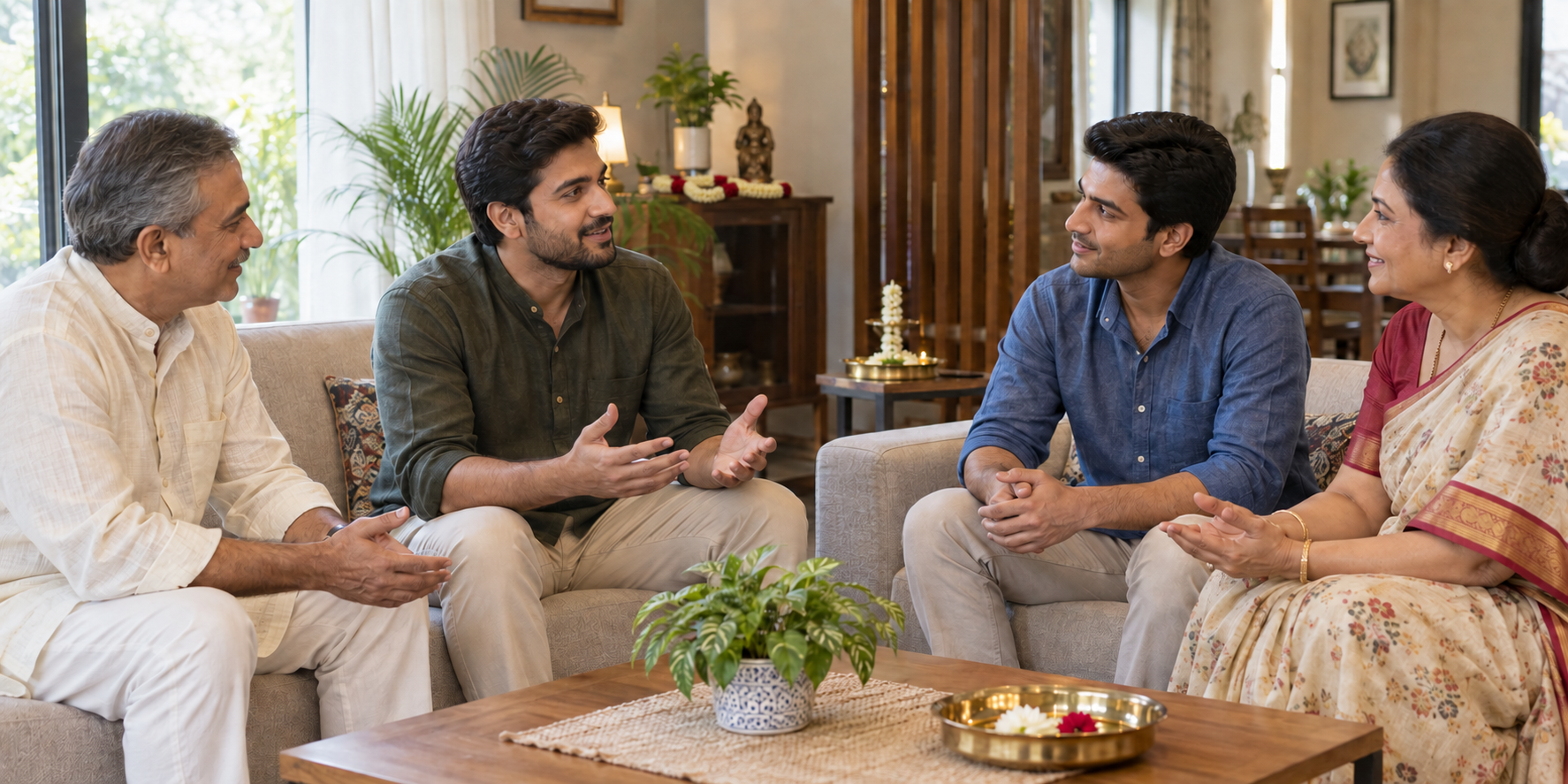
We should not rewrite history by pretending Parivedana originally meant nothing more than courteous communication. It prescribed a preferred sequence. At the same time, preserving a sequence cannot make every method used to enforce it dharmic.
An elder brother should not be pushed into an unwanted marriage merely so that the younger brother can proceed. A marriage obtained through family pressure does not become sound because it restores the expected order. It merely transfers the pressure from one brother to the other.
Nor should seniority become ownership of a younger brother’s future. Precedence can give the elder brother a claim to prior consideration, honest consultation, and reasonable accommodation. It need not give him the power to postpone another adult’s marriage indefinitely, especially when he does not wish to marry or has no present plan to do so.
The elder brother’s dignity also needs protection after the decision. A family should not publicly describe him as the reason for delay, force him to announce a waiver, or portray him as having failed at a compulsory milestone. Those approaches turn respect for hierarchy into humiliation of the very person whose place the custom was meant to recognize.
The younger brother and his prospective spouse deserve the same moral seriousness. Their commitment, circumstances, and consent cannot be reduced to a scheduling inconvenience. Family order should coordinate obligations; it should not erase the agency of the people entering marriage.
If your lineage regards a younger-first marriage as a ritual issue, consult a qualified acharya who understands that lineage before fixing the ceremony. Ask what the tradition actually requires in your circumstances rather than improvising a prohibition or remedy from a brief internet definition. Questions about civil validity belong separately to the law that applies where the marriage will occur; the ancient category alone is not a modern legal ruling.
A practical way to handle a younger-first marriage
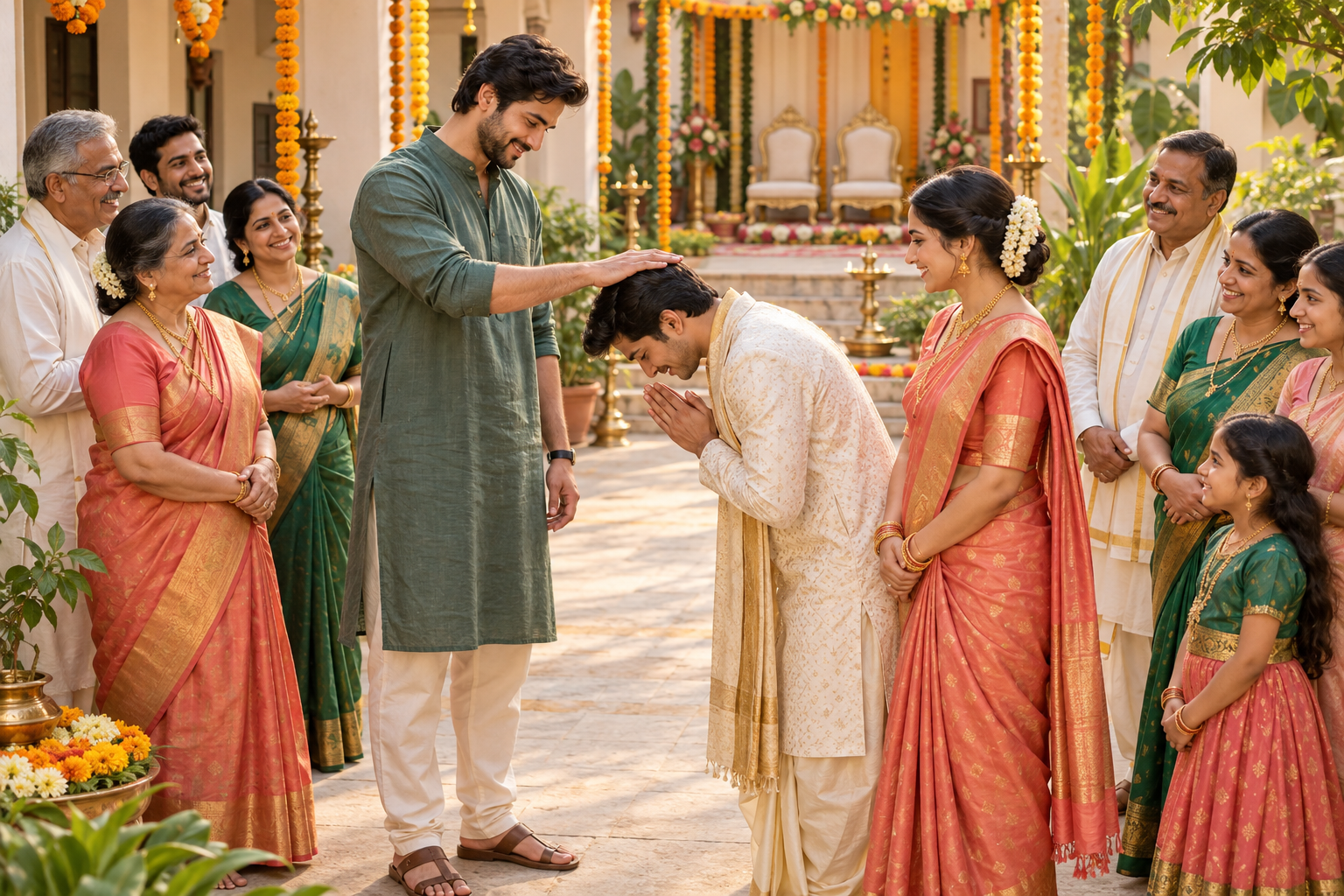
The family should address the question before an engagement announcement, venue booking, or public celebration makes every conversation defensive. Once plans are visible, the elder brother may feel that consultation is merely ceremonial, while the younger couple may feel that any pause has become a public rejection.
- Speak to the elder brother first and in private. Tell him that a younger-brother marriage is being considered before extended family members hear about it. Ask what the situation means to him; do not begin by demanding permission or announcing a completed decision.
- Establish his intention without judging his worth. Find out whether he wants to marry, whether anything concrete is in progress, and whether family support could remove an actual obstacle. Do not treat reluctance, uncertainty, or a different life direction as a defect.
- Name the younger brother’s real circumstances. Distinguish an existing commitment from a general wish to marry someday. A serious proposal involving two willing people deserves different consideration from impatience with family order.
- Make any delay bounded and purposeful. If the elder brother has a genuine process under way, decide what identifiable event would end the wait, such as the resolution of that proposal or a family consultation. Avoid an open-ended promise to reconsider when the time feels right.
- Seek blessing without manufacturing consent. If the elder brother does not intend to marry or has no active plan, acknowledge his precedence explicitly and ask for his goodwill. He should be free to express discomfort, but discomfort alone need not become permanent control.
- Resolve ritual questions separately. Let an appropriate acharya address lineage-specific observance. Do not make the elder brother responsible for inventing a ritual answer or for defending the family’s decision before the community.
- Protect everyone in the public explanation. The family can simply say that the decision was discussed together. Private details about proposals, refusals, finances, or personal choices do not need to become material for relatives and acquaintances.
This process honors the mechanism behind the traditional order: no one is silently bypassed. It also prevents Parivedana from becoming a weapon used by relatives who bear none of the consequences of delay.
Two opposite errors are common. One dismisses the custom as meaningless because modern adults choose their own timing. The other treats the inherited sequence as an automatic command regardless of consent, intention, or circumstance. A dharmic response is harder and more responsible: preserve the relationship, tell the truth about competing duties, and choose without humiliating either brother.
Key takeaways
- Parivedana concerns a younger brother marrying while his elder brother remains unmarried, contrary to the expected family sequence.
- The custom treats marriage as a household transition, not merely an isolated choice by one individual.
- The elder brother’s precedence calls for prior consultation, recognition, and reasonable accommodation.
- Precedence should not be converted into a forced marriage for the elder brother or an indefinite veto over the younger brother.
- A real, active elder-brother marriage process deserves different consideration from a hypothetical future possibility.
- Lineage-specific ritual questions and present-day legal questions require appropriate guidance beyond the definition of Parivedana.
Your next step is not to declare that tradition either forbids or permits the wedding. Arrange the private conversation with the elder brother before plans harden. Ask what is real, decide what can reasonably be accommodated, and make the family’s respect visible in how you proceed.
References

Leave a Reply
You must be logged in to post a comment.