
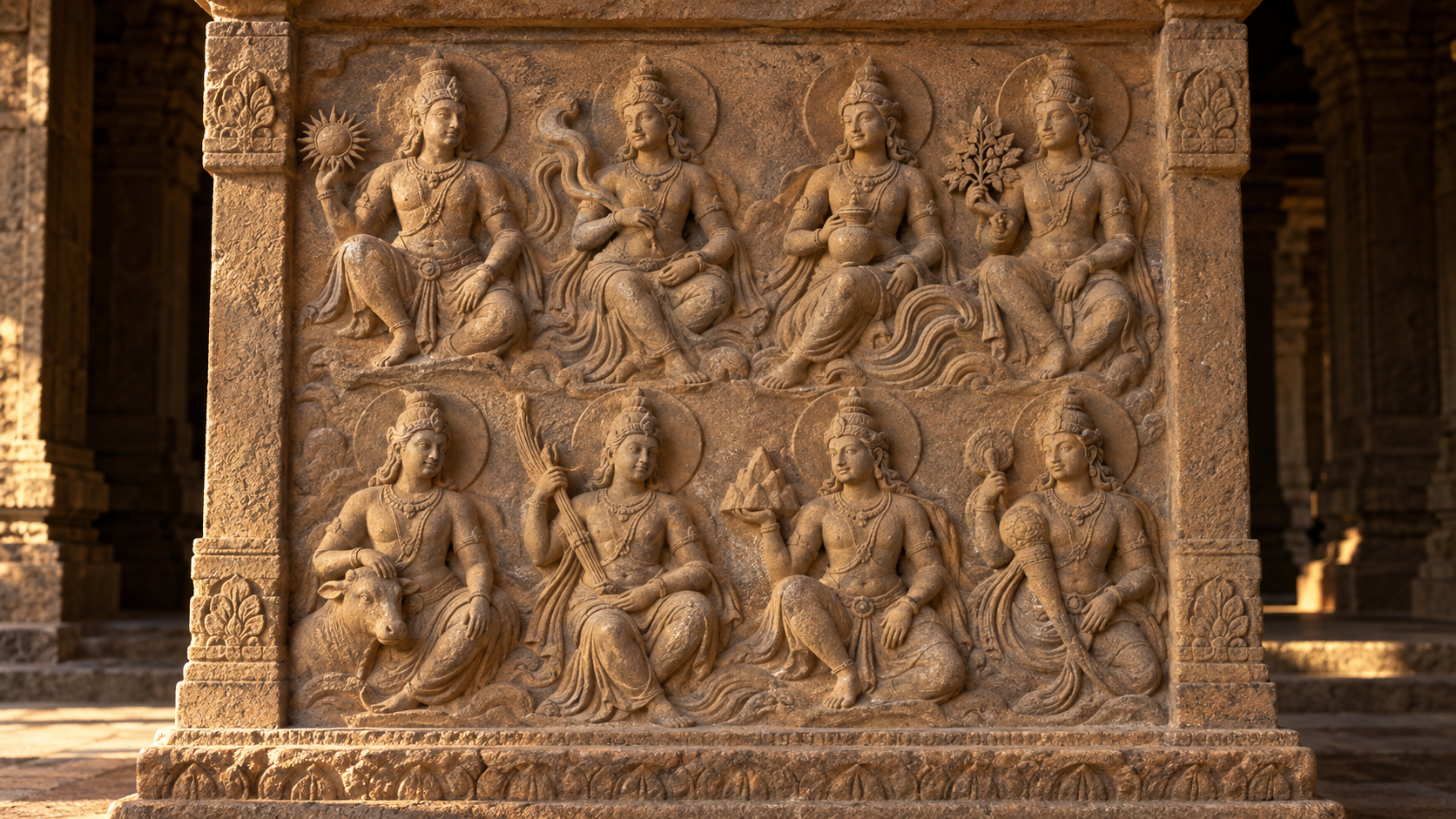
You are looking at a temple panel, museum sculpture, or photograph of an old carving. Several celestial figures appear together, but the label gives you little more than a name: Apah, one of the Ashtavasus. How do you recognise what the sculptor intended without turning every vessel, wave, or aquatic form into proof?
Begin with the group, not the water symbol. Apah becomes intelligible through a three-part reading: the eightfold ensemble, the figure’s place within it, and the idea of water as a divine power that dwells in and sustains the world.
Start with the eightfold group
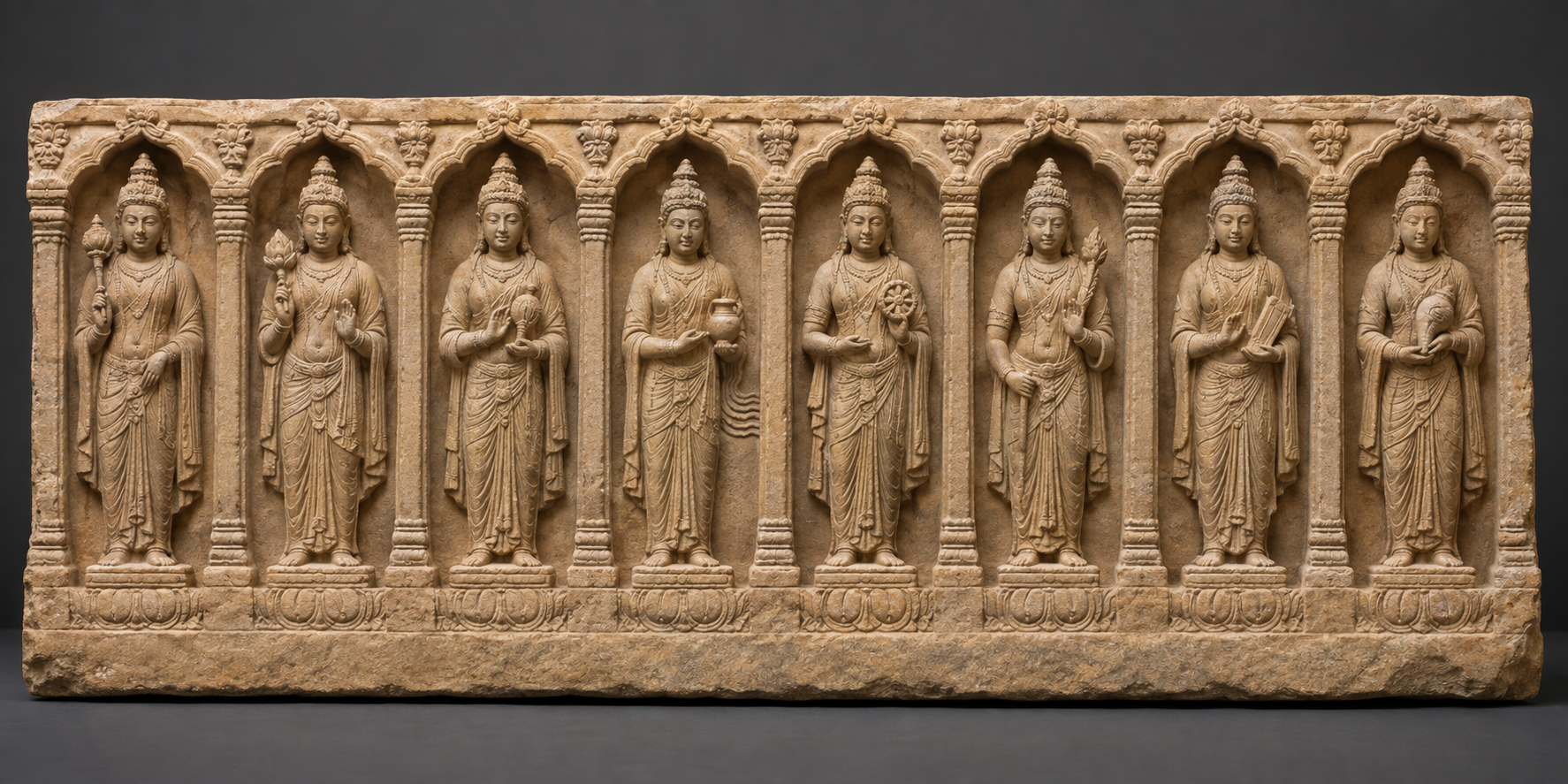
The most useful first question is not, “Does this figure look watery?” It is, “Am I looking at an Ashtavasu ensemble?” The name supplies the basic structure: ashta means eight, while vasu carries the sense of one who dwells or bestows goodness and light. Apah is the water-associated member of this radiant celestial group.
That changes the identification process. An isolated water-related motif can belong to many visual settings. Within a deliberate group of eight celestial beings, however, the possibility of an Ashtavasu programme becomes much stronger. Count the principal figures before interpreting their attributes. Do not include every attendant, damaged fragment, decorative face, or later addition simply to force the total to eight.
If fewer than eight figures survive, examine the architecture. An empty niche, broken edge, displaced block, or asymmetric arrangement may indicate loss. Record that evidence as uncertainty. A damaged group can still be an Ashtavasu group, but the missing portions prevent a confident figure-by-figure identification.
Read water as an identity, not merely an object
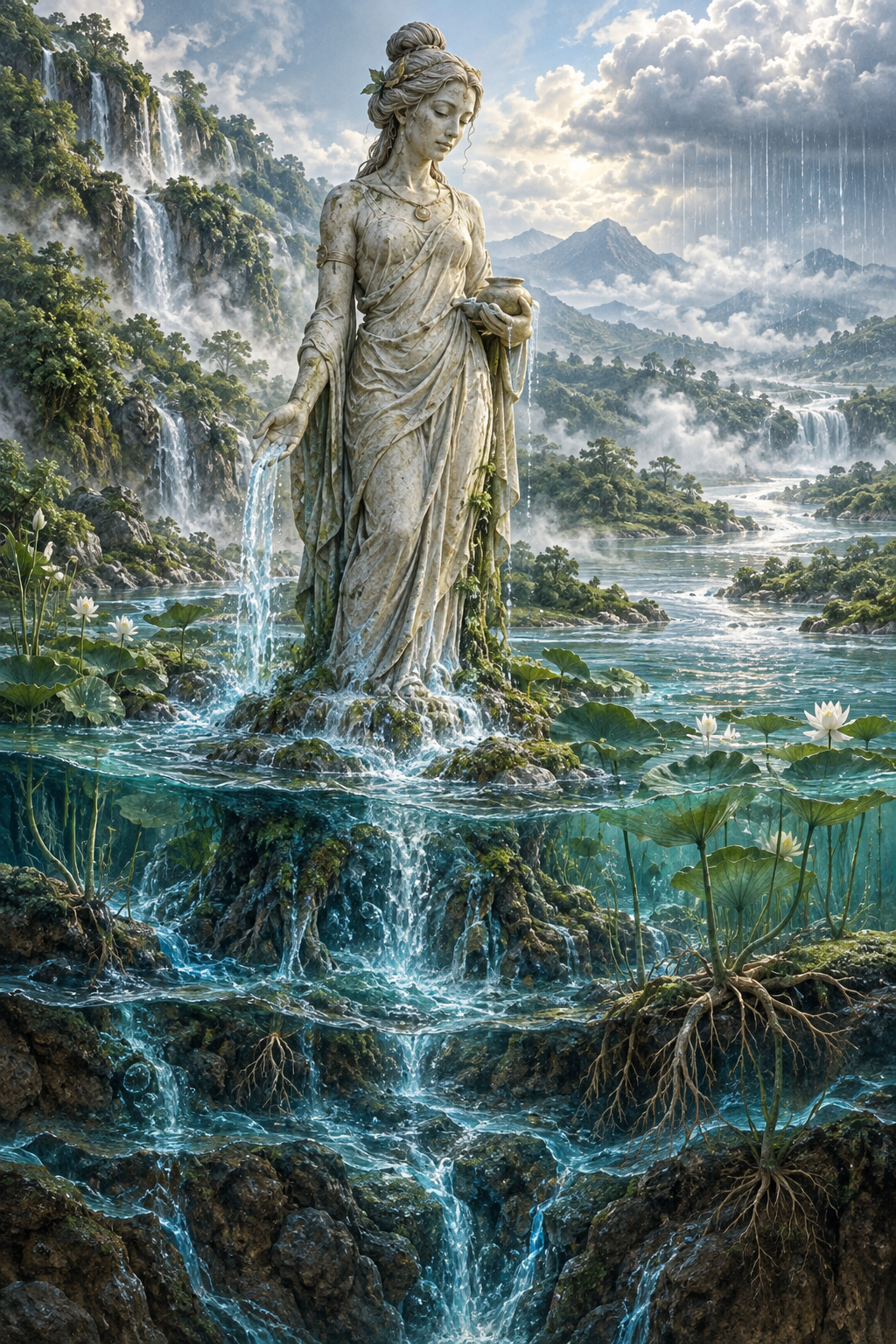
Apah means more than a figure carrying something connected with water. In this setting, water has been personified: a pervasive element of existence is made available to sight, worship, and contemplation. The human form does not reduce water to a human personality. It gives the devotee a way to encounter water as sacred presence.
This is why a purely literal reading falls short. A water vessel, aquatic ornament, flowing contour, or other water-related feature may help you form a hypothesis, but no single clue should bear the full weight of identification. First establish the ensemble. Then ask whether the suspected visual cue distinguishes this figure from its companions. Finally, check whether the placement, label, inscription, or documented temple programme supports the reading.
The distinction matters because Hindu sacred art often works through layered association. A vessel may participate in ritual, abundance, purification, hospitality, or divine service; it does not automatically identify Apah. Likewise, visible water may form part of the setting rather than represent a member of the Ashtavasus. Context turns resemblance into iconographic evidence.
Use the group to understand the theology
The term vasu invites you to notice indwelling power. Apah is therefore not best understood as a remote ruler assigned to a separate compartment called “water.” Divine water dwells within the conditions that make embodied life possible. It nourishes, moves, receives, connects, and changes form while remaining recognisably water.
Placed among seven fellow Vasus, Apah also resists an isolated reading of nature. The ensemble presents the cosmos as an ordered field of mutually related powers. Water does not stand alone. Its meaning emerges through participation in a larger whole, just as a river, rainfall, ritual offering, cultivated field, and living body reveal different expressions of the same elemental reality.
When you stand before such a sculpture, notice what the group does to your attention. Instead of treating the natural world as mute material, the Ashtavasu framework asks you to perceive presence, relationship, and obligation. The practical spiritual response is not to worship an abstraction while neglecting actual water. Reverence becomes coherent when careful ritual use is joined to restraint, cleanliness, and gratitude in ordinary life.
A disciplined way to examine an Apah image
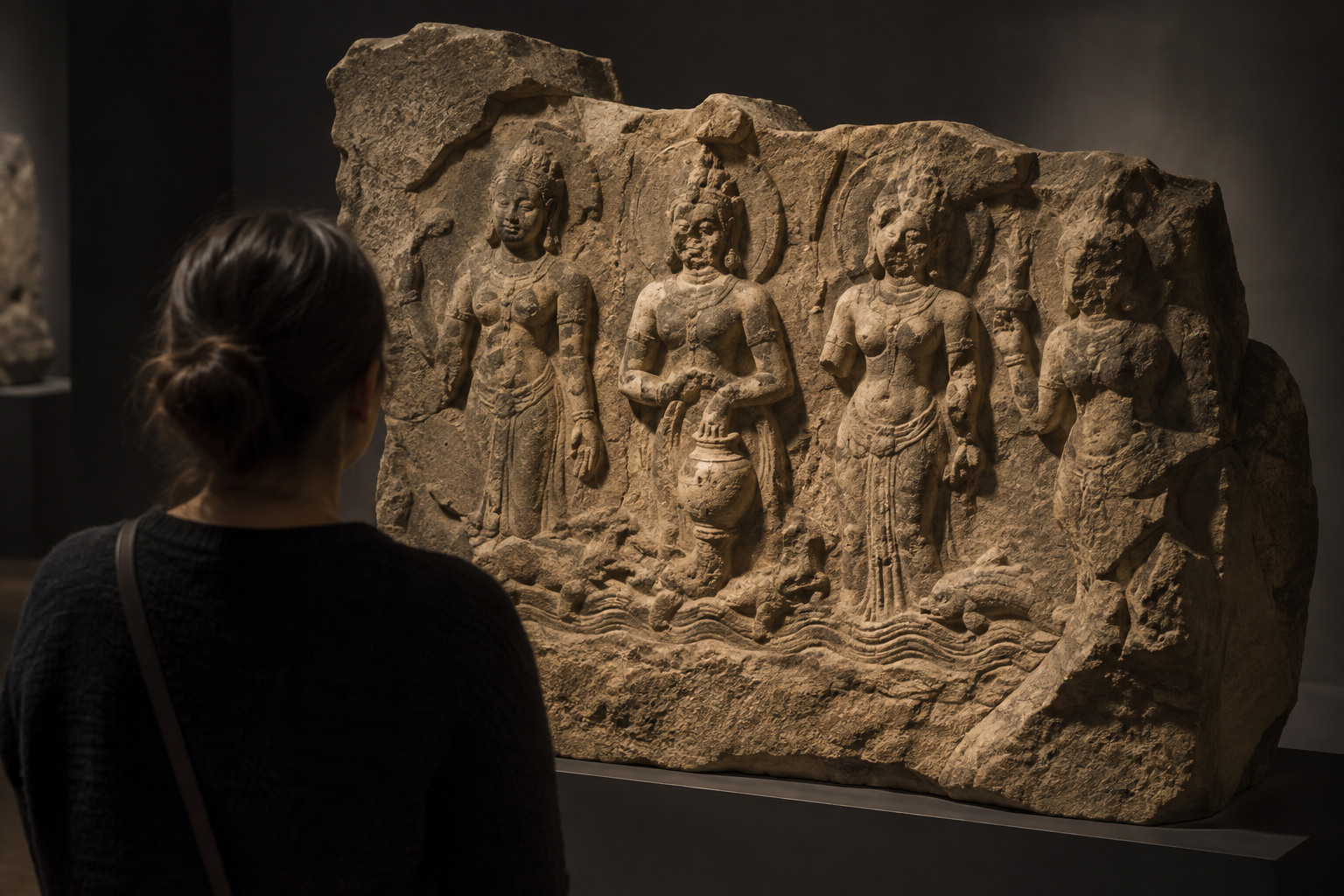
On your next temple or museum visit, make a record before deciding what the sculpture represents. Begin with one full view that preserves the relationship among all figures. Then photograph or sketch each principal figure in sequence, keeping the same direction throughout. Note the number of figures, their relative scale, hand-held objects, gestures, mounts or bases if visible, and any differences in crowns or posture.
Next, copy the exact wording of any label or inscription. Keep what you can see separate from what the label claims. “Eight principal figures occupy one register” is an observation. “The third figure is Apah” is an identification that requires support. This simple separation prevents a tentative museum caption, guidebook statement, or online image title from becoming circular proof.
Damage deserves its own note. A broken hand means that an attribute is unavailable; it does not mean the figure originally lacked one. Weathering can also turn distinct objects into similar shapes. Mark the unclear area and leave the conclusion open. In iconographic work, a careful “not yet identifiable” is more useful than a confident but unsupported name.
Finally, compare the suspected Apah figure with the rest of the same ensemble before searching for visually similar images elsewhere. Local comparison preserves the sculptor’s own visual grammar: scale, ornament, pose, and carving style remain constant while meaningful differences become easier to see.
Key takeaways
- Apah is the divine-water member of the eightfold Ashtavasu group.
- Count and establish the ensemble before interpreting a vessel, aquatic motif, or flowing form.
- Treat each visual feature as supporting evidence, not automatic identification.
- Separate observation from interpretation when recording a sculpture.
- Account for broken, missing, or displaced figures rather than forcing certainty.
- Read Apah as indwelling sacred water within an ordered cosmos, not as decorative scenery.
Let the next sculpture answer in stages
When you next encounter a possible image of Apah, resist the urge to name it at once. Count the group, preserve the arrangement, record the visible distinctions, and state exactly what remains uncertain. Once the eightfold context is secure, water symbolism can do its proper work: not as a shortcut to identification, but as an opening into the Ashtavasus’ vision of a luminous and inhabited cosmos.
References

Leave a Reply
You must be logged in to post a comment.