

If you know Sita Thakurani only as the wife of Advaita Acarya, you know her family relationship but not yet her devotional legacy. Her place in Gaudiya Vaishnava memory becomes clearer when you watch what she does: she recognizes sacred life early, welcomes devotees with practical care, and helps turn a household into a place where bhakti can be lived collectively.
That changes how you read her life, and perhaps how you judge your own seva. Sita Thakurani shows that devotion is not confined to teaching, renunciation, public leadership, or visible ritual. It is also the disciplined work of noticing what a sacred relationship requires and providing it at the right time.
Read her as a Vaishnavi, not a supporting character
Sita Thakurani is remembered as both the revered wife of Advaita Acarya and a great Vaishnavi in her own right. The two descriptions belong together, but they do different work. Her marriage locates her within the early Gaudiya community. The designation Vaishnavi identifies the devotional character for which she is honored.
This distinction matters because women in sacred history are often introduced relationally: someone’s wife, mother, daughter, or companion. Those relationships are real and important, but they can become a shortcut that prevents us from asking what the woman herself perceived, chose, gave, and made possible. In Sita Thakurani’s case, stopping at her marriage to Advaita Acarya leaves the central question unanswered: why did the Vaishnava community preserve her memory with such reverence?
Her life answers through acts of seva rather than through a large body of attributed speeches or writings. That calls for a different way of reading. When her name appears in a devotional narrative, look for the verbs around it. She travels, brings, blesses, receives, serves, and sustains. Those actions reveal agency. They also show the form her leadership takes.
Less public visibility does not mean less spiritual importance. A movement may be remembered through its teachers and theological debates, but it survives through homes, meals, journeys, relationships, care for guests, and the transmission of devotional conduct. Sita Thakurani stands within that sustaining dimension of Gaudiya life.
There is also a useful rule for speaking about her today. Gaudiya remembrance combines human biography with theological identity. When you discuss explicitly devotional claims, say that the tradition reveres or identifies her in that way. This does not diminish the claim. It locates it honestly within the faith that preserves it, without turning devotion into a modern historical assertion of a different kind.
Her visit to the newborn Nimai reveals attentive seva
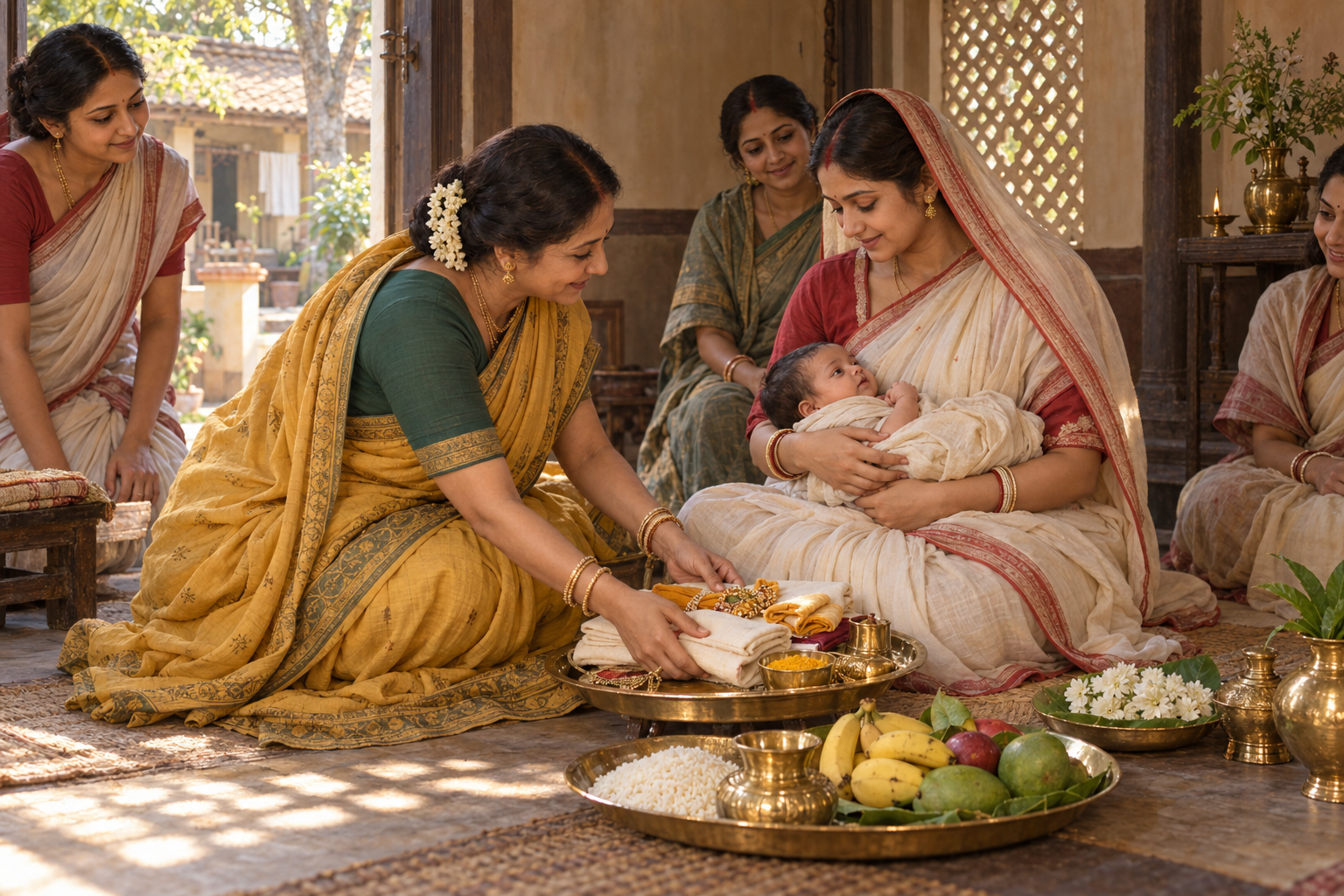
One of the defining episodes in Sita Thakurani’s life comes at the beginning of Sri Chaitanya’s earthly story. After the birth of Saci Devi and Jagannatha Misra’s son, Sita Thakurani went to honor the newborn with gifts, auspicious articles, blessings, and affectionate care. The child would be known as Nimai and later as Sri Chaitanya Mahaprabhu.
It is easy to skim this scene as a charming prelude to events that appear more theologically dramatic. Do not skim it. The episode shows three qualities of mature devotion.
First, Sita Thakurani responds promptly. Her devotion is not merely an inward feeling about the sacred; it becomes a journey and an arrival. She goes where care is needed. Bhakti here has direction, timing, and effort.
Second, her affection takes material form. Gifts for a newborn and his family are not distractions from spirituality. They are how reverence enters embodied life. A mother has recently given birth. A household is receiving visitors. A child needs protection and care. Sita Thakurani’s offerings meet the sacred event at the level where the family is actually living it.
Third, she honors the whole relationship around the child. Devotion does not isolate an exalted person from parents, family, home, or community. It serves the network of care through which that person is received. This is an important correction whenever religious admiration becomes so abstract that it overlooks the people carrying the immediate responsibility.
You can apply this principle without pretending to reproduce a historical custom. When a child is born, a family enters difficulty, a newcomer arrives at a temple, or a devotional initiative begins, do not stop at expressing good wishes. Ask one concrete question: what would reduce the burden on the people receiving this moment? The answer may be a meal, transport, a useful gift, help with cleaning, attention to an elder, or simply taking responsibility for a task that otherwise remains invisible.
The point is not that every act of kindness equals Sita Thakurani’s seva. The point is that her example gives you a test for devotional sincerity: does your reverence become timely care, or does it remain admiration from a comfortable distance?
Shantipur shows how a household becomes sacred infrastructure
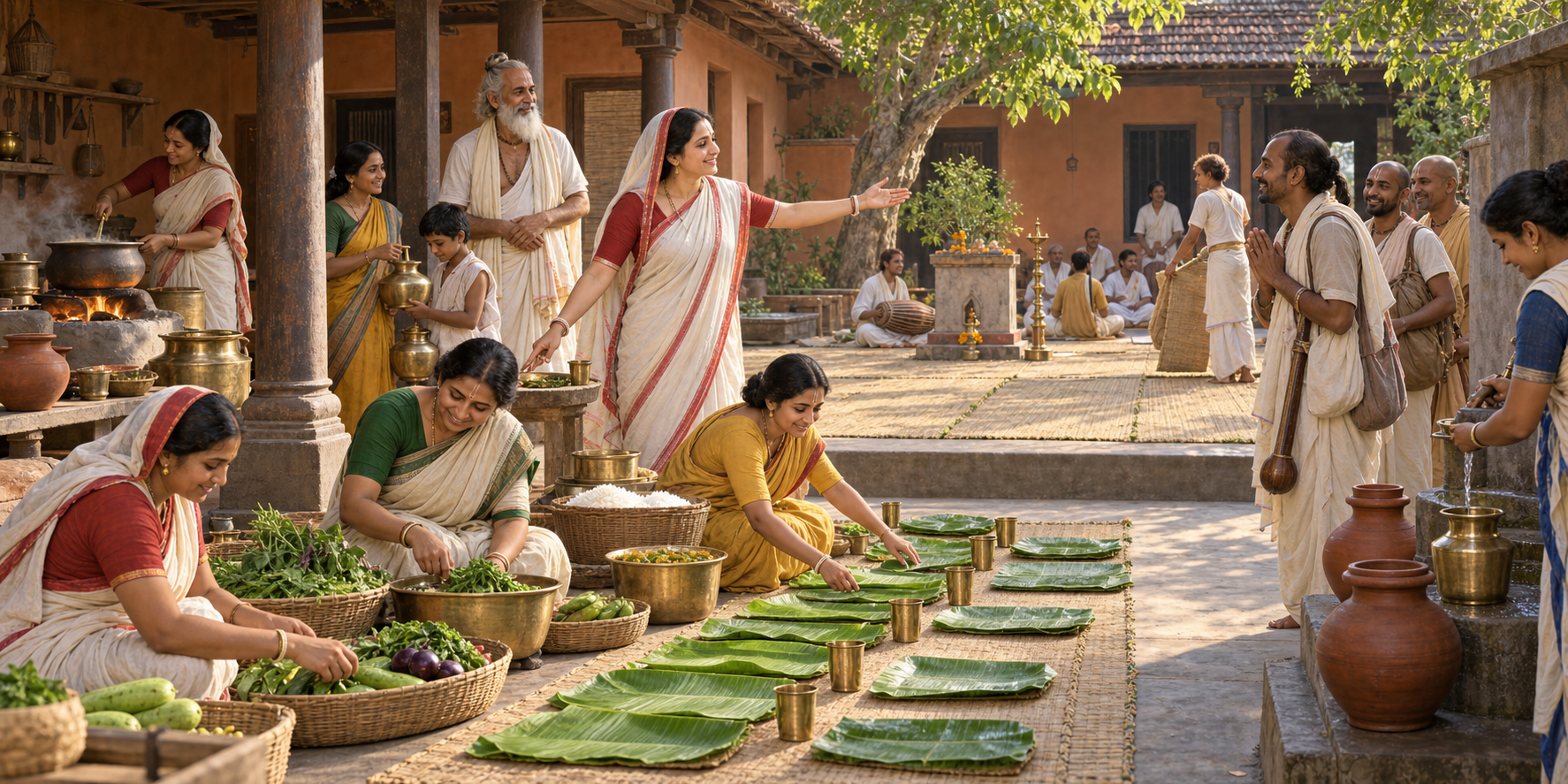
Advaita Acarya’s home at Shantipur occupies an important place in the remembrance of Sri Chaitanya’s associates. It was not merely a private residence. It became a setting for receiving devotees, sharing prasada, maintaining relationships, and supporting moments of intense spiritual importance. Sita Thakurani’s steady service belonged to the life of that devotional household.
This gives us a more complete picture of religious history. Public kirtan requires a place where people can arrive and recover. Pilgrims need food and water. Family members need attention. Offerings must be prepared. Rooms must be made ready. After a gathering, someone must restore order. None of this sits outside the spiritual event. It is part of what permits the event to occur.
Calling such work sacred does not justify leaving it unnamed or assigning it automatically to women. That would misuse Sita Thakurani’s legacy. If household and hospitality work sustains a devotional community, the community should treat it as real seva: assign it deliberately, distribute it according to capacity, provide what it requires, and honor the people doing it.
Before your next satsanga, festival, study circle, or home kirtan, plan the supporting seva alongside the visible program. Decide who will welcome unfamiliar guests, prepare and serve food, attend to children and elders, manage footwear and seating, clean afterward, and check that no volunteer carries the entire burden. If these responsibilities are considered only after the singing or discourse has been arranged, the community has planned only half the gathering.
Sita Thakurani’s example also corrects a narrow idea of spiritual leadership. Leadership is not always the person at the center of the room. Sometimes it is the person whose reliability allows everyone else to gather, worship, learn, and eat in peace. You can identify that leadership by asking a practical question: whose absence would make the devotional space stop functioning?
Once you see those people, do more than thank them. Learn the work, share it, and ensure that service does not become exhaustion. Reverence for a historical Vaishnavi rings hollow if a present-day community praises her care while continuing to overlook the people performing comparable sustaining labor.
Key takeaways for practicing her devotional legacy
- Use her full devotional identity. Introduce Sita Thakurani as a great Vaishnavi as well as the wife of Advaita Acarya. The relationship provides context; it does not exhaust her significance.
- Read actions, not only titles. Notice what she does in each remembered episode: she goes, brings, blesses, welcomes, and sustains. This prevents devotional women from disappearing behind the names of their male relatives.
- Turn reverence into timely help. Her visit to the newborn Nimai shows affection becoming useful service. When you honor a sacred occasion, ask what the people involved actually need.
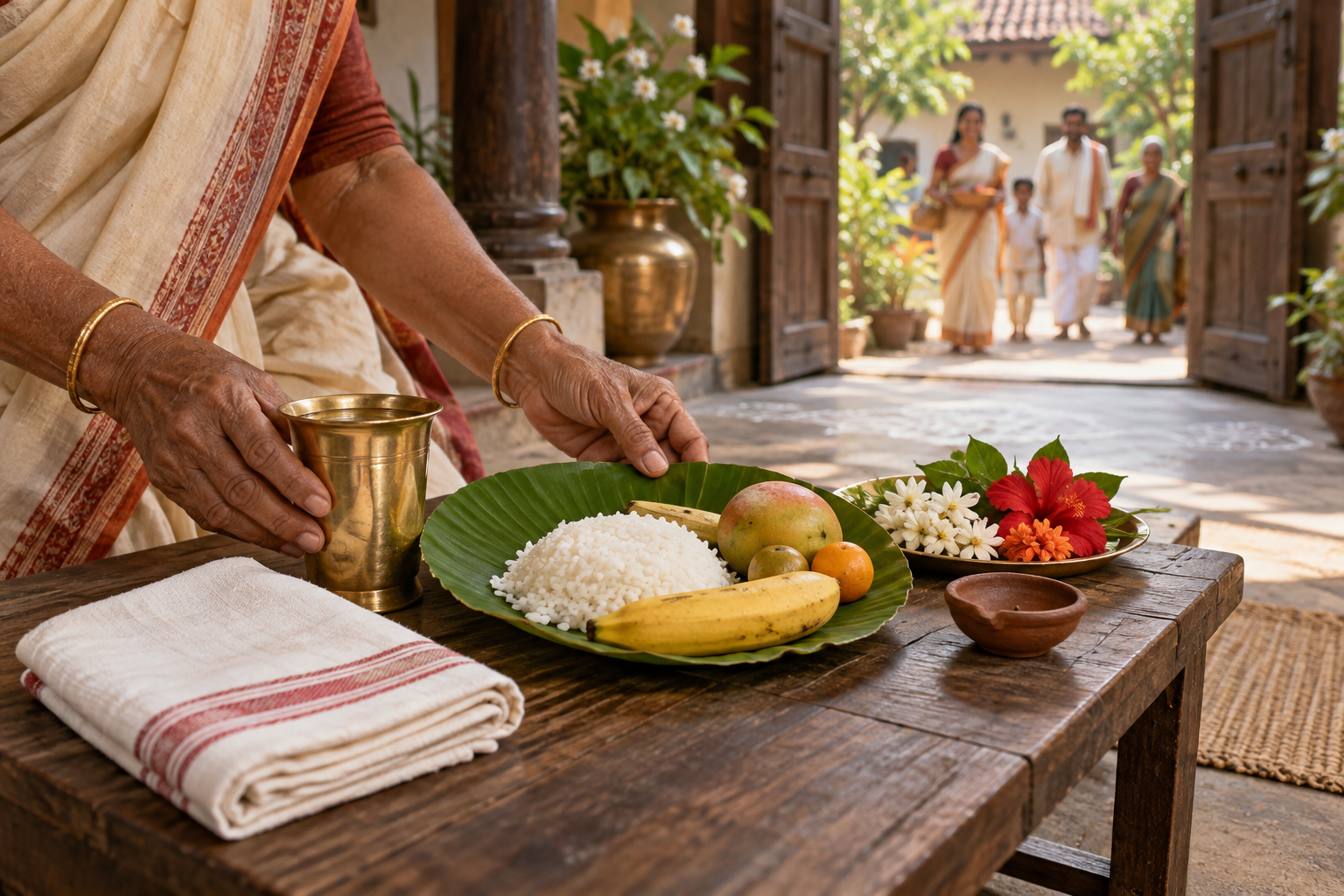
- Treat hospitality as part of worship. Food, welcome, preparation, care, and cleanup make collective devotion possible. Plan them with the same seriousness given to kirtan, discourse, and ritual.
- Distribute sustaining seva fairly. Honoring household devotion must never become an excuse to romanticize invisible labor or impose it on women. Name the work, rotate it where possible, and support those who carry it.
- Do not invent a traditional observance. If your lineage or temple has an established way to commemorate Sita Thakurani, learn it from a trusted teacher. A personal act of remembrance may be sincere, but it should not be presented as an ancient prescribed rite without authority.
You do not need an elaborate program to let her legacy change your practice. Choose one identifiable act of welcome this week. Take full responsibility for a meal and its cleanup. Receive a newcomer instead of assuming someone else will notice. Read the episode of her visit to the newborn Nimai with your family or study group, then ask what her actions reveal that a list of titles would miss.
The next time you encounter her name beside Advaita Acarya, pause on her own honorific: Sita Thakurani, a great Vaishnavi. Then carry that recognition into the devotional space around you by noticing, sharing, and honoring the seva that makes sacred community possible.
References

Leave a Reply
You must be logged in to post a comment.