
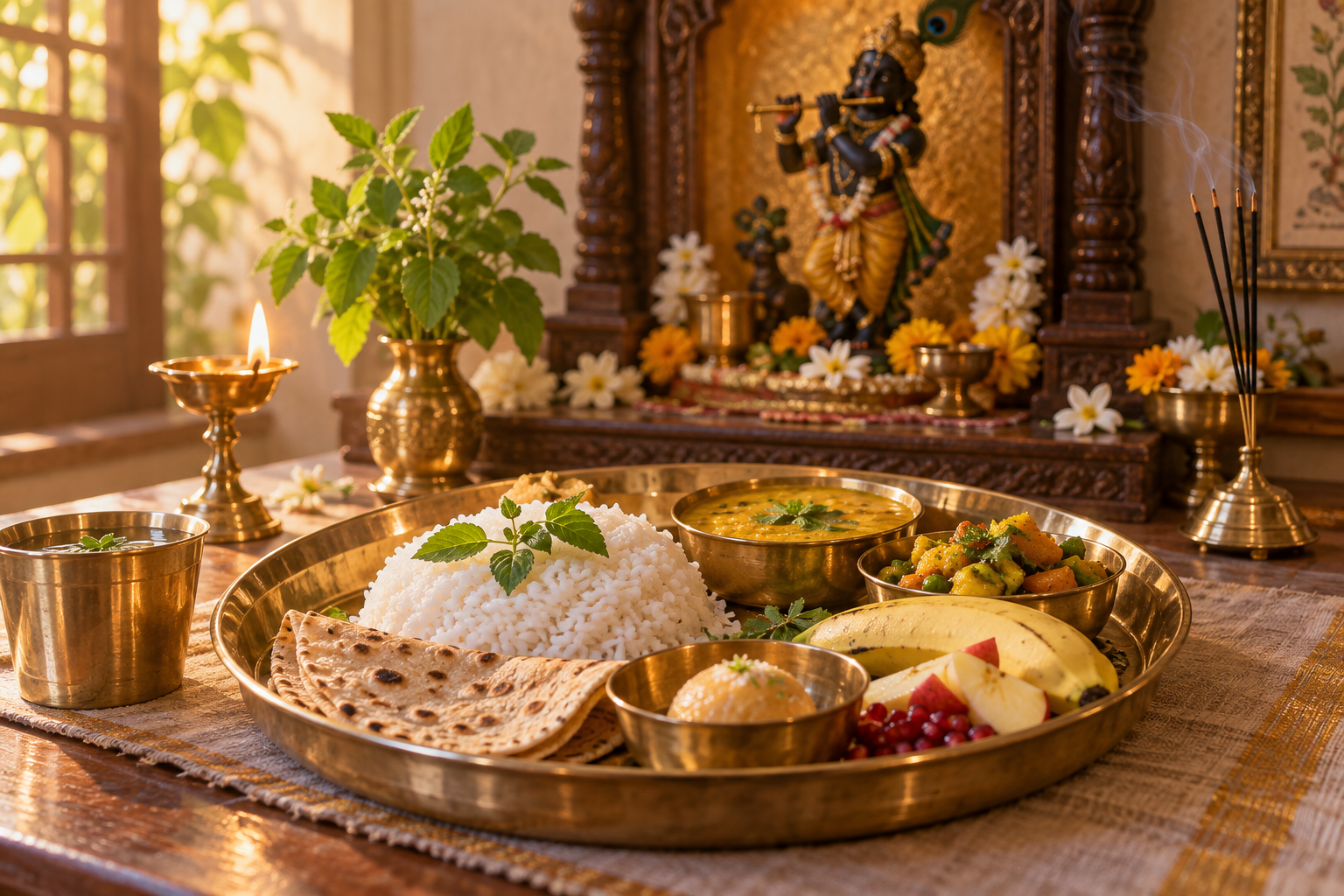
You have been handed prasadam at a temple, placed it in your palm, and wondered what you should do next. Is it simply blessed food? Must you eat it immediately? Does its spiritual value depend on the recipe, the ritual, or your state of mind?
In the Vaishnava understanding, prasadam is food that has been lovingly offered to Bhagavan and then received back as grace. That sequence changes an ordinary act of consumption into a relationship: you prepare, offer, receive, honor, and share. Knowing that sequence helps you approach prasadam with devotion without turning it into superstition or anxious rule-keeping.
Key takeaways
- Prasadam literally means mercy. It is received as Bhagavan’s grace, not treated as food that merely underwent a ceremony.
- In Krishna-bhakti, the decisive element is loving connection with Krishna. An elaborate feast offered for display is not spiritually superior to fruit or water offered sincerely.
- Honoring prasadam means eating with gratitude, care, and restraint from waste. It does not mean ignoring allergies, health needs, or ordinary food hygiene.
- Preparing the offering trains intention; receiving it trains the tongue; distributing it turns personal worship into seva.
- If you are new to the practice, begin with one simple, suitable item and a sincere prayer rather than waiting until you know an elaborate ritual.
Prasadam begins with a change in relationship
The most useful way to understand prasadam is to follow what happens to the food. Ingredients are gathered and prepared. A portion is placed before the Lord. The devotee asks Him to accept it. What is then returned is received as His favor.
The food may look, smell, and taste much as it did before the offering. The transformation claimed by the Vaishnava tradition is spiritual, not chemical. The food has been connected to Krishna through devotion and accepted back as His mercy. This is why prasadam is not defined by an unusual ingredient, a high price, or an impressive menu.
Srila Prabhupada explained the principle through a broader idea: something directed toward the Absolute regains its spiritual quality. Applied to a meal, the center changes. Cooking is no longer only about satisfying your appetite or displaying your skill. The ingredients, effort, attention, and eventual enjoyment are placed in Krishna’s service.
Love is therefore not a decorative addition to the ritual. It is the offering’s inner substance. Krishna may be offered something as modest as a leaf, fruit, or water when it is given with genuine love. That teaching removes two common obstacles at once: lack of wealth does not disqualify you, and ceremonial sophistication cannot replace sincerity.
Sincerity does not require you to manufacture an intense emotion. It begins more concretely. You remember for whom you are cooking. You resist careless habits. You prepare something appropriate to your tradition. You relinquish the assumption that the meal exists only for you. These are small decisions, but together they redirect the act.
This account belongs specifically to Krishna-bhakti and its theology of offering. Other Hindu sampradayas may use the words naivedya and prasada within their own forms of worship, with different mantras and kitchen disciplines. Follow the instructions of your guru, family tradition, or temple when you have them. Respect for prasadam includes respect for the living tradition in which it is offered.
Claims that prasadam frees a person from material bondage or nourishes the soul are theological claims about divine grace. They should not be confused with nutritional or medical claims. Spiritual descriptions of protection from material contamination do not mean immunity from infection, allergens, food spoilage, or disease.
How to prepare and offer prasadam at home
A home offering does not need to imitate a temple feast. It needs a clear devotional direction. If you already belong to a sampradaya, use its rules about ingredients, mantras, purity, and who receives the offering. If you are just beginning, a simple offering is more honest and sustainable than a complicated procedure assembled from unrelated customs.
A simple practice for a beginner
- Choose something suitable. Start with fresh fruit, water, or a simple preparation consistent with the form of Krishna worship you are following. Do not make a universal menu out of one household’s rules.
- Prepare yourself and the space. Wash your hands, use clean utensils, and keep the food protected from contamination. Cleanliness supports attentiveness; it is not a substitute for devotion.
- Cook with the offering in mind. Try not to taste the portion intended for Krishna before it is offered. The practical lesson is that the Lord is being served first, rather than receiving what remains after your appetite has approved it.
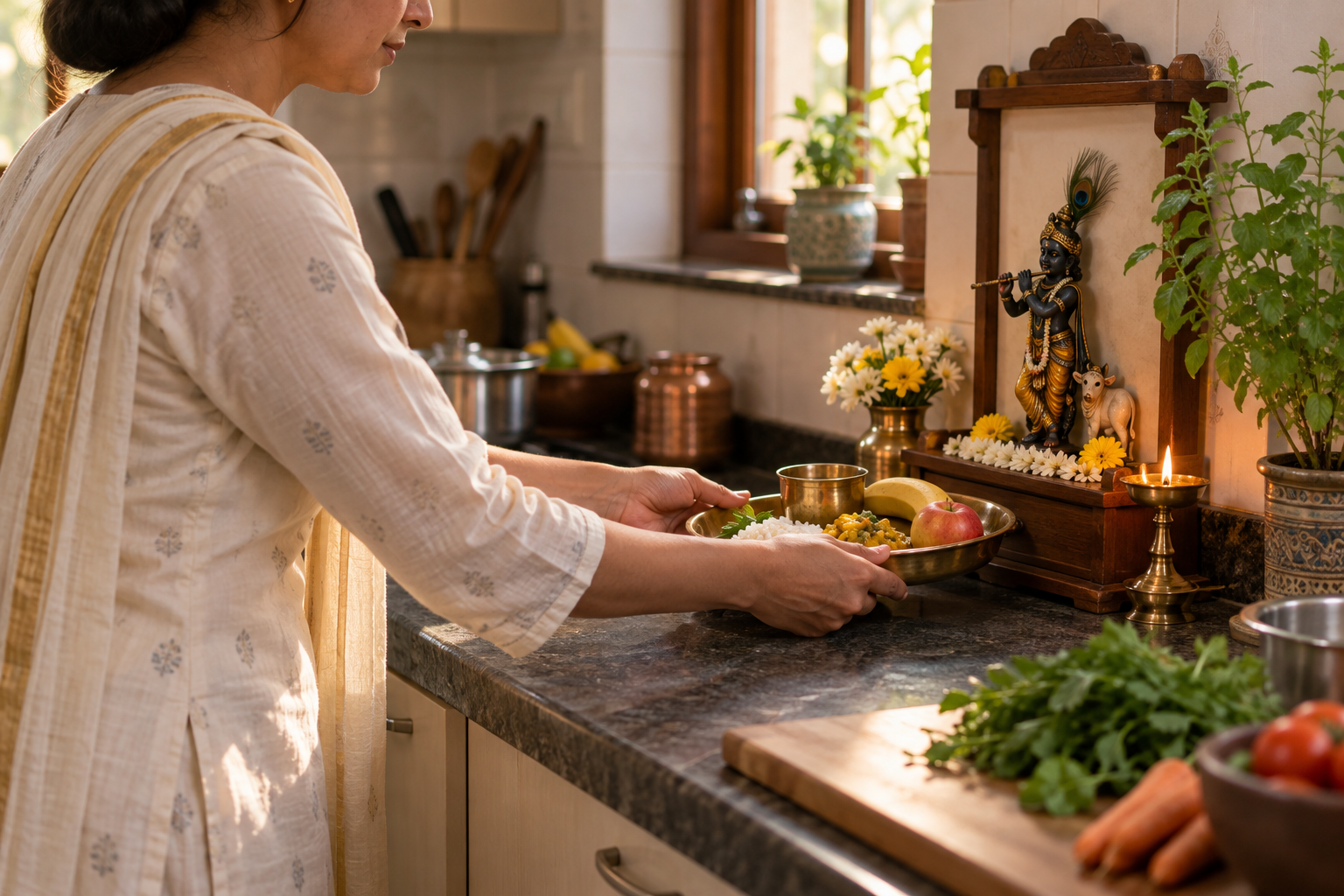
- Place a portion separately. Use a clean plate, bowl, or cup reserved for the offering if your household practice permits. Present the food neatly. Care in presentation is a form of attention, not a competition in ornamentation.
- Offer it sincerely. Place it before the Deity or sacred image used in your worship. Recite the mantras taught in your lineage. If you have not received a formal method, speak plainly: identify the food as an offering, ask Krishna to accept it, and express gratitude.
- Receive it back and distribute it. After completing the offering according to your practice, return the prasadam for serving. The method of combining the offered portion with the rest of the meal varies, so follow your lineage or temple rather than inventing certainty.
If your tradition teaches that offerings are made through the guru-parampara, that is not a bureaucratic detour. Association with a teacher includes following the teacher’s instructions. Cooking under those instructions can itself become a form of spiritual association, even when the teacher is not physically present.
Three mistakes that obscure the purpose
- Waiting for perfect knowledge: Uncertainty about an elaborate ritual can become an excuse never to offer anything. Begin with a simple item and seek reliable instruction as your practice develops.
- Making display the center: Variety and beauty can serve devotion, but they can also serve the cook’s desire for admiration. Ask whether the preparation is helping you remember Krishna or merely helping others notice you.
- Treating the words as a mechanism: Correct recitation matters within traditions that prescribe it, but syllables uttered while the mind remains entirely self-centered miss the inward movement of offering.
A missed mantra, modest plate, or lack of culinary skill need not produce panic. At the same time, sincerity should not become an excuse for indifference. The balanced practice is to offer the best care you can actually sustain, learn from an authentic teacher, and let precision grow alongside devotion.
Honoring prasadam changes how you eat
Devotees commonly speak of honoring prasadam rather than merely eating it. The distinction is practical. Eating begins with appetite: What do I want? Honoring begins with reception: What has been given to me, and how should I respond?
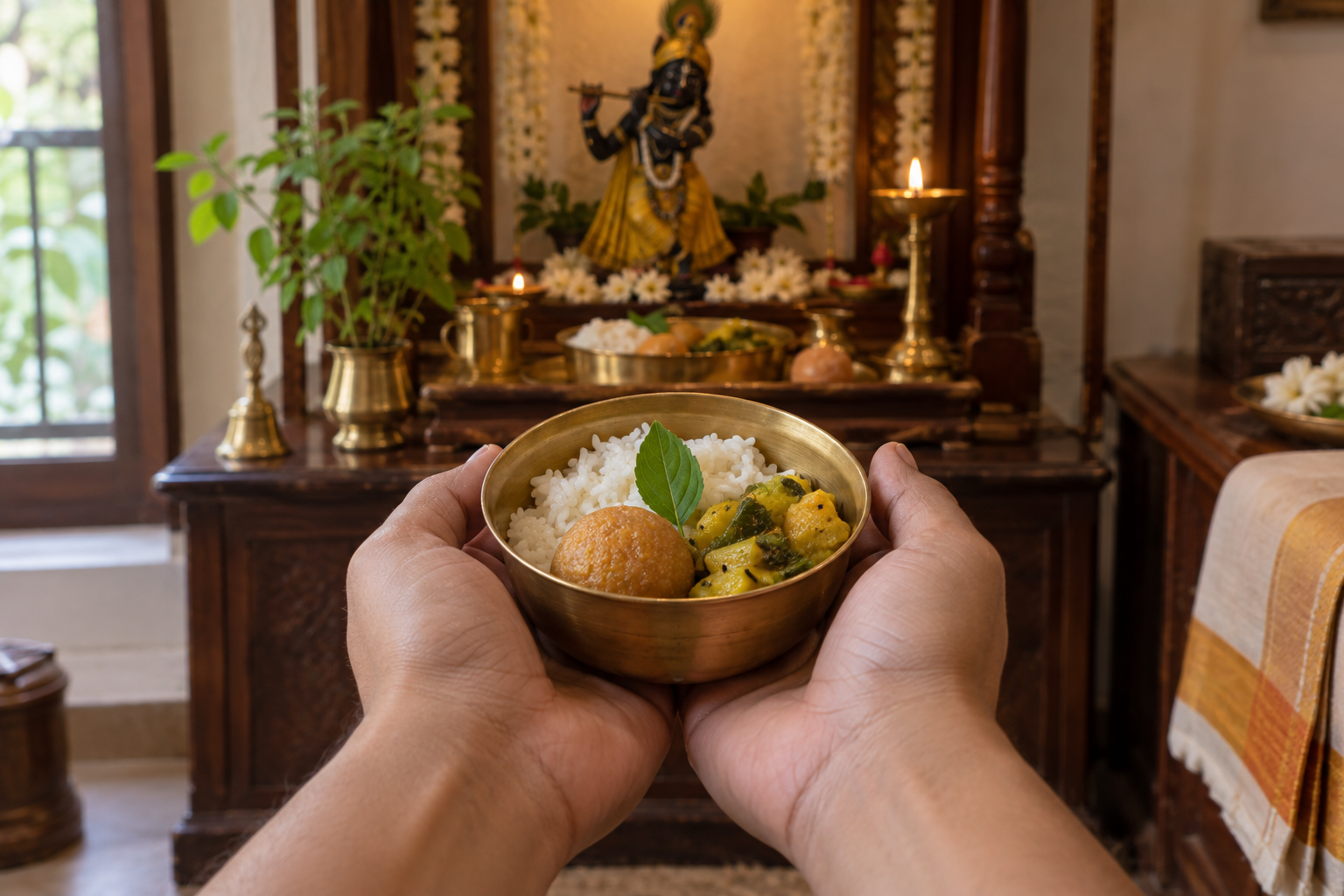
You do not need a theatrical mood. Pause before the first bite. Remember that the meal was offered. If your tradition has a prayer for prasadam, recite it attentively. Then eat without treating the sacred plate as background to distraction, complaint, or argument.
A prayer composed by Srila Bhaktivinoda Thakura identifies the tongue as especially difficult to govern and presents prasadam as Krishna’s merciful help in that struggle. Its logic is precise: the same tongue that pulls you toward restless consumption can taste sanctified food and glorify Radha and Krishna. The sense is not destroyed; it is given a better object and purpose.
This corrects the idea that spirituality requires hostility toward taste. Prasadam may be delicious, and delight is not a defect. The discipline lies in receiving pleasure as grace rather than claiming it as the sole purpose of the meal. Gratitude and enjoyment can coexist.
Respect also has visible consequences. Take an amount you can finish, then return for more if appropriate. Avoid wasting it. Keep it clean and store it safely. Do not leave prasadam to spoil because discarding it later would feel uncomfortable. Reverence never cancels responsible food handling.
Your medical needs remain real after an offering. If a preparation contains an allergen, conflicts with a prescribed diet, or appears unsafe, do not eat it under pressure. Ask what it contains, accept only a safe amount, or decline respectfully. Calling food prasadam does not remove its physical ingredients. A temple or host can support reverence by identifying ingredients clearly and never shaming a guest who cannot consume a particular preparation.
If you receive only a small morsel, do not measure the mercy by its size. If the meal is abundant, do not measure your devotion by how much you can eat. The relevant movement is from entitlement to gratitude, not from one form of excess to another.
Distribution turns a private offering into seva
Prasadam naturally moves outward. The Lord receives the offering, the devotee receives mercy, and that mercy is shared. Distribution is not an optional publicity layer added after worship. It expresses the same devotional relationship in social form.
Lord Chaitanya took care that prasadam was served properly and personally served devotees. Srila Prabhupada cooked and distributed the early Sunday love feasts. Near the end of his life, even while seriously ill, he remained concerned about whether devotees were receiving enough prasadam. These actions place feeding people inside spiritual leadership, not at its margins.
That principle became especially concrete when Srila Prabhupada saw women and children trying to recover remnants from discarded banana-leaf plates after a festival. His response was that no one within ten miles of an ISKCON temple should go hungry. Whatever one makes of that proposed radius in a particular place, the moral demand is unmistakable: a sacred kitchen should notice hunger beyond the people already seated inside it.
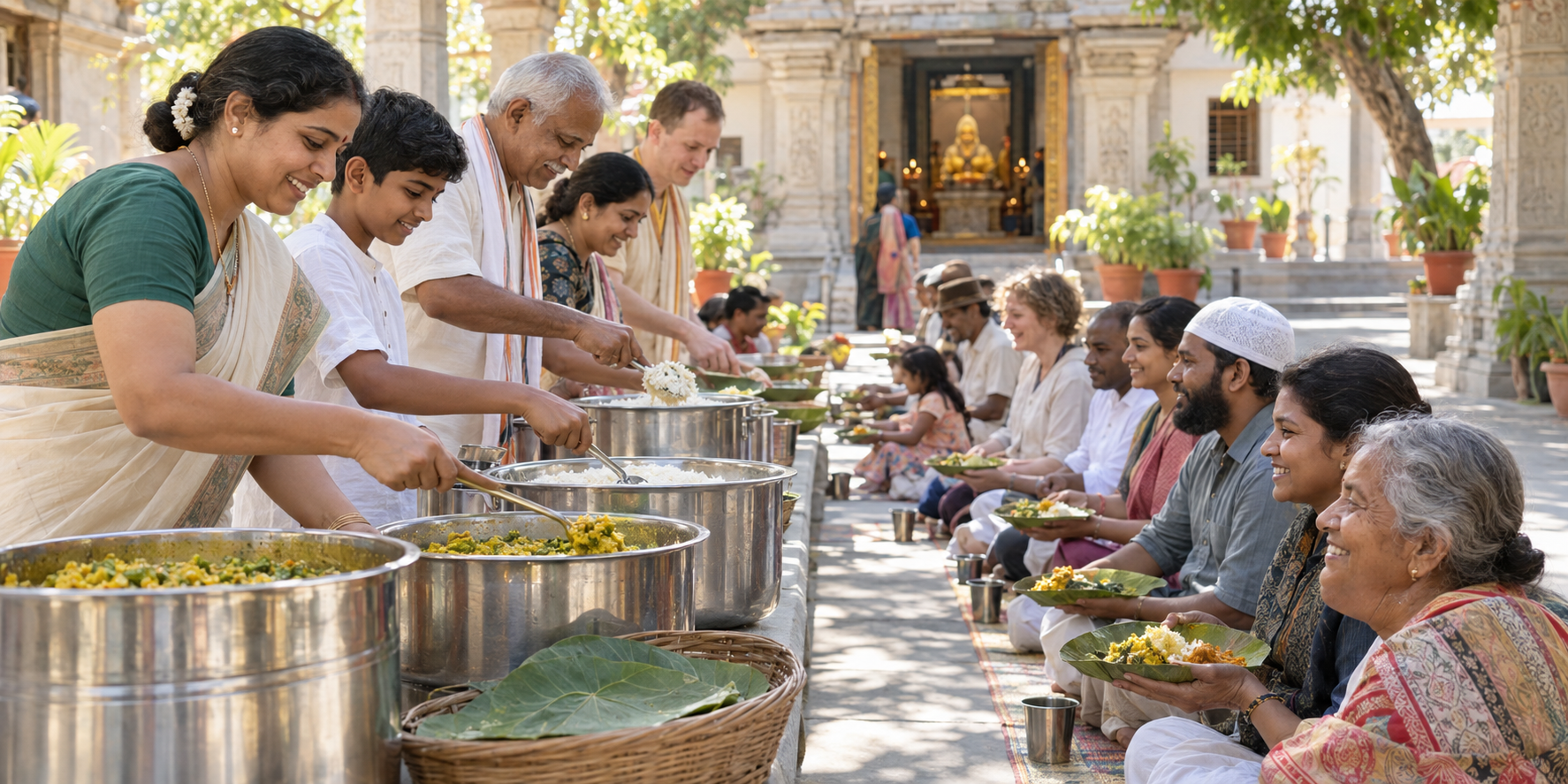
You can apply that demand without running a large institution. Cook one additional portion when you know someone may need it. Invite a guest without making the meal a test of belief. Serve family members before settling into your own plate. Support a trustworthy prasadam-distribution effort. If you help at a temple, pay attention to the serving line, drinking water, cleanliness, and whether quieter visitors are being overlooked.
Distribution should preserve dignity. Do not use food to corner a hungry person into religious participation. Explain what is being offered when appropriate, disclose relevant ingredients, and serve with the same care you would show an honored guest. The recipient is not a prop in the giver’s spiritual story.
This is where the meaning of mercy becomes testable in conduct. If your offering makes you more attentive to Krishna but less attentive to the hungry person nearby, part of the practice has been missed. If it loosens possessiveness, disciplines appetite, and makes hospitality more natural, the offering is already reshaping daily life.
Begin with your next suitable meal. Set aside one clean portion, offer it in the manner you have genuinely received or can sincerely understand, and honor it without hurry. Then decide before you rise from the table who else could be included the next time you cook. Prasadam becomes a living practice when mercy is received carefully and allowed to travel.

References
