

Your mind becomes noisy in a crisis. It wants a guarantee about your health, safety, work, family, or future. If you are asking how to take shelter of Krishna now, you probably do not need an abstract definition of surrender. You need a way to meet the next decision without abandoning either worldly duty or bhakti.
Taking shelter begins when you stop making remembrance conditional on receiving the outcome you want. You act where action is yours, maintain contact with Krishna through a stable devotional rhythm, and offer back the result you cannot command. This is active surrender, not passivity.
Deal with immediate danger before debating its meaning
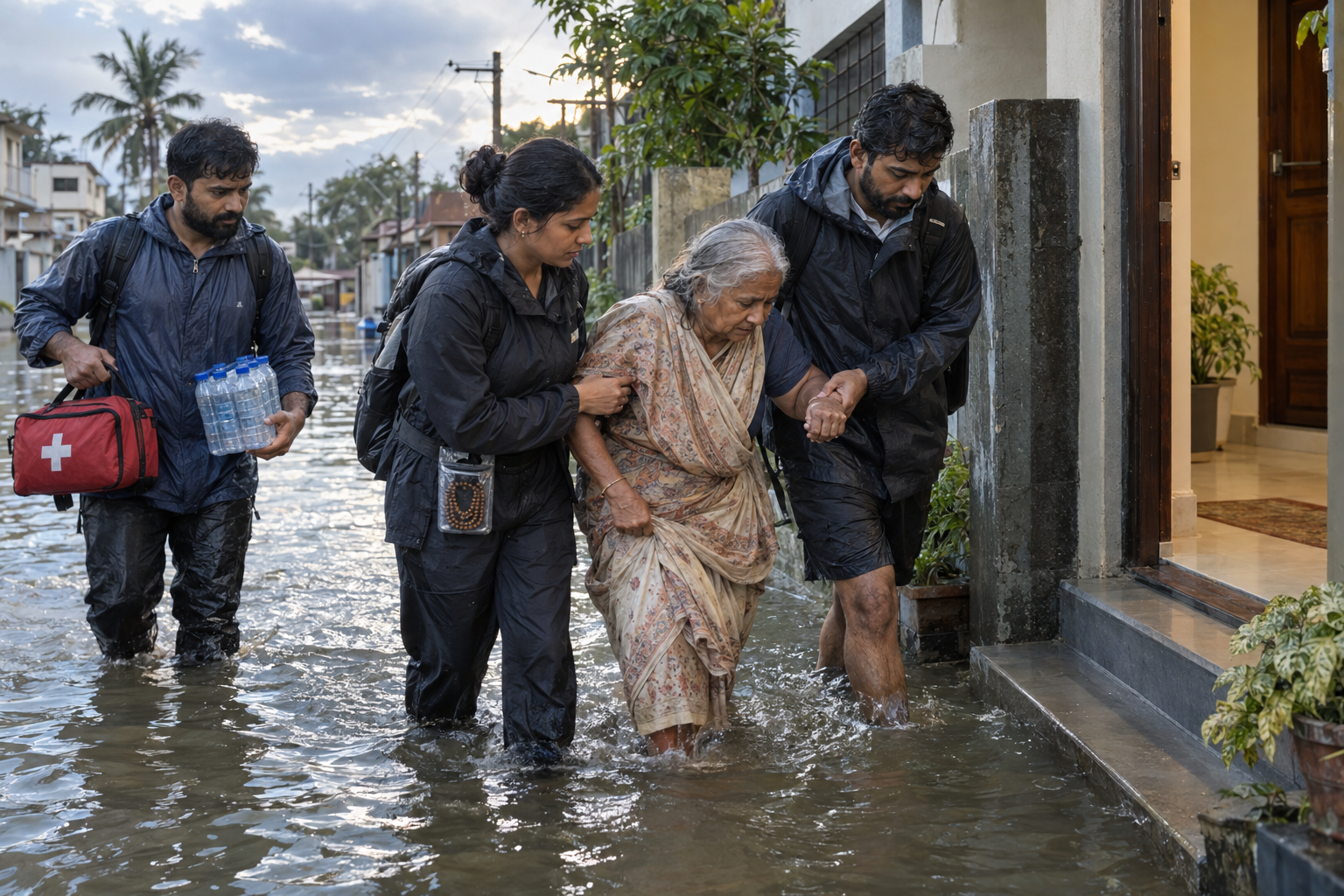
Taking shelter of Krishna never requires you to neglect an urgent material duty. If you or another person faces immediate danger, move to safety and contact the appropriate local emergency service. A threat of violence or self-harm, or a serious physical or psychological symptom, calls for qualified help. Chanting can accompany the call, the journey, and the treatment; it must not replace them.
Once the urgent step is underway, separate the crisis itself from the mind’s predictions about it. Write down what is happening in one sentence. Then write what you fear might happen in a second sentence. Do not let the second masquerade as the first.
- What is known right now, apart from speculation?
- What safety measure or dharmic duty is mine to perform next?
- What result am I trying to control even though it is not mine to command?
- Which act of remembrance can I complete without delaying necessary help?
These questions give responsibility and surrender their proper places. Responsibility governs your next action. Surrender governs your claim over the final outcome. Do not turn the thought that Krishna will handle everything into an excuse for avoiding a difficult call, seeking no help, or leaving another person unsupported. Pray plainly: Please let me see and perform the next duty without forgetting You.
Keep a devotional minimum when the rest of life is disrupted

When disciples in England reported oil shortages and IRA bombings, they were told to continue the regulative schedule, deity worship, prasadam distribution, chanting, and book distribution rather than allow external danger to erase the devotional programme. Those instructions addressed an organised community, but the principle applies more widely: crisis is not the time to make every spiritual practice optional.
You may have to adapt the form of your routine, especially while carrying genuine emergency duties. Adaptation should preserve continuity, not provide a respectable name for abandonment. Establish a minimum that keeps you connected to Krishna and leads you back to your full commitments.
- Begin at a repeatable point. If your usual time remains available, keep it. If an emergency has displaced it, return at the first safe interval instead of declaring the whole day lost.
- Chant with the attention you can offer now. Do not wait for fear to disappear. The practice itself is your return from fear’s repetitive loop.
- Maintain feasible deity or home-altar service and continue offering food. Simplicity under real constraint is different from carelessness.
- Read a defined portion of the Bhagavad-gita or Srimad-Bhagavatam, then identify one instruction that should shape your conduct that day. Do not search randomly for a prediction of how the crisis will end.
- Keep one outward-facing service. You might distribute prasadam, help a community member, support temple work, or share spiritual wisdom appropriately. Service prevents shelter from shrinking into private worry.
Put this minimum in writing. A frightened mind renegotiates every commitment, often several times in the same day. A written routine removes that repeated decision. If you miss part of it, resume at the next opportunity. Missing the morning does not require sacrificing the evening.
This repeated return is abhyasa in its most practical form. Your minimum is a bridge back to steadiness, not a new measure of your spiritual worth and not a permanent replacement for vows you have undertaken.
Surrender releases the outcome, not the duty

A common but damaging bargain hides inside crisis prayer: if devotion is sincere, the feared event must not happen. Bhakti does not purchase immunity from illness, loss, disruption, or bodily death. Making a preferred material result the test of Krishna’s protection leaves faith dependent on circumstances.
Prabhupada’s counsel places even bodily death within Krishna’s will while still directing the devotee to continue serving. This is a severe teaching, and it is easy to misuse. It is not contempt for life, permission to take foolish risks, or a command to suppress grief. It corrects the belief that preserving the present material arrangement is the only form divine protection can take.
The platform of deathlessness does not mean bodily invulnerability. Every material body remains subject to death. Deathlessness means learning to live from the self’s relationship with Krishna rather than treating the body’s survival as the complete measure of spiritual security. The practical result should be greater steadiness in duty, not indifference to life.
- Bargaining says: I have practised devotion, so this must end as I want.
- Fatalism says: I cannot control the end, so there is no reason to act.
- Shelter says: I will act responsibly, continue serving, and entrust what I cannot govern to Krishna.
The third position keeps duty, devotion, and humility together. It also gives you a useful diagnostic question: What result am I demanding as the price of my faith? Name that demand without disguising it as prayer. Then place it before Krishna while continuing the work that is actually yours.
You do not have to feel calm before doing this. Fear is an experience moving through the mind; surrender is a decision about whom you will remember and what duty you will perform. You can be frightened and still take shelter.
Do not impose this teaching on someone else as a rebuke. A truth that steadies your own heart can sound brutal when delivered to a person in fresh grief. Serve first. Bring food, arrange transport, offer protection, listen, or help with the immediate burden. Speak about surrender only when doing so will genuinely support the person rather than silence their pain.
Protect solidarity while pressure magnifies disagreement

Crisis makes ordinary differences feel existential. People become attached to their preferred plan, interpret disagreement as disloyalty, and spend energy assigning blame while urgent service waits. A devotional community can survive difficult external conditions and still be weakened from within by rivalry.
We have so much work to do, we cannot lose our solidarity.
A.C. Bhaktivedanta Swami Prabhupada
Use a simple cooperation discipline when tension rises:
- Name the shared duty first: safety, care, worship, service, or support for the affected person.
- Separate the decision needed now from the larger dispute. Not every disagreement must be settled before the next action can be taken.
- State your objection without assigning a hidden motive to the other person.
- Make responsibility explicit. Everyone should know who will act, who will assist, and when the decision will be reviewed.
- Refuse faction-building. Speak directly to the responsible people instead of circulating complaints among sympathetic listeners.
- After the decision, perform one shared act of service. Cooperation becomes real through work, not merely through an agreement to be cooperative.
Solidarity does not mean concealing abuse, danger, criminal conduct, or serious misconduct. Those require protection, reporting, and appropriate accountability. What must be set aside is ego-driven competition, not dharma. At home, in a temple, or in a wider community, coordinate the necessary care first and postpone speculative blame until the facts are clear.
Key takeaways
- Taking shelter joins responsible action to remembrance of Krishna; it does not replace emergency assistance or qualified care.
- Preserve a written devotional minimum so fear and disruption do not make every practice negotiable.
- Adapt the form of service when circumstances require it, but keep a clear path back to your established commitments.
- Do not treat Krishna’s protection as a contract guaranteeing your preferred material outcome.
- Deathlessness is not bodily invulnerability; it is an orientation beyond the body’s temporary condition.
- Protect cooperation during crisis, while never using solidarity to hide danger or wrongdoing.
Before the next wave of fear, write four lines on paper: one urgent duty, one outcome you must release, one devotional practice you will keep, and one person with whom you need to coordinate directly. Put the paper where you will see it when the mind starts circling.
When fear returns, do not reopen the entire philosophy. Take the required action, say Krishna’s name, complete the next act of service, and place the result before Him. The outcome may remain uncertain while your direction becomes clear.
References
